
6 Nov 2026
Single Malt Scotch Whisky: Regions, Casks and the Pursuit of Character
Discover what defines single malt Scotch whisky, from Scotland's distinctive whisky regions and traditional distillation methods to the influence of oak casks, maturation and the craftsmanship behind the world's finest single malts.
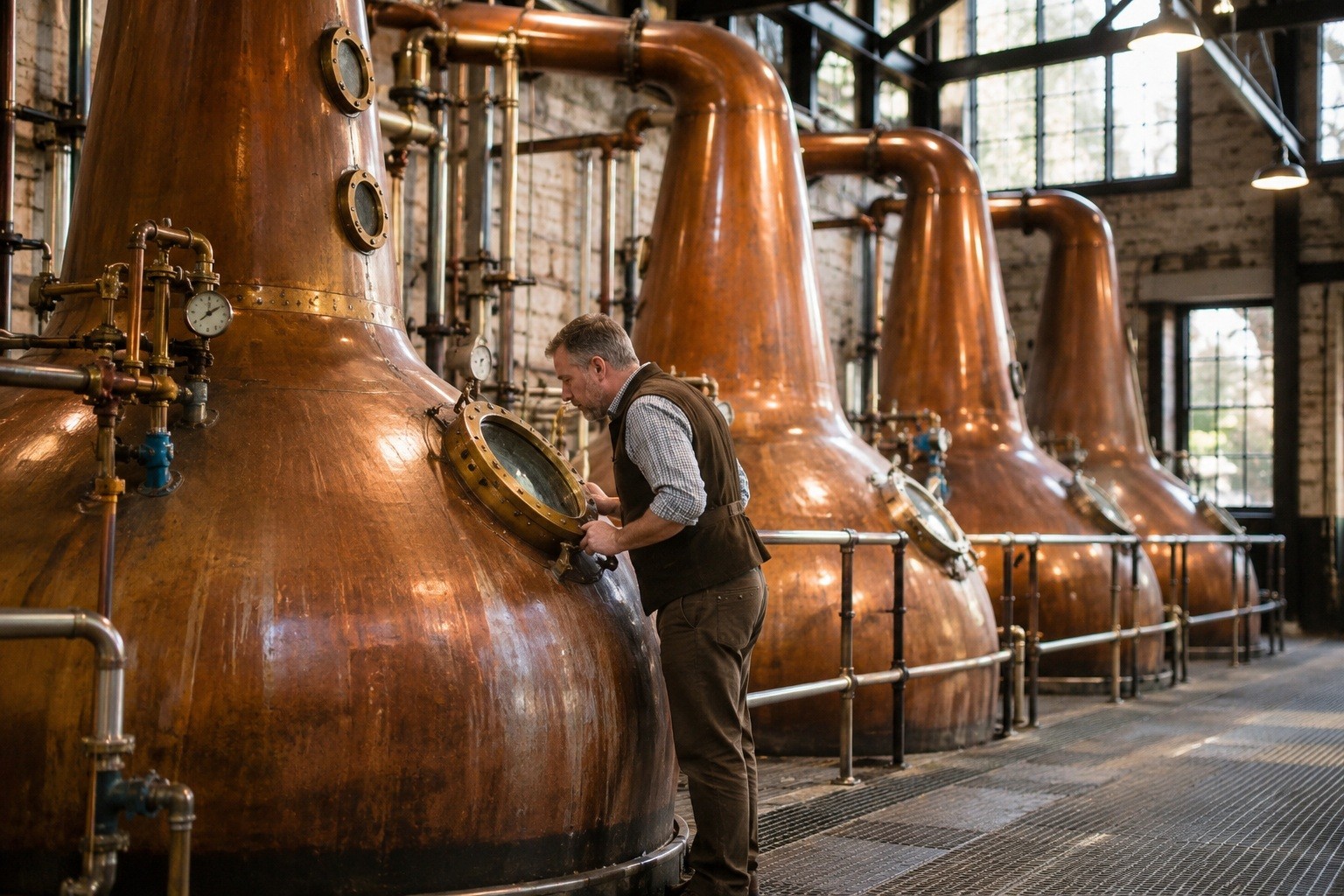
Scotland's finest single malts are not defined by age alone. From the stillhouses of Speyside to the peat fires of Islay, their character emerges through a combination of place, production and time spent in oak.
There is a particular fascination in tasting two single malt whiskies made from essentially the same ingredients, yet finding almost nothing in common between them.
One might be delicate, with notes of orchard fruit, honey and fresh malt. The other could be intensely smoky, carrying impressions of seaweed, medicinal herbs and charred wood. Both are Scotch whisky. Both may have spent twelve years in oak. Yet their differences are far greater than their similarities.
The explanation lies in the decisions made long before either whisky reaches the bottle.
The barley, the fermentation, the shape of the stills and the selection of casks all leave their mark. Even within a single distillery, variations in maturation can produce remarkably different expressions.
Understanding these influences is a more rewarding way to approach single malt than relying on age statements, regional reputations or price alone.
What Makes a Whisky a Single Malt?
The term single malt is sometimes misunderstood.
It does not mean whisky from a single barrel, nor does it necessarily refer to a single production batch.
Under Scottish regulations, single malt Scotch whisky must be produced at one distillery using water and malted barley, without the addition of other cereals. Distillation takes place in copper pot stills, using a batch process.
The resulting spirit must mature in oak casks in Scotland for at least three years before it can legally be called Scotch whisky. The casks must not exceed 700 litres in capacity, and the finished whisky must be bottled at a minimum strength of 40% alcohol by volume.
A distillery may combine whisky from numerous casks, and even from different years, to create a consistent expression. Provided every component comes from that same distillery and meets the production requirements, the result remains a single malt.
This distinction matters. Much of the skill involved in producing a familiar single malt lies in selecting and combining casks to preserve its character from one bottling to the next.
Scotland's Five Whisky Regions
Scotland has five legally recognised whisky regions and localities: Speyside, Highland, Lowland, Islay and Campbeltown.
Their names offer a useful introduction to Scotch whisky, but they should not be treated as rigid descriptions of flavour.
A distillery's methods and maturation programme frequently reveal more about its whisky than its position on a map.
Speyside: Fruit, Elegance and Sherry Casks
Speyside, in north-eastern Scotland, contains the country's greatest concentration of malt whisky distilleries.
The region is frequently associated with fruit-driven, relatively unpeated whiskies. Apples, pears, honey and gentle spice are familiar characteristics, although individual styles vary considerably.
It is also closely associated with maturation in casks previously used for sherry.
At The Macallan, cask selection has long been central to the distillery's identity, particularly the use of sherry-seasoned oak. Glenfarclas offers another interpretation of this tradition, with a house style often associated with dried fruit, malt richness and spice.
Glenfiddich and The Glenlivet demonstrate different expressions of Speyside's generally fruit-led character.
Yet Speyside is far from uniform. Benromach, for example, has developed a recognisably smoky style that challenges the idea that the region produces only gentle, unpeated whisky.
Speyside is perhaps best understood as a region of considerable stylistic breadth, rather than a single flavour profile.
Highland: A Region Too Diverse to Define
The Highland region covers an enormous geographical area, extending across much of northern Scotland and including several whisky-producing islands.
Its size makes broad generalisations particularly unreliable.
Glenmorangie is associated with a relatively elegant, fruit-led spirit, while Clynelish is known among enthusiasts for its distinctive waxy character.
Further west, coastal influences and different production traditions contribute to another range of styles.
The islands add further diversity. Talisker, produced on Skye, is known for its combination of smoke, pepper and maritime character. Highland Park, from Orkney, offers a different balance of aromatic peat, malt and cask influence.
The commonly used term Islands is not a separate legally recognised Scotch whisky region. With the exception of Islay, the island distilleries fall within the Highland designation.
For anyone exploring Highland whisky, the distillery is generally a more useful starting point than the region itself.
Islay: The Many Faces of Peat
Few places are as closely associated with a particular whisky character as Islay.
The island's reputation rests largely on heavily peated single malts, although its distilleries produce a wider range of styles than that description suggests.
Peat smoke enters the production process when burning peat is used to dry malted barley. The resulting smoky compounds survive fermentation and distillation, contributing aromas that can suggest bonfires, earth, tar, medicinal notes or seaweed.
At Ardbeg, peat often appears alongside citrus, sweetness and considerable intensity. Lagavulin is known for a rich, smoky character, while Laphroaig frequently displays pronounced medicinal and maritime associations.
These differences are not simply a matter of how much peat is used.
Fermentation, distillation and maturation influence how the smoky character develops and how it is perceived in the finished whisky.
Nor is every Islay malt heavily peated. Bunnahabhain produces well-known unpeated expressions, while Bruichladdich has explored several approaches to peat across its different ranges.
Islay illustrates an important principle: even a strong regional identity leaves considerable room for individual interpretation.
Lowland: More Than a Gentle Introduction
Lowland single malts have traditionally been associated with lighter, more delicate styles.
Auchentoshan is particularly notable for its triple-distillation tradition, which contributes to a spirit character distinct from that of many double-distilled Scottish malts.
Glenkinchie has long represented a softer, approachable interpretation of Lowland whisky.
However, the region has changed considerably as new distilleries have emerged and historic names have returned.
Lowland whisky is no longer adequately described by a single light-bodied style. Its producers increasingly demonstrate how fermentation, distillation and cask selection can create different expressions within the same geographical designation.
Campbeltown: A Distinctive Whisky Tradition
Campbeltown, on the Kintyre peninsula, was once one of Scotland's most important whisky-producing centres.
Its industry subsequently contracted dramatically, but the town retained its distinctive identity.
Springbank is particularly significant for its traditional approach to production and its range of contrasting whisky styles.
The distillery's Springbank, Longrow and Hazelburn expressions demonstrate how variations in production methods can produce markedly different results within the same distillery.
Glen Scotia provides another interpretation of Campbeltown character, often combining fruit, malt richness and coastal impressions.
Campbeltown whiskies are frequently described as robust, sometimes oily, with varying degrees of smoke and maritime character.
As elsewhere in Scotland, however, these descriptions are tendencies rather than rules.
The Distillery Matters More Than the Map
A whisky region tells us where a spirit originates. The distillery tells us much more about how it is made.
Consider fermentation.
After malted barley has been mashed and its sugars extracted, yeast converts those sugars into alcohol. During this process, numerous flavour compounds are also formed.
The duration and conditions of fermentation can influence the balance of fruity, floral and heavier characteristics that subsequently pass through distillation.
The shape and operation of the copper pot stills introduce another set of variables.
Tall stills and particular operating conditions can encourage a lighter spirit, while other configurations may retain a greater proportion of heavier compounds.
Copper contact also plays an important role in shaping the spirit.
None of these factors operates independently. The finished new-make spirit reflects their combined influence.
This is why two distilleries using similar barley and comparable casks can produce whiskies with fundamentally different personalities.
Why the Cask Changes Everything
If distillation establishes the spirit's underlying character, maturation develops it.
During years spent in oak, whisky undergoes a series of physical and chemical changes. Compounds are extracted from the wood, some components react with one another, and others are gradually lost through evaporation.
The result is not simply an older version of the original spirit.
It is a whisky whose aroma, texture and flavour have evolved through sustained contact with oak.
Ex-Bourbon Casks
Casks previously used for American bourbon are common in Scotch whisky maturation.
They are often associated with vanilla, coconut, honey, caramel and sweet spice, although the exact influence depends on the wood, previous use and maturation conditions.
These casks can be particularly effective at preserving the visibility of a distillery's underlying fruit and malt character.
Sherry-Seasoned Casks
Sherry-seasoned oak casks are especially important in premium single malt production.
Depending on the oak and seasoning regime, they may contribute impressions of dried fruit, nuts, chocolate, spice and polished wood.
The distinction between European and American oak can be as important as the previous contents of the cask.
A sherry-seasoned European oak cask will not necessarily produce the same result as a sherry-seasoned American oak cask.
Nor does the word sherry guarantee a particular flavour profile.
The quality, preparation and previous use of the cask all matter.
Finishing and Alternative Casks
Some whiskies spend most of their maturation in one type of cask before being transferred to another for a final period.
This process, known as finishing, can introduce additional characteristics without replacing the underlying distillery style.
Port, wine and certain other previously used oak casks may be employed, subject to the rules governing Scotch whisky maturation.
A successful finish adds complexity and balance.
A less convincing one can allow the influence of the finishing cask to dominate the original spirit.
The question is not whether a whisky has been finished in an unusual cask, but whether the result is coherent.
Does Older Whisky Mean Better Whisky?
Age statements remain one of the most visible markers in the single malt market.
A twelve-year-old whisky must contain no component younger than twelve years. A twenty-five-year-old expression must meet the same principle at twenty-five years.
The number therefore provides a genuine and regulated indication of maturation.
What it does not provide is a guarantee of quality.
Longer maturation may introduce greater complexity, soften certain characteristics and develop deeper oak-derived flavours.
But additional years can also diminish the freshness and individuality of a spirit.
A heavily oak-influenced whisky is not necessarily more balanced than a younger expression.
Some distillates reach an appealing balance relatively early. Others develop particularly well over several decades.
The outcome depends on the spirit, the cask and the conditions of maturation.
This is also why non-age-statement whisky should not automatically be regarded as inferior.
Without a stated age, producers have greater flexibility to combine mature components of different ages, potentially achieving a profile that would be difficult to reproduce within a narrowly defined age range.
The quality of the result must ultimately be judged in the glass.
What Makes a Single Malt Premium?
The premium whisky market brings together several different ideas that are often treated as interchangeable.
Quality is one.
Rarity is another.
Price is a third.
A whisky may command a substantial premium because it comes from a closed distillery, represents a limited release or contains unusually old spirit.
These characteristics can make a bottle desirable to collectors without necessarily making it more enjoyable to drink than a less expensive alternative.
Conversely, a widely available single malt may offer exceptional balance, complexity and distillery character without attracting the attention associated with rare releases.
Cask selection, production methods and maturation all contribute to the final result. Scarcity, reputation and collector demand influence what the market is prepared to pay.
The distinction becomes particularly important when comparing bottles from prestigious distilleries.
Two expressions carrying the same distillery name may differ substantially in age, cask composition, bottling strength and production volume.
They should be considered as individual whiskies, not simply as different prices for the same experience.
Understanding Whisky Prices
Unlike wine, single malt Scotch whisky does not generally carry a vintage in the familiar sense.
Most expressions are identified by their distillery, range, age statement and release details.
However, vintage-dated, single-cask and limited-edition bottlings are important parts of the premium market.
For these whiskies, details such as distillation year, bottling year, cask number and release edition can be essential to establishing the identity of a bottle.
A twenty-one-year-old whisky from one release may not be identical to a later bottling bearing the same age statement.
Similarly, two single-cask expressions from the same distillery and year may have entirely different characteristics and market values.
Accurate price comparison therefore begins with accurate identification.
The distillery name alone is rarely enough.
Exploring Single Malt Scotch Whisky
The most rewarding way to explore single malt is to compare different expressions with a clear sense of what distinguishes them.
A fruit-led Speyside malt alongside a heavily peated Islay whisky reveals the breadth of Scotch whisky immediately.
Comparing two expressions from the same distillery, matured in different types of oak, offers a different lesson: how much the cask can influence a familiar spirit.
And tasting younger and older releases side by side can challenge assumptions about the relationship between age and quality.
There is no single hierarchy that places one region, distillery or age above another.
The appeal of single malt lies in its variety, and in the ability of individual distilleries to retain a recognisable character while producing whiskies of considerable diversity.
At Sipfind, that same attention to detail underpins the comparison of premium whisky offers. Identifying the correct expression, release and bottle size matters as much as finding the lowest available price.
For anyone interested in discovering Scotch whisky, understanding what is inside the bottle remains the best place to begin.
The Sipfind Journal explores the producers, regions and traditions behind the world's most distinctive wines and spirits.
Fler inlägg
23 Nov 2026
Champagne vs the World: What Makes the King of Sparkling Wine So Special?
From the chalk hills of northern France to the vineyards of England, Italy and Spain, the world of sparkling wine is far more diverse than its most famous name suggests. But how did Champagne become the ultimate symbol of celebration, luxury and exceptional winemaking?
13 Nov 2026
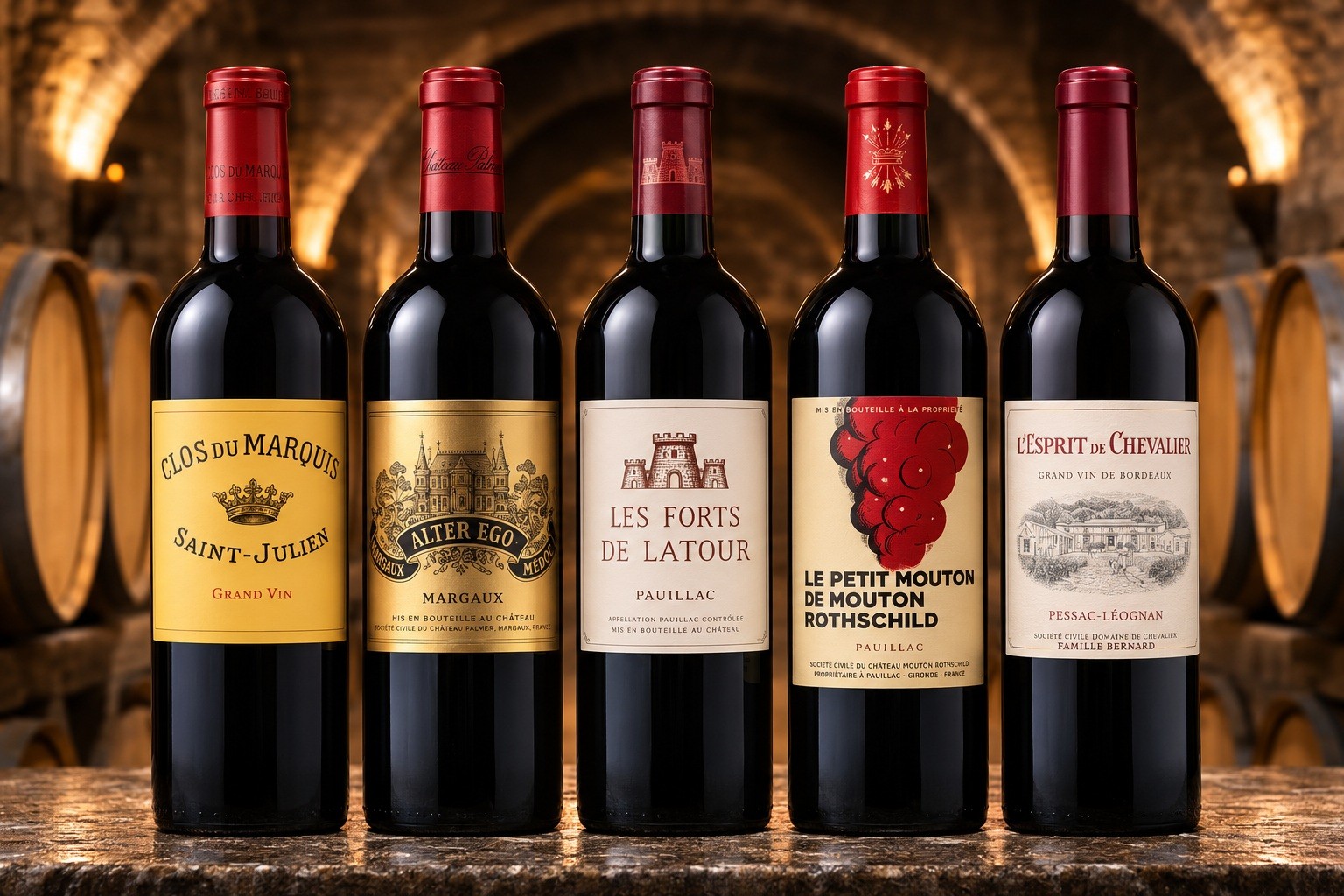
Bordeaux Second Wines: The Great Misconception
Not every Bordeaux wine produced alongside a famous Grand Vin is a conventional second wine. From Clos du Marquis and Alter Ego de Palmer to Les Forts de Latour and Le Petit Mouton, discover how vineyard origins, selection and winemaking philosophy shape some of Bordeaux's most misunderstood wines.
30 Oct 2026
Burgundy vs Bordeaux
Burgundy and Bordeaux have shaped the world of fine wine for centuries, yet their traditions are fundamentally different. From Burgundy’s vineyard-focused classifications and single-variety wines to Bordeaux’s celebrated estates and blending traditions, discover what distinguishes these two historic French wine regions.