
30 Oct 2026
Burgundy vs Bordeaux
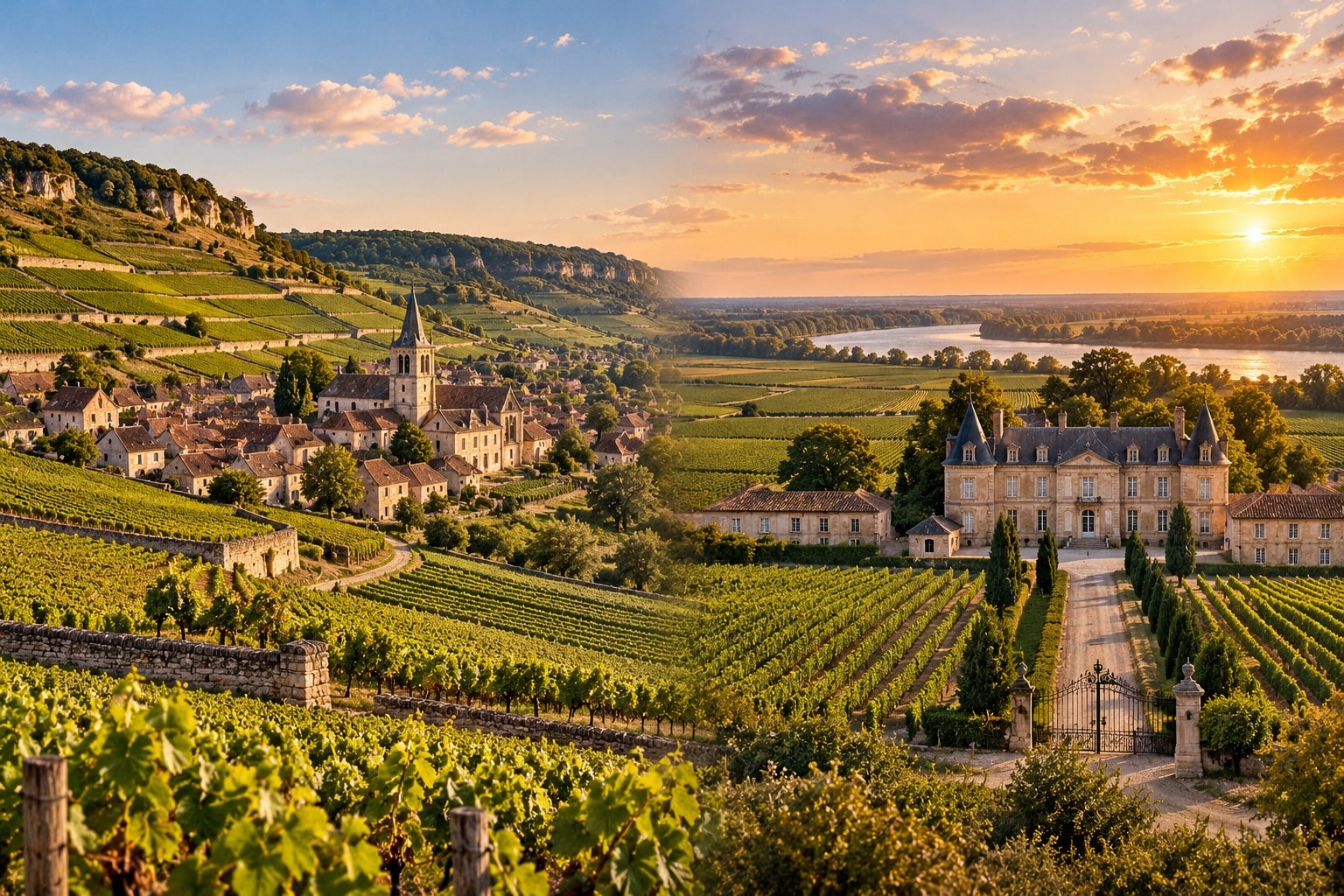
Burgundy and Bordeaux have shaped the world of fine wine for centuries, yet their traditions are fundamentally different. From Burgundy’s vineyard-focused classifications and single-variety wines to Bordeaux’s celebrated estates and blending traditions, discover what distinguishes these two historic French wine regions.
Burgundy vs Bordeaux: Understanding France’s Two Great Wine Regions
Few comparisons in the world of wine are as enduring as Burgundy versus Bordeaux.
Both regions have produced some of France’s most recognised wines for centuries. Their names are closely associated with historic vineyards, prestigious estates and bottles capable of developing over decades.
Yet despite their shared reputation, Burgundy and Bordeaux represent two distinctly different approaches to wine.
Burgundy places particular emphasis on individual vineyard sites and the expression of terroir. Bordeaux is widely associated with the art of blending, historic estates and wines built around Cabernet Sauvignon and Merlot.
Understanding these differences provides a foundation for exploring two of the most influential wine regions in the world.
1. Geography – Two Regions, Two Landscapes
Burgundy lies in eastern France, extending through a series of wine-producing districts that include Chablis, the Côte de Nuits, Côte de Beaune, Côte Chalonnaise and Mâconnais.
Its most celebrated vineyards are concentrated along the Côte d’Or, a relatively narrow limestone escarpment running south from Dijon.
Here, small differences in slope, exposure, soil and drainage can distinguish neighbouring vineyards.
Bordeaux is situated in southwestern France, close to the Atlantic coast.
Its vineyards extend across the Gironde estuary and the Garonne and Dordogne rivers.
The region is traditionally divided into the Left Bank and Right Bank, with additional important areas including Entre-Deux-Mers, Graves and Sauternes.
Bordeaux’s maritime climate differs considerably from Burgundy’s more continental conditions.
These geographical differences influence grape selection, vineyard management and the character of the wines.
2. Grape Varieties – Single Varieties Versus Blending
One of the clearest distinctions between Burgundy and Bordeaux is the use of grape varieties.
Burgundy – Pinot Noir and Chardonnay
Burgundy’s most internationally recognised wines are predominantly made from two grape varieties.
Pinot Noir is the principal red grape of the Côte d’Or.
It produces wines that can combine red-fruit aromas, acidity, fine tannins and considerable aromatic complexity.
Chardonnay is the principal white grape.
Its expression varies significantly across the region.
Chablis is often associated with freshness, acidity and a restrained style, while white wines from the Côte de Beaune can display greater richness and texture.
Other varieties are also important in Burgundy, including Gamay and Aligoté.
However, Pinot Noir and Chardonnay remain central to the region’s international reputation.
Bordeaux – The Art of the Blend
Bordeaux is best known for red wines assembled from several grape varieties.
The principal varieties are Cabernet Sauvignon, Merlot and Cabernet Franc.
Petit Verdot, Malbec and Carménère are also permitted in many Bordeaux appellations.
Cabernet Sauvignon contributes structure, tannins and black-fruit characteristics.
Merlot often provides a broader texture and plum-like fruit character.
Cabernet Franc can contribute freshness, aromatic complexity and floral or herbal notes.
The proportions vary between estates, appellations and vintages.
White Bordeaux is generally based on Sauvignon Blanc and Sémillon, sometimes with Muscadelle and other permitted varieties.
This blending tradition is one of Bordeaux’s defining characteristics.
3. Terroir – Burgundy’s Vineyard Identity
Terroir is important in both regions, but Burgundy has developed an especially detailed system of vineyard identification.
The concept encompasses the interaction between soil, climate, topography and human influence.
In Burgundy, individual vineyard sites may have distinct names and classifications.
These sites are often referred to as climats.
A climat is a precisely defined vineyard parcel recognised for its particular geographical and historical identity.
The Climats of the Côte de Nuits and Côte de Beaune were inscribed on the UNESCO World Heritage List in 2015.
A vineyard classified as Grand Cru may be situated only a short distance from a Premier Cru vineyard.
Nevertheless, differences in soil depth, slope and exposure can influence the resulting wines.
This emphasis on precisely identified vineyard sites is central to Burgundy’s identity.
4. Bordeaux – The Importance of the Estate
Bordeaux also places considerable emphasis on terroir.
The gravel soils of parts of the Médoc, for example, are particularly associated with Cabernet Sauvignon.
Clay and limestone soils are important in several Right Bank appellations.
However, Bordeaux’s historic reputation has often been organised around individual estates.
The term château identifies a wine-producing property or estate, although it does not necessarily imply the presence of a castle.
Many celebrated Bordeaux wines are associated primarily with the name of the producing château.
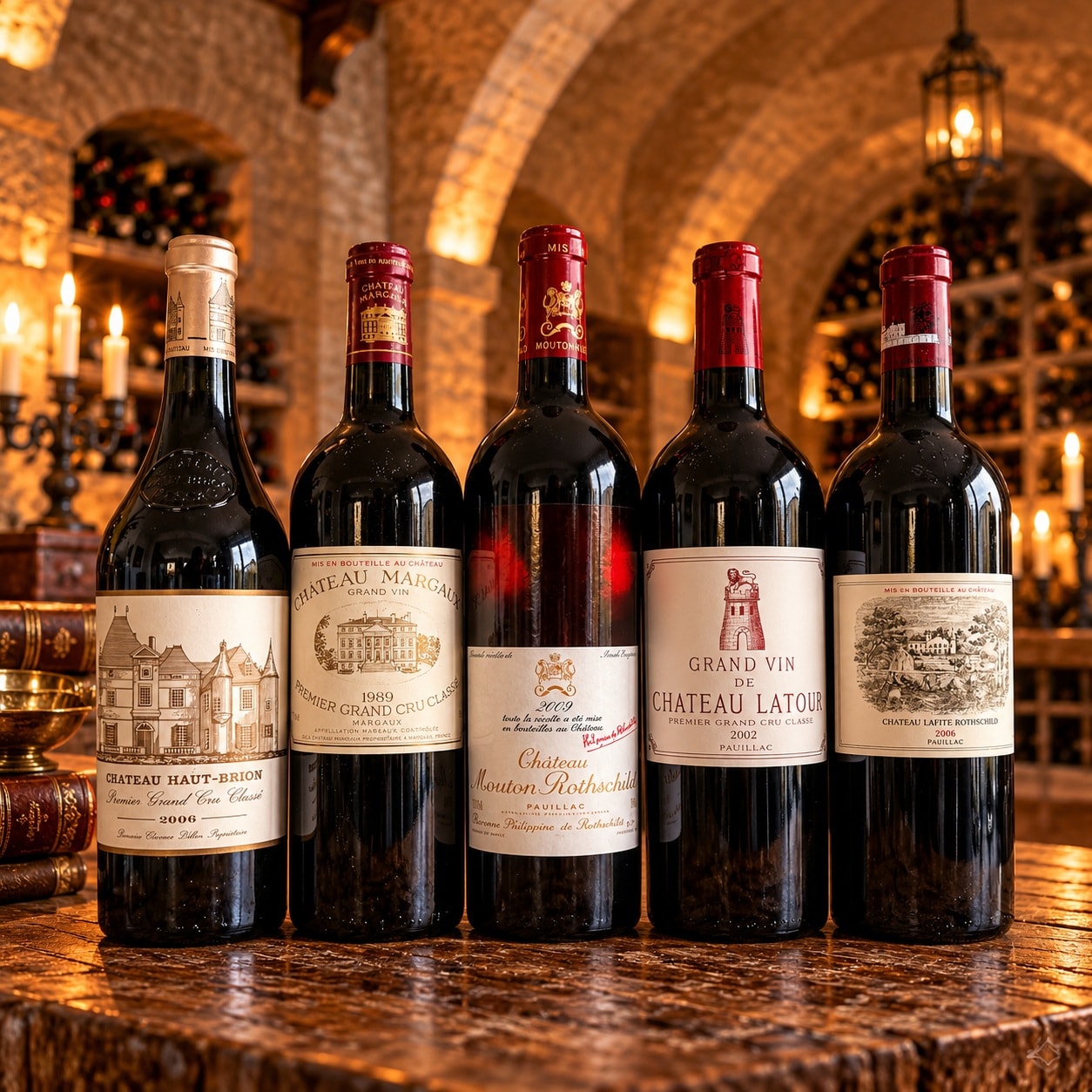
Examples include Château Lafite Rothschild, Château Latour, Château Margaux, Château Haut-Brion and Château Mouton Rothschild.
The estate’s vineyard holdings, blending decisions and winemaking philosophy contribute to its identity.
In Burgundy, the vineyard name may take precedence over the producer.
In Bordeaux, the estate name is frequently the principal reference point.
This is a broad distinction rather than an absolute rule: producer reputation is also crucial in Burgundy, while individual vineyard parcels matter greatly in Bordeaux.
5. Classification – Two Different Systems
The classification systems of Burgundy and Bordeaux reflect their different histories.
Burgundy’s Vineyard Hierarchy
Burgundy’s appellation structure is commonly understood through four principal levels:
Regional appellations cover wines produced within broader geographical areas.
Village appellations identify wines associated with particular communes.
Premier Cru designations recognise specific vineyard sites within certain village appellations.
Grand Cru appellations represent a small number of historically recognised vineyard sites.
These classifications are primarily geographical.
A Grand Cru vineyard may be divided between several producers, each making a separate wine from their holdings.
Consequently, wines from the same Grand Cru can differ in style and quality depending on the producer.
Bordeaux’s Estate Classifications
Bordeaux has several classification systems rather than one universal hierarchy.
The most famous is the 1855 Classification of the Médoc, established for the Paris Universal Exhibition.
It organised selected estates into five growth levels, from First Growth to Fifth Growth.
The classification also included Château Haut-Brion from Graves and a separate hierarchy for the sweet wines of Sauternes and Barsac.
Other important systems include the Graves classification and the Saint-Émilion classification.
Pomerol, despite its prestigious reputation, has no official estate classification.
Unlike Burgundy’s vineyard-based hierarchy, the 1855 Bordeaux classification is primarily associated with individual estates.
This distinction remains fundamental when interpreting wine labels from the two regions.
6. Red Wine Styles – Elegance and Structure
Burgundy and Bordeaux can produce very different expressions of red wine.
Red Burgundy
Red Burgundy is predominantly made from Pinot Noir.
Typical characteristics may include red cherry, raspberry, floral aromas and earthy or savoury notes.
The wines often combine noticeable acidity with relatively fine tannins.
Their structure varies considerably according to vineyard, vintage and producer.
Some are approachable when young, while others develop considerable complexity with bottle age.
Red Bordeaux
Red Bordeaux is generally based on Cabernet Sauvignon, Merlot and other permitted varieties.
Cabernet Sauvignon-dominant wines may display blackcurrant, cedar, tobacco and firmer tannins.
Merlot-dominant wines can show plum, dark cherry and a broader texture.
However, these descriptions are generalisations.
Bordeaux includes a wide range of styles, and the character of an individual wine depends on its appellation, vintage, vineyard and producer.
The comparison is therefore not simply between delicate Burgundy and powerful Bordeaux.
Both regions can produce wines of considerable concentration, finesse and complexity.
7. White Wines – Burgundy’s International Reputation
Although Bordeaux produces important white wines, Burgundy is particularly associated with some of the world’s most recognised Chardonnay expressions.
White Burgundy
The region offers a wide range of Chardonnay styles.
Chablis is commonly associated with freshness, acidity and mineral impressions.
Meursault is often associated with a broader texture and richer aromatic profile.
Puligny-Montrachet and Chassagne-Montrachet are recognised for white wines combining concentration, structure and precision.
The exact characteristics depend on the vineyard, vintage and producer.
White Bordeaux
Dry white Bordeaux is generally based on Sauvignon Blanc and Sémillon.
Sauvignon Blanc can contribute citrus, herbal aromas and freshness.
Sémillon may provide texture, body and ageing potential.
Some white Bordeaux wines are fermented or matured in oak, while others emphasise freshness and primary fruit.
The region also produces renowned sweet wines, particularly in Sauternes and Barsac.
These are often based on Sémillon and Sauvignon Blanc affected by noble rot under suitable conditions.
White Burgundy and white Bordeaux therefore represent two different traditions, each with considerable diversity.
8. Climate and Vintage Variation
Vintage conditions are important in both Burgundy and Bordeaux.
However, the regions experience different climatic influences.
Burgundy has a predominantly continental climate, with significant exposure to spring frost, summer heat, hail and rainfall variation.
Bordeaux’s maritime climate is influenced by the Atlantic Ocean.
Rainfall patterns, temperature and conditions during flowering and harvest can have a major impact on grape development.
In both regions, vintage conditions affect ripeness, acidity, tannin structure and the overall balance of the wines.
A successful vintage in Burgundy is not necessarily equally successful in Bordeaux.
Even within the same region, different appellations and grape varieties may respond differently to the growing season.
For this reason, vintage assessments should be considered regionally rather than applied uniformly across France.
9. Ageing Potential – Different Paths to Maturity
Both Burgundy and Bordeaux produce wines capable of developing over extended periods.
However, ageing potential varies enormously between individual bottles.
Burgundy
High-quality Pinot Noir can develop complex aromas associated with dried flowers, forest floor, spice and savoury characteristics.
Fine white Burgundy may develop additional texture and aromas reminiscent of nuts, honey and toasted bread.
Acidity, concentration, balance and winemaking decisions influence how successfully a wine ages.
Bordeaux
Structured Cabernet Sauvignon-based Bordeaux can develop aromas associated with cedar, tobacco, leather and dried fruit.
Merlot-dominant wines may evolve towards softer textures and more mature fruit characteristics.
Tannin structure, acidity, concentration and balance are important factors.
Neither region has a universal advantage in ageing potential.
The individual wine, vintage, storage conditions and personal preferences are more important than the regional name alone.
10. Production Scale and Availability
Bordeaux is substantially larger than Burgundy in terms of vineyard area and total wine production.
This difference influences the availability of wines.
Bordeaux includes large estates and producers capable of releasing significant quantities.
It also contains numerous smaller properties.
Burgundy’s celebrated vineyards are frequently divided into relatively small parcels.
Individual producers may own only limited areas within highly regarded appellations.
As a result, some Burgundy wines are produced in very small quantities.
This can contribute to scarcity, particularly for internationally recognised producers and vineyards.
However, both regions offer wines across a broad range of price levels.
11. Why Burgundy and Bordeaux Prices Differ
The prices of fine Burgundy and Bordeaux are influenced by several factors.
These include vineyard reputation, producer recognition, production volume, vintage quality, international demand and bottle condition.
In Burgundy, the combination of small vineyard holdings and strong demand for specific producers can create significant scarcity.
In Bordeaux, estate reputation, classification, vintage assessments and the established international market play important roles.
Bordeaux also has a long tradition of selling certain wines en primeur, before they are bottled.
This system influences how some of the region’s most recognised wines are marketed and traded.
Burgundy has its own distribution structures, but its most sought-after wines often face particularly limited supply.
Price alone does not establish wine quality.
It also reflects availability, reputation and market demand.
12. Burgundy vs Bordeaux – Which Region Should You Explore?
The choice between Burgundy and Bordeaux depends on individual preferences.
Those interested in Pinot Noir, Chardonnay and the influence of individual vineyard sites may find Burgundy particularly compelling.
Those interested in Cabernet Sauvignon, Merlot, blending traditions and historic estates may be drawn towards Bordeaux.
For white wine, Burgundy offers a particularly extensive range of Chardonnay expressions.
Bordeaux provides a different perspective through Sauvignon Blanc and Sémillon-based blends.
For red wine, both regions offer styles ranging from approachable and fruit-driven to structured and age-worthy.
Exploring producers, appellations and vintages provides a more useful understanding than treating either region as a single style.
13. Understanding Wine Through Place
The comparison between Burgundy and Bordeaux illustrates two important approaches to fine wine.
Burgundy places individual vineyard sites at the centre of its identity.
Bordeaux has developed a strong tradition of estate recognition and blending.
Both regions demonstrate how geography, grape varieties, history and winemaking decisions shape the character of wine.
Neither approach is inherently superior.
Their differences are part of what makes the study of French wine so varied.
Explore Burgundy and Bordeaux on Sipfind
Discover the wine regions of Burgundy and Bordeaux through Sipfind.
Explore their appellations, producers, grape varieties and individual wines.
Compare available offers from independent European wine retailers, with producer, vintage and bottle format clearly identified.
Fler inlägg
23 Oct 2026
Does Wine Vintage Really Matter? A Guide to Understanding Great Years
The year printed on a wine label can influence its character, reputation and price. But understanding what makes a vintage exceptional requires looking beyond the number.
14 Oct 2026
Bordeaux Wine Classifications Explained: From First Growths to Super Seconds
Discover how Bordeaux's historic wine classifications work, why some celebrated estates remain unclassified, and what the rankings really mean for quality, prestige and price.
14 Oct 2026
Château Pontet-Canet: The Fifth Growth with Super Second Ambitions
How a historic Pauillac estate challenged Bordeaux conventions, embraced biodynamic viticulture and earned a reputation that extends far beyond its 1855 classification.