
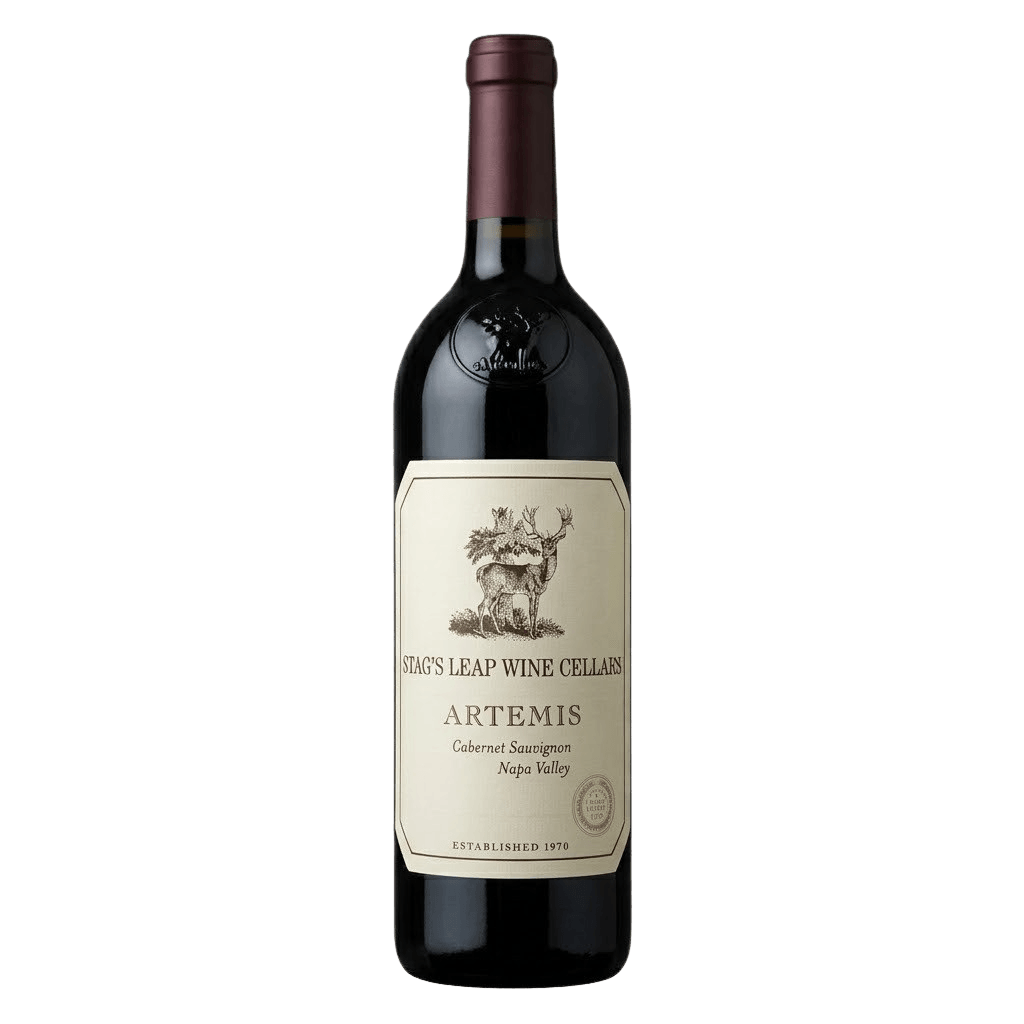
Stag's Leap Wine Cellars
Stag´s Leap Artemis
2015
Artemis represents Stag's Leap Wine Cellars' commitment to crafting approachable Napa Valley Cabernet, delivering the winery's hallmark elegance and structure in an accessible estate bottling.
Country
United States
Region
Napa Valley
More information
Producer
Stag's Leap Wine Cellars is one of Napa Valley's defining estates and the winery whose victory at the 1976 Judgement of Paris established California as a world-class wine region. Founded in 1970 by Warren Winiarski in the Stags Leap District, the estate has remained dedicated to expressive, site-driven Cabernet Sauvignon and Bordeaux-variety wines. Its signature style combines elegance, structure and aromatic complexity shaped by the unique volcanic soils and cooling maritime influence of the district.
Quick Facts
- Location: Stags Leap District, Napa Valley, California, USA
- Founded: 1970
- Founder: Warren Winiarski
- Ownership: Ste. Michelle Wine Estates (since 2007)
- Appellation: Stags Leap District AVA
- Principal grapes: Cabernet Sauvignon, Merlot, Cabernet Franc, Petit Verdot
- Estate vineyards: S.L.V. (Stag's Leap Vineyard) and FAY
- Soils: Volcanic with rocky outcroppings over varied substrates
- Grand Vin: CASK 23
- Estate wines: S.L.V. Estate Cabernet Sauvignon, FAY Estate Cabernet Sauvignon
- Style: Elegant tannins, balanced structure, refined aromatic intensity
- Ageing potential: 15–30+ years for flagship Cabernet Sauvignon
The 1976 Judgement of Paris
On 24 May 1976, a blind tasting organised by British wine merchant Steven Spurrier in Paris brought together leading French judges to evaluate California wines alongside established Bordeaux and Burgundy. Stag's Leap Wine Cellars' 1973 Cabernet Sauvignon placed first among the red wines, defeating Château Mouton Rothschild, Château Montrose, Château Haut-Brion and Château Léoville Las Cases.
The result sent shockwaves through the wine world. It demonstrated that Napa Valley could produce Cabernet Sauvignon of comparable—and, in this instance, superior—quality to the most prestigious estates of Bordeaux. The event, later known as the Judgement of Paris, fundamentally altered the trajectory of American fine wine and established Stag's Leap Wine Cellars as an icon of California winemaking.
Two Historic Estate Vineyards
The identity of Stag's Leap Wine Cellars is rooted in two estate vineyards: S.L.V. (Stag's Leap Vineyard) and FAY. Both lie within the Stags Leap District AVA, where volcanic soils, rocky terrain and the moderating influence of San Pablo Bay create ideal conditions for Cabernet Sauvignon.
S.L.V., the original estate vineyard acquired by Warren Winiarski in 1970, produced the grapes for the 1973 Cabernet Sauvignon that triumphed in Paris. Its volcanic soils and well-drained slopes yield wines of power, concentration and aromatic depth. FAY, first planted in 1961 by Nathan Fay, was acquired by the estate in 1986 and is known for producing Cabernet Sauvignon of exceptional elegance, finer tannins and more restrained structure.
Each vineyard is vinified separately, allowing the estate to express the distinct terroir of both sites. Together, they form the foundation of the winery's portfolio and the source material for CASK 23.
CASK 23 and the Estate Portfolio
CASK 23, first produced in 1974, represents the estate's highest expression. It is a Cabernet Sauvignon-based blend drawn from the finest barrels of S.L.V. and FAY, produced only in exceptional vintages. The wine combines the power and depth of S.L.V. with the refinement and aromatic complexity of FAY, resulting in a Cabernet of layered intensity, structure and long ageing potential.
S.L.V. Estate Cabernet Sauvignon and FAY Estate Cabernet Sauvignon are each crafted to reflect their individual vineyard origins. S.L.V. offers concentrated dark fruit, graphite-like minerality and structured tannins, while FAY expresses greater aromatic lift, finer texture and floral nuance. Both wines are built for extended cellaring and evolve gracefully over decades.
The estate's approach emphasises meticulous vineyard management, selective harvesting and minimal intervention in the cellar. The result is a collection of Cabernet Sauvignons distinguished by balance, site transparency and the refined elegance that has defined Stag's Leap Wine Cellars since 1970.
Country
Region
Napa Valley
Napa Valley is the most prestigious wine region in the United States and has become synonymous with world-class Cabernet Sauvignon and premium winemaking. Located in Northern California approximately 80 kilometres north of San Francisco, the valley combines exceptional growing conditions with pioneering innovation, producing wines that consistently rank among the finest in the world. Since the famous 1976 Judgment of Paris, when Napa wines triumphed over prestigious Bordeaux châteaux in a blind tasting, the region has established itself as one of the great wine regions alongside Bordeaux and Burgundy.
Despite covering a relatively small area of approximately 19,000 hectares, Napa Valley contains an extraordinary diversity of soils, elevations and microclimates across 16 distinct AVAs. Cool morning fog from San Pablo Bay moderates temperatures in the southern Carneros and Oak Knoll districts, providing ideal conditions for Chardonnay and Pinot Noir, while warmer northern appellations such as Calistoga and St. Helena favour bold Cabernet Sauvignon and Zinfandel. Mountain districts including Howell Mountain, Mount Veeder and Diamond Mountain produce wines of exceptional structure and complexity from volcanic and sedimentary soils. Benchmark appellations such as Oakville, Rutherford and Stags Leap District each contribute unique expressions of terroir, with Rutherford's famed "Rutherford Dust" tannins and Stags Leap's elegant, refined style.
The region is home to many internationally acclaimed estates, including Screaming Eagle, Opus One, Harlan Estate, Dominus Estate, Shafer Vineyards, Caymus Vineyards, Cakebread Cellars and Spottswoode. These producers represent a culture of meticulous vineyard management, sustainable viticulture and uncompromising quality that has made Napa Valley one of the world's most respected and collectible wine destinations.
Discover Napa Valley wines, compare prices from trusted merchants across Europe and find the best offers with Sipfind.
Grapes
Cabernet Sauvignon is one of the world’s most important and widely planted red wine grapes, renowned for its powerful structure, concentrated fruit and exceptional ageing potential. Originating in Bordeaux, France, the variety has become a defining grape of fine wine regions around the world, particularly Napa Valley, Tuscany, Chile, Australia and South Africa.
Classic Cabernet Sauvignon combines flavours and aromas of blackcurrant, cassis, blackberry and dark cherry with characteristic notes of cedar, graphite, tobacco and herbs. Naturally high tannins and fresh acidity provide structure and longevity, while maturation in oak can add layers of spice, vanilla and toast. Its character varies significantly with climate, soil and winemaking, ranging from elegant and savoury to rich, powerful and intensely concentrated.
In Bordeaux, Cabernet Sauvignon is particularly associated with the Left Bank, where it forms the foundation of many prestigious blends alongside Merlot, Cabernet Franc and other permitted varieties. In Napa Valley, it has become the region’s signature red grape, producing some of the world’s most sought-after Cabernet Sauvignon wines.
Cabernet Sauvignon’s ability to express terroir while retaining its distinctive structure and character has made it a global benchmark for premium red wine. Whether produced as the dominant variety in a blend or as a varietal wine, the finest examples combine concentration, complexity and the capacity to develop gracefully over decades
Merlot is one of the world’s most important red wine grapes, celebrated for its generous fruit, supple texture and ability to produce wines ranging from approachable and elegant to exceptionally complex and long-lived. Originating in Bordeaux, France, Merlot is particularly associated with the Right Bank, where it forms the foundation of many of the prestigious wines of Pomerol and Saint-Émilion.
Merlot typically expresses flavours and aromas of plum, black cherry, blackberry and red fruits, often developing notes of chocolate, tobacco, cedar, herbs and earthy complexity with maturation. Its naturally rounded texture and generally softer tannin profile distinguish it from Cabernet Sauvignon, although the finest examples can possess considerable structure, freshness and ageing potential.
In Pomerol, Merlot reaches some of its most celebrated expressions, particularly on the appellation’s clay-rich soils, producing wines of remarkable concentration, texture and complexity. In Saint-Émilion, it is commonly blended with Cabernet Franc and, to a lesser extent, Cabernet Sauvignon, creating wines that combine ripe fruit with structure, aromatic complexity and longevity.
Beyond Bordeaux, Merlot is widely cultivated in Italy, California, Washington State, Chile and other major wine regions. It can be produced as a varietal wine or used as a central component of blends, where its fruit and texture complement more structured grape varieties.
From the great Merlot-based wines of Bordeaux’s Right Bank to leading expressions around the world, Merlot’s combination of rich fruit, refined texture and capacity to express terroir has established it as one of the defining varieties of fine red wine.
Petit Verdot is a powerful red wine grape from south-west France, best known as a small but distinctive component of the classic red blends of Bordeaux. Its deeply coloured wines, firm tannins and concentrated aromatics allow even modest proportions to add structure, freshness and intensity alongside Cabernet Sauvignon, Merlot and Cabernet Franc.
On Bordeaux’s Left Bank, Petit Verdot is particularly associated with the gravel soils of the Médoc, including appellations such as Margaux, Saint-Julien, Pauillac and Saint-Estèphe. The variety buds relatively early but ripens late, making complete maturation challenging in cooler vintages. When fully ripe, it can retain vibrant acidity while developing considerable colour, tannin and aromatic complexity.
Typical expressions show blackberry, black cherry, blueberry and plum, accompanied by violet, liquorice, pepper, cocoa and other dark spices. In Bordeaux blends, Petit Verdot is generally used in limited quantities to reinforce colour, tannic structure and aromatic depth. Its combination of acidity and tannin can also contribute significantly to a wine’s ageing potential.
Beyond Bordeaux, warmer and more reliable growing conditions have allowed Petit Verdot to achieve greater ripeness and a more prominent role. Producers in California, Australia, Spain and South America increasingly use the variety in both Bordeaux-style blends and varietal wines. These expressions are often full-bodied and deeply coloured, with ripe dark fruit, floral character, spice and powerful tannins.
From its historic role in the Médoc to its expanding presence as a varietal wine, Petit Verdot is defined by colour, structure, freshness and aromatic intensity. Once regarded primarily as a supporting grape, it is increasingly recognised as a distinctive variety capable of producing serious, age-worthy wines in its own right.
History and Style
Artemis is an estate wine from Stag's Leap Wine Cellars, one of Napa Valley's most celebrated producers. This Cabernet Sauvignon-dominant blend showcases the winery's signature style at a more accessible price point than their flagship bottlings, drawing from estate vineyards and select Napa Valley sites to deliver consistent quality and varietal character.
Quick Facts
- Producer: Stag's Leap Wine Cellars
- Classification: Estate Wine
- Region: Napa Valley
- Appellation: Napa Valley AVA
- Country: United States
- Style: Full-bodied Napa Valley Cabernet blend
- Grape Composition: Cabernet Sauvignon-dominant blend (typically 85-90%), Merlot, other Bordeaux varieties
- Ageing Potential: 5-10 years from release
- Alcohol (ABV): 14-14.5%
- Tasting Profile: Blackberry, cassis, dark cherry, vanilla, mocha, subtle spice, smooth tannins
- Food Pairing: Grilled beef, roasted lamb, venison, hearty pasta, aged cheddar
- Serving Temperature: 16-18°C
- Bottle Status: Estate Wine
- Vintage: Non-Vintage (multi-vintage blend)
Vineyard, Terroir and Style
Stag's Leap Wine Cellars gained international recognition at the 1976 Judgment of Paris, where their 1973 S.L.V. Cabernet Sauvignon triumphed over established Bordeaux estates. This legacy of excellence informs every bottling, including Artemis. The wine benefits from the district's unique terroir—volcanic soils, cooling bay breezes, and optimal sun exposure—that produces Cabernet with both power and finesse. The estate's meticulous viticulture and winemaking expertise ensure Artemis captures the essence of Napa Valley's acclaimed growing conditions.
History and Reputation
Artemis typically exhibits ripe blackberry, cassis, and dark cherry flavors complemented by notes of vanilla, mocha, and subtle spice from oak ageing. The wine displays smooth tannins, balanced acidity, and a supple mouthfeel that makes it approachable upon release while offering moderate cellaring potential. Its structure and fruit intensity make it versatile at the table, pairing beautifully with grilled meats, roasted lamb, and hearty pasta dishes.
For those seeking an introduction to Stag's Leap Wine Cellars' renowned style or a reliable Napa Valley Cabernet for everyday enjoyment, Artemis delivers exceptional value. Compare prices on Sipfind to find the best offer on this acclaimed estate wine.