Stag´s Leap Artemis
2021
108EUR
incl. VAT
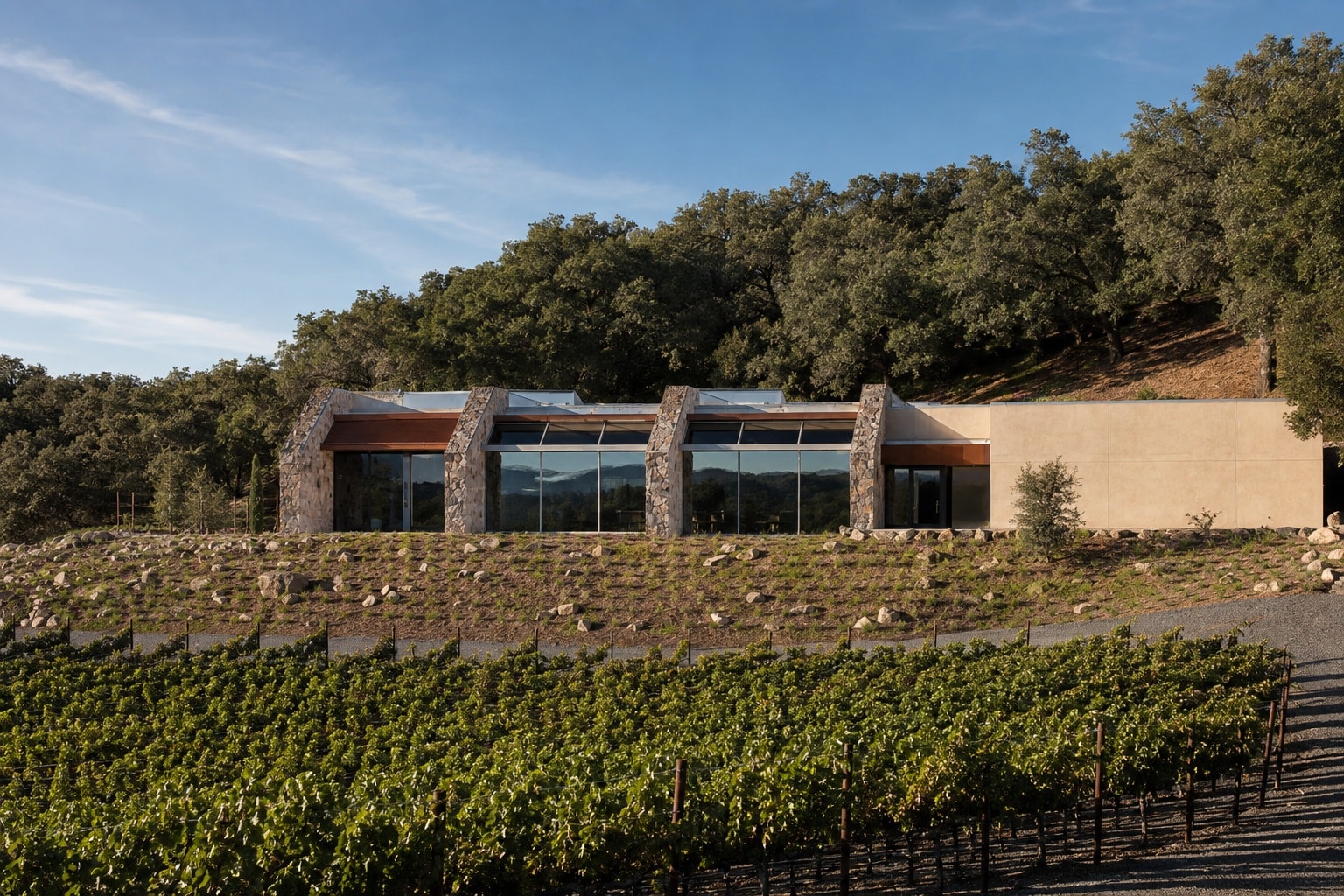
Stag's Leap Wine Cellars is one of Napa Valley's most historically significant estates, founded in 1970 in the Stags Leap District. The winery gained international recognition when its 1973 Cabernet Sauvignon defeated celebrated Bordeaux châteaux at the 1976 Judgement of Paris, fundamentally reshaping the global perception of California wine.
Stag's Leap Wine Cellars is one of Napa Valley's defining estates and the winery whose victory at the 1976 Judgement of Paris established California as a world-class wine region. Founded in 1970 by Warren Winiarski in the Stags Leap District, the estate has remained dedicated to expressive, site-driven Cabernet Sauvignon and Bordeaux-variety wines. Its signature style combines elegance, structure and aromatic complexity shaped by the unique volcanic soils and cooling maritime influence of the district.
Quick Facts
The 1976 Judgement of Paris
On 24 May 1976, a blind tasting organised by British wine merchant Steven Spurrier in Paris brought together leading French judges to evaluate California wines alongside established Bordeaux and Burgundy. Stag's Leap Wine Cellars' 1973 Cabernet Sauvignon placed first among the red wines, defeating Château Mouton Rothschild, Château Montrose, Château Haut-Brion and Château Léoville Las Cases.
The result sent shockwaves through the wine world. It demonstrated that Napa Valley could produce Cabernet Sauvignon of comparable—and, in this instance, superior—quality to the most prestigious estates of Bordeaux. The event, later known as the Judgement of Paris, fundamentally altered the trajectory of American fine wine and established Stag's Leap Wine Cellars as an icon of California winemaking.
Two Historic Estate Vineyards
The identity of Stag's Leap Wine Cellars is rooted in two estate vineyards: S.L.V. (Stag's Leap Vineyard) and FAY. Both lie within the Stags Leap District AVA, where volcanic soils, rocky terrain and the moderating influence of San Pablo Bay create ideal conditions for Cabernet Sauvignon.
S.L.V., the original estate vineyard acquired by Warren Winiarski in 1970, produced the grapes for the 1973 Cabernet Sauvignon that triumphed in Paris. Its volcanic soils and well-drained slopes yield wines of power, concentration and aromatic depth. FAY, first planted in 1961 by Nathan Fay, was acquired by the estate in 1986 and is known for producing Cabernet Sauvignon of exceptional elegance, finer tannins and more restrained structure.
Each vineyard is vinified separately, allowing the estate to express the distinct terroir of both sites. Together, they form the foundation of the winery's portfolio and the source material for CASK 23.
CASK 23 and the Estate Portfolio
CASK 23, first produced in 1974, represents the estate's highest expression. It is a Cabernet Sauvignon-based blend drawn from the finest barrels of S.L.V. and FAY, produced only in exceptional vintages. The wine combines the power and depth of S.L.V. with the refinement and aromatic complexity of FAY, resulting in a Cabernet of layered intensity, structure and long ageing potential.
S.L.V. Estate Cabernet Sauvignon and FAY Estate Cabernet Sauvignon are each crafted to reflect their individual vineyard origins. S.L.V. offers concentrated dark fruit, graphite-like minerality and structured tannins, while FAY expresses greater aromatic lift, finer texture and floral nuance. Both wines are built for extended cellaring and evolve gracefully over decades.
The estate's approach emphasises meticulous vineyard management, selective harvesting and minimal intervention in the cellar. The result is a collection of Cabernet Sauvignons distinguished by balance, site transparency and the refined elegance that has defined Stag's Leap Wine Cellars since 1970.