
Domaine de Chevalier
2021
92EUR
incl. VAT
A forest-surrounded Grand Cru Classé de Graves in Léognan, producing red and white Pessac-Léognan through gravel terroir, precision viticulture and restrained winemaking.
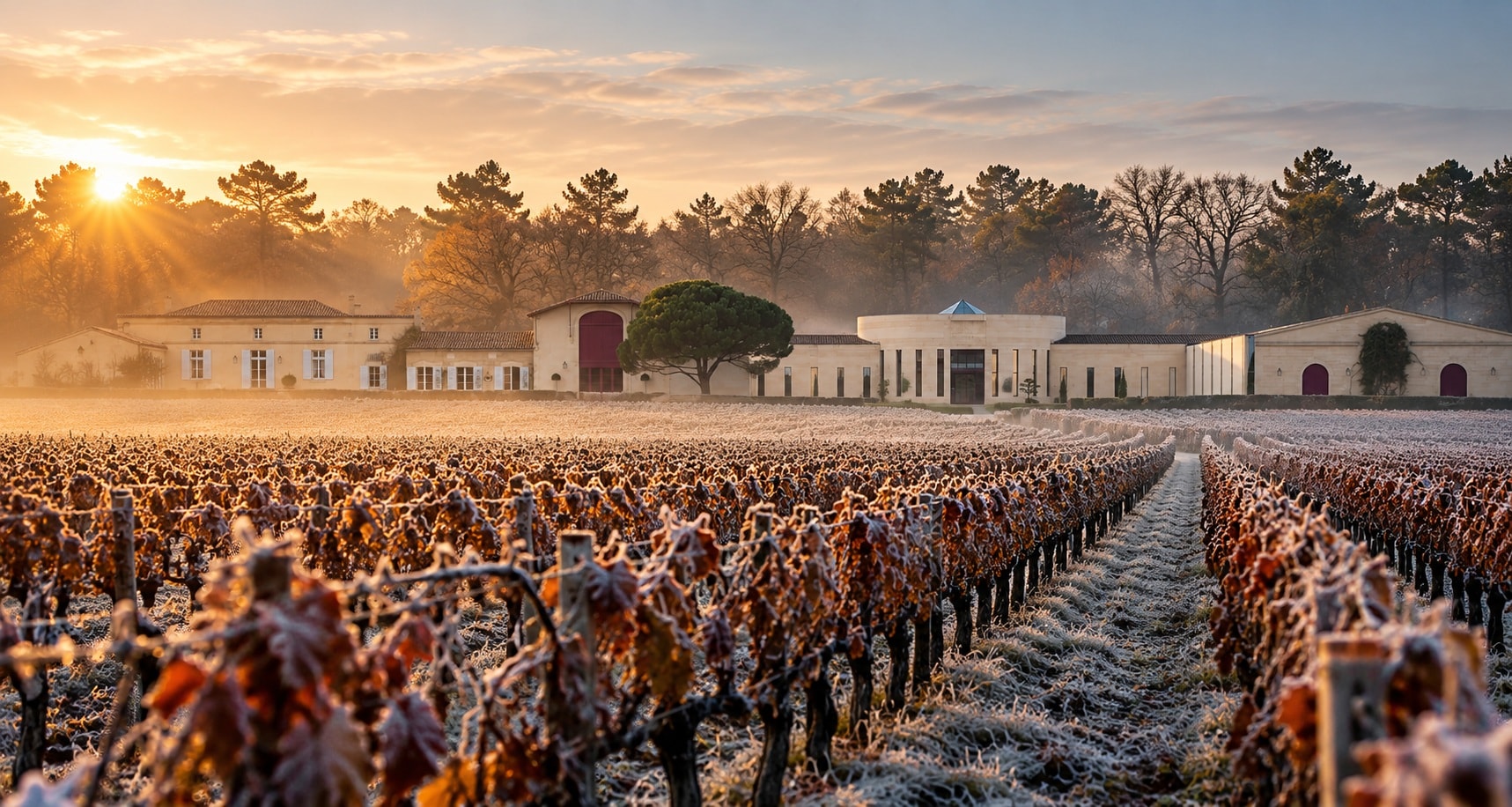
Domaine de Chevalier is a historic wine estate in Léognan, within Bordeaux's Pessac-Léognan appellation. Unlike many Bordeaux properties, it retains the designation Domaine rather than Château, reflecting an identity closely connected to its land, forest and long-established agricultural environment.
The estate is surrounded by woodland, creating an unusually isolated vineyard ecosystem within Pessac-Léognan. Domaine de Chevalier produces both red and white wines, with Cabernet Sauvignon forming the foundation of the red vineyard and Sauvignon Blanc dominating the white plantings. The property has belonged to the Bernard family since 1983 and is managed by Olivier Bernard and his team.
The origins of Chevalier are old, with the name Chivaley appearing in the estate's historical narrative from around 1650. The property is also represented on Pierre de Belleyme's map of the region in 1783. Its development as a significant wine estate, however, accelerated during the second half of the nineteenth century.
A decisive moment came in 1865, when Arnaud and Jean Ricard acquired the domaine. The Ricard family's stewardship established much of the modern identity of Chevalier.
Under Claude Ricard, Domaine de Chevalier entered the Graves Classification in 1953.
In 1983, the Bernard family acquired the estate. Olivier Bernard subsequently oversaw substantial investment in the vineyards and cellars, including expansion of the vineyard and redevelopment of the winemaking facilities.
Despite this modernisation, continuity remains fundamental to the domaine's philosophy: preserving the character of its terroir rather than imposing a predetermined wine style upon each vintage.
One of Domaine de Chevalier's defining characteristics is its location within a large forested environment.
The woodland surrounding the vineyard influences its microclimate and supports biodiversity, while the estate's relative isolation creates a distinctive ecosystem. The domaine specifically identifies the interaction between vineyard and forest as a major natural advantage.
The property covers approximately 100 hectares, of which the producer currently describes around 70 hectares as planted with vines, including approximately 60 hectares of red vines and 7 hectares of white vines.
The soils are poor and complex, with gravel playing a central role. Official technical material describes gravel over clay-gravel subsoil.
The current vineyard plantings are given by the domaine as:
Red vineyard plantings
White vineyard plantings
These percentages describe vineyard plantings — not the blend of Domaine de Chevalier Rouge or Blanc.
That distinction is critical for SCI.
Domaine de Chevalier emphasises detailed observation of individual parcels and vines.
Planting density is approximately 10,000 vines per hectare, significantly increasing competition between vines and forming an important part of the estate's approach to fruit concentration and maturity.
The surrounding forest is equally important. Beyond its climatic influence, it provides habitat for beneficial fauna and contributes to biodiversity around the vineyard.
The domaine states that herbicides and chemical fertilisers have historically been avoided and describes an ongoing ecological approach to vineyard management. Soil drainage, vine density, parcel observation and matching grape varieties to individual terroirs form central parts of the viticultural strategy.
The underlying philosophy is therefore not simply organic or environmental positioning, but:
Forest ecosystem → soil health → high-density vineyard → individual parcel observation → balanced fruit.
Domaine de Chevalier deliberately adapts winemaking to the characteristics of each vintage rather than pursuing maximum extraction or a predetermined style.
For the reds, the winery uses concrete, wooden and stainless-steel vats of varying capacities, allowing individual parcels, grape varieties and vine ages to be handled separately.
The domaine explicitly describes its extraction philosophy as moderate. Fermentation is carefully temperature controlled, with remontage and, where appropriate, traditional pigeage. Maceration generally lasts around 15–25 days, depending on the structure of the wine. Malolactic fermentation can then take place in new barrels.
Final blending takes place relatively early, typically in January, with the objective of integrating tannins while preserving the natural density, depth, complexity, finesse and balance of the terroir. Depending on the vintage, only around 40–65% of total red vineyard production may be selected for the Grand Vin.
White wine production follows a different philosophy. Grapes are harvested through successive passes through the vineyard, selecting fruit as individual bunches reach maturity. The domaine says a parcel may be picked repeatedly over two to three weeks.
Exact barrel proportions, maturation periods and technical parameters belong to the individual wine and vintage entities.
Domaine de Chevalier's identity is built around balance rather than power.
For its red wines, the producer's philosophy combines density and depth with complexity, finesse and elegance, while deliberately avoiding excessive extraction.
The whites form an equally important part of the domaine's identity. Sauvignon Blanc provides freshness and aromatic definition, while Sémillon contributes texture and depth. The small scale of the white vineyard reflects the demanding selection and vinification required by the domaine's approach.
For SCI, I would lock the producer DNA as:
Forest → gravel → precision → Cabernet / Sauvignon Blanc → balance → depth → freshness → finesse → longevity.
That captures something genuinely distinctive about Domaine de Chevalier rather than giving it a generic Pessac-Léognan description.
The core portfolio is centred on two Grand Vins:
Domaine de Chevalier Rouge
Pessac-Léognan red wine based principally on Cabernet Sauvignon and Merlot.
Domaine de Chevalier Blanc
Pessac-Léognan dry white based principally on Sauvignon Blanc and Sémillon.
These need to exist as separate bottle entities within Sipfind because their vineyards, blends, vinification, maturation, tasting profiles and vintages differ substantially.
The producer entity therefore sits above them:
Domaine de Chevalier
→ Domaine de Chevalier Rouge
→ Domaine de Chevalier Blanc
→ Individual vintages
The Bernard family's involvement with other Bordeaux properties should not cause those estates to be treated as Domaine de Chevalier wines. The domaine's official site separately identifies properties including Domaine de la Solitude, Château Lespault-Martillac and Clos des Lunes.
Discover Domaine de Chevalier Rouge and Blanc. Compare vintages, critic scores, availability and current prices from trusted wine merchants.
Products from Domaine de Chevalier: 2 pcs.
Chateaunet
Philipson Wine ApS