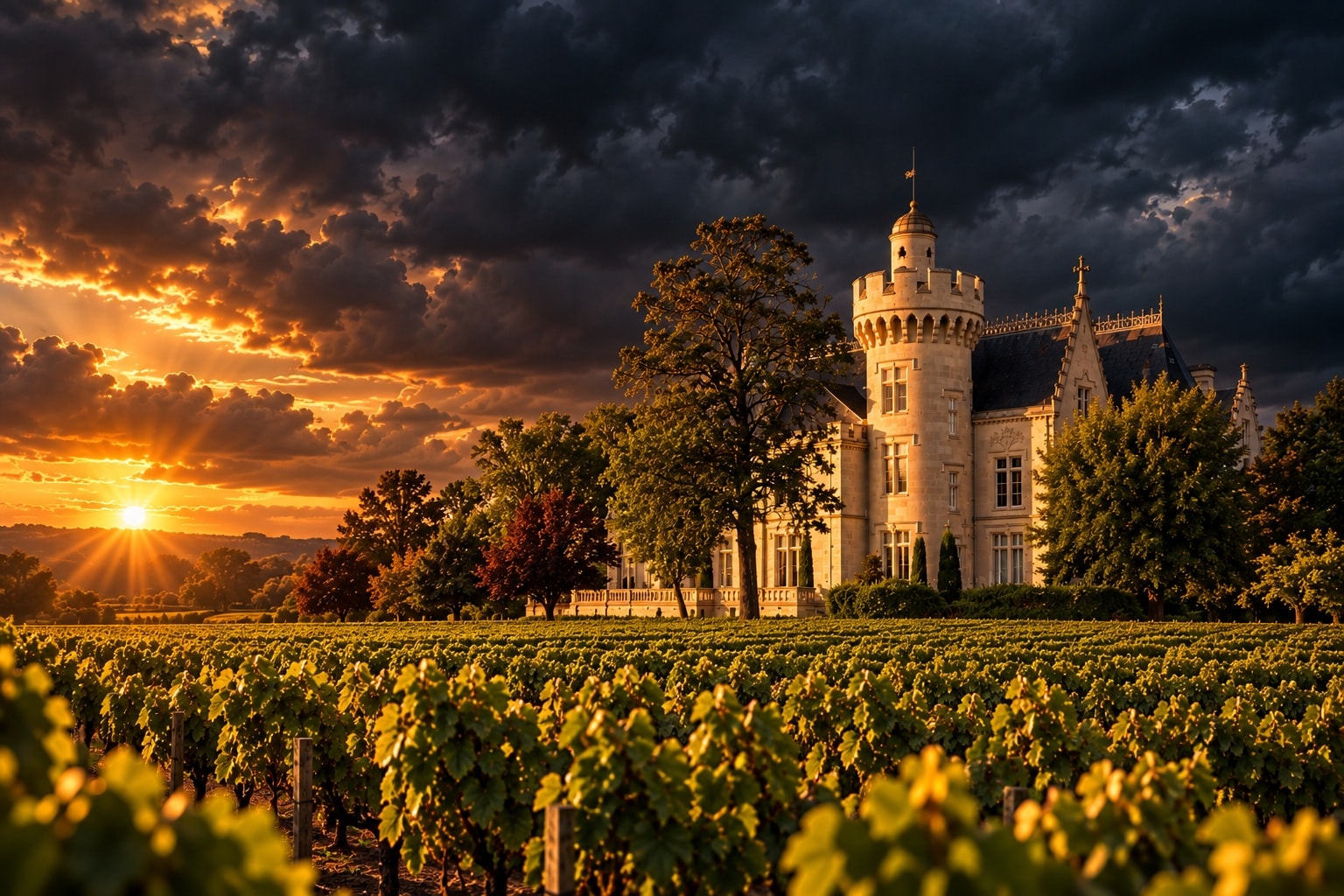
Château Pape Clément
2020
1,307SEK
incl. VAT
A historic Pessac estate with its first harvest in 1252, combining seven centuries of heritage, Graves terroir and precise modern viticulture and winemaking.
Château Pape Clément is one of Bordeaux's oldest wine estates, situated in Pessac, immediately southwest of the city of Bordeaux. Its first recorded harvest dates to 1252, giving the property more than seven centuries of viticultural history.
The château takes its name from Bertrand de Goth, who became Archbishop of Bordeaux before being elected Pope in 1305 as Clement V. Today, Château Pape Clément is owned by Bernard Magrez and produces both red and white wines from its Pessac-Léognan terroir. Its red Grand Vin is recognised as a Grand Cru Classé de Graves.
The history of Château Pape Clément reaches back to the 13th century. The estate records its first harvest in 1252 and traces its origins to the de Goth family.
Bertrand de Goth became Archbishop of Bordeaux and, in 1305, was elected Pope under the name Clement V. His association with the vineyard ultimately gave Château Pape Clément the name it carries today.
The property continued through centuries of Bordeaux history and became one of the estates included in the 1959 Classification of Graves.
A major modern chapter began during the 1980s when Bernard Magrez acquired Château Pape Clément. It was his first vineyard and became the foundation of what subsequently developed into a much broader international wine portfolio.
This combination of medieval origins and continuing technical development is central to the producer's identity.
Château Pape Clément lies within Pessac-Léognan, part of the historic Graves area south of Bordeaux.
Its terroir belongs to the gravel-dominated landscape from which Graves takes its name. The estate manages individual vineyard parcels according to their particular characteristics rather than treating the vineyard as a single homogeneous unit.
The red vineyards are associated principally with the traditional Bordeaux varieties Cabernet Sauvignon and Merlot, alongside smaller contributions from other varieties depending on vineyard composition and vintage.
White wine production centres on Bordeaux's principal white varieties, particularly Sauvignon Blanc and Sémillon, with other varieties appearing in individual wines or vintages.
For SCI, estate plantings and individual wine blends must remain completely separate:
Estate vineyard composition ≠ Château Pape Clément Rouge blend ≠ Château Pape Clément Blanc blend.
Exact bottle blends belong at product and vintage level.
Viticulture at Château Pape Clément is highly parcel-focused.
The estate describes vineyard management that includes natural or managed grass cover, soil cultivation, integrated pest management, vigour control, debudding, removal of lateral shoots and green harvesting. Manual harvesting is used for the principal wines, with grapes collected in small crates.
Animal traction is also used for certain vineyard work, reducing soil compaction around the vines.
The estate's official material identifies both Terra Vitis and HVE Level 3 environmental certification.
For Sipfind, the key producer-level concept is:
micro-terroir → parcel management → precision viticulture → selective harvesting.
The same parcel philosophy continues inside the winery.
Château Pape Clément's wooden vat room was redesigned in 2007 and contains 28 vats corresponding to vineyard parcels of different ages and grape varieties. The estate describes this approach as parcellisation: reproducing the structure of the vineyard inside the winery so individual micro-terroirs can be separated or combined as required.
For the red Grand Vin, official material describes manual sorting, gravity-fed transfer into wooden vats, pre-fermentation cold maceration, manual punching down and malolactic fermentation in French oak barrels.
White winemaking follows a different process, including whole-berry pressing, protection from oxidation, fermentation in French oak and lees ageing.
Exact fermentation, oak and maturation specifications should nevertheless remain attached to the relevant wine and vintage, rather than being hard-coded across the producer entity.
Château Pape Clément produces both red and white expressions of Pessac-Léognan, and these need separate stylistic identities within SCI.
The red wines combine Cabernet and Merlot structure with the depth, texture and aromatic complexity associated with the gravel terroirs of Pessac-Léognan.
The white wines place greater emphasis on freshness, concentration, texture and aromatic definition, primarily through Sauvignon Blanc and Sémillon.
At producer level, however, the strongest identity is broader:
Historic Graves terroir → parcel precision → red and white Bordeaux → concentration → structure → freshness → refinement.
Specific aromas and tasting notes should remain attached to individual wines and vintages.
The portfolio must be separated carefully because Château Pape Clément produces both red and white wines.
Château Pape Clément Rouge is the estate's principal red wine and carries its Grand Cru Classé de Graves identity.
Château Pape Clément Blanc is the estate's principal white wine.
Le Clémentin de Pape Clément Rouge and Le Clémentin de Pape Clément Blanc form separate product entities associated with the estate and must not be merged with their respective Grand Vins.
The estate also produces additional cuvées, which should remain separate product entities in SCI rather than being folded into the core Château Pape Clément record.
This gives us the basic hierarchy:
Château Pape Clément → Rouge / Blanc → individual wine → vintage
with each product maintaining its own blends, technical specifications, scores and merchant offers.
Discover the red and white wines of Château Pape Clément. Compare vintages, critic scores, availability and current prices from trusted wine merchants.