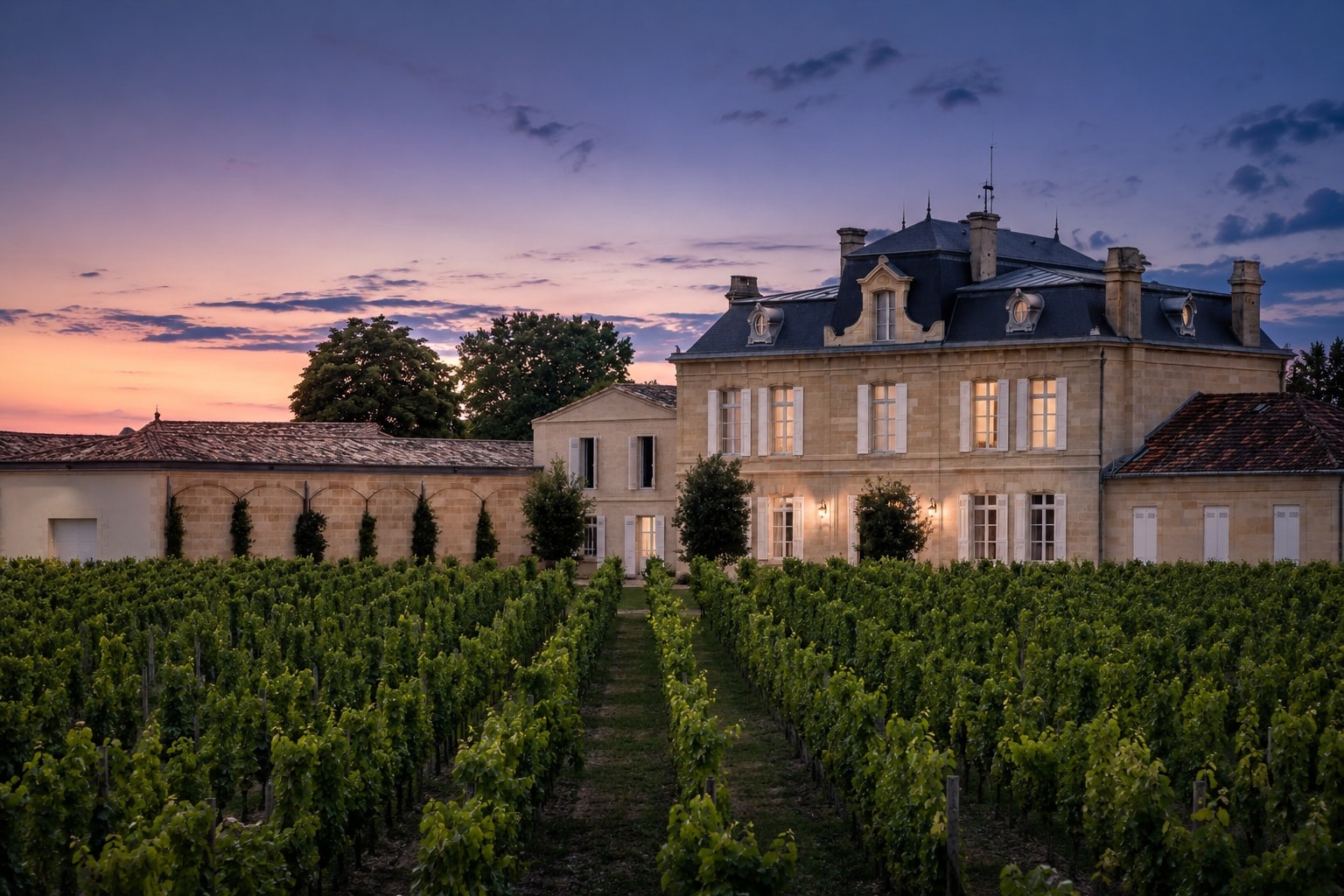
Chateau Léoville-Las Cases
2020
3,671SEK
incl. VAT
Château Léoville Las Cases is a leading Second Growth of Saint-Julien and one of the Médoc's most distinguished Cabernet-led estates. Its Grand Vin is shaped by the historic, walled Grand Enclos, whose gravel soils and proximity to the Gironde produce wines renowned for their precision, structure and exceptional longevity.
Château Léoville Las Cases is a leading Second Growth of Saint-Julien and one of the Médoc's most distinguished Cabernet-led estates. Based on the boundary between Saint-Julien and Pauillac and led by Jean-Hubert Delon, the property has remained under the stewardship of the same family since the late 19th century. Its Grand Vin is shaped by the historic, walled Grand Enclos, whose deep gravel soils and proximity to the Gironde produce wines renowned for their precision, structure and exceptional longevity.
Quick Facts
The Historic Heart of Léoville
The estate traces its origins to the vast Domaine de Léoville, one of the oldest and most important properties in the Médoc. Assembled over centuries, the original Léoville estate stretched across prime gravelly terroir in Saint-Julien and extended into neighbouring Pauillac.
Following the division of the property between 1826 and 1840, Léoville Las Cases retained approximately three-fifths of the original domaine, including the historic heart of its finest vineyard land. The estate was classified as a Second Growth in the landmark 1855 Classification and has remained under the continuous stewardship of the same family since the late 19th century, preserving both its identity and its uncompromising commitment to quality.
The Grand Enclos
The Grand Vin of Château Léoville Las Cases comes principally from the celebrated Grand Enclos, a walled vineyard of nearly 60 hectares situated between the village of Saint-Julien and the boundary with Pauillac. This exceptional parcel contains a complex mosaic of deep Quaternary gravel deposits over gravelly sand and gravelly clay, formed through successive geological periods and providing outstanding natural drainage.
The vineyard's position immediately adjacent to Château Latour underscores the quality of its terroir. The neighbouring Gironde estuary creates a temperate microclimate that moderates temperature extremes, encourages even ripening and offers protection from spring frost. These conditions are ideally suited to Cabernet Sauvignon and Cabernet Franc, which together typically dominate the Grand Vin's blend.
The Grand Enclos is worked with meticulous attention to detail. Low yields, selective vine management and rigorous sorting at harvest provide the foundation for wines of remarkable concentration and definition.
Cabernet-Led Precision
Cabernet Sauvignon normally forms the core of the Grand Vin, supported by Cabernet Franc and Merlot in proportions that vary according to the character of each vintage. The resulting wine combines concentrated dark fruit, graphite-like minerality and finely structured tannins with remarkable freshness, tension and length.
Traditional winemaking methods, including extended maceration and maturation in French oak barrels, allow the estate to produce wines that express the Grand Enclos with clarity and depth. Château Léoville Las Cases is built for extended ageing—often 30 to 50 years or more—and its reputation rests on a consistency of style and quality that places it among the most sought-after wines in Bordeaux.
With time, the Grand Vin's youthful power develops into layered complexity, aromatic refinement and a seamless, harmonious expression of one of Saint-Julien's greatest terroirs.
The Portfolio Context
Le Petit Lion du Marquis de Las Cases, introduced with the 2007 vintage, is the château's second wine. Composed of fruit from younger vines and parcels that do not meet the exacting standards for the Grand Vin, it offers an earlier-maturing expression of the estate's style while retaining the precision and balance that define Léoville Las Cases.
Clos du Marquis is not the second wine of Château Léoville Las Cases. It is produced from a distinct 40-hectare vineyard located approximately 500 metres west of the Grand Enclos and expresses its own identity and terroir within the Saint-Julien appellation. Though made with the same rigorous standards, it remains a separate wine with its own character and evolution.