
Château Clerc Milon
2021
81EUR
incl. VAT
A historic Pauillac Classified Growth where Rothschild stewardship, distinctive gravel terroirs and five traditional Bordeaux varieties shape precise, elegant and age-worthy wines.
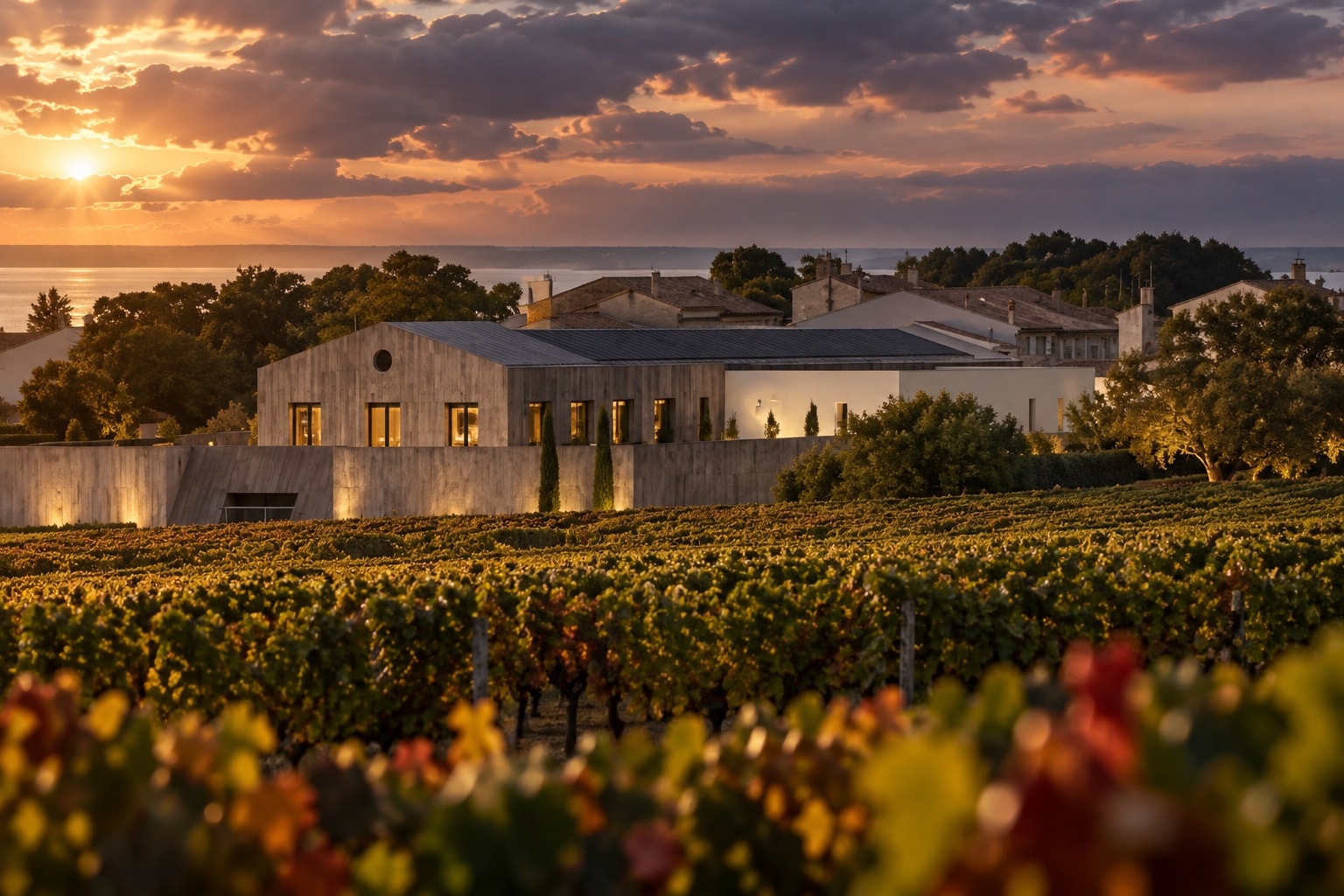
Set in Pauillac in the Médoc, Château Clerc Milon is a historic Classified Growth whose 41-hectare vineyard lies in a single sweep, much of it across the Mousset outcrop overlooking the Gironde estuary. The estate borders two First Classified Growths and combines deep gravel, sand and clay-limestone soils with a favourable estuarine microclimate.
Owned by the Rothschild family since Baron Philippe de Rothschild acquired it in 1970, Clerc Milon has undergone a long programme of vineyard restoration and technical development. Today, the estate combines historic Médoc terroir with precise parcel-by-parcel viticulture and modern winemaking facilities designed to express the individual character of its vineyards.
The origins of Château Clerc Milon are closely connected with the historic seigneuries of Lafite and Mouton. Following the French Revolution, the Clerc family acquired the property when it was sold as a national asset. In 1850, the name of the neighbouring Pauillac hamlet of Milon was added to the family name, creating Château Clerc Milon. Five years later, the estate was included in the 1855 Classification.
After passing through several owners, the property was acquired in 1970 by Baron Philippe de Rothschild, who recognised the potential of its terroir and began an extensive renovation of the vineyard. His daughter, Baroness Philippine de Rothschild, continued this work from 1988, overseeing a new vat room inaugurated in 2007 and the development of a modern architectural complex with a barrel hall and reception facilities in 2011.
Following Baroness Philippine's death in 2014, her children Camille and Philippe Sereys de Rothschild and Julien de Beaumarchais de Rothschild continued the family's stewardship of the estate.
Château Clerc Milon's vineyard extends across 41 hectares in a single contiguous block, much of it situated on the Mousset outcrop overlooking the Gironde. Its soils form a complex mosaic of windblown gravel and sand over a clay-limestone base, with variations across the estate allowing different grape varieties to be matched to specific parcels.
Cabernet Sauvignon is particularly associated with the deeper gravel soils, while Merlot occupies more clay-rich slopes. Cabernet Franc is planted towards the eastern part of the estate, where limestone becomes more prominent. Much of the vineyard was planted in the early twentieth century, and Clerc Milon also preserves one of Bordeaux's oldest plots of Carmenere.
The Gironde estuary plays an important moderating role. Sea breezes help reduce temperature extremes and regulate airflow and humidity, while the vineyard's slopes provide natural drainage and favourable exposure to sunlight.
2024 vineyard plantings reported by the estate comprise approximately:
These figures describe the vineyard plantings and must not be interpreted as the blend of an individual vintage, which varies from year to year.
Viticulture at Clerc Milon increasingly combines detailed knowledge of individual soils and parcels with techniques intended to preserve biodiversity and reduce intervention. The estate is testing approaches based on natural inputs, studying its soils to reduce treatments and using pruning methods designed to respect sap flow.
Environmental initiatives extend beyond the vines. A permaculture vegetable garden was established in 2021, green waste is recycled into compost, and beehives and bird nesting boxes have been introduced alongside landscaping incorporating local plant species.
Harvesting is carried out by hand in small open crates, allowing fruit to enter the winery with limited handling.
The modern vat room was designed around precise parcel selection. Individual parcels, and when required even sections within a parcel, can be harvested according to their own ripening schedule and vinified separately. The winery contains 40 temperature-controlled stainless-steel vats, which are gravity-fed to reduce unnecessary handling of the fruit.
The partly underground configuration helps regulate temperature naturally, while more than 300 square metres of solar panels contribute electricity to the vat room and barrel hall. The barrel cellar can accommodate more than 1,000 barrels.
The Grand Vin is matured for approximately 18 months in French oak barrels, around 55% new according to the estate's current production description. Pastourelle de Clerc Milon follows a different maturation regime, reflecting its role as the estate's second wine.
Château Clerc Milon's identity is built around an unusual five-variety expression of Pauillac. Cabernet Sauvignon provides structure, complexity and ageing potential; Cabernet Franc contributes freshness and floral character; Merlot brings roundness and texture; Petit Verdot adds spice; and the small proportion of Carmenere contributes distinctive floral nuances.
The estate characterises its Grand Vin through precision and elegance, combining the structure expected of Pauillac with freshness, aromatic complexity and substantial ageing potential. The comparatively important role of Cabernet Franc and the continued presence of Carmenere are particularly distinctive elements of Clerc Milon's identity.
The estate's Grand Vin and principal expression of its Pauillac terroir. Its blend draws on Cabernet Sauvignon, Merlot, Cabernet Franc, Petit Verdot and Carmenere, with the precise proportions determined separately for each vintage.
The second wine of Château Clerc Milon, first made in 2009 and subsequently introduced commercially. Produced from the same estate terroirs, it is conceived as a more immediately approachable expression, emphasising freshness, fruit and suppleness while retaining its Pauillac identity.
Products from Château Clerc Milon: 1 pcs.
Bottle Hero
Chateaunet
Philipson Wine ApS
bordeauxwines.se