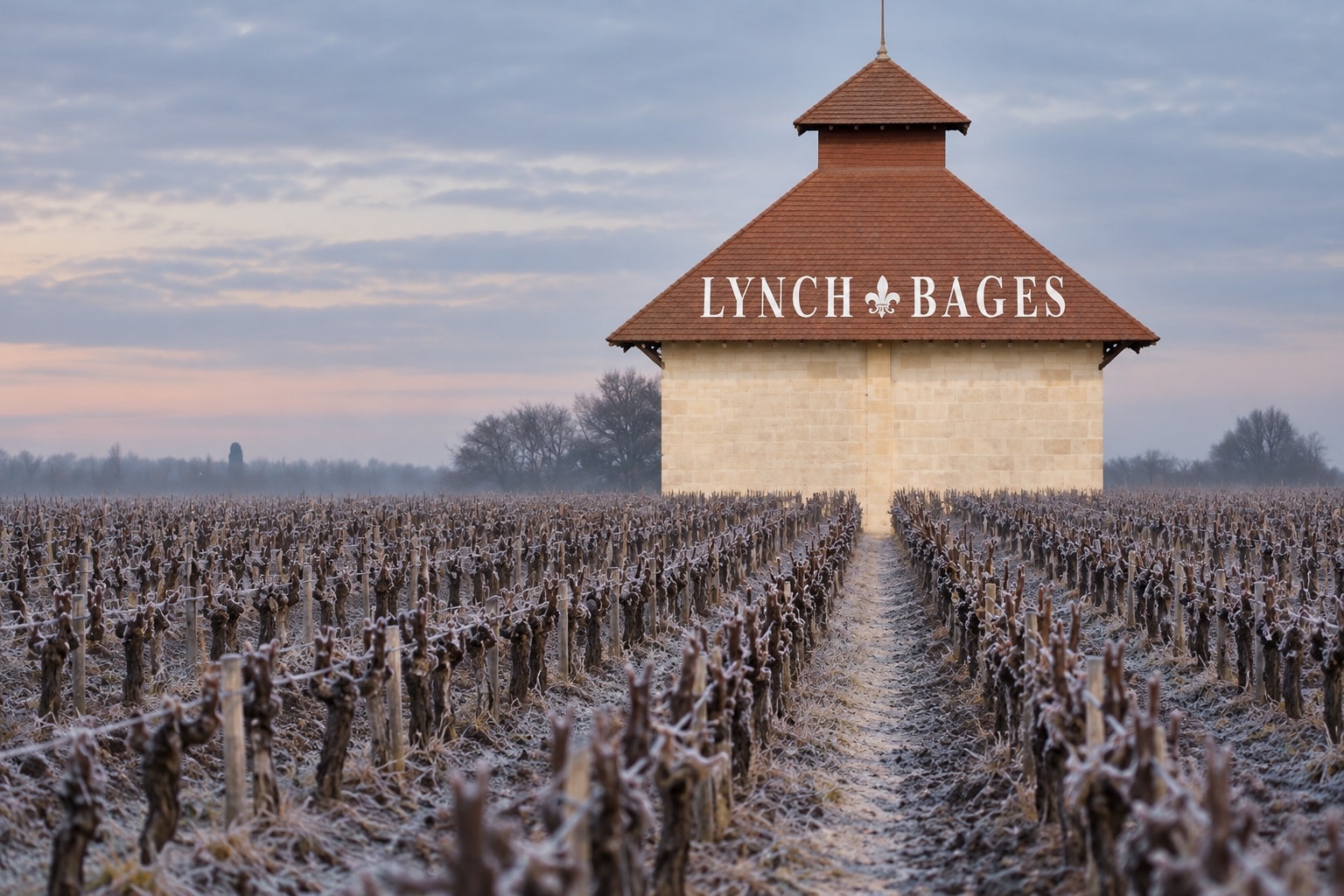
Château Lynch-Bages
2024
83EUR
incl. VAT
Château Lynch-Bages is a Fifth Growth estate in Pauillac whose reputation and performance have long exceeded its 1855 classification ranking. Under Cazes family stewardship since 1939, the château produces powerful, richly textured Cabernet-based wines from deep gravel plateaux overlooking the Gironde estuary—wines celebrated for their consistency, immediate appeal and exceptional cellaring potential spanning three decades or more.
Château Lynch-Bages is a Fifth Growth (Cinquième Cru Classé) estate in Pauillac whose wines have consistently performed well beyond their official 1855 classification ranking. Under the stewardship of the Cazes family since 1939, the château occupies a privileged position on the Bages plateau, where deep gravel soils and proximity to the Gironde estuary shape wines of remarkable power, generosity and longevity. Lynch-Bages has built an international reputation for producing Cabernet-dominant reds that combine immediate opulence with the structure to age gracefully for thirty years or more.
Quick Facts
The Plateau of Bages
The estate's name reflects both its heritage and its place. Lynch refers to Thomas Lynch, an Irish merchant who acquired the property in the mid-18th century, while Bages identifies the gently elevated plateau southwest of the town of Pauillac where the vineyards lie. Following the French Revolution, the estate passed through several hands before Jean-Charles Cazes acquired it in 1939, establishing the family stewardship that continues today.
Under Jean-Michel Cazes, who led the property from 1973 until 2006, Lynch-Bages underwent significant modernisation while maintaining respect for traditional methods. The estate's reputation grew steadily throughout the late 20th century, cementing its status as one of Bordeaux's most reliable and sought-after châteaux.
Gravel, Drainage and the Gironde
The vineyards of Lynch-Bages occupy approximately 100 hectares on the Bages plateau, where deep beds of Günzian gravel provide excellent drainage and encourage the vines to root deeply. These well-drained soils are particularly suited to Cabernet Sauvignon, which accounts for roughly 73 per cent of plantings and forms the backbone of the estate's Grand Vin.
The Gironde estuary lies just over a kilometre to the east, moderating temperatures and reducing the risk of spring frost and extreme summer heat. This maritime influence supports slow, even ripening and helps preserve freshness and aromatic complexity in the fruit.
Merlot, Cabernet Franc and a small proportion of Petit Verdot complete the blend, contributing roundness, floral lift and additional structural refinement.
Opulence, Structure and Time
Château Lynch-Bages is recognised for a style that balances power with elegance. The Grand Vin typically offers concentrated dark fruit, cassis, graphite and subtle spice, supported by refined tannins and a long, persistent finish. While approachable in its youth, the wine reveals greater depth and complexity with extended cellaring—often showing beautifully after two or three decades.
Vinification takes place in temperature-controlled stainless steel and concrete vats, with gentle extraction designed to preserve purity and balance. Maturation occurs in French oak barrels, approximately 60 to 75 per cent of which are new depending on the vintage, allowing the wine to develop texture and aromatic nuance without overwhelming the fruit.
Echo de Lynch-Bages, the estate's second wine, reflects the same commitment to terroir and quality. It offers earlier accessibility while retaining the château's characteristic richness and structure.
A Benchmark for Pauillac
Lynch-Bages has become one of the most recognisable names in Pauillac, valued by collectors and enthusiasts alike for its consistency, generosity and ability to reward patience. Its wines appear regularly on lists of the finest Bordeaux and remain sought-after across markets worldwide.
The estate's combination of privileged terroir, meticulous vineyard management and thoughtful cellar work continues to produce wines that honour both the heritage of the 1855 Classification and the evolving standards of modern Bordeaux.