
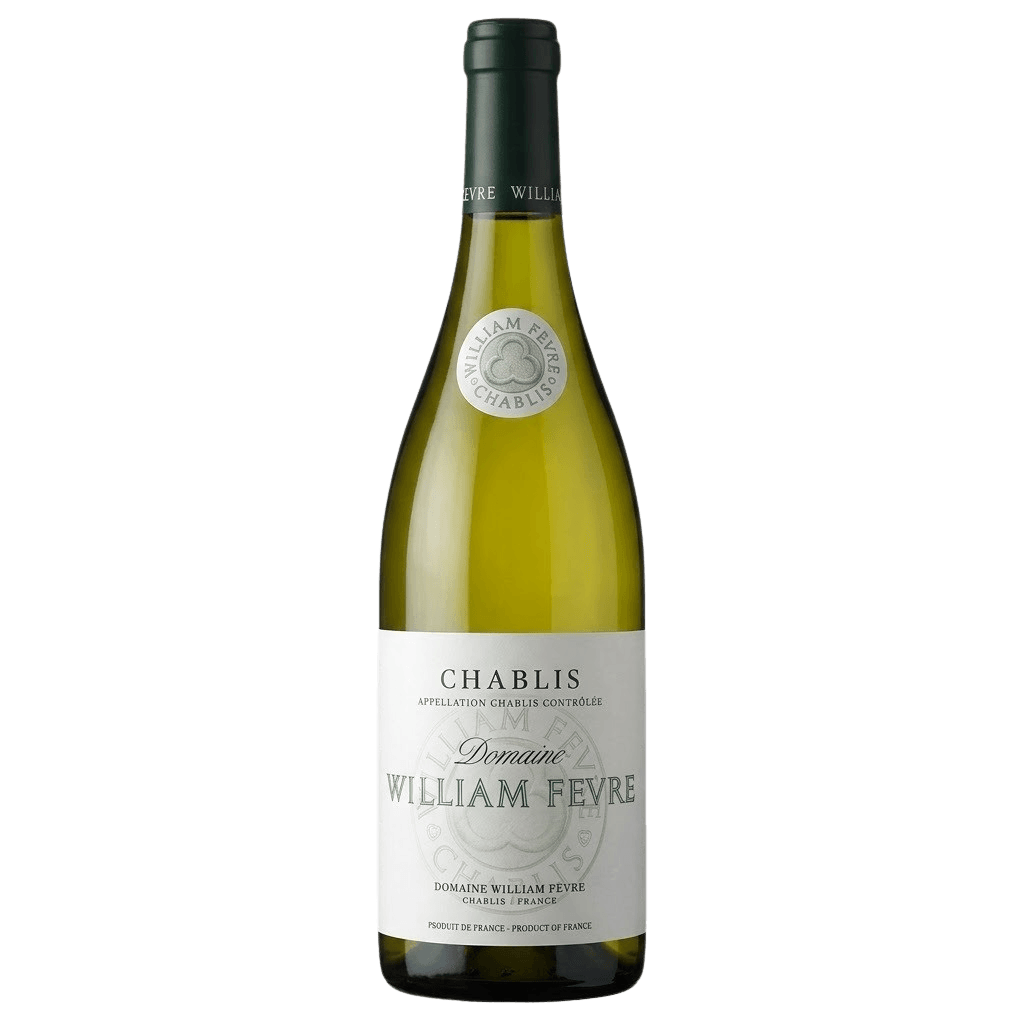
Domaine William Fèvre
William Fèvre Chablis Domaine
2006
An elegant estate Chablis from Domaine William Fèvre, showcasing the pure, mineral-driven expression of Chardonnay that has made this historic Northern Burgundy appellation famous worldwide.
Country
France
Region
Bourgogne - Northern Burgundy
More information
Producer
Domaine William Fèvre stands among Chablis' most respected estates and holds the largest private ownership of Grand Cru vineyards in the appellation. Founded in 1959 by William Fèvre and acquired by the Henriot family in 1998, the domaine remains based in the town of Chablis, where it maintains 78 hectares of vines across the appellation's hierarchy. Its wines are recognised for their crystalline minerality, restrained power and faithful expression of Kimmeridgian terroir.
Quick Facts
- Location: Chablis, Burgundy, France
- Founded: 1959
- Founder: William Fèvre
- Ownership: Henriot family, since 1998
- Estate director: Didier Séguier
- Principal grape: 100% Chardonnay
- Estate size: 78 hectares
- Grand Cru holdings: 15.9 hectares across all seven climats
- Premier Cru holdings: 15.5 hectares across ten climats
- Soils: Kimmeridgian limestone with fossilized oyster shells
- Signature wine: Chablis Grand Cru Les Clos
- Viticulture: Sustainable practices with minimal intervention
- Winemaking: Primarily stainless steel with selective use of oak for Grand Cru wines
- Style: Mineral-driven, taut and built for extended cellaring
A Domaine Shaped by Vision and Continuity
William Fèvre established the estate in 1959 with a clear ambition: to assemble exceptional vineyard sites and produce Chablis that reflected the purity and character of each climat. Over nearly four decades, he built one of the most substantial and carefully positioned holdings in the appellation, acquiring parcels across both Grand Cru and Premier Cru vineyards.
In 1998, the Henriot family—producers of Champagne since 1808—acquired the domaine. Under their stewardship and the direction of Didier Séguier, Domaine William Fèvre has maintained its founder's vision while refining vineyard management and cellar practices to emphasise precision and terroir transparency.
The Kimmeridgian Foundation
The estate's vineyards rest on Kimmeridgian marl, a geological formation dating to the Upper Jurassic period approximately 150 million years ago. This distinctive soil, rich in fossilized oyster shells and marine sediments, creates conditions particularly suited to Chardonnay. The limestone subsoil provides excellent drainage while allowing deep root penetration, and the surrounding cool continental climate preserves acidity and structural tension.
Domaine William Fèvre's 15.9 hectares of Grand Cru represent plantings across all seven of Chablis' Grand Cru climats: Les Clos, Vaudésir, Les Preuses, Bougros, Grenouilles, Valmur and Blanchot. This comprehensive coverage allows the domaine to express the stylistic variation within the Grand Cru hillside—from the structured power of Les Clos to the floral delicacy of Vaudésir and the taut minerality of Bougros.
Les Clos and the Grand Cru Portfolio
At the summit of the estate's production stands Chablis Grand Cru Les Clos, sourced from the climat widely regarded as Chablis' finest. Les Clos occupies a southwest-facing slope with consistent depth of Kimmeridgian marl, producing wines of concentration, structural rigour and exceptional longevity. The domaine's bottling combines citrus peel, white stone fruit and steely mineral tension with the capacity to develop layered complexity over 15 to 20 years or more.
Across the Grand Cru portfolio, winemaking follows a consistent philosophy. Fermentation occurs primarily in temperature-controlled stainless steel tanks to preserve freshness and site clarity, with a portion of certain cuvées fermented or matured in oak barrels to add texture without masking origin. Extended lees contact builds weight and complexity while maintaining the taut, mineral-driven profile that defines the domaine's identity.
Precision Across the Appellation
Beyond the Grand Cru holdings, Domaine William Fèvre produces wines from 15.5 hectares of Premier Cru vineyards, including Montmains, Montée de Tonnerre, Fourchaume and Vaillons. These sites offer earlier accessibility than the Grand Cru wines while retaining the estate's characteristic balance between fruit purity, mineral drive and ageing potential.
The domaine's Chablis and Petit Chablis bottlings complete the range, providing clear introductions to the house style and demonstrating how meticulous viticulture and restrained winemaking can reveal terroir even at the appellation's entry levels. Across every tier, Domaine William Fèvre produces Chardonnay shaped by Kimmeridgian soils, cool-climate ripening and patient cellar work—wines built to express place with clarity, tension and enduring grace.
Country
Region
Bourgogne - Northern Burgundy
Northern Burgundy is a respected wine region in eastern France, encompassing the historic appellations of Chablis and the Auxerrois. Known primarily for exceptional Chardonnay grown on Kimmeridgian limestone and fossilised oyster shell soils, the area produces distinctive wines celebrated for their minerality, precision and remarkable ageing potential. The cool continental climate and unique geological composition create ideal conditions for expressing pure Chardonnay character, making the region a benchmark for unoaked and terroir-focused white wine production.
Chablis remains the most recognised appellation within Northern Burgundy, with seven Grand Cru vineyards including Les Clos, Vaudésir and Blanchot producing wines of notable depth and complexity. Premier Cru sites such as Montmains, Fourchaume and Vaillons offer refined expressions of the region's signature style. Respected producers including Domaine William Fèvre, Domaine Raveneau, Domaine Vincent Dauvissat and Domaine Christian Moreau consistently demonstrate the region's capacity for world-class Chardonnay that balances steely minerality with elegant fruit character.
Discover Northern Burgundy wines, compare prices from trusted merchants across Europe and find the best offers with Sipfind.
Grapes
Chardonnay is one of the world’s most important and prestigious white wine grapes, renowned for its remarkable versatility and ability to reflect both terroir and winemaking style. Most famously associated with Burgundy and Champagne in France, Chardonnay is cultivated across virtually every major wine-producing country and can produce everything from precise, mineral-driven whites to rich, complex wines with exceptional ageing potential.
In Burgundy, Chardonnay reaches some of its most celebrated expressions. The limestone-rich vineyards of Chablis are known for wines combining vibrant acidity, citrus character and mineral precision, while the Côte de Beaune, particularly appellations such as Meursault, Puligny-Montrachet and Chassagne-Montrachet, produces some of the world’s most sought-after and age-worthy white wines.
Chardonnay also plays a fundamental role in Champagne, where it contributes freshness, finesse and acidity to blends alongside Pinot Noir and Meunier. When produced exclusively from Chardonnay, the resulting Champagne is known as Blanc de Blancs, a style prized for its elegance, precision and capacity to develop considerable complexity with extended ageing.
The grape’s character varies significantly according to climate, terroir and winemaking. Cooler regions can produce wines showing citrus, green apple, white flowers and mineral notes, while warmer conditions can bring peach, melon and tropical-fruit character. Oak fermentation, barrel ageing and malolactic fermentation can introduce additional layers of toast, vanilla, butter and hazelnut, demonstrating Chardonnay’s exceptional stylistic range.
Beyond France, Chardonnay has established important expressions in California, Australia, New Zealand, South Africa and numerous other wine regions. From the mineral whites of Chablis and the great vineyards of Burgundy to Blanc de Blancs Champagne and modern New World interpretations, Chardonnay’s combination of versatility, complexity and terroir expression has established it as one of the defining grape varieties of fine wine.
History and Style
William Fèvre Chablis Domaine represents the estate wine tier from one of Chablis's most distinguished producers. Domaine William Fèvre owns some of the finest vineyard holdings in the appellation, and this bottling offers an accessible introduction to the domaine's philosophy of terroir-driven winemaking and classic Chardonnay expression.
Quick Facts
- Producer: Domaine William Fèvre
- Classification: Chablis AOC (village-level)
- Region: Northern Burgundy
- Appellation: Chablis
- Country: France
- Style: Dry white wine, mineral-driven, unoaked or lightly oaked
- Grape Composition: 100% Chardonnay
- Ageing Potential: 3-5 years from vintage
- Alcohol (ABV): 12.5-13%
- Tasting Profile: Green apple, citrus, white flowers, flinty minerality, oyster shell, crisp acidity
- Food Pairing: Oysters, shellfish, grilled fish, goat cheese, chicken, seafood risotto
- Serving Temperature: 10-12°C
- Bottle Status: Estate Wine
- Vintage: Non-Vintage (current release vintage varies)
Vineyard, Terroir and Style
Founded in the mid-20th century, Domaine William Fèvre has become synonymous with quality Chablis production. The estate controls significant parcels across the appellation, including premier and grand cru sites, with this domaine-level wine sourced from carefully selected village-level vineyards. The Kimmeridgian limestone and clay soils that define Chablis provide the geological foundation for the wine's distinctive mineral character, while the cool continental climate ensures vibrant acidity and elegant structure.
History and Reputation
In the glass, William Fèvre Chablis Domaine displays the hallmark characteristics of well-crafted Chablis: green apple, citrus, and white flowers complemented by the signature flinty minerality and oyster shell notes. Fermentation and ageing typically occur in stainless steel to preserve freshness and purity of fruit, though some batches may see neutral oak. The result is a wine of precision and balance, suitable for enjoying young or cellaring for 3-5 years.
Compare prices for William Fèvre Chablis Domaine on Sipfind and discover why this estate wine continues to exemplify authentic Chablis character at accessible pricing.