
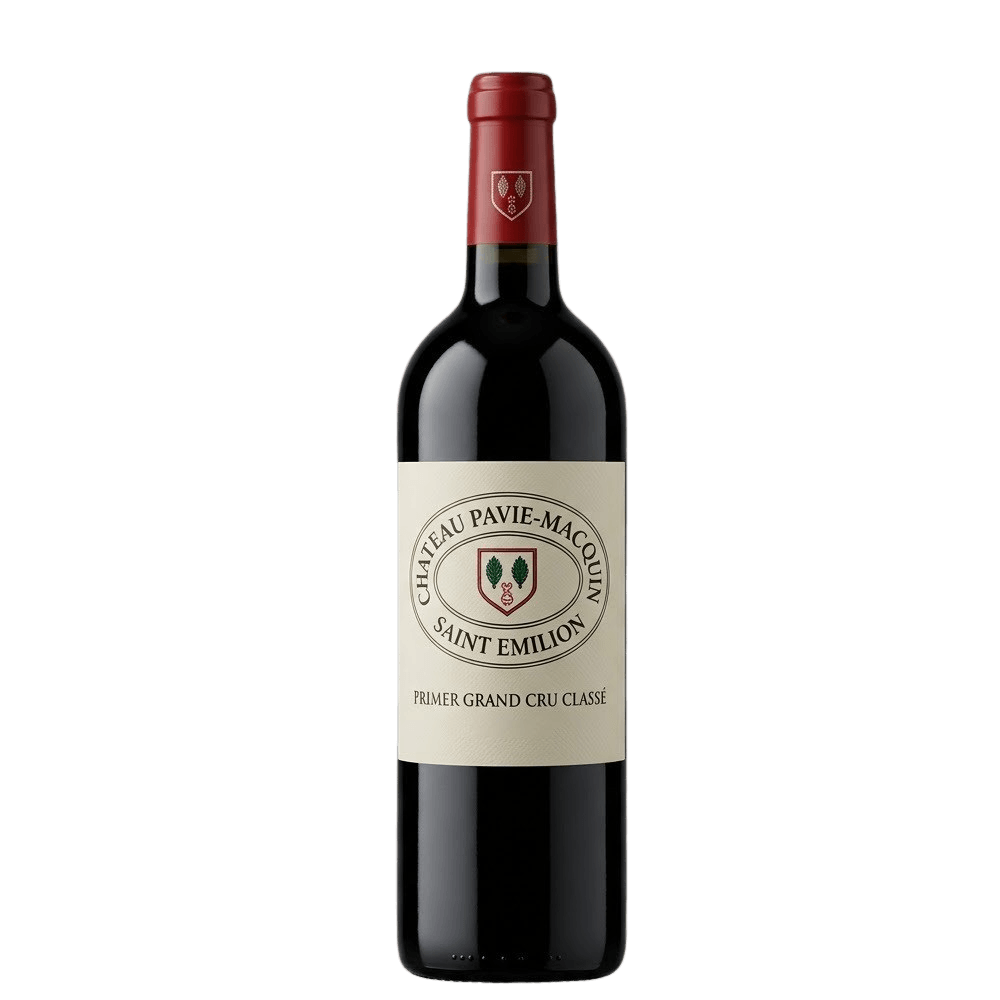
Pavie Macquin
Pavie Macquin
2017
From 97 EUR from 1 retailers
Pavie Macquin represents the excellence of Saint-Émilion's limestone plateau, crafted by Château Pavie Macquin as an organically farmed Premier Grand Cru Classé celebrated for its mineral elegance and refined structure.
Country
France
Region
Bordeaux - Saint-Emilion
Number of retailers: 1
Chateaunet
France
Pavie Macquin
2017
Standard delivery 1-3 business days
More information
Producer
Château Pavie Macquin is a Premier Grand Cru Classé (B) estate in Saint-Émilion, occupying a historic position on the appellation's renowned limestone plateau. Named after Albert Macquin, the viticulturist who pioneered the use of grafted vines in the aftermath of the phylloxera crisis, the estate has been stewarded by the Corre-Macquin family since 1994. The wines are distinguished by their mineral precision, structured complexity and exceptional capacity for long-term ageing.
Quick Facts
- Location: Saint-Émilion, Bordeaux, France
- Classification: Premier Grand Cru Classé (B) – Saint-Émilion Classification
- Ownership: Corre-Macquin family, since 1994
- Estate size: Approximately 15 hectares
- Principal grapes: Merlot, Cabernet Franc, Cabernet Sauvignon
- Soils: Clay-limestone on the limestone plateau (Côte Pavie)
- Viticulture: Certified biodynamic (since 2010)
- Grand Vin: Château Pavie Macquin
- Second wine: Les Chênes de Macquin
- Style: Mineral, structured and precise with notable freshness
- Ageing potential: 15 to 25 years or longer
A Pioneer's Legacy on the Plateau
Albert Macquin was one of the most forward-thinking viticulturists in France during the late 19th century. As phylloxera devastated European vineyards, he championed the grafting of European vinifera vines onto resistant American rootstocks, a practice that became essential to saving French viticulture. The estate that bears his name stands as a tribute to this legacy of innovation and adaptation.
The property was acquired by the Corre-Macquin family in 1994. Under their stewardship, the estate has transitioned to biodynamic viticulture and achieved recognition for producing wines that honour both tradition and a modern understanding of sustainable farming.
The Côte Pavie and Its Limestone Foundation
The estate's vineyards occupy a privileged position on the Côte Pavie, the steep limestone slope that forms part of Saint-Émilion's western plateau. Clay-limestone soils here provide excellent drainage while retaining sufficient moisture to sustain the vines through dry periods. The elevation and south-facing aspect ensure optimal sun exposure, encouraging gradual ripening and concentration.
This terroir is particularly suited to Merlot, which forms the majority of plantings and contributes depth, texture and dark-fruit character to the Grand Vin. Cabernet Franc adds aromatic lift and structural precision, while Cabernet Sauvignon provides additional backbone in suitable vintages. The combination of varieties and soils produces wines that are both powerful and refined, with a distinctive mineral signature.
Biodynamic Viticulture and Low Intervention
Château Pavie Macquin has been certified biodynamic since 2010. The estate follows strict principles that prioritize soil health, biodiversity and the natural rhythms of the vineyard. Cover crops, composting and biodynamic preparations replace synthetic inputs, while work is timed according to the lunar calendar.
Yields are kept deliberately low through green harvesting and careful canopy management. Grapes are hand-harvested at optimal ripeness and sorted rigorously before vinification. In the cellar, fermentation takes place in temperature-controlled concrete and wooden vats, followed by extended ageing in French oak barrels, a proportion of which are new each year.
The result is a wine that expresses the purity and character of the Côte Pavie with clarity and balance. Château Pavie Macquin combines the richness and structure expected from its classification with the precision and freshness that define the estate's modern identity.
Country
Region
Bordeaux - Saint-Emilion
Saint-Émilion is one of the most respected wine appellations in Bordeaux and has long been recognised for producing refined, age-worthy wines of exceptional quality. Located on the Right Bank of the Dordogne River, this historic appellation combines centuries of winemaking tradition with distinctive terroir, creating elegant Merlot-dominant wines that are celebrated by collectors and enthusiasts worldwide. Established as an AOC in 1936, Saint-Émilion represents the finest expression of Right Bank winemaking.
The appellation benefits from diverse soils that define its wines. The plateau and côtes feature limestone and clay-limestone terroirs that produce structured, mineral-driven wines with remarkable ageing potential, while the lower slopes contain sandy and gravelly soils that yield softer, more approachable expressions. Merlot dominates the blend, typically complemented by Cabernet Franc and occasionally Cabernet Sauvignon, creating wines of elegance, depth and finesse.
Saint-Émilion is home to its own classification system, revised approximately every decade, which recognises Premiers Grands Crus Classés A estates such as Château Ausone and Château Cheval Blanc, alongside distinguished Premiers Grands Crus Classés B and Grands Crus Classés properties. Notable producers including Château Pavie, Château Figeac and Château Canon demonstrate the appellation's benchmark for quality and terroir expression.
Whether exploring classified estates, exceptional vintages or the appellation's rich medieval heritage, Saint-Émilion offers a distinguished introduction to Right Bank Bordeaux. Discover Saint-Émilion wines, compare prices from trusted merchants across Europe and find the best offers with Sipfind.
Grapes
Merlot is one of the world’s most important red wine grapes, celebrated for its generous fruit, supple texture and ability to produce wines ranging from approachable and elegant to exceptionally complex and long-lived. Originating in Bordeaux, France, Merlot is particularly associated with the Right Bank, where it forms the foundation of many of the prestigious wines of Pomerol and Saint-Émilion.
Merlot typically expresses flavours and aromas of plum, black cherry, blackberry and red fruits, often developing notes of chocolate, tobacco, cedar, herbs and earthy complexity with maturation. Its naturally rounded texture and generally softer tannin profile distinguish it from Cabernet Sauvignon, although the finest examples can possess considerable structure, freshness and ageing potential.
In Pomerol, Merlot reaches some of its most celebrated expressions, particularly on the appellation’s clay-rich soils, producing wines of remarkable concentration, texture and complexity. In Saint-Émilion, it is commonly blended with Cabernet Franc and, to a lesser extent, Cabernet Sauvignon, creating wines that combine ripe fruit with structure, aromatic complexity and longevity.
Beyond Bordeaux, Merlot is widely cultivated in Italy, California, Washington State, Chile and other major wine regions. It can be produced as a varietal wine or used as a central component of blends, where its fruit and texture complement more structured grape varieties.
From the great Merlot-based wines of Bordeaux’s Right Bank to leading expressions around the world, Merlot’s combination of rich fruit, refined texture and capacity to express terroir has established it as one of the defining varieties of fine red wine.
Cabernet Franc is one of France’s most historic red wine grapes, valued for its aromatic intensity, vibrant acidity and ability to express both climate and soil with remarkable clarity. It produces elegant single-varietal wines and plays an essential role in some of Bordeaux’s most distinguished blends. Earlier ripening than Cabernet Sauvignon allows Cabernet Franc to perform particularly well in cooler wine regions.
In the Loire Valley, Cabernet Franc reaches its clearest expression as a varietal wine. Typical aromas include redcurrant, raspberry, red cherry and violet, often accompanied by graphite, dried herbs, tobacco and subtle peppery notes. Naturally fresh acidity and finely structured tannins can produce approachable, fruit-driven wines as well as complex examples capable of developing for many years.
The variety is especially important in Chinon, Bourgueil and Saumur-Champigny. Chinon can range from fragrant and supple to deeply structured and age-worthy, depending on vineyard site and soil. Bourgueil often combines dark red fruit with firm structure, while Saumur-Champigny is renowned for freshness, aromatic purity and refined texture. Limestone-rich tuffeau, gravel, sand and clay all contribute to the diversity of Cabernet Franc across these Loire appellations.
In Bordeaux, Cabernet Franc is principally associated with the Right Bank, particularly Saint-Émilion and Pomerol. Usually blended with Merlot and sometimes Cabernet Sauvignon, it contributes perfume, freshness, savoury complexity and structural precision. On suitable limestone and clay terroirs, Cabernet Franc can become a dominant component of exceptionally refined and long-lived wines.
Beyond France, Cabernet Franc is cultivated in regions including Tuscany, Bolgheri, Napa Valley, Washington State, Canada, Argentina and Chile, producing styles shaped by local climate and terroir. Traditionally known as Breton in the Loire and Bouchet in parts of Bordeaux, Cabernet Franc’s combination of aromatic elegance, freshness and ageing potential establishes it as one of the world’s great red wine varieties.
Cabernet Sauvignon is one of the world’s most important and widely planted red wine grapes, renowned for its powerful structure, concentrated fruit and exceptional ageing potential. Originating in Bordeaux, France, the variety has become a defining grape of fine wine regions around the world, particularly Napa Valley, Tuscany, Chile, Australia and South Africa.
Classic Cabernet Sauvignon combines flavours and aromas of blackcurrant, cassis, blackberry and dark cherry with characteristic notes of cedar, graphite, tobacco and herbs. Naturally high tannins and fresh acidity provide structure and longevity, while maturation in oak can add layers of spice, vanilla and toast. Its character varies significantly with climate, soil and winemaking, ranging from elegant and savoury to rich, powerful and intensely concentrated.
In Bordeaux, Cabernet Sauvignon is particularly associated with the Left Bank, where it forms the foundation of many prestigious blends alongside Merlot, Cabernet Franc and other permitted varieties. In Napa Valley, it has become the region’s signature red grape, producing some of the world’s most sought-after Cabernet Sauvignon wines.
Cabernet Sauvignon’s ability to express terroir while retaining its distinctive structure and character has made it a global benchmark for premium red wine. Whether produced as the dominant variety in a blend or as a varietal wine, the finest examples combine concentration, complexity and the capacity to develop gracefully over decades
History and Style
Pavie Macquin is the flagship Grand Vin of Château Pavie Macquin, a distinguished Premier Grand Cru Classé B estate situated on Saint-Émilion's prized limestone plateau. This Right Bank Bordeaux represents the pinnacle of organic viticulture and traditional winemaking, producing wines of remarkable finesse and longevity that express the unique terroir of their elevated vineyard site.
Quick Facts
- Producer: Château Pavie Macquin
- Classification: Premier Grand Cru Classé B (Saint-Émilion)
- Region: Bordeaux
- Appellation: Saint-Émilion Grand Cru
- Country: France
- Style: Full-bodied Right Bank Bordeaux with mineral elegance
- Grape Composition: Merlot-dominant blend with Cabernet Franc and Cabernet Sauvignon (proportions vary by vintage, typically 70-85% Merlot)
- Ageing Potential: 15-30+ years from vintage
- Alcohol (ABV): 13.5-14.5%
- Tasting Profile: Dark berries, plum, violets, graphite, truffle, mineral notes, fine tannins
- Food Pairing: Beef, lamb, duck, game, mushroom dishes, aged hard cheeses
- Serving Temperature: 16-18°C
- Bottle Status: Flagship
- Vintage: Varies by release
Vineyard, Terroir and Style
The estate's 15-hectare vineyard enjoys an exceptional position on the Côte Pavie, where limestone bedrock and clay soils provide natural drainage and mineral complexity. Under organic and increasingly biodynamic practices, the vines benefit from this terroir to produce grapes of concentration and purity. The Perse family's stewardship since 1994 has elevated the property to the forefront of Saint-Émilion's quality revolution, with meticulous vineyard management and selective harvesting ensuring only the finest fruit reaches the cellar.
History and Reputation
Predominantly Merlot with supporting roles for Cabernet Franc and Cabernet Sauvignon, Pavie Macquin displays a distinctive profile that balances Right Bank opulence with mineral tension. The wines typically show dark berry fruit, floral notes, graphite, and truffle, supported by fine-grained tannins and vibrant acidity that ensure graceful evolution over decades. Aged in French oak barrels, the flagship combines power with elegance, offering both immediate pleasure and long-term cellaring potential.
For collectors and enthusiasts seeking benchmark Saint-Émilion from organic viticulture, Pavie Macquin delivers exceptional terroir expression and aging potential at Premier Grand Cru Classé level.