
Moët & Chandon
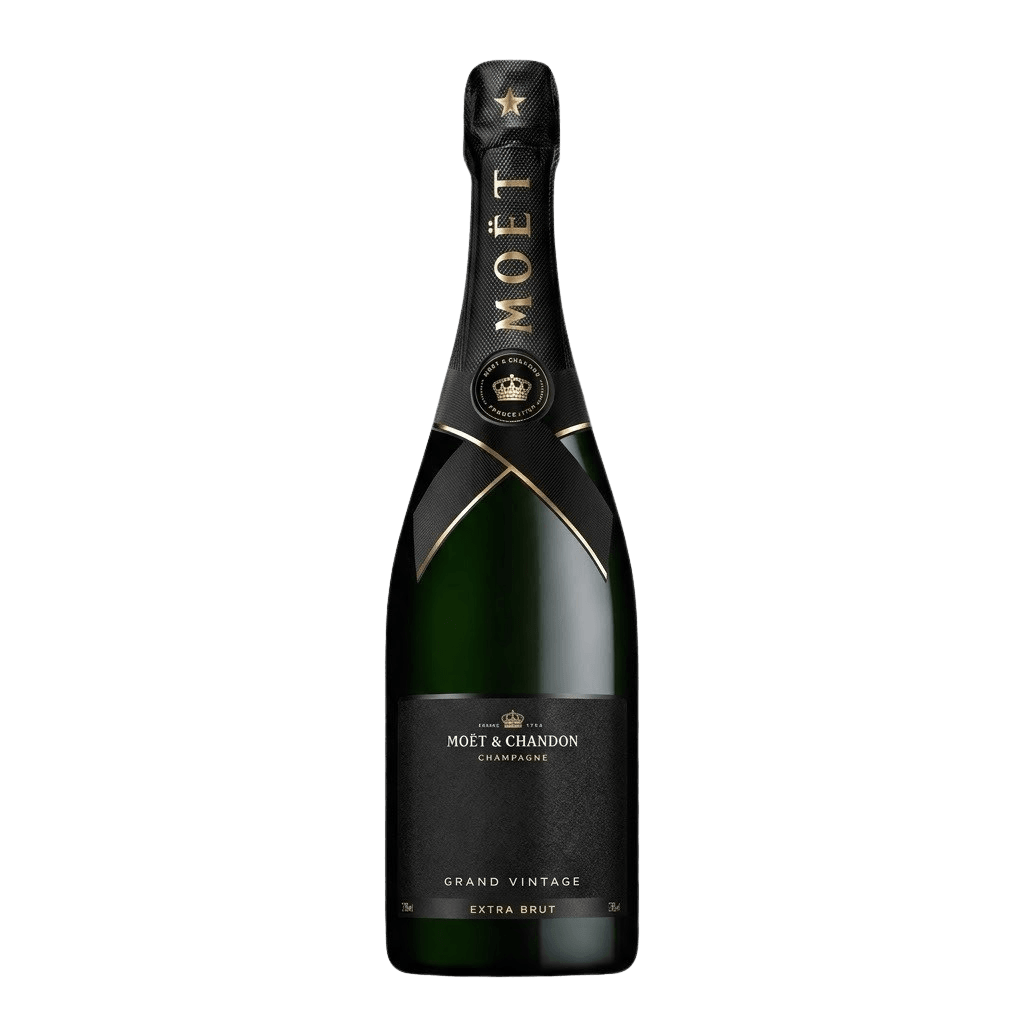
Moët & Chandon Grand Vintage Extra Brut
2014
Moët & Chandon Grand Vintage Extra Brut represents the house's finest vintage Champagne expression, crafted only in exceptional years with minimal dosage to emphasize terroir purity and aromatic precision.
Country
France
Region
Champagne
More information
Producer
Founded in 1743 by Claude Moët, Moët & Chandon is one of Champagne's oldest and most celebrated Houses, commanding one of the region's largest and most diverse vineyard estates. Based in Épernay, at the heart of the Champagne region, the House has been part of LVMH since 1971 and maintains control over exceptional vineyard sites across the Montagne de Reims, Vallée de la Marne and Côte des Blancs. Its signature style balances freshness, fruit expression and accessibility with the structure and refinement necessary for extended ageing in vintage cuvées.
Quick Facts
- Location: Épernay, Champagne, France
- Founded: 1743
- Founder: Claude Moët
- House identity: Fresh, elegant and fruit-forward Champagne
- Signature cuvée: Moët Impérial Brut
- Prestige cuvée: Dom Pérignon
- Cellar network: 28 kilometres of underground galleries
- Cellar depth: Extends up to 30 metres below ground
- Principal grapes: Pinot Noir, Pinot Meunier and Chardonnay
- Estate vineyards: Over 1,150 hectares across premier Champagne terroirs
- Key styles: Brut, Rosé, Vintage and prestige Champagne
- Recognition: Part of the UNESCO World Heritage-listed Champagne landscape
Nearly Three Centuries of Champagne Craftsmanship
Claude Moët established the House in 1743, during an era when Champagne was emerging as a symbol of celebration and refinement across European courts. His grandson, Jean-Rémy Moët, expanded the enterprise throughout the late 18th and early 19th centuries, forging relationships with figures including Napoleon Bonaparte and securing the House's international reputation.
In 1833, Pierre-Gabriel Chandon de Briailles joined the family through marriage, and the House adopted the name Moët & Chandon. The partnership brought further vineyard acquisitions and cemented the foundation for what would become one of Champagne's most enduring institutions.
Today, the House remains steward to one of the region's largest contiguous vineyard holdings, ensuring consistent access to distinguished fruit from across Champagne's diverse terroirs.
The Vineyards of Three Great Regions
Moët & Chandon controls over 1,150 hectares of estate vineyards, distributed across the Montagne de Reims, Vallée de la Marne and Côte des Blancs. This exceptional geographic diversity allows the House to source Pinot Noir, Pinot Meunier and Chardonnay from sites ideally suited to each variety.
The Montagne de Reims provides powerful, structured Pinot Noir. The Vallée de la Marne, where the House was founded, contributes expressive Pinot Meunier with roundness and fruit character. The Côte des Blancs delivers Chardonnay of finesse, tension and longevity.
Beneath the House's headquarters in Épernay lies an extensive network of cellars extending approximately 28 kilometres and descending as deep as 30 metres. These chalk galleries, carved over centuries, provide the darkness, humidity and stable temperatures essential for slow, controlled maturation of reserve wines and finished Champagnes.
A Portfolio Built on Consistency and Prestige
Moët Impérial Brut is the House's defining expression, produced from a blend of Pinot Noir, Pinot Meunier and Chardonnay drawn from multiple vintages and sites. The cuvée is built for immediate pleasure, offering fresh orchard fruit, citrus and brioche with a balanced, approachable structure.
Rosé Impérial introduces red-fruit character and greater texture, while Grand Vintage expresses the personality of exceptional individual years. Ice Impérial, designed for service over ice, represents a contemporary expression of the House's willingness to innovate.
At the summit of the portfolio stands Dom Pérignon, produced as a vintage-only Champagne from its own dedicated vineyard sources and cellar team. Released only in years deemed worthy of the name, Dom Pérignon is recognised globally as one of Champagne's most iconic prestige cuvées, built for complexity, precision and decades of evolution.
Blending Philosophy and the Reserve Library
Central to Moët & Chandon's style is its extensive reserve wine library, which allows the Chef de Cave to maintain consistency and freshness across non-vintage cuvées while adding depth and complexity. Reserve wines, stored in stainless steel tanks and large oak foudres, are selected from earlier harvests and blended with base wines to achieve the House's signature balance.
The blending process draws on parcels from across the estate's vineyard holdings, with each site contributing specific aromatic, structural or textural characteristics. This meticulous parcel selection and layered approach to assemblage result in Champagnes that express the House's vision with clarity and refinement year after year.
Country
Region
Champagne
Champagne is widely regarded as the world's most prestigious sparkling wine region and has become synonymous with celebration, luxury and uncompromising quality. Located in northeastern France, approximately 150 kilometres east of Paris, the region combines centuries of winemaking tradition with exceptional terroir to produce sparkling wines of remarkable elegance and complexity. From legendary maisons to small grower-producers, Champagne represents the benchmark against which all other sparkling wines are measured, and its influence on global wine culture remains unrivalled.
The region's vineyards stretch across five principal districts: Montagne de Reims, Vallée de la Marne, Côte des Blancs, Côte de Sézanne and Côte des Bar. The defining characteristic of Champagne terroir is its chalk-limestone subsoil, which provides excellent drainage, mineral richness and steady water supply essential for producing grapes of exceptional quality. The cool continental climate, moderated by maritime influences, ensures slow ripening and high natural acidity, while the principal grape varieties—Chardonnay, Pinot Noir and Pinot Meunier—each contribute distinct character to the final blend. The region's 17 grand cru villages and 42 premier cru villages represent the finest expression of Champagne terroir, producing grapes of outstanding concentration and finesse.
Champagne is governed by strict AOC regulations established in 1927, which define geographical boundaries, permitted grape varieties, yields and production methods. The region is home to some of the world's most celebrated houses, including Krug, Louis Roederer, Bollinger, Dom Pérignon, Veuve Clicquot, Pol Roger, Salon, Taittinger and Moët & Chandon. These maisons have upheld the art of blending and cellar ageing for generations, producing prestige cuvées and vintage expressions that rank among the most collectible wines in the world. Alongside these historic houses, a growing number of grower-producers cultivate and vinify their own grapes, offering terroir-focused expressions that reveal the diversity and depth of Champagne's varied terroirs.
Whether exploring grand cru villages, prestige cuvées or historic maisons, Champagne offers an unparalleled journey through the birthplace of the world's finest sparkling wines. Discover Champagne Champagnes, compare prices from trusted merchants across Europe and find the best offers with Sipfind.
Grapes
Chardonnay is one of the world’s most important and prestigious white wine grapes, renowned for its remarkable versatility and ability to reflect both terroir and winemaking style. Most famously associated with Burgundy and Champagne in France, Chardonnay is cultivated across virtually every major wine-producing country and can produce everything from precise, mineral-driven whites to rich, complex wines with exceptional ageing potential.
In Burgundy, Chardonnay reaches some of its most celebrated expressions. The limestone-rich vineyards of Chablis are known for wines combining vibrant acidity, citrus character and mineral precision, while the Côte de Beaune, particularly appellations such as Meursault, Puligny-Montrachet and Chassagne-Montrachet, produces some of the world’s most sought-after and age-worthy white wines.
Chardonnay also plays a fundamental role in Champagne, where it contributes freshness, finesse and acidity to blends alongside Pinot Noir and Meunier. When produced exclusively from Chardonnay, the resulting Champagne is known as Blanc de Blancs, a style prized for its elegance, precision and capacity to develop considerable complexity with extended ageing.
The grape’s character varies significantly according to climate, terroir and winemaking. Cooler regions can produce wines showing citrus, green apple, white flowers and mineral notes, while warmer conditions can bring peach, melon and tropical-fruit character. Oak fermentation, barrel ageing and malolactic fermentation can introduce additional layers of toast, vanilla, butter and hazelnut, demonstrating Chardonnay’s exceptional stylistic range.
Beyond France, Chardonnay has established important expressions in California, Australia, New Zealand, South Africa and numerous other wine regions. From the mineral whites of Chablis and the great vineyards of Burgundy to Blanc de Blancs Champagne and modern New World interpretations, Chardonnay’s combination of versatility, complexity and terroir expression has established it as one of the defining grape varieties of fine wine.
Meunier, historically known as Pinot Meunier, is one of the three principal grape varieties of Champagne, alongside Chardonnay and Pinot Noir. Valued for its fresh fruit character, reliable ripening and adaptability to cooler vineyard sites, Meunier plays an essential role in many Champagne blends, contributing aromatic expression, roundness and approachability.
The grape is particularly important in the Vallée de la Marne, where it thrives across vineyards that can be more challenging for Chardonnay and Pinot Noir. Meunier buds later and ripens relatively early, helping reduce its exposure to damaging spring frosts while allowing it to reach maturity reliably in Champagne’s cool climate. These characteristics have made it an important component of the region’s viticultural identity.
In Champagne, Meunier typically contributes flavours and aromas of red apple, pear, plum, citrus and fresh red fruits, depending on terroir, ripeness and winemaking. Its naturally generous fruit profile can provide softness and accessibility to blends, complementing the finesse and acidity of Chardonnay and the structure and depth associated with Pinot Noir.
Although best known as a blending variety, Meunier can also produce distinctive single-variety Champagnes, demonstrating greater complexity and terroir expression than its historical reputation sometimes suggests. A growing number of producers highlight individual Meunier vineyards and parcels, bringing renewed attention to the grape as an important expression of Champagne in its own right.
From classic non-vintage blends to increasingly sought-after single-variety bottlings, Meunier’s combination of fresh fruit, adaptability and aromatic character makes it one of Champagne’s defining grape varieties.
History and Style
Moët & Chandon Grand Vintage Extra Brut is a prestige vintage cuvée from one of Champagne's most historic houses, produced exclusively in years when harvest conditions warrant a vintage declaration. This extra brut style, with dosage below 6 grams per liter, showcases the house's contemporary approach to champagne-making, prioritizing terroir expression and vineyard character over traditional sweetness.
Quick Facts
- Producer: Moët & Chandon
- Classification: Prestige Vintage Cuvée
- Region: Champagne
- Appellation: Champagne AOC
- Country: France
- Style: Extra Brut Vintage Champagne
- Grape Composition: Chardonnay, Pinot Noir, Pinot Meunier blend (proportions vary by vintage)
- Ageing Potential: 10-15 years from vintage
- Alcohol (ABV): 12-12.5%
- Tasting Profile: Citrus fruit, white flowers, brioche, mineral notes, fine mousse, crisp acidity
- Food Pairing: Seafood, oysters, white fish, poultry, sushi, light cheeses
- Serving Temperature: 8-10°C
- Bottle Status: Iconic Cuvée
- Vintage: Vintage (varies by release year)
House Style and Blending Philosophy
Moët & Chandon draws upon an exceptional estate of over 1,150 hectares across Champagne's finest crus, including holdings in the Côte des Blancs, Montagne de Reims, and Vallée de la Marne. The Grand Vintage Extra Brut cuvée reflects the distinct personality of each declared vintage, typically blending Chardonnay, Pinot Noir and Pinot Meunier from premier and grand cru vineyards. Extended lees ageing in the house's historic cellars in Épernay develops complexity while maintaining the vibrant freshness characteristic of the extra brut style.
Character and Ageing
The resulting champagne displays remarkable purity and precision, with citrus fruit, white flowers, brioche and subtle mineral notes. The low dosage reveals the wine's natural structure and allows vintage-specific characteristics to shine through, offering a more austere, gastronomic profile compared to traditional brut styles. Fine, persistent mousse and crisp acidity provide both elegance and ageing potential.
Ideal for collectors and champagne enthusiasts seeking vintage expression with contemporary restraint, Grand Vintage Extra Brut pairs beautifully with seafood, white meats and refined cuisine. Compare prices across premium retailers on Sipfind to discover this expressive vintage champagne.