
Maison Louis Jadot
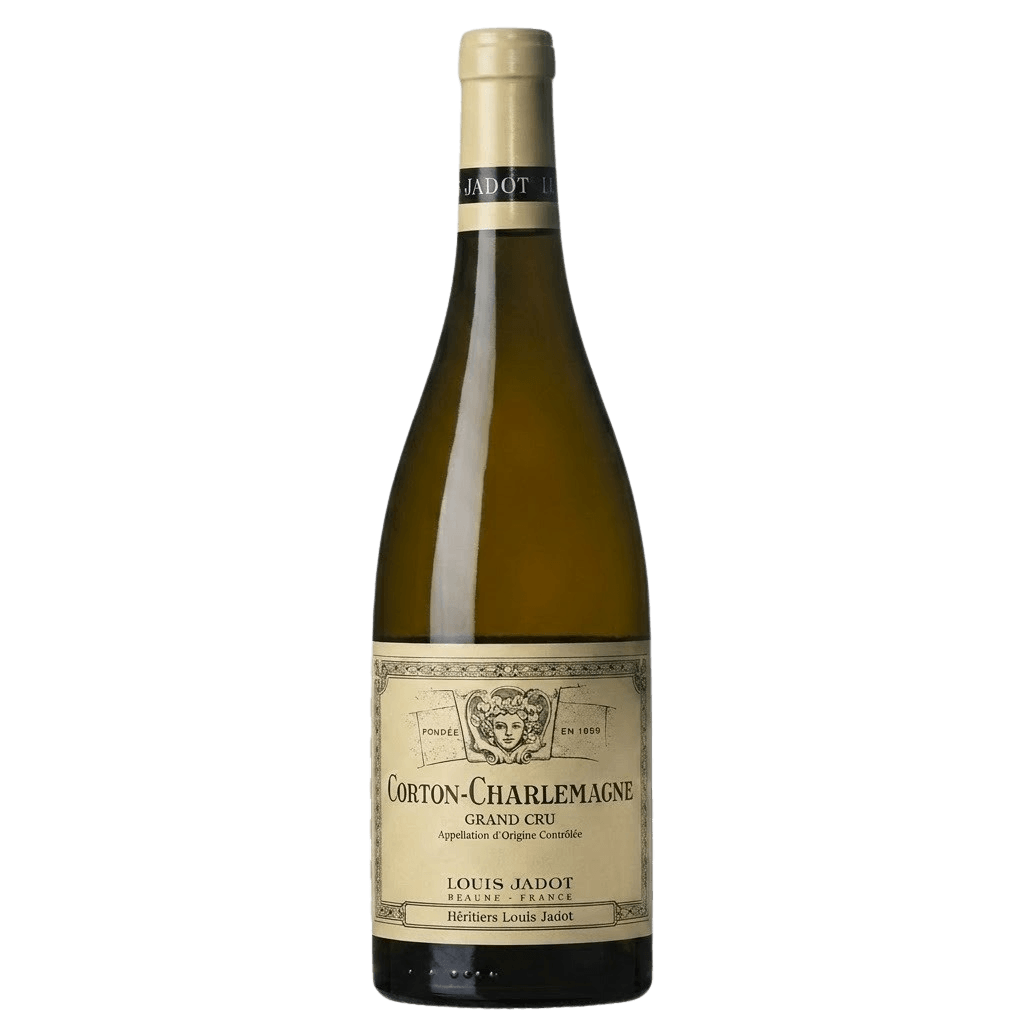
Louis Jadot Corton-Charlemagne
2011
Maison Louis Jadot's Corton-Charlemagne represents the pinnacle of white Burgundy, sourced from one of the region's most storied Grand Cru vineyards. A benchmark expression of power, elegance and terroir-driven minerality.
Country
France
Region
Bourgogne - Cote de Beaune
More information
Producer
Founded in 1859, Maison Louis Jadot is one of Burgundy's most distinguished and historically significant négociant-éleveurs, combining the roles of vineyard owner, grape purchaser and cellar master across the region's most prestigious appellations. Based in Beaune and now owned by the American Kobrand Corporation while remaining firmly Burgundy-managed, the House controls over 240 hectares of estate vineyards spanning the Côte d'Or, Beaujolais and Mâconnais. Louis Jadot is particularly recognised for benchmark Grand Cru Chardonnays and refined Pinot Noirs that express the precision, elegance and ageing potential of their individual terroirs.
Quick Facts
- Location: Beaune, Côte d'Or, Burgundy, France
- Founded: 1859
- Founder: Louis Henry Denis Jadot
- Ownership: Kobrand Corporation (since 1985), under Burgundian management
- Estate size: Over 240 hectares of owned vineyards
- Principal grapes: Pinot Noir, Chardonnay
- Grand Cru holdings: Corton-Charlemagne, Chambertin-Clos de Bèze, Chevalier-Montrachet, Le Montrachet, Bonnes-Mares, Musigny, Chapelle-Chambertin
- Premier Cru monopole: Beaune Premier Cru Clos des Ursules
- Soils: Diverse limestone, marl and clay-limestone across Côte d'Or appellations
- Style: Terroir-focused, elegant and structured with extended ageing potential
- Viticulture: Traditional management with sustainable practices
- Winemaking: Minimal intervention, careful use of French oak, extended élevage
A Négociant-Éleveur Built on Estate Foundations
Louis Henry Denis Jadot established the House in 1859, initially acquiring vineyard parcels in Beaune Premier Cru sites before expanding the business through both estate ownership and long-term partnerships with independent growers. This dual identity as both proprietor and négociant allowed the House to secure access to fruit from a remarkable breadth of appellations while maintaining direct control over its most important holdings.
The estate's growth accelerated significantly during the 20th century, particularly under the leadership of André Gagey and later his son Pierre-Henry Gagey, who oversaw major vineyard acquisitions and solidified Louis Jadot's reputation for producing wines of consistent quality and terroir expression. In 1985, the House was purchased by the Kobrand Corporation, ensuring financial stability while preserving its Burgundian identity and winemaking philosophy.
The Grand Cru Portfolio
Louis Jadot's estate vineyards include some of Burgundy's most celebrated Grand Cru sites. In white wine, the House is particularly recognised for its holdings in Corton-Charlemagne, where limestone soils at elevations between 280 and 330 metres produce Chardonnays of power, minerality and remarkable longevity. Additional Grand Cru parcels include Chevalier-Montrachet and a small holding in Le Montrachet itself.
The red wine portfolio spans the length of the Côte de Nuits, with estate parcels in Chambertin-Clos de Bèze, Bonnes-Mares, Musigny and Chapelle-Chambertin. These holdings allow Louis Jadot to produce Grand Cru Pinot Noirs across a range of expressions, from the structured intensity of Chambertin-Clos de Bèze to the more floral elegance of Musigny.
The Premier Cru monopole Beaune Clos des Ursules, a 2.1-hectare walled vineyard acquired in 1826, remains one of the House's most emblematic wines. Its clay-limestone soils and southeastern exposure produce a Pinot Noir of depth, refinement and consistent quality that has become a reference point for Beaune Premier Cru.
Precision Across the Côte d'Or
Louis Jadot's winemaking approach prioritises clarity of origin over stylistic intervention. Vineyard management focuses on moderate yields, with careful fruit selection and hand harvesting providing the foundation for cellar work defined by gentle handling and patient maturation. Fermentation takes place in temperature-controlled stainless steel or traditional oak vessels, followed by élevage in French oak barrels sourced primarily from the House's own cooperage.
The proportion of new oak and the length of barrel ageing are calibrated according to appellation and vintage, with Grand Cru wines typically receiving between 12 and 18 months in wood. This measured use of oak allows the wines to develop structure and complexity without masking the character of their individual sites.
The result is a portfolio that spans village, Premier Cru and Grand Cru appellations with a consistent thread of balance, precision and transparency. From the approachable elegance of Beaune Premier Cru to the concentrated power of Corton-Charlemagne and the layered complexity of Chambertin-Clos de Bèze, Louis Jadot's wines express both the diversity of Burgundy's terroirs and the continuity of a House shaped by more than 160 years of focused craftsmanship.
Country
Region
Bourgogne - Cote de Beaune
Côte de Beaune is one of the most respected wine appellations in Burgundy and represents the benchmark for premium Chardonnay worldwide. Forming the southern half of the Côte d'Or, the appellation combines centuries of monastic winemaking tradition with exceptional terroir, producing both distinguished white Burgundy and refined Pinot Noir. From the legendary vineyards of Montrachet to the historic cellars of Beaune, this region remains central to Burgundy's international reputation.
The appellation stretches approximately 25 kilometres along a limestone escarpment where marl, clay and limestone soils create ideal conditions for Chardonnay and Pinot Noir. The east-facing slopes benefit from morning sun and excellent drainage, while microclimatic variations between villages create distinct expressions of terroir. Grand Cru vineyards including Montrachet, Bâtard-Montrachet, Corton-Charlemagne and Corton produce some of the world's most collectible white and red wines, while Premier Cru sites throughout the appellation offer exceptional complexity and ageing potential.
Côte de Beaune is home to celebrated producers including Domaine Leflaive, Domaine des Comtes Lafon, Bouchard Père & Fils, Domaine de la Romanée-Conti and Louis Jadot. The appellation encompasses distinguished villages such as Meursault, Puligny-Montrachet, Chassagne-Montrachet, Pommard and Volnay, each contributing unique interpretations of Burgundian winemaking. Together these estates and villages represent a culture of meticulous vineyard management and terroir-focused craftsmanship that has defined fine Burgundy for generations.
Discover Côte de Beaune wines, compare prices from trusted merchants across Europe and find the best offers with Sipfind.
Grapes
Chardonnay is one of the world’s most important and prestigious white wine grapes, renowned for its remarkable versatility and ability to reflect both terroir and winemaking style. Most famously associated with Burgundy and Champagne in France, Chardonnay is cultivated across virtually every major wine-producing country and can produce everything from precise, mineral-driven whites to rich, complex wines with exceptional ageing potential.
In Burgundy, Chardonnay reaches some of its most celebrated expressions. The limestone-rich vineyards of Chablis are known for wines combining vibrant acidity, citrus character and mineral precision, while the Côte de Beaune, particularly appellations such as Meursault, Puligny-Montrachet and Chassagne-Montrachet, produces some of the world’s most sought-after and age-worthy white wines.
Chardonnay also plays a fundamental role in Champagne, where it contributes freshness, finesse and acidity to blends alongside Pinot Noir and Meunier. When produced exclusively from Chardonnay, the resulting Champagne is known as Blanc de Blancs, a style prized for its elegance, precision and capacity to develop considerable complexity with extended ageing.
The grape’s character varies significantly according to climate, terroir and winemaking. Cooler regions can produce wines showing citrus, green apple, white flowers and mineral notes, while warmer conditions can bring peach, melon and tropical-fruit character. Oak fermentation, barrel ageing and malolactic fermentation can introduce additional layers of toast, vanilla, butter and hazelnut, demonstrating Chardonnay’s exceptional stylistic range.
Beyond France, Chardonnay has established important expressions in California, Australia, New Zealand, South Africa and numerous other wine regions. From the mineral whites of Chablis and the great vineyards of Burgundy to Blanc de Blancs Champagne and modern New World interpretations, Chardonnay’s combination of versatility, complexity and terroir expression has established it as one of the defining grape varieties of fine wine.
History and Style
Louis Jadot Corton-Charlemagne stands as one of Burgundy's most celebrated white Grand Crus, drawn from the legendary hillside that has produced exceptional Chardonnay since Charlemagne's era. This flagship cuvée from Maison Louis Jadot captures the essence of one of the Côte de Beaune's most prestigious appellations, where limestone-rich soils and optimal sun exposure create wines of remarkable depth and longevity.
Quick Facts
- Producer: Maison Louis Jadot
- Classification: Grand Cru
- Region: Burgundy (Côte de Beaune)
- Appellation: Corton-Charlemagne Grand Cru
- Country: France
- Style: Full-bodied white Burgundy Grand Cru
- Grape Composition: 100% Chardonnay
- Ageing Potential: 15-25+ years from vintage
- Alcohol (ABV): 13-13.5%
- Tasting Profile: Citrus, white flowers, hazelnut, minerals, stone fruit, butter, flint
- Food Pairing: Lobster, scallops, poultry in cream sauce, Comté cheese, white truffle dishes
- Serving Temperature: 12-14°C
- Bottle Status: Flagship
- Vintage: Vintage (varies by release)
Vineyard, Terroir and Style
Maison Louis Jadot, founded in 1859, has long been recognized as a guardian of Burgundian tradition and quality. The house's holdings in Corton-Charlemagne benefit from prime parcels on the hill's mid-slope, where the combination of Chardonnay's natural affinity for chalky terroir and meticulous viticulture yields grapes of exceptional concentration. The Jadot approach emphasizes minimal intervention, allowing the Grand Cru terroir to express itself authentically through extended barrel maturation in French oak.
History and Reputation
The wine typically exhibits a powerful aromatic profile marked by citrus, white flowers, hazelnut and pronounced mineral notes. On the palate, Corton-Charlemagne reveals layers of complexity—ripe stone fruit, butter, and a distinctive flinty character—supported by vibrant acidity and a texture that is both rich and refined. The finish is long and saline, underlining the wine's Grand Cru pedigree.
With considerable ageing potential spanning 15-25+ years, Louis Jadot Corton-Charlemagne rewards both immediate appreciation and extended cellaring, making it a cornerstone bottle for collectors and connoisseurs of fine white Burgundy.