
Ornellaia
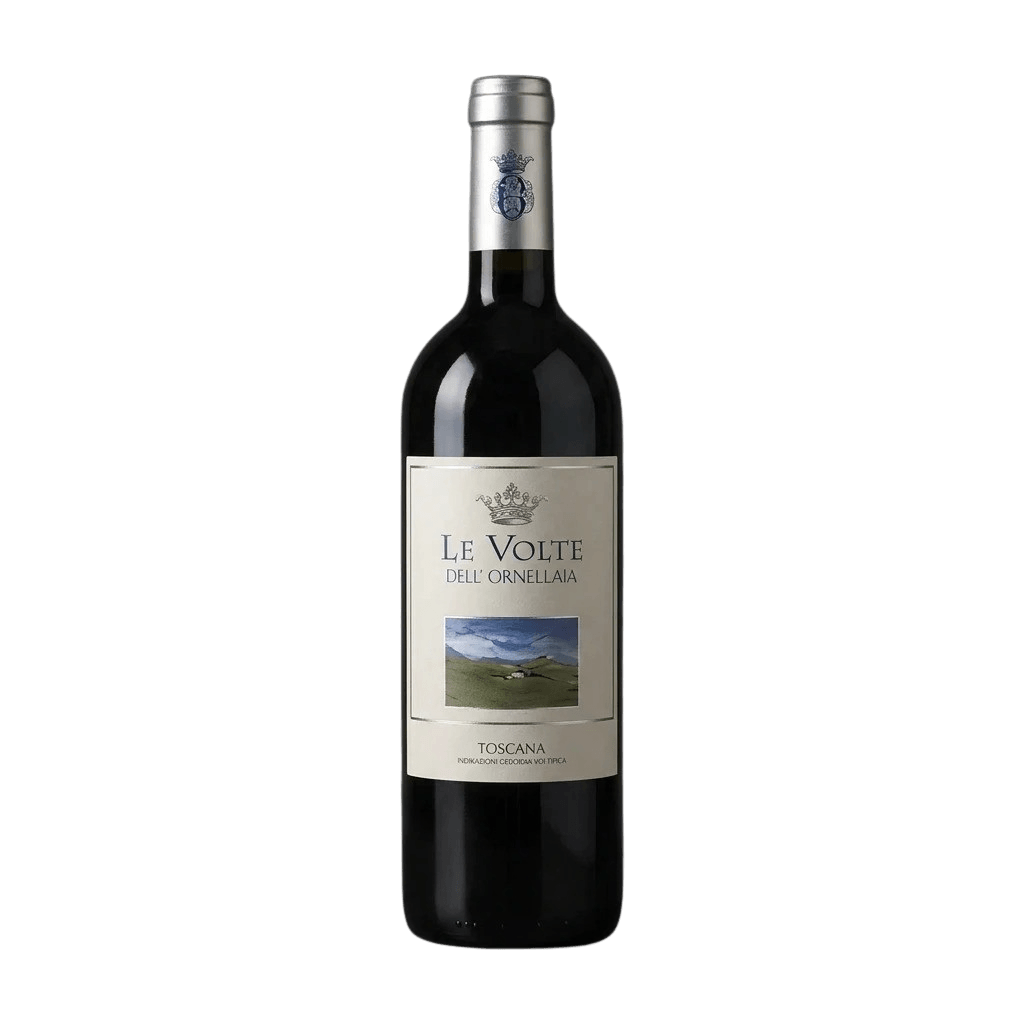
Le Volte dell’Ornellaia
2019
Le Volte dell’Ornellaia is a Toscana IGT red wine from Ornellaia, the renowned estate near Bolgheri on Tuscany’s Mediterranean coast. Produced from a blend of red grape varieties, it combines the estate’s approach to winemaking with an emphasis on fruit, freshness and balanced structure.
Country
Italy
Region
Tuscany - Bolgheri
More information
Producer
Ornellaia is one of Italy's most celebrated Super Tuscan estates and a defining producer of Bordeaux-style wines from coastal Tuscany. Founded in 1981 by Marchese Lodovico Antinori in Bolgheri and now owned by the Frescobaldi family, the estate comprises 115 hectares of vineyards situated just kilometres from the Tyrrhenian Sea. Meticulous attention to parcel-specific terroir and refined winemaking has established Ornellaia as a benchmark for internationally styled fine wine, with both its flagship blend and single-vineyard Masseto achieving global recognition.
Quick Facts
- Location: Bolgheri, Tuscany, Italy
- Founded: 1981
- Founder: Marchese Lodovico Antinori
- Ownership: Frescobaldi family (since 2005)
- Appellation: Bolgheri DOC / Bolgheri Superiore DOC
- Estate size: 115 hectares of vineyards
- Principal grapes: Cabernet Sauvignon, Merlot, Cabernet Franc, Petit Verdot
- Soils: Diverse alluvial and volcanic deposits with marine sediments
- Grand Vin: Ornellaia
- Second wine: Le Serre Nuove dell'Ornellaia
- Signature single vineyard: Masseto (pure Merlot)
- White wine: Ornellaia Bianco (Sauvignon Blanc-led blend)
- Style: Structured, aromatic Bordeaux-style blends with Mediterranean warmth and exceptional ageing potential
A Modern Vision in Bolgheri
Marchese Lodovico Antinori established Ornellaia in 1981 with the ambition to create wines that could rival the great growths of Bordeaux while expressing the distinctive character of Bolgheri's coastal terroir. At a time when Tuscany remained dominated by Sangiovese, Antinori planted Cabernet Sauvignon, Merlot, Cabernet Franc and Petit Verdot on land near the Tyrrhenian Sea.
The estate's first vintage was released in 1985, and within a decade Ornellaia had established itself among Italy's most sought-after wines. The Frescobaldi family assumed ownership in 2005, maintaining the estate's founding philosophy while investing in vineyard management, cellar technology and long-term quality.
Coastal Terroir and Maritime Influence
Ornellaia's 115 hectares of vineyards occupy gently sloping terrain between the coastal plain and the hills east of Bolgheri. Maritime breezes from the Tyrrhenian Sea, located less than five kilometres away, moderate summer heat and create diurnal temperature variation that preserves aromatic freshness and natural acidity.
The estate's soils are notably varied, comprising alluvial deposits of marine origin alongside volcanic material and areas of clay. This diversity allows Ornellaia to match each variety to its ideal site: Cabernet Sauvignon thrives on well-drained gravel and sand, while Merlot finds structure and depth in the cooler, clay-rich parcels. Parcel-by-parcel vinification allows the estate to preserve the distinctive character of each block before final blending.
The Ornellaia Blend and Masseto
The flagship Ornellaia is typically composed of 50 to 60 per cent Cabernet Sauvignon, with Merlot, Cabernet Franc and Petit Verdot in supporting roles. Proportions shift with each vintage to reflect the year's conditions, but the wine consistently expresses aromatic complexity, structured tannins and a balance between power and elegance. After fermentation in temperature-controlled stainless steel, the wine is aged for approximately 18 months in French oak barriques, followed by bottle maturation before release.
At the summit of the estate's portfolio stands Masseto, produced from a seven-hectare single vineyard of pure Merlot planted on dense blue clay. This monopole parcel, located within the Ornellaia estate, yields wines of remarkable concentration, silky texture and exceptional longevity. Masseto has become one of the world's most collectible wines, often mentioned alongside Pomerol's greatest estates.
A Portfolio Shaped by Precision
Le Serre Nuove dell'Ornellaia, introduced with the 1997 vintage, is the estate's second wine and draws from younger vines and parcels that do not enter the Grand Vin. It offers earlier accessibility while reflecting the same philosophy and terroir-driven approach.
Ornellaia Bianco, a Sauvignon Blanc-led white blend with Viognier and smaller proportions of other varieties, demonstrates the estate's commitment to expressing Bolgheri's potential across styles. Fermented and aged partly in French oak, it combines aromatic intensity with structure and freshness, providing a refined counterpoint to the estate's red wines.
Country
Region
Tuscany - Bolgheri
Bolgheri is widely regarded as one of Italy's most influential wine regions and the birthplace of the Super Tuscan movement that revolutionised Italian winemaking in the late 20th century. Located on the Tuscan coast in central Italy, Bolgheri broke from traditional Italian grape varieties and classifications to produce Bordeaux-inspired blends that achieved international acclaim and redefined what Italian fine wine could be. Today the region represents the benchmark for modern Italian winemaking and produces some of the country's most collectible bottles.
The region benefits from a distinctive maritime climate influenced by the Tyrrhenian Sea, which moderates temperatures and extends the growing season. Sandy clay and gravel soils provide ideal drainage and concentration for Cabernet Sauvignon, Merlot, Cabernet Franc and Petit Verdot, while coastal breezes preserve natural acidity and freshness. Granted DOC status in 1994, Bolgheri encompasses both varietal wines and blends, with the prestigious Bolgheri Sassicaia DOC established in 2013 exclusively for Tenuta San Guido's legendary Sassicaia—Italy's first internationally recognised Super Tuscan and the wine that inspired an entire movement.
Bolgheri is home to several iconic estates that have achieved global recognition. Tenuta San Guido produces the celebrated Sassicaia, while Ornellaia, Masseto, Le Macchiole, Grattamacco and Guado al Tasso continue to produce refined and powerful wines that command respect from collectors worldwide. These producers have elevated Bolgheri to a status that rivals Bordeaux's finest appellations and established the region as synonymous with exceptional quality and visionary winemaking.
Whether exploring legendary vintages, prestigious estates or benchmark Super Tuscan blends, Bolgheri offers an exceptional journey through one of Italy's most dynamic wine regions. Discover Bolgheri wines, compare prices from trusted merchants across Europe and find the best offers with Sipfind.
Grapes
Cabernet Sauvignon is one of the world’s most important and widely planted red wine grapes, renowned for its powerful structure, concentrated fruit and exceptional ageing potential. Originating in Bordeaux, France, the variety has become a defining grape of fine wine regions around the world, particularly Napa Valley, Tuscany, Chile, Australia and South Africa.
Classic Cabernet Sauvignon combines flavours and aromas of blackcurrant, cassis, blackberry and dark cherry with characteristic notes of cedar, graphite, tobacco and herbs. Naturally high tannins and fresh acidity provide structure and longevity, while maturation in oak can add layers of spice, vanilla and toast. Its character varies significantly with climate, soil and winemaking, ranging from elegant and savoury to rich, powerful and intensely concentrated.
In Bordeaux, Cabernet Sauvignon is particularly associated with the Left Bank, where it forms the foundation of many prestigious blends alongside Merlot, Cabernet Franc and other permitted varieties. In Napa Valley, it has become the region’s signature red grape, producing some of the world’s most sought-after Cabernet Sauvignon wines.
Cabernet Sauvignon’s ability to express terroir while retaining its distinctive structure and character has made it a global benchmark for premium red wine. Whether produced as the dominant variety in a blend or as a varietal wine, the finest examples combine concentration, complexity and the capacity to develop gracefully over decades
Merlot is one of the world’s most important red wine grapes, celebrated for its generous fruit, supple texture and ability to produce wines ranging from approachable and elegant to exceptionally complex and long-lived. Originating in Bordeaux, France, Merlot is particularly associated with the Right Bank, where it forms the foundation of many of the prestigious wines of Pomerol and Saint-Émilion.
Merlot typically expresses flavours and aromas of plum, black cherry, blackberry and red fruits, often developing notes of chocolate, tobacco, cedar, herbs and earthy complexity with maturation. Its naturally rounded texture and generally softer tannin profile distinguish it from Cabernet Sauvignon, although the finest examples can possess considerable structure, freshness and ageing potential.
In Pomerol, Merlot reaches some of its most celebrated expressions, particularly on the appellation’s clay-rich soils, producing wines of remarkable concentration, texture and complexity. In Saint-Émilion, it is commonly blended with Cabernet Franc and, to a lesser extent, Cabernet Sauvignon, creating wines that combine ripe fruit with structure, aromatic complexity and longevity.
Beyond Bordeaux, Merlot is widely cultivated in Italy, California, Washington State, Chile and other major wine regions. It can be produced as a varietal wine or used as a central component of blends, where its fruit and texture complement more structured grape varieties.
From the great Merlot-based wines of Bordeaux’s Right Bank to leading expressions around the world, Merlot’s combination of rich fruit, refined texture and capacity to express terroir has established it as one of the defining varieties of fine red wine.
Cabernet Franc is one of France’s most historic red wine grapes, valued for its aromatic intensity, vibrant acidity and ability to express both climate and soil with remarkable clarity. It produces elegant single-varietal wines and plays an essential role in some of Bordeaux’s most distinguished blends. Earlier ripening than Cabernet Sauvignon allows Cabernet Franc to perform particularly well in cooler wine regions.
In the Loire Valley, Cabernet Franc reaches its clearest expression as a varietal wine. Typical aromas include redcurrant, raspberry, red cherry and violet, often accompanied by graphite, dried herbs, tobacco and subtle peppery notes. Naturally fresh acidity and finely structured tannins can produce approachable, fruit-driven wines as well as complex examples capable of developing for many years.
The variety is especially important in Chinon, Bourgueil and Saumur-Champigny. Chinon can range from fragrant and supple to deeply structured and age-worthy, depending on vineyard site and soil. Bourgueil often combines dark red fruit with firm structure, while Saumur-Champigny is renowned for freshness, aromatic purity and refined texture. Limestone-rich tuffeau, gravel, sand and clay all contribute to the diversity of Cabernet Franc across these Loire appellations.
In Bordeaux, Cabernet Franc is principally associated with the Right Bank, particularly Saint-Émilion and Pomerol. Usually blended with Merlot and sometimes Cabernet Sauvignon, it contributes perfume, freshness, savoury complexity and structural precision. On suitable limestone and clay terroirs, Cabernet Franc can become a dominant component of exceptionally refined and long-lived wines.
Beyond France, Cabernet Franc is cultivated in regions including Tuscany, Bolgheri, Napa Valley, Washington State, Canada, Argentina and Chile, producing styles shaped by local climate and terroir. Traditionally known as Breton in the Loire and Bouchet in parts of Bordeaux, Cabernet Franc’s combination of aromatic elegance, freshness and ageing potential establishes it as one of the world’s great red wine varieties.
Petit Verdot is a powerful red wine grape from south-west France, best known as a small but distinctive component of the classic red blends of Bordeaux. Its deeply coloured wines, firm tannins and concentrated aromatics allow even modest proportions to add structure, freshness and intensity alongside Cabernet Sauvignon, Merlot and Cabernet Franc.
On Bordeaux’s Left Bank, Petit Verdot is particularly associated with the gravel soils of the Médoc, including appellations such as Margaux, Saint-Julien, Pauillac and Saint-Estèphe. The variety buds relatively early but ripens late, making complete maturation challenging in cooler vintages. When fully ripe, it can retain vibrant acidity while developing considerable colour, tannin and aromatic complexity.
Typical expressions show blackberry, black cherry, blueberry and plum, accompanied by violet, liquorice, pepper, cocoa and other dark spices. In Bordeaux blends, Petit Verdot is generally used in limited quantities to reinforce colour, tannic structure and aromatic depth. Its combination of acidity and tannin can also contribute significantly to a wine’s ageing potential.
Beyond Bordeaux, warmer and more reliable growing conditions have allowed Petit Verdot to achieve greater ripeness and a more prominent role. Producers in California, Australia, Spain and South America increasingly use the variety in both Bordeaux-style blends and varietal wines. These expressions are often full-bodied and deeply coloured, with ripe dark fruit, floral character, spice and powerful tannins.
From its historic role in the Médoc to its expanding presence as a varietal wine, Petit Verdot is defined by colour, structure, freshness and aromatic intensity. Once regarded primarily as a supporting grape, it is increasingly recognised as a distinctive variety capable of producing serious, age-worthy wines in its own right.
History and Style
Le Volte dell’Ornellaia – A Contemporary Expression of Coastal Tuscany
Le Volte dell’Ornellaia is a red wine produced by Ornellaia, the historic estate situated near Bolgheri on Tuscany’s Mediterranean coast. Classified as Toscana IGT Rosso, it represents the estate’s approach to blending, combining carefully selected grape varieties to create a wine defined by fruit expression, freshness and balanced structure.
Introduced in 1991, Le Volte dell’Ornellaia occupies a distinct position within the producer’s portfolio. While Ornellaia and Le Serre Nuove dell’Ornellaia are associated with the Bolgheri appellation, Le Volte carries the broader Toscana IGT designation, reflecting a different approach to vineyard sourcing and blending.
The wine’s composition has evolved over time. Earlier releases combined Sangiovese with Merlot and Cabernet Sauvignon, while more recent vintages have incorporated Petit Verdot in place of Sangiovese. This evolution reflects the importance of distinguishing the permanent identity of the cuvée from the characteristics of individual harvests.
Quick Wine Facts
- Wine Status: Estate-produced Tuscan red wine
- Producer: Ornellaia
- Producer Classification: Part of the Ornellaia wine portfolio
- Appellation: Toscana IGT Rosso
- Region: Tuscany, Italy
- Production Area: Coastal Tuscany, associated with the Bolgheri estate
- Grape Blend: Vintage-dependent; historically Sangiovese, Merlot and Cabernet Sauvignon, with recent releases based on Cabernet Sauvignon, Merlot and Petit Verdot
- Terroir: Mediterranean-influenced Tuscan growing conditions
- Tasting Profile: Red and dark fruit, balanced acidity, supple tannins and subtle savoury or spicy characteristics
- Winemaking: Separate vinification of grape varieties, followed by blending and maturation
- Ageing: Oak maturation has been used across releases, with the precise vessels and duration determined by the vintage
- Wine Style: Dry red wine
- Bottle Size: 750 ml
History and Identity
Ornellaia was established in 1981 by Marchese Lodovico Antinori in the coastal Tuscan area of Bolgheri. The estate became associated with the development of internationally recognised wines made from Bordeaux grape varieties grown under Mediterranean conditions.
Le Volte dell’Ornellaia was introduced in 1991 as a separate expression within the estate’s portfolio.
Its identity differs from that of Ornellaia, the estate’s flagship Bolgheri Superiore, and Le Serre Nuove dell’Ornellaia, its second wine.
Rather than being defined by the same appellation or vineyard selection as those wines, Le Volte is produced under the broader Toscana IGT classification.
This distinction allows the producer to develop a blend that reflects its intended style while responding to the characteristics of different growing seasons.
Over time, Le Volte has maintained an emphasis on fruit expression, freshness and approachable tannin structure, even as its grape composition has evolved.
Vineyards and Terroir
The identity of Le Volte dell’Ornellaia is closely associated with coastal Tuscany and the winemaking traditions of Ornellaia.
The Bolgheri area benefits from the moderating influence of the Mediterranean Sea, which contributes to its distinctive growing conditions.
Warm summers, maritime air circulation and variations in vineyard exposure influence grape development and ripening.
The wider coastal Tuscan landscape contains a range of soil types, including clay, sand and limestone-influenced formations.
At Ornellaia itself, the estate's vineyards occupy a varied landscape of marine and alluvial soils, with individual parcels displaying different characteristics.
However, Le Volte carries the Toscana IGT designation, and its vineyard sourcing should not automatically be equated with the precise vineyard composition of Ornellaia Bolgheri Superiore.
The wine's identity is therefore best understood through its Tuscan origins, grape selection and the producer's approach to blending rather than through a single named vineyard.
Grape Varieties and Blending
Blending is central to Le Volte dell’Ornellaia.
The wine has historically combined traditional Tuscan and international grape varieties, although its composition has changed over successive vintages.
Earlier releases incorporated Sangiovese alongside Merlot and Cabernet Sauvignon.
Sangiovese contributed a distinctly Tuscan dimension through its acidity, red-fruit character and savoury profile.
Merlot provided fruit concentration and a rounded texture, while Cabernet Sauvignon contributed structure and depth.
More recent releases have used Cabernet Sauvignon, Merlot and Petit Verdot.
In these blends, Cabernet Sauvignon contributes structure and dark-fruit characteristics, Merlot provides texture and fruit expression, and Petit Verdot can add colour, tannin and aromatic complexity.
The precise proportions depend on the harvest and the producer's blending decisions.
For this reason, the grape composition of each release should be recorded separately rather than presented as a fixed characteristic of the cuvée.
Winemaking and Maturation
Le Volte dell’Ornellaia is produced through a winemaking process designed to preserve the individual characteristics of its grape varieties before blending.
Producer documentation from different vintages describes separate fermentation of the varieties in stainless steel tanks.
This approach allows the winemaking team to manage fermentation and extraction according to the characteristics of each component.
Following alcoholic fermentation, the wine undergoes malolactic fermentation.
Maturation has traditionally included the use of oak barrels, including barrels previously employed for Ornellaia.
More recent technical documentation also describes the use of concrete tanks alongside previously used oak barrels.
The combination of maturation vessels allows the producer to balance tannin development with the preservation of fruit character.
The precise ageing period and proportions matured in different vessels vary according to the release.
These details belong to the individual vintage rather than the permanent product description.
Style and Tasting Profile
Le Volte dell’Ornellaia is generally characterised by a combination of fruit expression, freshness and balanced tannins.
Its sensory profile varies with the grape composition, growing season and maturation of each vintage.
Appearance
- Ruby to purple-red colour, depending on the vintage.
- Colour intensity influenced by the grape varieties and maturity of the wine.
Aromas
- Red cherries and dark berries.
- Plum, blackberry or blackcurrant characteristics.
- Subtle herbal, floral or spicy notes.
- Additional savoury complexity depending on the vintage and maturation.
Palate
- Medium to full body, depending on the release.
- Fruit-driven character supported by acidity.
- Rounded or supple tannins.
- A balance between freshness, structure and texture.
These characteristics describe the general style of the cuvée rather than a specific vintage tasting note.
Ageing and Serving
Le Volte dell’Ornellaia is generally produced in a style that can be enjoyed relatively young, although its structure and development vary between vintages.
The combination of fruit, acidity and tannins can allow selected releases to develop additional complexity with bottle age.
However, its ageing potential should not be assumed to match that of Ornellaia Bolgheri Superiore.
Serving and food pairing
- Serving temperature: Approximately 16–18°C.
- Glassware: A medium-to-large red wine glass.
- Food pairing: Roasted meats, grilled dishes, mushroom-based preparations and traditional Tuscan cuisine.
- Cellaring: Dependent on vintage, storage conditions and personal preference.
The wine's combination of fruit and structure makes it suitable for a range of savoury dishes without requiring extended bottle maturation.
Le Volte dell’Ornellaia Within the Ornellaia Collection
Le Volte occupies a separate position within the Ornellaia portfolio.
Ornellaia Bolgheri Superiore is the estate's flagship red wine, associated with its Bolgheri vineyards and Bordeaux-inspired blending tradition.
Le Serre Nuove dell’Ornellaia is the estate's second wine, produced under the Bolgheri Rosso DOC designation.
Le Volte dell’Ornellaia is classified as Toscana IGT Rosso and represents a different approach to blending and vineyard sourcing.
Although the three wines share a producer, they should be treated as distinct products with separate identities, classifications and production characteristics.
Compare Le Volte dell’Ornellaia Prices on Sipfind
Explore Le Volte dell’Ornellaia on Sipfind and compare available vintages and prices from selected European wine retailers.
Each vintage is identified separately, allowing comparisons between offers for the same wine, harvest year and bottle format.