
Chateau Léoville-Las Cases
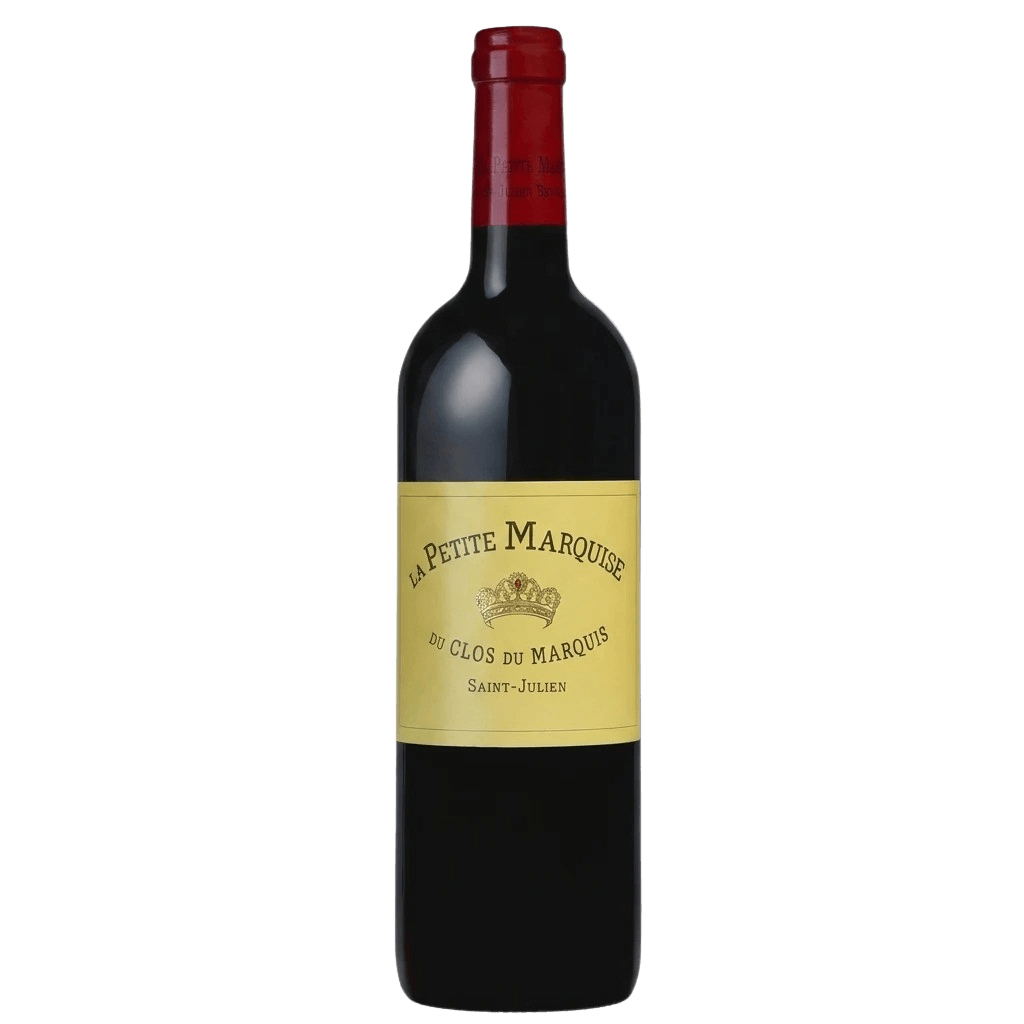
La Petite Marquise
2018
La Petite Marquise is the second wine of Clos du Marquis, produced by Domaines Delon in Saint-Julien, Bordeaux. Introduced in 2015, it reflects the distinctive vineyard origins of Clos du Marquis, combining expressive dark fruit, balanced tannins and the classical character of the northern Médoc. A separate selection from Clos du Marquis, it offers an approachable expression of this historic Saint-Julien terroir.
Country
France
Region
Bordeaux - Saint-Julien
More information
Producer
Château Léoville Las Cases is a leading Second Growth of Saint-Julien and one of the Médoc's most distinguished Cabernet-led estates. Based on the boundary between Saint-Julien and Pauillac and led by Jean-Hubert Delon, the property has remained under the stewardship of the same family since the late 19th century. Its Grand Vin is shaped by the historic, walled Grand Enclos, whose deep gravel soils and proximity to the Gironde produce wines renowned for their precision, structure and exceptional longevity.
Quick Facts
- Location: Saint-Julien-Beychevelle, Médoc, Bordeaux, France
- Classification: Deuxième Cru Classé – Second Growth, 1855
- Historical origin: The former Domaine de Léoville, divided between 1826 and 1840
- Ownership: Jean-Hubert Delon
- Family stewardship: Since the late 19th century
- Core vineyard: The Grand Enclos de Las Cases (approximately 60 hectares)
- Total estate: 98 hectares under vine
- Principal grapes: Cabernet Sauvignon, Cabernet Franc, Merlot
- Soils: Quaternary gravel over gravelly sand and gravelly clay
- Grand Vin: Château Léoville Las Cases
- Second wine: Le Petit Lion du Marquis de Las Cases (introduced 2007)
- Related estate wine: Clos du Marquis, from a separate vineyard parcel
- Style: Structured, mineral, precisely balanced and built for decades of ageing
The Historic Heart of Léoville
The estate traces its origins to the vast Domaine de Léoville, one of the oldest and most important properties in the Médoc. Assembled over centuries, the original Léoville estate stretched across prime gravelly terroir in Saint-Julien and extended into neighbouring Pauillac.
Following the division of the property between 1826 and 1840, Léoville Las Cases retained approximately three-fifths of the original domaine, including the historic heart of its finest vineyard land. The estate was classified as a Second Growth in the landmark 1855 Classification and has remained under the continuous stewardship of the same family since the late 19th century, preserving both its identity and its uncompromising commitment to quality.
The Grand Enclos
The Grand Vin of Château Léoville Las Cases comes principally from the celebrated Grand Enclos, a walled vineyard of nearly 60 hectares situated between the village of Saint-Julien and the boundary with Pauillac. This exceptional parcel contains a complex mosaic of deep Quaternary gravel deposits over gravelly sand and gravelly clay, formed through successive geological periods and providing outstanding natural drainage.
The vineyard's position immediately adjacent to Château Latour underscores the quality of its terroir. The neighbouring Gironde estuary creates a temperate microclimate that moderates temperature extremes, encourages even ripening and offers protection from spring frost. These conditions are ideally suited to Cabernet Sauvignon and Cabernet Franc, which together typically dominate the Grand Vin's blend.
The Grand Enclos is worked with meticulous attention to detail. Low yields, selective vine management and rigorous sorting at harvest provide the foundation for wines of remarkable concentration and definition.
Cabernet-Led Precision
Cabernet Sauvignon normally forms the core of the Grand Vin, supported by Cabernet Franc and Merlot in proportions that vary according to the character of each vintage. The resulting wine combines concentrated dark fruit, graphite-like minerality and finely structured tannins with remarkable freshness, tension and length.
Traditional winemaking methods, including extended maceration and maturation in French oak barrels, allow the estate to produce wines that express the Grand Enclos with clarity and depth. Château Léoville Las Cases is built for extended ageing—often 30 to 50 years or more—and its reputation rests on a consistency of style and quality that places it among the most sought-after wines in Bordeaux.
With time, the Grand Vin's youthful power develops into layered complexity, aromatic refinement and a seamless, harmonious expression of one of Saint-Julien's greatest terroirs.
The Portfolio Context
Le Petit Lion du Marquis de Las Cases, introduced with the 2007 vintage, is the château's second wine. Composed of fruit from younger vines and parcels that do not meet the exacting standards for the Grand Vin, it offers an earlier-maturing expression of the estate's style while retaining the precision and balance that define Léoville Las Cases.
Clos du Marquis is not the second wine of Château Léoville Las Cases. It is produced from a distinct 40-hectare vineyard located approximately 500 metres west of the Grand Enclos and expresses its own identity and terroir within the Saint-Julien appellation. Though made with the same rigorous standards, it remains a separate wine with its own character and evolution.
Country
Region
Bordeaux - Saint-Julien
Saint-Julien is one of the most respected wine appellations in the Médoc and has earned a distinguished reputation for producing some of Bordeaux's most refined and balanced wines. Located between Pauillac and Margaux along the left bank of the Gironde estuary, the appellation combines exceptional terroir with centuries of winemaking tradition. Despite being one of the smallest communal appellations in the Médoc, Saint-Julien boasts an extraordinary concentration of classified growth estates.
The appellation benefits from deep gravel soils mixed with clay and sand, providing excellent drainage while retaining sufficient moisture for the vines. This terroir creates ideal conditions for Cabernet Sauvignon, which dominates most blends, supported by Merlot, Cabernet Franc and Petit Verdot. The maritime influence from the Gironde moderates temperatures, allowing for slow, even ripening that contributes to the appellation's signature balance and refinement.
Saint-Julien is home to eleven classified growths from the 1855 Classification, including five distinguished Second Growths: Château Léoville Las Cases, Château Léoville Poyferré, Château Léoville Barton, Château Ducru-Beaucaillou and Château Gruaud-Larose. These estates produce wines renowned for their harmonious structure, combining concentration and power with remarkable elegance and finesse. The consistent quality across the appellation has made Saint-Julien a benchmark for classic Médoc winemaking.
Discover Saint-Julien wines, compare prices from trusted merchants across Europe and find the best offers with Sipfind.
Grapes
Cabernet Sauvignon is one of the world’s most important and widely planted red wine grapes, renowned for its powerful structure, concentrated fruit and exceptional ageing potential. Originating in Bordeaux, France, the variety has become a defining grape of fine wine regions around the world, particularly Napa Valley, Tuscany, Chile, Australia and South Africa.
Classic Cabernet Sauvignon combines flavours and aromas of blackcurrant, cassis, blackberry and dark cherry with characteristic notes of cedar, graphite, tobacco and herbs. Naturally high tannins and fresh acidity provide structure and longevity, while maturation in oak can add layers of spice, vanilla and toast. Its character varies significantly with climate, soil and winemaking, ranging from elegant and savoury to rich, powerful and intensely concentrated.
In Bordeaux, Cabernet Sauvignon is particularly associated with the Left Bank, where it forms the foundation of many prestigious blends alongside Merlot, Cabernet Franc and other permitted varieties. In Napa Valley, it has become the region’s signature red grape, producing some of the world’s most sought-after Cabernet Sauvignon wines.
Cabernet Sauvignon’s ability to express terroir while retaining its distinctive structure and character has made it a global benchmark for premium red wine. Whether produced as the dominant variety in a blend or as a varietal wine, the finest examples combine concentration, complexity and the capacity to develop gracefully over decades
Merlot is one of the world’s most important red wine grapes, celebrated for its generous fruit, supple texture and ability to produce wines ranging from approachable and elegant to exceptionally complex and long-lived. Originating in Bordeaux, France, Merlot is particularly associated with the Right Bank, where it forms the foundation of many of the prestigious wines of Pomerol and Saint-Émilion.
Merlot typically expresses flavours and aromas of plum, black cherry, blackberry and red fruits, often developing notes of chocolate, tobacco, cedar, herbs and earthy complexity with maturation. Its naturally rounded texture and generally softer tannin profile distinguish it from Cabernet Sauvignon, although the finest examples can possess considerable structure, freshness and ageing potential.
In Pomerol, Merlot reaches some of its most celebrated expressions, particularly on the appellation’s clay-rich soils, producing wines of remarkable concentration, texture and complexity. In Saint-Émilion, it is commonly blended with Cabernet Franc and, to a lesser extent, Cabernet Sauvignon, creating wines that combine ripe fruit with structure, aromatic complexity and longevity.
Beyond Bordeaux, Merlot is widely cultivated in Italy, California, Washington State, Chile and other major wine regions. It can be produced as a varietal wine or used as a central component of blends, where its fruit and texture complement more structured grape varieties.
From the great Merlot-based wines of Bordeaux’s Right Bank to leading expressions around the world, Merlot’s combination of rich fruit, refined texture and capacity to express terroir has established it as one of the defining varieties of fine red wine.
Cabernet Franc is one of France’s most historic red wine grapes, valued for its aromatic intensity, vibrant acidity and ability to express both climate and soil with remarkable clarity. It produces elegant single-varietal wines and plays an essential role in some of Bordeaux’s most distinguished blends. Earlier ripening than Cabernet Sauvignon allows Cabernet Franc to perform particularly well in cooler wine regions.
In the Loire Valley, Cabernet Franc reaches its clearest expression as a varietal wine. Typical aromas include redcurrant, raspberry, red cherry and violet, often accompanied by graphite, dried herbs, tobacco and subtle peppery notes. Naturally fresh acidity and finely structured tannins can produce approachable, fruit-driven wines as well as complex examples capable of developing for many years.
The variety is especially important in Chinon, Bourgueil and Saumur-Champigny. Chinon can range from fragrant and supple to deeply structured and age-worthy, depending on vineyard site and soil. Bourgueil often combines dark red fruit with firm structure, while Saumur-Champigny is renowned for freshness, aromatic purity and refined texture. Limestone-rich tuffeau, gravel, sand and clay all contribute to the diversity of Cabernet Franc across these Loire appellations.
In Bordeaux, Cabernet Franc is principally associated with the Right Bank, particularly Saint-Émilion and Pomerol. Usually blended with Merlot and sometimes Cabernet Sauvignon, it contributes perfume, freshness, savoury complexity and structural precision. On suitable limestone and clay terroirs, Cabernet Franc can become a dominant component of exceptionally refined and long-lived wines.
Beyond France, Cabernet Franc is cultivated in regions including Tuscany, Bolgheri, Napa Valley, Washington State, Canada, Argentina and Chile, producing styles shaped by local climate and terroir. Traditionally known as Breton in the Loire and Bouchet in parts of Bordeaux, Cabernet Franc’s combination of aromatic elegance, freshness and ageing potential establishes it as one of the world’s great red wine varieties.
Petit Verdot is a powerful red wine grape from south-west France, best known as a small but distinctive component of the classic red blends of Bordeaux. Its deeply coloured wines, firm tannins and concentrated aromatics allow even modest proportions to add structure, freshness and intensity alongside Cabernet Sauvignon, Merlot and Cabernet Franc.
On Bordeaux’s Left Bank, Petit Verdot is particularly associated with the gravel soils of the Médoc, including appellations such as Margaux, Saint-Julien, Pauillac and Saint-Estèphe. The variety buds relatively early but ripens late, making complete maturation challenging in cooler vintages. When fully ripe, it can retain vibrant acidity while developing considerable colour, tannin and aromatic complexity.
Typical expressions show blackberry, black cherry, blueberry and plum, accompanied by violet, liquorice, pepper, cocoa and other dark spices. In Bordeaux blends, Petit Verdot is generally used in limited quantities to reinforce colour, tannic structure and aromatic depth. Its combination of acidity and tannin can also contribute significantly to a wine’s ageing potential.
Beyond Bordeaux, warmer and more reliable growing conditions have allowed Petit Verdot to achieve greater ripeness and a more prominent role. Producers in California, Australia, Spain and South America increasingly use the variety in both Bordeaux-style blends and varietal wines. These expressions are often full-bodied and deeply coloured, with ripe dark fruit, floral character, spice and powerful tannins.
From its historic role in the Médoc to its expanding presence as a varietal wine, Petit Verdot is defined by colour, structure, freshness and aromatic intensity. Once regarded primarily as a supporting grape, it is increasingly recognised as a distinctive variety capable of producing serious, age-worthy wines in its own right.
History and Style
La Petite Marquise – The Second Wine of Clos du Marquis
La Petite Marquise is the second red wine of Clos du Marquis, produced by Domaines Delon in the Saint-Julien appellation of Bordeaux. Introduced with the 2015 vintage, the wine represents a separate selection from the vineyards associated with Clos du Marquis, an independent Saint-Julien wine first produced in 1902.
The vineyards lie in the northern part of Saint-Julien, west of the historic Grand Enclos of Château Léoville Las Cases and close to the boundary with Pauillac. Their location and geological characteristics provide the foundation for a distinctive expression of the Médoc.
La Petite Marquise shares its vineyard origins and winemaking expertise with Clos du Marquis but is assembled as a separate wine. Its style generally emphasises expressive fruit, balanced tannins and an approachable structure while retaining the freshness and definition associated with Cabernet Sauvignon-based Saint-Julien.
The wine occupies a specific position within the Domaines Delon portfolio. It is the second wine of Clos du Marquis, not the second wine of Château Léoville Las Cases. That distinction is important because Clos du Marquis itself is an independent wine with separate vineyard origins from the Grand Vin of Léoville Las Cases.
The precise grape composition, maturation and ageing potential of La Petite Marquise vary according to the vintage.
Wine at a Glance
- Wine: La Petite Marquise
- Producer: Domaines Delon / Château Léoville Las Cases
- Wine Family: Clos du Marquis
- Appellation: Saint-Julien AOC
- Region: Médoc, Bordeaux, France
- First Vintage: 2015
- Wine Category: Second Wine of Clos du Marquis
- Wine Type: Dry Red Bordeaux
- Principal Grape Varieties: Cabernet Sauvignon and Merlot
- Other Varieties: Cabernet Franc and Petit Verdot may be present according to vintage
- Vineyard Origins: Parcels associated with Clos du Marquis
- Terroir: Gravel-rich soils with varied underlying geology
- Classification: Not independently classified under the 1855 Bordeaux Classification
- Bottle Format: 750 ml
- Vintage: Identified by individual harvest year
The Origins of La Petite Marquise
La Petite Marquise was introduced with the 2015 vintage as the second wine of Clos du Marquis.
Its creation added a further level of selection to the Domaines Delon portfolio.
Clos du Marquis had already maintained a separate identity for more than a century, having been first produced in 1902.
The introduction of La Petite Marquise allowed the estate to distinguish between different selections originating from the Clos du Marquis vineyard holdings.
This approach reflects a broader Bordeaux tradition in which separate wines are assembled to express different characteristics of a property's production.
However, La Petite Marquise has a particularly clear identity because its relationship is specifically with Clos du Marquis.
The Meaning of the Name
The name La Petite Marquise reflects its relationship with Clos du Marquis.
The word Marquise provides a direct linguistic connection to the established wine.
Its identity should therefore be understood within the history of Clos du Marquis rather than as a separate château or estate.
A Distinct Wine Selection
La Petite Marquise is produced as a separate wine from Clos du Marquis.
The selection allows the winemaking team to assemble a wine with its own balance of fruit, structure and approachability.
Although the two wines share vineyard origins, they are distinct bottled products.
Their grape proportions, maturation and ageing characteristics may differ.
Domaines Delon – A Family Tradition in Bordeaux
Domaines Delon is a family-owned Bordeaux wine organisation associated with several historic estates.
Its portfolio includes Château Léoville Las Cases in Saint-Julien, Château Nénin in Pomerol and Château Potensac in the Médoc.
Clos du Marquis and La Petite Marquise form part of the Saint-Julien wines produced within this organisation.
The family's association with Léoville Las Cases extends through generations.
Over time, Domaines Delon has developed a production structure that distinguishes between wines according to vineyard origin and selection.
The Saint-Julien Wine Family
Within Saint-Julien, the organisation produces several separate wines.
Château Léoville Las Cases is the classified Grand Vin.
Le Petit Lion du Marquis de Las Cases is its second wine.
Clos du Marquis is an independent wine from separate vineyard parcels.
La Petite Marquise is the second wine of Clos du Marquis.
This structure allows the wines to retain their individual identities while sharing the expertise of the same producer.
Saint-Julien – A Historic Médoc Appellation
Saint-Julien lies on Bordeaux's Left Bank, within the Haut-Médoc.
The appellation is situated between Pauillac to the north and Margaux to the south.
It is recognised for Cabernet Sauvignon-based red wines combining structure, freshness and ageing potential.
The landscape is characterised by gravel ridges and varied subsoils.
These geological features influence vineyard drainage and the availability of water to vine roots.
The nearby Gironde estuary also contributes to the area's climatic conditions.
The Northern Saint-Julien Identity
The vineyards associated with Clos du Marquis are situated in northern Saint-Julien.
Their proximity to Pauillac is geographically significant.
The area is particularly associated with gravel soils and Cabernet Sauvignon.
The resulting wines can display a structured profile, dark-fruit concentration and pronounced tannic definition.
La Petite Marquise reflects this vineyard environment through a separate selection intended to offer its own balance and character.
The Terroir of Clos du Marquis
La Petite Marquise originates from the vineyard holdings associated with Clos du Marquis.
These vineyards are located west of the Grand Enclos of Château Léoville Las Cases.
Their geological characteristics differ from those of the historic enclosure.
Gravel-Rich Soils
Gravel is one of the defining features of the Médoc.
Its physical characteristics influence drainage and soil temperature.
The composition and depth of gravel deposits can vary between vineyard parcels.
These variations affect the environment in which the vines develop.
Underlying Soils
Beneath the gravel, different soil layers influence water retention and root development.
The relationship between surface drainage and deeper water availability becomes particularly important during dry growing seasons.
The Influence of the Growing Season
The characteristics of the terroir are expressed differently from year to year.
Rainfall, temperature and sunlight influence vine development and grape ripening.
Harvest timing and vineyard management also contribute to the final character of the wine.
La Petite Marquise therefore reflects both its geographical origins and the conditions of the individual vintage.
Cabernet Sauvignon – Structure and Definition
Cabernet Sauvignon is one of the principal grape varieties associated with the Clos du Marquis vineyards.
It contributes structure, freshness and aromatic definition.
Depending on the vintage, Cabernet Sauvignon may provide:
- Blackcurrant.
- Blackberry.
- Dark cherry.
- Cedar-like aromas.
- Herbal complexity.
- Firm tannins.
- Fresh acidity.
- Structural definition.
Its characteristics depend on ripeness and growing conditions.
Cabernet Sauvignon in Northern Saint-Julien
Cabernet Sauvignon is well suited to the gravel-rich soils of the Médoc.
The variety generally requires a relatively long growing season to reach maturity.
Its tannins and acidity can provide the framework for bottle development.
In La Petite Marquise, Cabernet Sauvignon contributes to the wine's classical Bordeaux identity.
Merlot – Fruit and Texture
Merlot plays an important complementary role in the wines of Saint-Julien.
It can contribute fruit concentration, texture and a rounded palate.
Depending on the vintage, its characteristics may include:
- Plum.
- Black cherry.
- Blackberry.
- Ripe red fruits.
- Supple tannins.
- A rounded mid-palate.
Merlot can help balance the firmer structure of Cabernet Sauvignon.
The final proportions are determined according to the characteristics of the vintage and the estate's selection.
Additional Bordeaux Varieties
Cabernet Franc and Petit Verdot are also associated with the traditional grape composition of the Clos du Marquis vineyard holdings.
Their presence in individual vintages of La Petite Marquise should be confirmed through the relevant technical documentation.
Cabernet Franc
Cabernet Franc may contribute aromatic freshness, floral characteristics and fine structural detail.
Petit Verdot
Petit Verdot can contribute colour, tannic concentration and aromatic intensity when included in a blend.
Vintage-Specific Composition
The presence of a grape variety in the vineyard does not necessarily mean it is included in every bottled vintage.
For this reason, exact grape percentages belong on the individual vintage pages.
Vineyard Management and Harvest
The production of La Petite Marquise begins with the management of the Clos du Marquis vineyard holdings.
The estate monitors vine development throughout the growing season.
Different grape varieties and parcels may reach maturity at different times.
Harvest decisions therefore depend on the condition of the fruit.
The Importance of Selection
The characteristics of individual parcels can vary because of:
- Soil composition.
- Drainage.
- Vine age.
- Grape variety.
- Exposure.
- Seasonal temperatures.
- Rainfall.
- Vineyard management.
The estate's approach to selection allows these differences to be considered during winemaking.
Harvest Conditions
The weather during the growing season influences the balance between fruit concentration, acidity and tannin development.
Warm vintages may produce greater ripeness.
Cooler vintages can emphasise freshness and a more restrained aromatic profile.
The final result depends on the complete growing season.
Vinification – A Separate Wine Identity
La Petite Marquise is produced through the winemaking expertise of Domaines Delon.
The estate's approach involves the assessment of individual grape and wine lots.
This provides flexibility when assembling the final blend.
Fermentation
During alcoholic fermentation, yeast converts grape sugars into alcohol.
The management of fermentation influences the wine's aromatic profile, colour and tannic structure.
Extraction
The extraction of compounds from grape skins contributes to colour, tannins and texture.
The winemaking team must balance extraction with the maturity and quality of the fruit.
Selection and Blending
The final wine is assembled from suitable components associated with the Clos du Marquis vineyard identity.
La Petite Marquise is selected separately from Clos du Marquis.
This distinction is fundamental to the wine's position within the producer's portfolio.
Oak Maturation – Developing Balance
La Petite Marquise undergoes maturation before bottling.
The precise oak programme and duration should be confirmed for each vintage.
Oak maturation can influence the integration of tannins, aromatic complexity and texture.
The Role of Oak
During barrel ageing, gradual oxygen exchange and interaction with the wood can contribute to the development of the wine.
The effects depend on the characteristics of the barrels and the duration of maturation.
Integration of Structure
For Cabernet Sauvignon-based Bordeaux wines, maturation can help integrate tannins and develop the relationship between fruit and structure.
The objective is to produce a balanced wine rather than one dominated by oak aromas.
Wine Style and Tasting Profile
La Petite Marquise is associated with an approachable expression of the northern Saint-Julien terroir.
Its style generally combines dark-fruit aromas with freshness and balanced tannins.
The precise characteristics vary according to the vintage.
Appearance
Young examples generally display a ruby-red colour.
With bottle maturity, the colour may develop garnet reflections.
Aromatic Profile
Depending on the vintage and maturity, the wine may display:
- Blackcurrant.
- Blackberry.
- Dark cherry.
- Plum.
- Cedar.
- Subtle spice.
- Herbal complexity.
- Earthy notes with maturity.
These are characteristics associated with the wine's style rather than fixed tasting notes for every vintage.
Palate
The palate generally combines fruit expression with a structured but approachable tannic profile.
Cabernet Sauvignon contributes definition and freshness.
Merlot provides complementary fruit and texture.
The balance depends on the final blend and the growing season.
Finish
The finish may combine dark fruit, freshness and subtle savoury characteristics.
Its length and structure vary between vintages.
Ageing Potential
La Petite Marquise is generally intended to be approachable earlier than Clos du Marquis.
However, its ageing potential depends on the vintage.
Development in Bottle
Younger bottles may emphasise fresh dark fruit and a more direct aromatic expression.
With suitable bottle ageing, some vintages may develop additional savoury characteristics.
Factors Influencing Ageing
- Vintage conditions.
- Grape composition.
- Acidity.
- Tannin structure.
- Fruit concentration.
- Maturation.
- Storage conditions.
No universal drinking window should be applied to every vintage.
Serving and Food Pairing
La Petite Marquise is suited to dishes that complement its dark-fruit character and balanced structure.
Beef
Roast beef and grilled beef dishes can complement the wine's tannins and fruit concentration.
Lamb
Roast lamb with herbs is a traditional pairing for Cabernet Sauvignon-based Bordeaux.
Poultry
Roast duck and other richly flavoured poultry dishes can work well with the wine's structure.
Mushrooms
Mushroom-based dishes may complement bottles displaying greater savoury complexity.
Mature Cheeses
Selected firm cheeses can provide suitable pairings depending on their intensity.
Serving Recommendations
- Serving Temperature: Approximately 16–18°C.
- Glassware: Bordeaux-style red wine glass.
- Decanting: Assess according to vintage and maturity.
- Storage: Cool, dark conditions with a stable temperature.
- Drinking Window: Vintage-specific.
La Petite Marquise and Clos du Marquis
The relationship between La Petite Marquise and Clos du Marquis is central to understanding the wine.
Clos du Marquis
Clos du Marquis is an independent Saint-Julien wine first produced in 1902.
It originates from distinct vineyard parcels west of the Grand Enclos of Château Léoville Las Cases.
La Petite Marquise
La Petite Marquise is the second wine of Clos du Marquis.
It shares the same vineyard identity but is produced through a separate selection.
The two wines may differ in grape composition, structure, maturation and ageing potential.
Château Léoville Las Cases
Château Léoville Las Cases is the classified Grand Vin associated with the historic Grand Enclos.
Its second wine is Le Petit Lion du Marquis de Las Cases.
La Petite Marquise should not be confused with either of these wines.
Understanding Vintage Variation
Every vintage of La Petite Marquise reflects the growing conditions of its harvest year.
Temperature, rainfall and harvest timing influence grape maturity.
The final blend can vary.
Alcohol levels, maturation and ageing potential may also differ.
The permanent product page should therefore focus on the wine's identity, vineyard origins and established production philosophy.
Precise technical details belong on the individual vintage pages.
Discover La Petite Marquise on Sipfind
Explore La Petite Marquise, the second wine of Clos du Marquis, produced by Domaines Delon in Saint-Julien, Bordeaux.
Discover its vineyard origins, traditional Bordeaux grape varieties and the characteristics of individual vintages.
Compare available offers from European wine retailers on Sipfind, with vintage and bottle format clearly distinguished.