
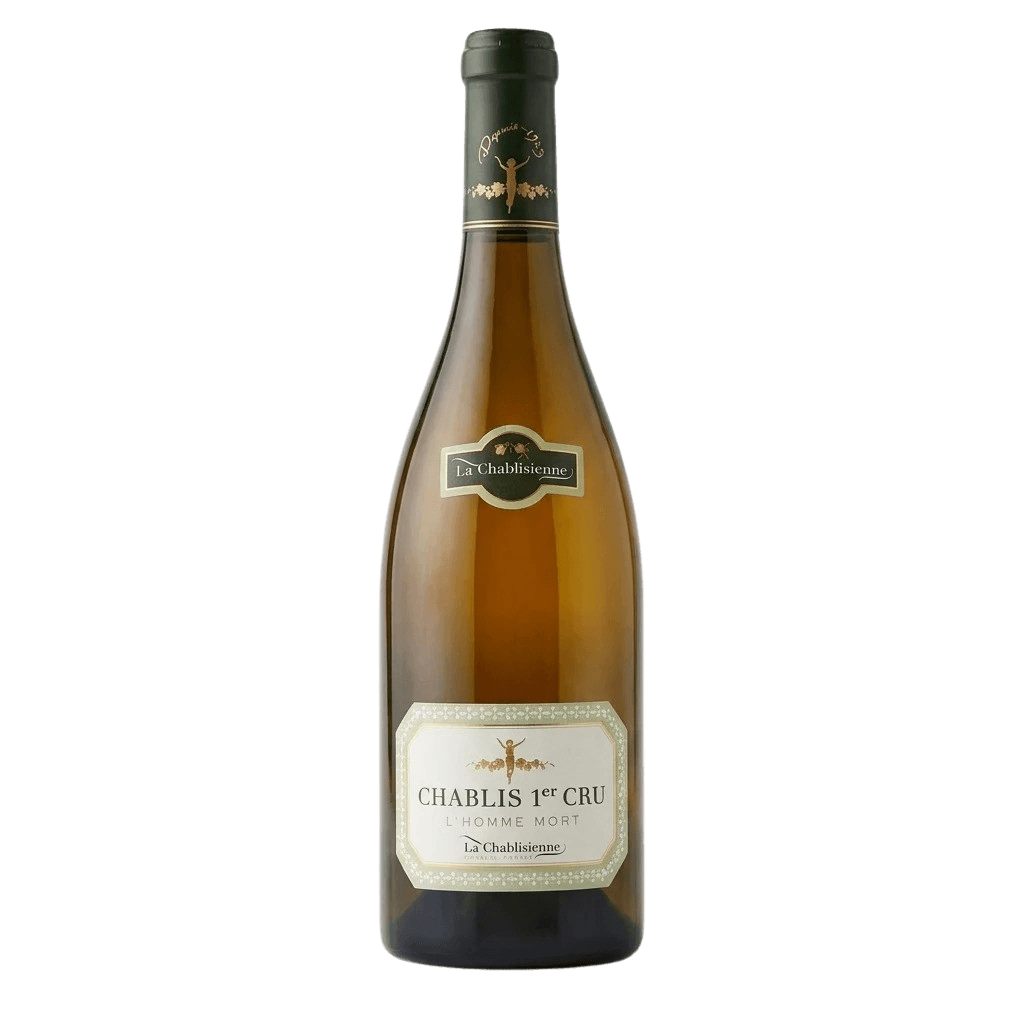
La Chablisienne
La Chablisienne L’Homme Mort
2022
From 45 EUR from 1 retailers
La Chablisienne L’Homme Mort is a distinctive Chablis Premier Cru Chardonnay from a named vineyard site within the Fourchaume grouping. Combining citrus and orchard-fruit character with mineral freshness and structured acidity, this dry white Burgundy wine reflects the limestone-rich terroir of Chablis’ right bank.
Country
France
Region
Bourgogne - Northern Burgundy
Number of retailers: 1
8wines
Ireland
La Chablisienne L’Homme Mort
2022
More information
Producer
La Chablisienne – A Century of Chardonnay in Chablis
Founded in 1923, La Chablisienne is a historic winegrowers' cooperative based in Chablis, in the northernmost part of Bourgogne. Established through the collaboration of local growers, it has developed into an important producer of Chardonnay wines across the region's appellations, from Petit Chablis and Chablis to Premier Cru and Grand Cru.
Unlike a single-estate domaine, La Chablisienne works with a network of winegrowers whose vineyards encompass different soils, exposures and recognised vineyard sites. This collective structure gives the cooperative access to a broad range of Chablis terroirs while maintaining a shared approach to winemaking and quality.
A Cooperative Founded in 1923
La Chablisienne was established at a time when Chablis growers faced considerable economic and agricultural challenges. By working together, local producers sought greater stability and a more consistent means of producing and selling their wines.
Over the following decades, the cooperative developed its technical expertise and expanded its range of wines, while remaining closely associated with the vineyards and growers of Chablis.
Its history reflects the importance of cooperation in preserving and developing the region's viticultural traditions.
The Terroir of Northern Bourgogne
Chablis lies considerably farther north than the Côte d'Or, giving the region a cooler climate and a distinctive expression of Chardonnay.
Its vineyards are particularly associated with Kimmeridgian geological formations, composed of limestone and clay containing marine fossils.
These soils, together with the region's climate and vineyard exposures, contribute to the character of Chablis wines.
La Chablisienne works with grapes from different parts of the appellation, allowing it to produce wines that express both the broader identity of Chablis and the individual characteristics of recognised vineyard sites.
Chardonnay Across the Chablis Appellations
Chardonnay is the defining grape variety of Chablis and the foundation of La Chablisienne's wines.
The cooperative produces wines across the region's principal appellation levels.
Petit Chablis generally offers a fresh, direct expression of Chardonnay, while Chablis AOC can show greater depth and variation according to vineyard origin and winemaking.
Premier Cru wines come from designated vineyard sites recognised for their particular conditions and historical reputations.
At the highest appellation level, Chablis Grand Cru encompasses a limited group of vineyard climats on the slopes overlooking the town of Chablis.
La Chablisienne produces wines from several recognised Premier Cru and Grand Cru sites, including Montée de Tonnerre, Fourchaume, Les Clos and Grenouilles.
Each wine must be understood in relation to its specific vineyard origin and appellation.
Winemaking and the Expression of Terroir
La Chablisienne's winemaking approach seeks to preserve the identity of Chardonnay and the distinctive characteristics of Chablis.
Fermentation and maturation methods vary across the range, with stainless steel and oak used according to the intended style and individual cuvée.
The use of oak should not be assumed to be identical across all wines or vintages.
For Chablis, the balance between freshness, texture and aromatic development is particularly important.
The cooperative's range demonstrates how Chardonnay can express different levels of concentration, structure and complexity within a relatively compact geographical area.
Wine Style and Ageing Potential
La Chablisienne's wines are generally associated with citrus fruit, green apple, white flowers and mineral or saline impressions.
Premier Cru and Grand Cru wines may show greater depth, texture and complexity, with suitable examples developing additional savoury and tertiary characteristics through bottle ageing.
However, the style and ageing potential of each wine depend on its vineyard origin, vintage and winemaking.
A Petit Chablis intended for early enjoyment should not be described in the same terms as a structured Grand Cru Les Clos.
Notable Wines of La Chablisienne
The producer's portfolio includes wines representing different expressions of Chablis.
Les Vénérables is a recognised Chablis cuvée, while Premier Cru wines such as Montée de Tonnerre and Fourchaume demonstrate the individuality of specific vineyard sites.
At Grand Cru level, Les Clos and Grenouilles represent two distinguished expressions of Chardonnay from the historic Grand Cru slopes.
These wines differ in origin, structure and maturation, and should be treated as separate products rather than variations of a single generic Chablis wine.
Discover La Chablisienne on Sipfind
Explore La Chablisienne's Chardonnay wines across the Chablis appellations on Sipfind.
Discover individual cuvées, vineyard designations and vintages, and compare available European retailer offers for the same wine, vintage and bottle format.
Country
Region
Bourgogne - Northern Burgundy
Northern Burgundy is a respected wine region in eastern France, encompassing the historic appellations of Chablis and the Auxerrois. Known primarily for exceptional Chardonnay grown on Kimmeridgian limestone and fossilised oyster shell soils, the area produces distinctive wines celebrated for their minerality, precision and remarkable ageing potential. The cool continental climate and unique geological composition create ideal conditions for expressing pure Chardonnay character, making the region a benchmark for unoaked and terroir-focused white wine production.
Chablis remains the most recognised appellation within Northern Burgundy, with seven Grand Cru vineyards including Les Clos, Vaudésir and Blanchot producing wines of notable depth and complexity. Premier Cru sites such as Montmains, Fourchaume and Vaillons offer refined expressions of the region's signature style. Respected producers including Domaine William Fèvre, Domaine Raveneau, Domaine Vincent Dauvissat and Domaine Christian Moreau consistently demonstrate the region's capacity for world-class Chardonnay that balances steely minerality with elegant fruit character.
Discover Northern Burgundy wines, compare prices from trusted merchants across Europe and find the best offers with Sipfind.
Grapes
Chardonnay is one of the world’s most important and prestigious white wine grapes, renowned for its remarkable versatility and ability to reflect both terroir and winemaking style. Most famously associated with Burgundy and Champagne in France, Chardonnay is cultivated across virtually every major wine-producing country and can produce everything from precise, mineral-driven whites to rich, complex wines with exceptional ageing potential.
In Burgundy, Chardonnay reaches some of its most celebrated expressions. The limestone-rich vineyards of Chablis are known for wines combining vibrant acidity, citrus character and mineral precision, while the Côte de Beaune, particularly appellations such as Meursault, Puligny-Montrachet and Chassagne-Montrachet, produces some of the world’s most sought-after and age-worthy white wines.
Chardonnay also plays a fundamental role in Champagne, where it contributes freshness, finesse and acidity to blends alongside Pinot Noir and Meunier. When produced exclusively from Chardonnay, the resulting Champagne is known as Blanc de Blancs, a style prized for its elegance, precision and capacity to develop considerable complexity with extended ageing.
The grape’s character varies significantly according to climate, terroir and winemaking. Cooler regions can produce wines showing citrus, green apple, white flowers and mineral notes, while warmer conditions can bring peach, melon and tropical-fruit character. Oak fermentation, barrel ageing and malolactic fermentation can introduce additional layers of toast, vanilla, butter and hazelnut, demonstrating Chardonnay’s exceptional stylistic range.
Beyond France, Chardonnay has established important expressions in California, Australia, New Zealand, South Africa and numerous other wine regions. From the mineral whites of Chablis and the great vineyards of Burgundy to Blanc de Blancs Champagne and modern New World interpretations, Chardonnay’s combination of versatility, complexity and terroir expression has established it as one of the defining grape varieties of fine wine.
History and Style
La Chablisienne L’Homme Mort – A Distinctive Premier Cru of Chablis
La Chablisienne Chablis Premier Cru L’Homme Mort is a dry white Burgundy wine made exclusively from Chardonnay. Produced by the historic Chablis winegrowers’ cooperative La Chablisienne, the wine originates from the L’Homme Mort vineyard on the right bank of the River Serein.
L’Homme Mort is a named Premier Cru climat associated with the Fourchaume vineyard grouping. Its identity reflects a specific geographical origin within one of Chablis’ established Premier Cru areas, rather than a generic expression of the wider appellation.
Quick Facts – Bullet Points
- Producer: La Chablisienne, founded in 1923
- Appellation: Chablis Premier Cru AOC, Bourgogne, France
- Vineyard: L’Homme Mort, within the Fourchaume Premier Cru grouping
- Grape Variety: 100% Chardonnay
- Terroir: Limestone and marl soils on the right bank of the River Serein
- Wine Style: Dry white wine with citrus fruit, mineral freshness and structured acidity
L’Homme Mort – A Named Climat Within Fourchaume
The L’Homme Mort vineyard lies north of the town of Chablis, within the right-bank Premier Cru vineyards associated with Fourchaume.
Chablis Premier Cru is organised around recognised vineyard sites, some of which belong to broader geographical groupings. L’Homme Mort is one of the named climats associated with Fourchaume.
This relationship is important when identifying the wine.
Although L’Homme Mort and Fourchaume are geographically connected, La Chablisienne produces separately named wines under these designations. Their vineyard sourcing and individual identities must therefore be distinguished.
Limestone Terroir and Vineyard Character
The vineyards of northern Chablis are associated with limestone and marl formations that form part of the region’s distinctive geological landscape.
Kimmeridgian geology is particularly important to the traditional identity of Chablis, although soil composition and exposure vary between vineyard sites.
The right-bank location of L’Homme Mort places it within a landscape where vineyard orientation, slope and local climatic conditions influence Chardonnay ripening.
These factors contribute to differences in fruit expression, acidity and structure between Premier Cru wines.
L’Homme Mort should therefore be understood as an expression of its own vineyard origin rather than as interchangeable with other Fourchaume-associated climats.
Chardonnay and the Northern Bourgogne Climate
Chardonnay is the sole grape variety used for La Chablisienne L’Homme Mort.
Chablis occupies the northern part of Bourgogne, where relatively cool growing conditions influence grape ripening and the preservation of acidity.
In this environment, Chardonnay can develop citrus and orchard-fruit characteristics while retaining the freshness associated with Chablis.
The precise balance of fruit, acidity and texture depends on the growing season and decisions made during winemaking.
La Chablisienne’s Premier Cru Range
Founded in 1923, La Chablisienne is a winegrowers’ cooperative bringing together producers from across the Chablis region.
Its portfolio includes wines from Petit Chablis, Chablis, Premier Cru and Grand Cru appellations.
L’Homme Mort belongs to the cooperative’s Premier Cru range, alongside separately identified wines such as Fourchaume, Montmains and Côte de Léchet.
Each cuvée is associated with its own vineyard designation and should be evaluated independently.
The distinction is particularly relevant for L’Homme Mort because of its geographical relationship with Fourchaume.
Winemaking and Maturation
La Chablisienne L’Homme Mort is produced from Chardonnay grown in its designated Premier Cru vineyard area.
Fermentation and maturation influence the wine’s aromatic development, texture and structure.
The choice of fermentation vessels, any use of oak and the duration of maturation should be established from the producer’s technical information for the relevant release.
These details should not be inferred from the production methods of La Chablisienne’s other Premier Cru wines.
The vineyard identity remains consistent, while individual vintages may differ in their composition of fruit character, acidity and maturity.
Wine Style and Ageing Potential
L’Homme Mort is associated with the freshness and structure characteristic of Premier Cru Chablis.
Its general aromatic profile may include lemon, green apple, orchard fruit and subtle floral notes, alongside mineral or saline impressions.
The wine can display a combination of defined acidity and palate texture, with greater depth than more straightforward expressions of Chablis.
Suitable vintages may develop additional complexity through bottle ageing, potentially revealing honeyed, nutty or savoury characteristics.
The precise drinking window depends on the vintage, storage conditions and individual preferences.
Discover La Chablisienne L’Homme Mort on Sipfind
Explore La Chablisienne Chablis Premier Cru L’Homme Mort across individual vintages on Sipfind.
Compare available European retailer offers for the same wine, vintage and 750 ml bottle format.