
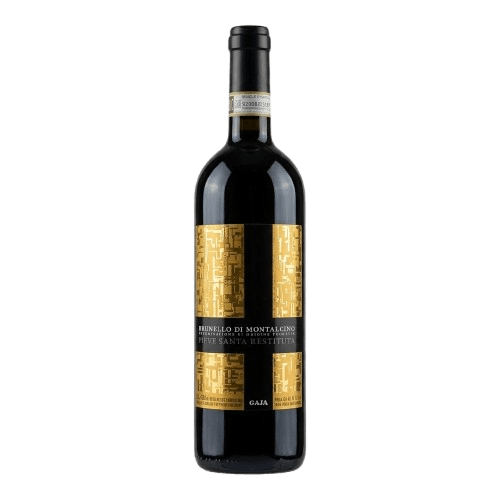
Gaja
Gaja Pieve Santa Restituta Brunello di Montalcino
A refined expression of Brunello di Montalcino from the Gaja family's Pieve Santa Restituta estate. Crafted exclusively from Sangiovese, this Tuscan red wine combines vibrant acidity, layered cherry fruit, savoury complexity and structured tannins, with the potential to develop greater depth through bottle ageing.
Country
Italy
Region
Tuscany
Scoring
No ratings are available for this vintage
More information
Producer
Founded in 1859 by Giovanni Gaja, this Barbaresco estate has become one of Italy's most internationally renowned wine producers and a benchmark for Nebbiolo-based fine wine. Located in the heart of Barbaresco, Piedmont, and now led by the fifth generation—Gaia, Rossana and Giovanni Gaja—the estate combines exceptional vineyard holdings with precision winemaking shaped by decades of innovation. The result is a collection of wines distinguished by elegance, complexity and remarkable ageing potential.
Quick Facts
- Location: Barbaresco, Piedmont, Italy
- Founded: 1859
- Founder: Giovanni Gaja
- Ownership: Family-owned, fifth generation (Gaia, Rossana and Giovanni Gaja)
- Principal grapes: Nebbiolo, Barbera, Cabernet Sauvignon, Chardonnay
- Estate size: Approximately 250 acres across Barbaresco and Barolo
- Flagship vineyards: Sorì San Lorenzo, Sorì Tildìn, Costa Russi (Barbaresco); Conteisa, Dagromis (Barolo)
- Soils: Calcareous marl
- Grand Vin: Sorì San Lorenzo (single-vineyard Barbaresco)
- Appellations: Barbaresco DOCG, Barolo DOCG, Langhe DOC
- Style: Elegant, structured Nebbiolo with exceptional longevity
- Ageing potential: 20 to 40+ years for single-vineyard Barbaresco and Barolo
A Visionary Family Across Five Generations
The estate remained a local producer for its first century, but in 1961, Angelo Gaja—then just 21 years old—joined his father and began transforming the family business. Over the following decades, Angelo introduced shorter maceration times, French oak barriques and meticulous single-vineyard selections that challenged convention and redefined what Piedmontese wine could achieve on the global stage.
His determination to elevate Barbaresco to the level of the world's greatest wines brought international recognition to the region and influenced an entire generation of Italian winemakers. Today, Gaia Gaja leads winemaking, Rossana oversees viticulture and Giovanni manages the estate's commercial operations, continuing the family's pursuit of precision and excellence.
The Single Vineyards of Barbaresco
Gaja's reputation rests on three legendary single-vineyard Barbarescos: Sorì San Lorenzo, Sorì Tildìn and Costa Russi. Each originates from distinct parcels within Barbaresco's calcareous marl soils and expresses a different facet of Nebbiolo's character.
Sorì San Lorenzo, acquired in 1964, occupies a southwest-facing slope that produces wines of remarkable structure, depth and aromatic complexity. Sorì Tildìn, purchased in 1967, lies on a south-facing site and yields more floral, elegant and finely textured expressions. Costa Russi, also acquired in 1967, combines power with finesse, delivering wines of pronounced minerality and exceptional length.
For decades, these wines were labelled as Barbaresco DOCG. In 1996, Angelo Gaja introduced small proportions of Barbera into the blends, reclassifying them as Langhe DOC—a controversial decision that underscored his commitment to creative freedom and stylistic evolution over appellation conformity.
Barolo and the Langhe
Beyond Barbaresco, Gaja has cultivated significant holdings in Barolo, acquiring vineyards in Serralunga d'Alba in the 1980s and 1990s. Conteisa and Dagromis are the estate's principal Barolo expressions, crafted from parcels within this historically important commune and reflecting its characteristic power, tannin and ageability.
The estate also produces innovative Langhe wines that demonstrate the family's willingness to explore beyond Nebbiolo. Sperss, a Barolo-zone wine declassified to Langhe DOC, blends Nebbiolo with small amounts of Barbera. Darmagi, meaning "what a pity" in Piedmontese dialect—Angelo's father's reaction to planting Cabernet Sauvignon—was Italy's first single-vineyard Cabernet and remains a landmark wine in the estate's portfolio.
Precision Rooted in Terroir
Gaja's approach combines rigorous vineyard management with cellar practices designed to preserve site character and varietal expression. Low yields, careful parcel selection and hand harvesting provide the foundation. In the cellar, controlled fermentation temperatures, shorter maceration periods than tradition dictated and maturation in French oak have become hallmarks of the estate's style.
The resulting wines balance concentration with elegance, structure with finesse and immediate aromatic appeal with the capacity to evolve gracefully over decades. Gaja remains a reference point for collectors, critics and winemakers worldwide—a producer whose influence extends far beyond Piedmont and whose wines continue to define the highest standards of Italian fine wine.
Country
Region
Tuscany
Tuscany is widely regarded as Italy's most prestigious wine region and has established itself as one of the world's great fine wine destinations. Located in central Italy, the region combines centuries of winemaking heritage with diverse terroir, producing some of the most collectible and age-worthy wines in the country. From historic Chianti estates to the acclaimed Super Tuscans, Tuscany represents the pinnacle of Italian winemaking tradition and innovation.
The region's diverse landscape encompasses rolling hills, varied elevations and distinct soil types that create ideal conditions for Sangiovese, Tuscany's signature grape. The Chianti Classico zone between Florence and Siena is characterised by galestro and alberese soils, producing elegant, structured wines with exceptional ageing potential. Montalcino's warmer climate and clay-limestone soils yield the powerful Brunello, while Montepulciano's volcanic and sandy terrains create the distinguished Vino Nobile. The coastal Bolgheri area, with maritime influence and alluvial soils, has become renowned for Cabernet Sauvignon and Merlot-based Super Tuscans that challenge Bordeaux's finest.
Tuscany is home to legendary estates including Antinori, Sassicaia, Ornellaia, Biondi-Santi, Fontodi and Castello di Ama. The region's DOCG classifications—Brunello di Montalcino, Vino Nobile di Montepulciano and Chianti Classico—represent the highest quality standards in Italian wine. These estates and appellations continue to define excellence in Sangiovese production while pioneering innovative blends that have reshaped the international fine wine landscape.
Whether exploring historic Chianti Classico, the refined elegance of Brunello or benchmark Super Tuscans, Tuscany offers an extraordinary journey through Italy's finest wine heritage. Discover Tuscany wines, compare prices from trusted merchants across Europe and find the best offers with Sipfind.
Grapes
History and Style
Gaja Pieve Santa Restituta Brunello di Montalcino – A Distinctive Expression of Tuscan Sangiovese
Gaja Pieve Santa Restituta Brunello di Montalcino represents the Gaja family's interpretation of one of Italy's most celebrated red wine appellations. Produced at Pieve Santa Restituta in Montalcino, Tuscany, the wine combines the distinctive character of Sangiovese with the estate's approach to vineyard selection, fermentation and maturation.
Brunello di Montalcino is renowned for wines that unite aromatic complexity, naturally vibrant acidity and firm yet refined tannins. The Pieve Santa Restituta expression follows this tradition while reflecting the Gaja family's emphasis on precision, balance and the individual character of its vineyard sites.
Wine at a Glance
- Wine: Gaja Pieve Santa Restituta Brunello di Montalcino
- Producer: Gaja – Pieve Santa Restituta
- Country: Italy
- Region: Tuscany
- Wine Region: Montalcino
- Appellation: Brunello di Montalcino DOCG
- Wine Type: Red wine
- Grape Variety: 100% Sangiovese
- Local Grape Identity: Sangiovese Grosso, traditionally associated with Brunello
- Estate Ownership: Gaja family, since 1994
- Terroir: Varied hillside soils and vineyard exposures around Montalcino
- Wine Style: Structured, elegant and savoury
- Typical Aromatics: Red cherry, plum, dried herbs, spice and earthy nuances
- Ageing Potential: Medium to long term, depending on vintage
- Bottle Size: 750 ml
Vineyard Origins and Montalcino Terroir
The character of Brunello di Montalcino is inseparable from the hills surrounding the medieval town of Montalcino in southern Tuscany.
The region's combination of elevation, vineyard exposure and varied soils creates a distinctive environment for Sangiovese. Warm Mediterranean influences support ripening, while differences in altitude and local conditions can help preserve acidity and aromatic definition.
Pieve Santa Restituta's vineyards contribute fruit that reflects these contrasting influences.
Sangiovese is particularly responsive to its growing environment, with variations in soil composition, temperature and harvest conditions influencing the resulting wine's structure, aromatic profile and balance.
The estate's Brunello di Montalcino is intended to express this regional character through a combination of ripe fruit, freshness and fine tannic structure.
Winemaking and Maturation
At Pieve Santa Restituta, the winemaking philosophy centres on expressing the natural character of Sangiovese while preserving the balance between fruit, acidity and tannin.
Following harvest, the grapes undergo fermentation and maceration to extract colour, flavour and structural components from the skins.
The wine subsequently matures in oak, allowing its tannins to develop and its aromatic components to integrate.
Brunello di Montalcino DOCG regulations require an extended maturation period before commercial release, including at least two years of oak ageing and a minimum of four months in bottle.
The wine cannot be released before 1 January of the fifth year following the harvest.
The precise fermentation and maturation methods employed by Pieve Santa Restituta may vary between vintages.
Tasting Profile and Wine Style
Gaja Pieve Santa Restituta Brunello di Montalcino typically expresses the aromatic characteristics associated with high-quality Sangiovese.
The bouquet may reveal red cherry, ripe plum, dried flowers and Mediterranean herbs, complemented by subtle spice, tobacco and earthy notes as the wine develops.
On the palate, Sangiovese's naturally vibrant acidity provides freshness and definition, while its tannins contribute structure and persistence.
The balance between fruit concentration, acidity and tannic texture is central to the wine's character.
With bottle maturity, youthful fruit aromas may evolve towards dried cherry, leather, woodland and more complex savoury expressions.
The exact aromatic profile and structure depend on the vintage and the wine's stage of development.
Ageing Potential and Collectability
Brunello di Montalcino is one of Italy's most established age-worthy red wine styles.
Its combination of acidity, tannin and fruit concentration can provide the structural foundation for extended bottle development.
Gaja Pieve Santa Restituta Brunello di Montalcino is generally suited to medium- or long-term cellaring, although the optimal drinking window varies considerably between vintages.
In favourable years, patient ageing can allow the wine to develop additional aromatic complexity and a more integrated texture.
Proper storage conditions remain essential for preserving its quality over time.
For enthusiasts exploring Tuscan fine wine, the estate offers an interpretation of Brunello that combines the traditions of Montalcino with the Gaja family's winemaking philosophy.
Gaja and the Pieve Santa Restituta Estate
The Gaja family acquired Pieve Santa Restituta in 1994, extending its activities beyond its historic base in Piedmont.
The estate is situated in Montalcino, where Sangiovese is the exclusive grape variety permitted for Brunello di Montalcino DOCG.
Alongside its estate Brunello, Pieve Santa Restituta is associated with the single-vineyard wines Sugarille and Rennina.
These wines provide different expressions of the estate's vineyard holdings and the broader diversity of Montalcino.
The Brunello di Montalcino bottling offers an expression of the estate's overall approach, balancing regional identity with the precision associated with the Gaja name.
Explore Gaja Pieve Santa Restituta Brunello di Montalcino on Sipfind
Discover available vintages of Gaja Pieve Santa Restituta Brunello di Montalcino, explore its Tuscan heritage and compare prices from independent wine retailers on Sipfind.