
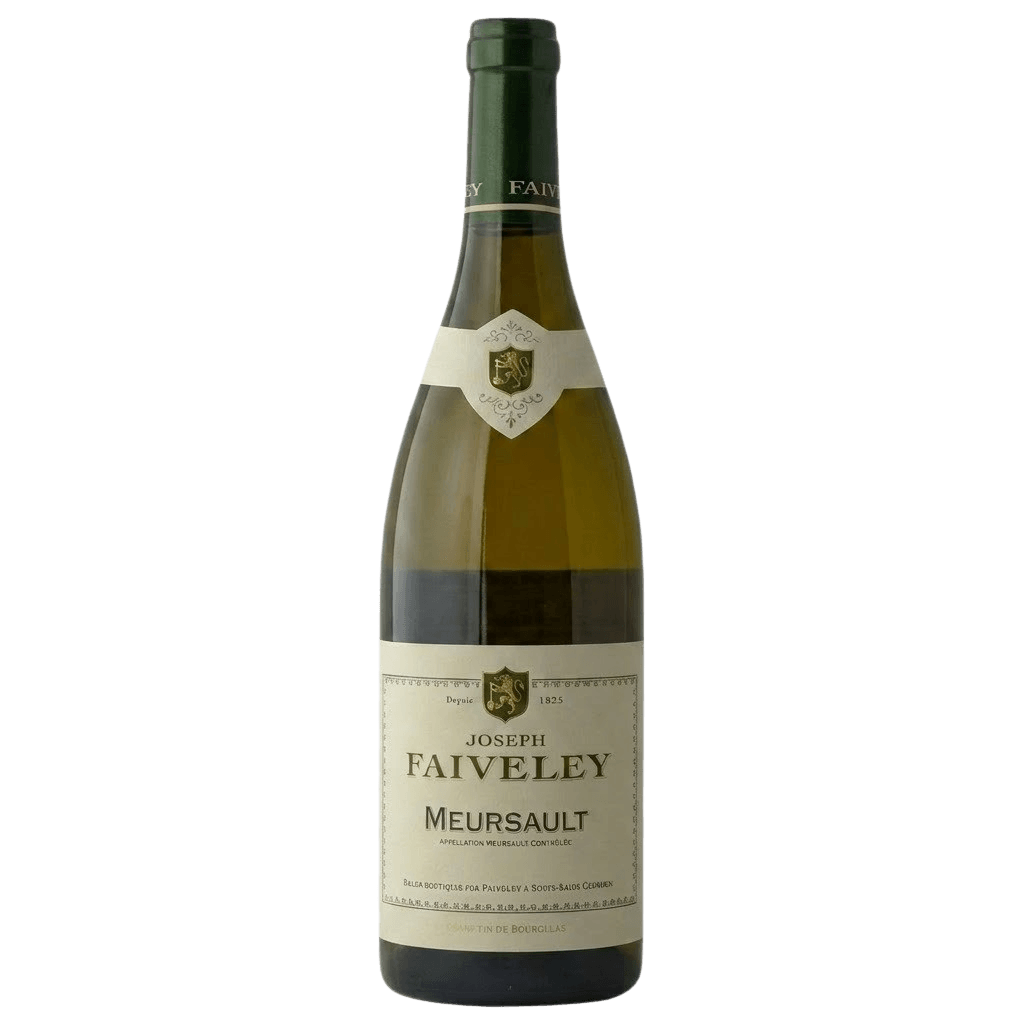
Domaine Faiveley
Domaine Faiveley Meursault
2004
Domaine Faiveley Meursault represents this renowned Burgundy house's expression of one of the Côte de Beaune's most celebrated white wine villages, offering classic Chardonnay character with the signature richness and minerality Meursault is known for.
Country
France
Region
Bourgogne - Cote de Beaune
More information
Producer
Established in 1825 by Pierre Faiveley, Domaine Faiveley stands among Burgundy's most distinguished family-owned producers, holding one of the region's largest portfolios of classified vineyard land across the Côte d'Or. Based in Nuits-Saint-Georges and now in its seventh generation, the domaine operates as both estate owner and négociant, acquiring grapes from trusted growers to complement its own holdings. The result is a collection of wines recognised for their depth, consistency and authentic expression of Burgundy's most celebrated terroirs.
Quick Facts
- Location: Nuits-Saint-Georges, Côte de Nuits, Burgundy, France
- Founded: 1825
- Founder: Pierre Faiveley
- Ownership: Seventh-generation Faiveley family
- Principal grapes: Pinot Noir and Chardonnay
- Estate size: One of Burgundy's largest Grand Cru and Premier Cru holdings
- Key appellations: Chambertin-Clos de Bèze, Gevrey-Chambertin, Nuits-Saint-Georges, Corton, Mercurey, Chambolle-Musigny
- Signature Grand Cru: Chambertin-Clos de Bèze
- Soils: Predominantly limestone-rich with varying proportions of clay and marl
- Viticulture: Sustainable practices with rigorous parcel selection
- Historic cellars: Nuits-Saint-Georges, housing one of Burgundy's most impressive collections of old vintages
- Style: Classical Burgundy combining finesse, structure and remarkable ageing capacity
Nearly Two Centuries of Family Stewardship
Pierre Faiveley founded the domaine in 1825 during a period of significant change in Burgundy, when many vineyards were being redistributed following the French Revolution. His descendants expanded the estate steadily over successive generations, acquiring parcels in some of the Côte d'Or's most prestigious villages.
The family's dual approach as both estate owner and négociant allowed them to work with prime vineyard sites while maintaining relationships with carefully selected growers. This combination has enabled Domaine Faiveley to produce a broad yet consistently distinguished portfolio spanning regional Bourgogne to some of Burgundy's finest Grand Cru appellations.
By the late 20th century, the domaine had become one of the largest owners of classified land in Burgundy. Today, under seventh-generation leadership, it remains entirely family-owned and continues to prioritise quality and terroir expression across every tier of production.
The Grand Cru Collection
Domaine Faiveley's reputation rests significantly on its holdings in Grand Cru vineyards across Gevrey-Chambertin and Corton. The estate produces Chambertin-Clos de Bèze, one of Burgundy's most esteemed expressions of Pinot Noir, from parcels within this historic nine-hectare monopole originally established by monks in the 7th century.
Additional Grand Cru bottlings include Mazis-Chambertin, Latricières-Chambertin and the distinctive Corton-Clos des Cortons, a monopole entirely owned by Faiveley since 1874. This 2.5-hectare parcel sits at the summit of the Corton hill, where limestone soils and optimal exposure produce Pinot Noir of concentration, structure and considerable longevity.
These wines are traditionally built for extended cellaring. A well-stored Chambertin-Clos de Bèze or Corton-Clos des Cortons can develop gracefully for two decades or more, evolving from youthful intensity into layered complexity with tertiary notes of forest floor, truffle and dried flowers.
Precision Across the Côte d'Or
Beyond Grand Cru sites, the domaine holds significant parcels of Premier Cru land in Nuits-Saint-Georges, Gevrey-Chambertin, Chambolle-Musigny and Mercurey. Plots such as Nuits-Saint-Georges Les Saint-Georges and Gevrey-Chambertin Les Cazetiers express their respective terroirs with clarity, combining village character with greater depth and ageing capacity than regional wines.
Sustainable vineyard management, manual harvesting and traditional winemaking techniques form the foundation of the estate's approach. In the cellars beneath Nuits-Saint-Georges, wines mature slowly in French oak barrels, with the proportion of new wood carefully calibrated to complement rather than dominate site expression.
The domaine's extensive library of older vintages, carefully preserved in its historic cellars, reflects a long-standing commitment to understanding how its wines develop with time. This archive also serves as a reference for evaluating current winemaking decisions and maintaining stylistic continuity across generations.
Country
Region
Bourgogne - Cote de Beaune
Côte de Beaune is one of the most respected wine appellations in Burgundy and represents the benchmark for premium Chardonnay worldwide. Forming the southern half of the Côte d'Or, the appellation combines centuries of monastic winemaking tradition with exceptional terroir, producing both distinguished white Burgundy and refined Pinot Noir. From the legendary vineyards of Montrachet to the historic cellars of Beaune, this region remains central to Burgundy's international reputation.
The appellation stretches approximately 25 kilometres along a limestone escarpment where marl, clay and limestone soils create ideal conditions for Chardonnay and Pinot Noir. The east-facing slopes benefit from morning sun and excellent drainage, while microclimatic variations between villages create distinct expressions of terroir. Grand Cru vineyards including Montrachet, Bâtard-Montrachet, Corton-Charlemagne and Corton produce some of the world's most collectible white and red wines, while Premier Cru sites throughout the appellation offer exceptional complexity and ageing potential.
Côte de Beaune is home to celebrated producers including Domaine Leflaive, Domaine des Comtes Lafon, Bouchard Père & Fils, Domaine de la Romanée-Conti and Louis Jadot. The appellation encompasses distinguished villages such as Meursault, Puligny-Montrachet, Chassagne-Montrachet, Pommard and Volnay, each contributing unique interpretations of Burgundian winemaking. Together these estates and villages represent a culture of meticulous vineyard management and terroir-focused craftsmanship that has defined fine Burgundy for generations.
Discover Côte de Beaune wines, compare prices from trusted merchants across Europe and find the best offers with Sipfind.
Grapes
Chardonnay is one of the world’s most important and prestigious white wine grapes, renowned for its remarkable versatility and ability to reflect both terroir and winemaking style. Most famously associated with Burgundy and Champagne in France, Chardonnay is cultivated across virtually every major wine-producing country and can produce everything from precise, mineral-driven whites to rich, complex wines with exceptional ageing potential.
In Burgundy, Chardonnay reaches some of its most celebrated expressions. The limestone-rich vineyards of Chablis are known for wines combining vibrant acidity, citrus character and mineral precision, while the Côte de Beaune, particularly appellations such as Meursault, Puligny-Montrachet and Chassagne-Montrachet, produces some of the world’s most sought-after and age-worthy white wines.
Chardonnay also plays a fundamental role in Champagne, where it contributes freshness, finesse and acidity to blends alongside Pinot Noir and Meunier. When produced exclusively from Chardonnay, the resulting Champagne is known as Blanc de Blancs, a style prized for its elegance, precision and capacity to develop considerable complexity with extended ageing.
The grape’s character varies significantly according to climate, terroir and winemaking. Cooler regions can produce wines showing citrus, green apple, white flowers and mineral notes, while warmer conditions can bring peach, melon and tropical-fruit character. Oak fermentation, barrel ageing and malolactic fermentation can introduce additional layers of toast, vanilla, butter and hazelnut, demonstrating Chardonnay’s exceptional stylistic range.
Beyond France, Chardonnay has established important expressions in California, Australia, New Zealand, South Africa and numerous other wine regions. From the mineral whites of Chablis and the great vineyards of Burgundy to Blanc de Blancs Champagne and modern New World interpretations, Chardonnay’s combination of versatility, complexity and terroir expression has established it as one of the defining grape varieties of fine wine.
History and Style
Domaine Faiveley Meursault is an estate wine from one of Burgundy's most respected producers, showcasing the house's expertise in crafting white wines from the prestigious Meursault appellation in the Côte de Beaune. Made from 100% Chardonnay, this wine captures the essence of Meursault's renowned terroir, delivering the rich, buttery character and mineral complexity that has made this village famous among white Burgundy enthusiasts.
Quick Facts
- Producer: Domaine Faiveley
- Classification: Village-level Meursault AOC
- Region: Côte de Beaune
- Appellation: Meursault
- Country: France
- Style: Rich, mineral-driven white Burgundy
- Grape Composition: 100% Chardonnay
- Ageing Potential: 5-10 years from vintage
- Alcohol (ABV): 13-13.5%
- Tasting Profile: Hazelnut, butter, white peach, citrus, mineral, toast
- Food Pairing: Roasted chicken, lobster, scallops, creamy risotto, soft cheeses
- Serving Temperature: 10-12°C
- Bottle Status: Estate Wine
- Vintage: Varies by release
Vineyard, Terroir and Style
Domaine Faiveley, established in 1825 and based in Nuits-Saint-Georges, has built an exceptional portfolio spanning both the Côte de Nuits and Côte de Beaune. The estate's holdings in Meursault benefit from the appellation's distinctive limestone-rich soils and optimal east-facing exposures that produce Chardonnay of exceptional depth and elegance. The Faiveley family's commitment to traditional Burgundian winemaking, combined with modern precision, ensures consistent quality across their range.
History and Reputation
The wine typically displays the classic Meursault profile of hazelnut, butter, and stone fruit notes, complemented by a firm mineral backbone and well-integrated oak from barrel ageing. The texture is characteristically rich yet refined, with the acidity necessary for food pairing and medium-term cellaring potential. This estate wine offers an accessible entry point to understanding both Meursault's terroir and Domaine Faiveley's winemaking philosophy.
Compare prices on Sipfind to find the best offers on Domaine Faiveley Meursault and discover how this estate wine represents excellent value from one of Burgundy's most accomplished producers.