
Chateau Léoville-Las Cases
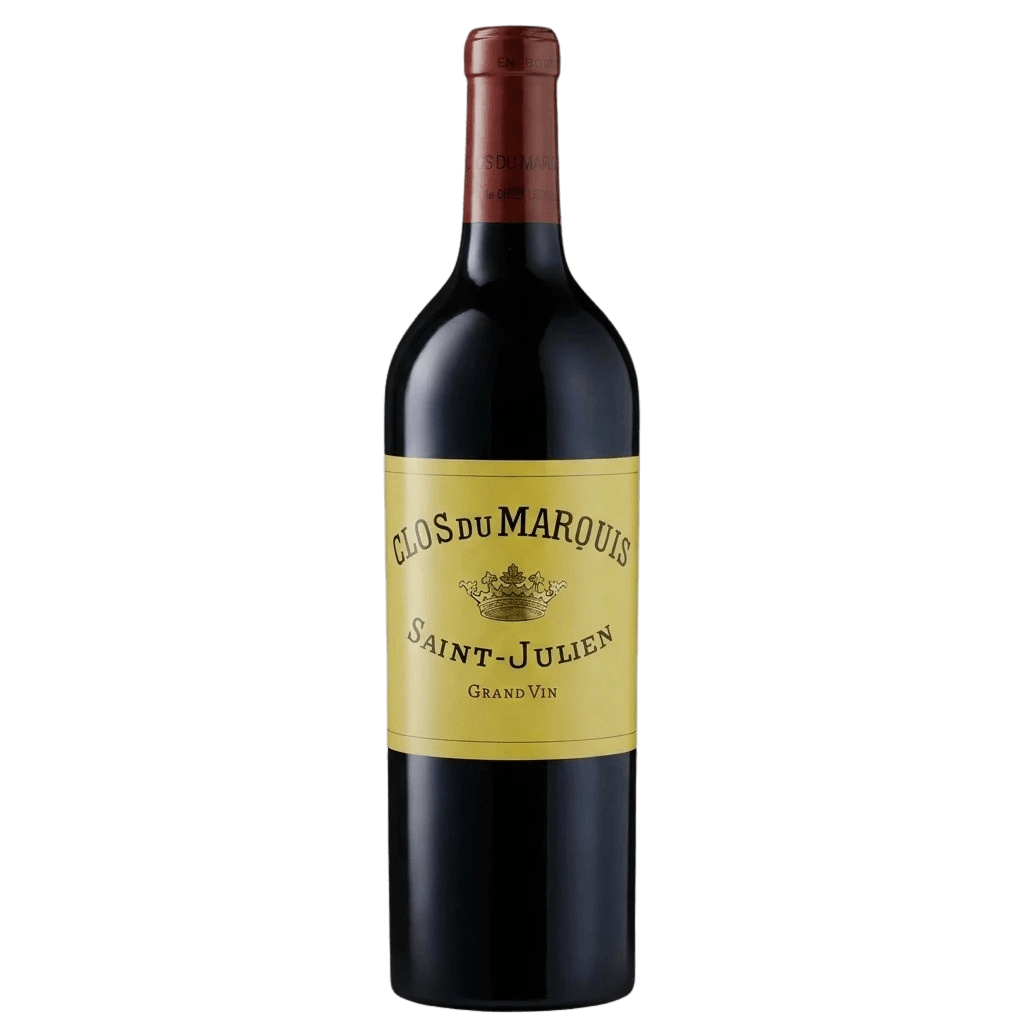
Clos du Marquis
2024
Clos du Marquis is a distinctive Saint-Julien wine produced by Domaines Delon, the owners of Château Léoville Las Cases. Established in 1902 and sourced from separate vineyard parcels west of the Grand Enclos, it combines Cabernet Sauvignon-led structure with dark-fruit depth, refined tannins and the classical character of the northern Médoc. It is an independent wine, not the second wine of Léoville Las Cases.
Country
France
Region
Bordeaux - Saint-Julien
More information
Producer
Château Léoville Las Cases is a leading Second Growth of Saint-Julien and one of the Médoc's most distinguished Cabernet-led estates. Based on the boundary between Saint-Julien and Pauillac and led by Jean-Hubert Delon, the property has remained under the stewardship of the same family since the late 19th century. Its Grand Vin is shaped by the historic, walled Grand Enclos, whose deep gravel soils and proximity to the Gironde produce wines renowned for their precision, structure and exceptional longevity.
Quick Facts
- Location: Saint-Julien-Beychevelle, Médoc, Bordeaux, France
- Classification: Deuxième Cru Classé – Second Growth, 1855
- Historical origin: The former Domaine de Léoville, divided between 1826 and 1840
- Ownership: Jean-Hubert Delon
- Family stewardship: Since the late 19th century
- Core vineyard: The Grand Enclos de Las Cases (approximately 60 hectares)
- Total estate: 98 hectares under vine
- Principal grapes: Cabernet Sauvignon, Cabernet Franc, Merlot
- Soils: Quaternary gravel over gravelly sand and gravelly clay
- Grand Vin: Château Léoville Las Cases
- Second wine: Le Petit Lion du Marquis de Las Cases (introduced 2007)
- Related estate wine: Clos du Marquis, from a separate vineyard parcel
- Style: Structured, mineral, precisely balanced and built for decades of ageing
The Historic Heart of Léoville
The estate traces its origins to the vast Domaine de Léoville, one of the oldest and most important properties in the Médoc. Assembled over centuries, the original Léoville estate stretched across prime gravelly terroir in Saint-Julien and extended into neighbouring Pauillac.
Following the division of the property between 1826 and 1840, Léoville Las Cases retained approximately three-fifths of the original domaine, including the historic heart of its finest vineyard land. The estate was classified as a Second Growth in the landmark 1855 Classification and has remained under the continuous stewardship of the same family since the late 19th century, preserving both its identity and its uncompromising commitment to quality.
The Grand Enclos
The Grand Vin of Château Léoville Las Cases comes principally from the celebrated Grand Enclos, a walled vineyard of nearly 60 hectares situated between the village of Saint-Julien and the boundary with Pauillac. This exceptional parcel contains a complex mosaic of deep Quaternary gravel deposits over gravelly sand and gravelly clay, formed through successive geological periods and providing outstanding natural drainage.
The vineyard's position immediately adjacent to Château Latour underscores the quality of its terroir. The neighbouring Gironde estuary creates a temperate microclimate that moderates temperature extremes, encourages even ripening and offers protection from spring frost. These conditions are ideally suited to Cabernet Sauvignon and Cabernet Franc, which together typically dominate the Grand Vin's blend.
The Grand Enclos is worked with meticulous attention to detail. Low yields, selective vine management and rigorous sorting at harvest provide the foundation for wines of remarkable concentration and definition.
Cabernet-Led Precision
Cabernet Sauvignon normally forms the core of the Grand Vin, supported by Cabernet Franc and Merlot in proportions that vary according to the character of each vintage. The resulting wine combines concentrated dark fruit, graphite-like minerality and finely structured tannins with remarkable freshness, tension and length.
Traditional winemaking methods, including extended maceration and maturation in French oak barrels, allow the estate to produce wines that express the Grand Enclos with clarity and depth. Château Léoville Las Cases is built for extended ageing—often 30 to 50 years or more—and its reputation rests on a consistency of style and quality that places it among the most sought-after wines in Bordeaux.
With time, the Grand Vin's youthful power develops into layered complexity, aromatic refinement and a seamless, harmonious expression of one of Saint-Julien's greatest terroirs.
The Portfolio Context
Le Petit Lion du Marquis de Las Cases, introduced with the 2007 vintage, is the château's second wine. Composed of fruit from younger vines and parcels that do not meet the exacting standards for the Grand Vin, it offers an earlier-maturing expression of the estate's style while retaining the precision and balance that define Léoville Las Cases.
Clos du Marquis is not the second wine of Château Léoville Las Cases. It is produced from a distinct 40-hectare vineyard located approximately 500 metres west of the Grand Enclos and expresses its own identity and terroir within the Saint-Julien appellation. Though made with the same rigorous standards, it remains a separate wine with its own character and evolution.
Country
Region
Bordeaux - Saint-Julien
Saint-Julien is one of the most respected wine appellations in the Médoc and has earned a distinguished reputation for producing some of Bordeaux's most refined and balanced wines. Located between Pauillac and Margaux along the left bank of the Gironde estuary, the appellation combines exceptional terroir with centuries of winemaking tradition. Despite being one of the smallest communal appellations in the Médoc, Saint-Julien boasts an extraordinary concentration of classified growth estates.
The appellation benefits from deep gravel soils mixed with clay and sand, providing excellent drainage while retaining sufficient moisture for the vines. This terroir creates ideal conditions for Cabernet Sauvignon, which dominates most blends, supported by Merlot, Cabernet Franc and Petit Verdot. The maritime influence from the Gironde moderates temperatures, allowing for slow, even ripening that contributes to the appellation's signature balance and refinement.
Saint-Julien is home to eleven classified growths from the 1855 Classification, including five distinguished Second Growths: Château Léoville Las Cases, Château Léoville Poyferré, Château Léoville Barton, Château Ducru-Beaucaillou and Château Gruaud-Larose. These estates produce wines renowned for their harmonious structure, combining concentration and power with remarkable elegance and finesse. The consistent quality across the appellation has made Saint-Julien a benchmark for classic Médoc winemaking.
Discover Saint-Julien wines, compare prices from trusted merchants across Europe and find the best offers with Sipfind.
Grapes
Cabernet Sauvignon is one of the world’s most important and widely planted red wine grapes, renowned for its powerful structure, concentrated fruit and exceptional ageing potential. Originating in Bordeaux, France, the variety has become a defining grape of fine wine regions around the world, particularly Napa Valley, Tuscany, Chile, Australia and South Africa.
Classic Cabernet Sauvignon combines flavours and aromas of blackcurrant, cassis, blackberry and dark cherry with characteristic notes of cedar, graphite, tobacco and herbs. Naturally high tannins and fresh acidity provide structure and longevity, while maturation in oak can add layers of spice, vanilla and toast. Its character varies significantly with climate, soil and winemaking, ranging from elegant and savoury to rich, powerful and intensely concentrated.
In Bordeaux, Cabernet Sauvignon is particularly associated with the Left Bank, where it forms the foundation of many prestigious blends alongside Merlot, Cabernet Franc and other permitted varieties. In Napa Valley, it has become the region’s signature red grape, producing some of the world’s most sought-after Cabernet Sauvignon wines.
Cabernet Sauvignon’s ability to express terroir while retaining its distinctive structure and character has made it a global benchmark for premium red wine. Whether produced as the dominant variety in a blend or as a varietal wine, the finest examples combine concentration, complexity and the capacity to develop gracefully over decades
Merlot is one of the world’s most important red wine grapes, celebrated for its generous fruit, supple texture and ability to produce wines ranging from approachable and elegant to exceptionally complex and long-lived. Originating in Bordeaux, France, Merlot is particularly associated with the Right Bank, where it forms the foundation of many of the prestigious wines of Pomerol and Saint-Émilion.
Merlot typically expresses flavours and aromas of plum, black cherry, blackberry and red fruits, often developing notes of chocolate, tobacco, cedar, herbs and earthy complexity with maturation. Its naturally rounded texture and generally softer tannin profile distinguish it from Cabernet Sauvignon, although the finest examples can possess considerable structure, freshness and ageing potential.
In Pomerol, Merlot reaches some of its most celebrated expressions, particularly on the appellation’s clay-rich soils, producing wines of remarkable concentration, texture and complexity. In Saint-Émilion, it is commonly blended with Cabernet Franc and, to a lesser extent, Cabernet Sauvignon, creating wines that combine ripe fruit with structure, aromatic complexity and longevity.
Beyond Bordeaux, Merlot is widely cultivated in Italy, California, Washington State, Chile and other major wine regions. It can be produced as a varietal wine or used as a central component of blends, where its fruit and texture complement more structured grape varieties.
From the great Merlot-based wines of Bordeaux’s Right Bank to leading expressions around the world, Merlot’s combination of rich fruit, refined texture and capacity to express terroir has established it as one of the defining varieties of fine red wine.
Cabernet Franc is one of France’s most historic red wine grapes, valued for its aromatic intensity, vibrant acidity and ability to express both climate and soil with remarkable clarity. It produces elegant single-varietal wines and plays an essential role in some of Bordeaux’s most distinguished blends. Earlier ripening than Cabernet Sauvignon allows Cabernet Franc to perform particularly well in cooler wine regions.
In the Loire Valley, Cabernet Franc reaches its clearest expression as a varietal wine. Typical aromas include redcurrant, raspberry, red cherry and violet, often accompanied by graphite, dried herbs, tobacco and subtle peppery notes. Naturally fresh acidity and finely structured tannins can produce approachable, fruit-driven wines as well as complex examples capable of developing for many years.
The variety is especially important in Chinon, Bourgueil and Saumur-Champigny. Chinon can range from fragrant and supple to deeply structured and age-worthy, depending on vineyard site and soil. Bourgueil often combines dark red fruit with firm structure, while Saumur-Champigny is renowned for freshness, aromatic purity and refined texture. Limestone-rich tuffeau, gravel, sand and clay all contribute to the diversity of Cabernet Franc across these Loire appellations.
In Bordeaux, Cabernet Franc is principally associated with the Right Bank, particularly Saint-Émilion and Pomerol. Usually blended with Merlot and sometimes Cabernet Sauvignon, it contributes perfume, freshness, savoury complexity and structural precision. On suitable limestone and clay terroirs, Cabernet Franc can become a dominant component of exceptionally refined and long-lived wines.
Beyond France, Cabernet Franc is cultivated in regions including Tuscany, Bolgheri, Napa Valley, Washington State, Canada, Argentina and Chile, producing styles shaped by local climate and terroir. Traditionally known as Breton in the Loire and Bouchet in parts of Bordeaux, Cabernet Franc’s combination of aromatic elegance, freshness and ageing potential establishes it as one of the world’s great red wine varieties.
Petit Verdot is a powerful red wine grape from south-west France, best known as a small but distinctive component of the classic red blends of Bordeaux. Its deeply coloured wines, firm tannins and concentrated aromatics allow even modest proportions to add structure, freshness and intensity alongside Cabernet Sauvignon, Merlot and Cabernet Franc.
On Bordeaux’s Left Bank, Petit Verdot is particularly associated with the gravel soils of the Médoc, including appellations such as Margaux, Saint-Julien, Pauillac and Saint-Estèphe. The variety buds relatively early but ripens late, making complete maturation challenging in cooler vintages. When fully ripe, it can retain vibrant acidity while developing considerable colour, tannin and aromatic complexity.
Typical expressions show blackberry, black cherry, blueberry and plum, accompanied by violet, liquorice, pepper, cocoa and other dark spices. In Bordeaux blends, Petit Verdot is generally used in limited quantities to reinforce colour, tannic structure and aromatic depth. Its combination of acidity and tannin can also contribute significantly to a wine’s ageing potential.
Beyond Bordeaux, warmer and more reliable growing conditions have allowed Petit Verdot to achieve greater ripeness and a more prominent role. Producers in California, Australia, Spain and South America increasingly use the variety in both Bordeaux-style blends and varietal wines. These expressions are often full-bodied and deeply coloured, with ripe dark fruit, floral character, spice and powerful tannins.
From its historic role in the Médoc to its expanding presence as a varietal wine, Petit Verdot is defined by colour, structure, freshness and aromatic intensity. Once regarded primarily as a supporting grape, it is increasingly recognised as a distinctive variety capable of producing serious, age-worthy wines in its own right.
History and Style
Clos du Marquis – An Independent Wine from the Heart of Saint-Julien
Clos du Marquis is a distinguished red Bordeaux wine from Saint-Julien, produced by Domaines Delon, the family-owned group responsible for Château Léoville Las Cases. First introduced in 1902, it occupies a distinctive position among the wines of the Médoc: closely associated with one of Bordeaux's historic classified estates, yet produced from its own vineyard parcels and conceived as an independent wine.
The vineyards of Clos du Marquis lie west of the Grand Enclos of Château Léoville Las Cases, in the northern part of Saint-Julien near the boundary with Pauillac. Their location and geological characteristics give the wine an identity that is related to, but distinct from, the Grand Vin of Léoville Las Cases.
Clos du Marquis is principally based on Cabernet Sauvignon and Merlot, with Cabernet Franc and Petit Verdot also forming part of the vineyard's grape composition. The final blend varies by vintage, reflecting the characteristics of the growing season and the selection of individual wine lots.
The wine is associated with dark-fruit concentration, firm but refined tannins, freshness and a structured palate. Its style reflects the classical Cabernet-led character of northern Saint-Julien, with sufficient depth and balance to develop complexity through bottle ageing.
Unlike a conventional second wine, Clos du Marquis is not simply assembled from barrels excluded from the Grand Vin. It represents a separate vineyard identity with its own history, production and selection.
Wine at a Glance
- Wine: Clos du Marquis
- Producer: Château Léoville Las Cases / Domaines Delon
- Appellation: Saint-Julien AOC
- Region: Médoc, Bordeaux, France
- First Vintage: 1902
- Wine Type: Dry red Bordeaux
- Principal Varieties: Cabernet Sauvignon and Merlot
- Additional Varieties: Cabernet Franc and Petit Verdot, according to vineyard composition and vintage
- Terroir: Quaternary gravel deposits over varied subsoils
- Vineyard Location: West of the Grand Enclos of Château Léoville Las Cases
- Wine Identity: Independent wine, not the second wine of Léoville Las Cases
- Second Wine of Clos du Marquis: La Petite Marquise
- Classification: Not independently classified under the 1855 Bordeaux Classification
- Bottle Format: 750 ml
The Origins of Clos du Marquis – A History Beginning in 1902
Clos du Marquis was established in 1902 by the Delon family, whose association with Château Léoville Las Cases extends back through generations.
The name refers to the Marquis de Las Cases, whose family was historically associated with the Léoville estate.
Its creation reflected the recognition that the vineyard parcels outside the Grand Enclos possessed characteristics distinct from those of the estate's principal vineyard.
Rather than incorporating all these parcels into a single wine, the family developed Clos du Marquis as a separate expression of Saint-Julien.
This distinction remains central to its identity.
Clos du Marquis is not the result of a modern commercial decision to introduce a more accessible second label. Its origins predate the widespread development of contemporary Bordeaux second wines.
The wine has therefore maintained a separate identity for more than a century.
A Distinctive Place Within Domaines Delon
Domaines Delon is responsible for several Bordeaux properties and wines, including Château Léoville Las Cases, Château Nénin in Pomerol and Château Potensac in the northern Médoc.
Clos du Marquis forms part of this wider family-owned portfolio.
Its relationship with Château Léoville Las Cases is particularly close because the wines share the same ownership and production expertise.
However, their vineyard origins are distinct.
Clos du Marquis should therefore be understood as an independent Saint-Julien wine within the Domaines Delon family rather than a secondary expression of the Grand Vin.
Saint-Julien – The Classical Heart of the Médoc
Saint-Julien occupies a central position within the Haut-Médoc, between Pauillac to the north and Margaux to the south.
The appellation is particularly associated with Cabernet Sauvignon-based red wines combining structure, aromatic complexity and ageing potential.
Its landscape is characterised by gravel ridges formed through successive geological processes.
These gravel deposits create varied vineyard environments, influencing drainage, root development and the availability of water.
The proximity of the Gironde estuary also contributes to the appellation's climatic conditions.
The Character of Northern Saint-Julien
Clos du Marquis originates from the northern part of the appellation.
This location is particularly relevant because the vineyards lie close to Pauillac, where Cabernet Sauvignon frequently plays a dominant role in the character of the wines.
Although Clos du Marquis is legally and geographically a Saint-Julien wine, its northern location contributes to its distinctive expression.
The wine often combines the structural definition associated with Cabernet Sauvignon with the balance and refinement traditionally associated with Saint-Julien.
Its precise character depends on the vintage, vineyard conditions and final blend.
The Vineyards of Clos du Marquis
The vineyards used for Clos du Marquis are situated west of the Grand Enclos of Château Léoville Las Cases.
This distinction is fundamental.
The Grand Enclos is the historic vineyard enclosure closely associated with the production of Château Léoville Las Cases.
Clos du Marquis originates from different parcels outside this enclosure.
The vineyards occupy a geological environment characterised by gravel deposits and varied underlying soils.
These conditions influence the development of Cabernet Sauvignon and the other Bordeaux varieties planted on the property.
Gravel Soils
Gravel is one of the defining features of the Médoc.
Its physical characteristics support drainage and influence soil temperature.
These properties can be particularly important for Cabernet Sauvignon, a variety that benefits from sufficient warmth and a long growing season.
The precise effects depend on the depth and composition of the gravel and the characteristics of the underlying soil.
Subsoil and Water Availability
The vineyard's subsoil influences how water is retained and made available to vine roots.
This becomes particularly important during periods of limited rainfall.
Differences between parcels can influence vine development, grape maturity and the characteristics of the harvested fruit.
A Separate Terroir Identity
The distinction between Clos du Marquis and Château Léoville Las Cases is not simply one of wine quality or selection.
It begins in the vineyard.
The two wines originate from different parcels with their own geological characteristics.
This provides the foundation for their separate identities.
Cabernet Sauvignon – The Structural Foundation
Cabernet Sauvignon is the principal grape variety associated with Clos du Marquis.
It is particularly well suited to the gravel-rich soils of the Médoc.
The variety contributes structure, acidity, aromatic intensity and the tannic framework that supports bottle ageing.
Depending on the vintage, Cabernet Sauvignon may contribute:
- Blackcurrant and blackberry aromas.
- Dark cherry and plum.
- Cedar and graphite-like impressions.
- Subtle herbal complexity.
- Firm, structured tannins.
- Freshness and definition.
- Long-term ageing potential.
The precise expression depends on growing conditions and ripeness.
The Importance of Cabernet Sauvignon in Saint-Julien
Cabernet Sauvignon is central to the traditional identity of many of Saint-Julien's leading wines.
Its relatively late ripening requires careful vineyard management and appropriate harvest timing.
Gravel soils can provide favourable conditions by supporting drainage and influencing the vineyard's thermal environment.
At Clos du Marquis, Cabernet Sauvignon contributes much of the wine's structure and classical Médoc character.
Merlot – Texture and Fruit Expression
Merlot plays an important complementary role in Clos du Marquis.
The variety can contribute a rounder texture, fruit concentration and a different tannic profile from Cabernet Sauvignon.
Depending on the vintage, its characteristics may include:
- Plum and dark cherry.
- Blackberry.
- Ripe red and black fruits.
- A supple mid-palate.
- Rounded tannins.
- Additional depth and texture.
Merlot can help balance Cabernet Sauvignon's firmer structural characteristics.
The final proportion varies according to the growing season and the estate's blending decisions.
Cabernet Franc and Petit Verdot
Cabernet Franc and Petit Verdot also form part of the traditional grape composition associated with the Clos du Marquis vineyards.
Their contributions to individual vintages depend on the final blend.
Cabernet Franc
Cabernet Franc can contribute aromatic definition, floral characteristics and freshness.
Its expression may include red fruits, subtle herbal notes and fine structural detail.
Petit Verdot
Petit Verdot is a late-ripening Bordeaux variety.
When included in a blend, it can contribute colour, tannic structure and aromatic intensity.
Its influence depends on ripeness and the proportion used.
Vintage-Specific Blending
The presence of a grape variety in the vineyard does not necessarily mean it appears in every bottled vintage.
The final composition should always be recorded using the relevant vintage's technical information.
Vineyard Management and Harvesting
The production of Clos du Marquis begins with careful management of its individual vineyard parcels.
The estate monitors vine development and grape maturity throughout the growing season.
Harvest timing is particularly important because the grape varieties do not ripen at the same rate.
Cabernet Sauvignon generally requires a longer growing period than Merlot.
The estate therefore makes harvesting decisions according to the condition and maturity of the fruit.
Vineyard Selection
Individual parcels can produce grapes with different characteristics.
These differences may reflect:
- Soil composition.
- Drainage.
- Vine age.
- Grape variety.
- Exposure.
- Seasonal rainfall.
- Temperature.
- Vineyard management.
The estate's approach to selection allows these differences to be considered during vinification and blending.
Harvest Conditions
The characteristics of each harvest influence the wine's final style.
Warm years may produce greater fruit concentration and ripeness.
Cooler years can emphasise freshness and a more restrained aromatic profile.
However, the outcome depends on the complete growing season rather than temperature alone.
Vinification – Precision and Parcel Identity
Clos du Marquis is produced through the winemaking expertise of Domaines Delon.
The estate's approach emphasises the selection and vinification of individual grape lots.
This allows the characteristics of different vineyard parcels and grape varieties to be assessed before the final blend is assembled.
Fermentation
During alcoholic fermentation, grape sugars are converted into alcohol.
The management of fermentation temperature, extraction and maceration influences the wine's structure and aromatic development.
For Cabernet Sauvignon-based Bordeaux wines, the relationship between fruit concentration and tannin extraction is particularly important.
Extraction and Tannin Management
Extraction influences the concentration of colour, tannins and other compounds from grape skins.
Excessive extraction can produce an unnecessarily hard structure.
Insufficient extraction may fail to capture the characteristics of the fruit.
The objective is to achieve balance according to the quality and maturity of the grapes.
Individual Wine Lots
Maintaining the identity of individual lots provides flexibility during blending.
Different components may contribute fruit expression, structure, freshness or aromatic complexity.
The final wine is assembled to reflect the characteristics sought for Clos du Marquis.
Oak Maturation – Structure and Integration
Clos du Marquis undergoes maturation in oak barrels.
The precise duration and proportion of new oak vary by vintage and should be recorded separately.
Oak maturation contributes to the development and integration of the wine before bottling.
The Role of Oak
During maturation, the wine undergoes gradual changes in texture and aromatic composition.
Oak barrels allow limited oxygen exchange.
The process can influence:
- Tannin integration.
- Aromatic complexity.
- Texture.
- Structural balance.
- Fruit expression.
- Development of secondary characteristics.
New oak can also contribute aromas associated with cedar, spice and toast.
The influence depends on the proportion of new barrels, the characteristics of the wood and the duration of maturation.
Balance and Ageing Potential
The purpose of maturation is not simply to add oak flavours.
It forms part of the process through which the wine's structure and components develop before bottling.
For Clos du Marquis, this is particularly relevant because Cabernet Sauvignon often provides a substantial tannic framework.
The Style of Clos du Marquis
Clos du Marquis is associated with a classical northern Saint-Julien style.
Its character combines Cabernet Sauvignon-led structure with dark-fruit concentration, freshness and refined tannins.
The precise balance varies between vintages.
Appearance
Young examples generally display a deep ruby to garnet colour.
With bottle maturity, the colour may gradually develop brick-red or tawny reflections.
Aromatic Profile
Depending on vintage and maturity, Clos du Marquis may display:
- Blackcurrant.
- Blackberry.
- Dark cherry.
- Plum.
- Cedar.
- Tobacco.
- Graphite-like mineral impressions.
- Subtle spice.
- Dried herbs.
- Earthy complexity.
These are characteristics associated with the wine's style rather than fixed tasting notes for every vintage.
Palate
The palate is generally structured and concentrated.
Cabernet Sauvignon contributes tannic definition and freshness.
Merlot provides complementary fruit and texture.
The wine can display a firm structure in youth, particularly in concentrated vintages.
With suitable bottle ageing, the tannins may soften and the aromatic profile can develop greater complexity.
Finish
Clos du Marquis is associated with a persistent finish combining fruit, structure and savoury detail.
The length and character of the finish depend on the vintage and bottle maturity.
Ageing Potential – A Wine Built for Development
Clos du Marquis is a wine with meaningful ageing potential.
Its Cabernet Sauvignon-based structure, acidity and fruit concentration can support development over time.
However, the appropriate drinking window varies considerably between vintages.
Development in Bottle
Younger bottles may emphasise:
- Fresh blackcurrant.
- Blackberry.
- Dark cherry.
- Firm tannins.
- Cedar.
- Fresh acidity.
With maturity, suitable vintages may develop:
- Tobacco.
- Leather.
- Forest-floor characteristics.
- Dried flowers.
- Savoury spice.
- More integrated tannins.
- Greater aromatic complexity.
Factors Affecting Ageing
The wine's development depends on:
- Vintage quality.
- Grape proportions.
- Acidity.
- Tannin structure.
- Fruit concentration.
- Oak maturation.
- Bottling conditions.
- Storage temperature.
A single ageing recommendation should not be applied to every vintage.
Serving and Food Pairing
Clos du Marquis is particularly suited to dishes that complement its structured tannins and dark-fruit character.
Beef
Roast beef, grilled ribeye and beef tenderloin can complement the wine's concentration and structure.
Lamb
Roast lamb with herbs is a traditional pairing for Cabernet Sauvignon-based Bordeaux.
Game
Venison and other game dishes may complement mature bottles displaying greater savoury complexity.
Mushrooms
Mushroom-based dishes can work particularly well with bottles that have developed earthy secondary aromas.
Mature Cheeses
Firm, mature cheeses may complement the wine's structure, depending on their intensity.
Serving Recommendations
- Serving Temperature: Approximately 16–18°C.
- Glassware: A large Bordeaux-style red wine glass.
- Decanting: Assess according to vintage and bottle maturity.
- Storage: Cool, dark conditions with a stable temperature.
- Drinking Window: Vintage-specific.
Clos du Marquis and Château Léoville Las Cases – Two Distinct Wines
Clos du Marquis is frequently associated with Château Léoville Las Cases because both wines are produced within the Domaines Delon organisation.
However, they should not be treated as interchangeable products.
Château Léoville Las Cases
Château Léoville Las Cases is the estate's Grand Vin.
It originates principally from the historic Grand Enclos and is classified as a Deuxième Grand Cru Classé in the 1855 Bordeaux Classification.
Its vineyard origins and selection are distinct from those of Clos du Marquis.
Clos du Marquis
Clos du Marquis originates from separate vineyard parcels west of the Grand Enclos.
It has been produced as an independent wine since 1902.
Its identity reflects its own vineyard location and geological characteristics.
Le Petit Lion du Marquis de Las Cases
Le Petit Lion du Marquis de Las Cases is the second wine associated with Château Léoville Las Cases.
It should not be confused with Clos du Marquis.
La Petite Marquise
La Petite Marquise is the second wine associated with Clos du Marquis.
It represents a separate selection from the Clos du Marquis vineyard identity.
Four Separate Wine Identities
The wines should therefore be distinguished as follows:
- Château Léoville Las Cases – Grand Vin.
- Le Petit Lion du Marquis de Las Cases – second wine of Léoville Las Cases.
- Clos du Marquis – independent Saint-Julien wine.
- La Petite Marquise – second wine of Clos du Marquis.
This distinction is essential when comparing vintages, prices and wine identities.
Understanding Vintage Variation
Clos du Marquis reflects the characteristics of each growing season in Saint-Julien.
Temperature, rainfall and harvest conditions influence grape maturity and the final composition of the wine.
The proportion of Cabernet Sauvignon, Merlot and other varieties may vary.
Alcohol levels, oak maturation and ageing potential can also differ.
For this reason, the permanent product page should focus on the wine's identity, terroir and established production philosophy.
Precise technical information belongs on the individual vintage pages.
Discover Clos du Marquis on Sipfind
Explore Clos du Marquis, an independent Saint-Julien wine produced by Domaines Delon, the owners of Château Léoville Las Cases.
Discover its historic origins, distinctive vineyard parcels, Cabernet Sauvignon-led character and the differences between individual vintages.
Compare available offers from European wine retailers on Sipfind, with vintage and bottle format clearly distinguished.