
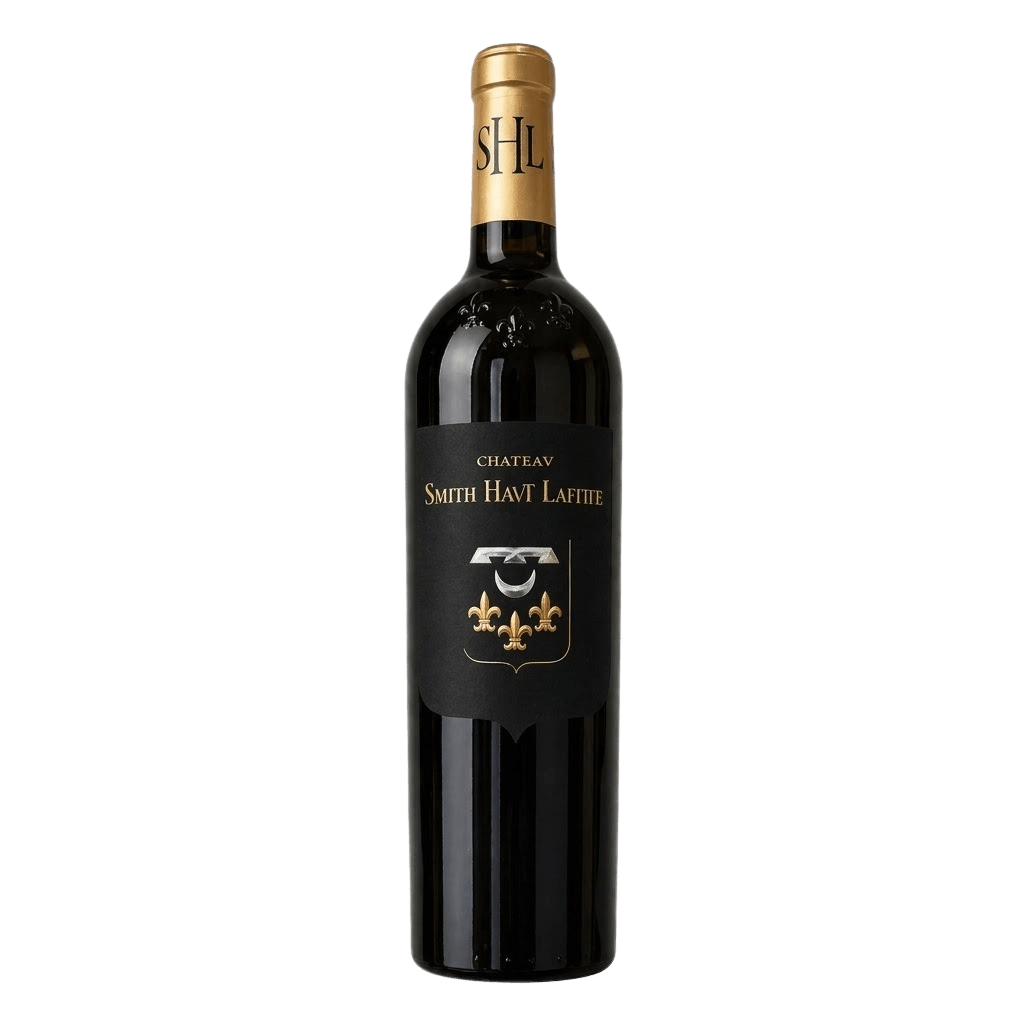
Château Smith Haut Lafitte
Château Smith Haut Lafitte Blanc
2009
Château Smith Haut Lafitte Blanc represents the pinnacle of white Bordeaux production from this historic Pessac-Léognan Grand Cru Classé estate, combining elegance, complexity and remarkable longevity.
Country
France
Region
Bordeaux - Pessac-Leognan
More information
Producer
Château Smith Haut Lafitte is a Grand Cru Classé estate in the Pessac-Léognan appellation, one of only six properties classified for both red and white wines in the 1959 Graves Classification. Situated south of Bordeaux and acquired by the Cathiard family in 1990, the estate has established itself as a leading proponent of organic and biodynamic viticulture in the region. Its wines are distinguished by refined structure, aromatic complexity and exceptional ageing potential, reflecting both historic terroir and a long-term commitment to sustainable winemaking.
Quick Facts
- Location: Martillac, Pessac-Léognan, Bordeaux, France
- Historical origins: Dating to the 14th century
- Ownership: Cathiard family since 1990
- Classification: Grand Cru Classé, 1959 Graves Classification (red and white)
- Estate size: 78 hectares of vineyards
- Principal grapes (red): Cabernet Sauvignon, Merlot, Cabernet Franc, Petit Verdot
- Principal grapes (white): Sauvignon Blanc, Sauvignon Gris, Sémillon
- Soils: Deep Günzian gravel over gravelly-clay subsoils
- Grand Vin (red): Château Smith Haut Lafitte Rouge
- Grand Vin (white): Château Smith Haut Lafitte Blanc
- Second wine: Les Hauts de Smith
- Viticulture: Organic certification achieved 2019, biodynamic practices ongoing
- Style: Elegant, terroir-focused Left Bank Bordeaux with extended ageing potential
The Cathiard Vision for a Historic Estate
The property's roots extend to the 14th century, when it formed part of the noble Du Bosq estate. By the 18th century, it had passed to Scotsman George Smith, whose name became attached to the property. Following classification in 1959, the estate changed hands several times before being acquired by Daniel and Florence Cathiard in 1990.
The Cathiards undertook extensive vineyard replanting, cellar modernisation and a decisive shift toward environmentally conscious viticulture. Organic certification was achieved in 2019, formalising practices developed over nearly three decades. This commitment has reshaped Smith Haut Lafitte into a model for quality-driven, sustainable estate management in Bordeaux.
Günzian Gravel and the Graves Identity
The estate's 78 hectares occupy a gently elevated plateau formed from deep Günzian gravel deposited during the Quaternary period. These warm, well-drained soils are characteristic of the finest sites in Pessac-Léognan and are particularly well suited to Cabernet Sauvignon, which typically dominates the red wine blend.
The red wine vineyards are planted predominantly to Cabernet Sauvignon, complemented by Merlot, Cabernet Franc and a small proportion of Petit Verdot. White wine parcels, accounting for approximately 11 hectares, feature Sauvignon Blanc and the rarer Sauvignon Gris, along with Sémillon. Hand-harvesting, meticulous parcel selection and precise vinification allow the estate to express the distinct character of its terroir across both red and white wines.
Elegance Built Through Precision and Time
Château Smith Haut Lafitte Rouge is crafted for structure, freshness and longevity. The wine combines concentrated dark fruit, graphite-like minerality and fine-grained tannins with a characteristic elegance that distinguishes it from more opulent Left Bank expressions. Extended ageing in French oak, typically around 60% new, refines rather than dominates the wine's expression.
The white Grand Vin ranks among the most celebrated in Bordeaux. Fermented and matured in barrel, it offers citrus peel, white flowers, mineral tension and remarkable depth. Both wines are built to evolve gracefully over decades, developing layered complexity and aromatic refinement with time.
Les Hauts de Smith, the estate's second wine, provides earlier accessibility while maintaining the precise, terroir-focused style that defines the property. Across its portfolio, Smith Haut Lafitte continues to reflect the Cathiard family's vision of Pessac-Léognan: a balance of historic terroir, environmental stewardship and uncompromising attention to quality.
Country
Region
Bordeaux - Pessac-Leognan
Pessac-Léognan is an AOC/AOP wine appellation in northern Graves, immediately south and south-west of the city of Bordeaux, France. Recognised as a separate appellation in 1987, it produces both red and dry white wines across ten communes. Its gravel-dominated terroir is home to all 14 estates in the current Graves Great Growth classification, including Château Haut-Brion, which also appears in the 1855 Bordeaux Classification.
Pessac-Léognan occupies the northern part of the Graves wine area. Its vineyards extend across Cadaujac, Canéjan, Gradignan, Léognan, Martillac, Mérignac, Pessac, Saint-Médard-d’Eyrans, Talence and Villenave-d’Ornon.
The appellation’s soils combine river pebbles, fine gravel, flint, sand and limestone-rich clay. Ancient gravel deposits form gently undulating outcrops with effective natural drainage. The nearby Garonne, the city of Bordeaux and the Landes Forest also influence local growing conditions.
Red Pessac-Léognan is principally associated with Cabernet Sauvignon and Merlot. Cabernet Franc, Malbec and Petit Verdot may also contribute to the blend.
The appellation’s red wines are generally structured and complex, combining ripe fruit with firm but polished tannins. Their balance, concentration and capacity for bottle ageing vary by estate, vineyard site and vintage.
Pessac-Léognan also produces dry white Bordeaux from Sauvignon Blanc, Sauvignon Gris, Sémillon and Muscadelle. These wines can combine citrus and white-fruit character with freshness, texture and mineral or gently toasted notes.
The exact blend and ageing approach differ between producers. Sauvignon commonly contributes freshness and aromatic definition, while Sémillon can add breadth and texture.
All 14 estates in the current Graves Great Growth classification are situated within Pessac-Léognan. Estates may be classified for their red wine, their dry white wine or both.
Château Haut-Brion has a unique position: it belongs to the Graves classification and is also a Premier Grand Cru Classé in the 1855 Bordeaux Classification. Other recognised estates in the appellation include Château La Mission Haut-Brion, Domaine de Chevalier, Château Haut-Bailly, Château Pape Clément and Château Smith Haut Lafitte.
Compare prices for Pessac-Léognan wines across retailers on Sipfind. Explore red and dry white wines by estate, vintage, bottle size and available offer.
Grapes
Sauvignon Blanc is one of the world’s most widely recognised white wine grapes, celebrated for its vibrant acidity, expressive aromatics and remarkable ability to reflect climate and terroir. Originating in France, the variety is historically associated with the Loire Valley and Bordeaux, while today it produces distinctive wines across many of the world’s leading wine regions.
In the Loire Valley, Sauvignon Blanc reaches some of its most celebrated expressions in Sancerre and Pouilly-Fumé. These wines are typically dry, precise and refreshing, showing flavours and aromas of citrus, green apple, gooseberry and white flowers, often accompanied by herbal and mineral notes. Differences in soil, vineyard location and winemaking can produce styles ranging from delicate and elegant to concentrated and age-worthy.
In Bordeaux, Sauvignon Blanc traditionally plays a different role. It is frequently blended with Sémillon, and sometimes Muscadelle, to produce both dry white Bordeaux and the renowned sweet wines of Sauternes and Barsac. Sauvignon Blanc contributes acidity, freshness and aromatic lift, complementing the richness and texture of Sémillon.
Beyond France, Sauvignon Blanc has become particularly important in New Zealand, where Marlborough established an internationally recognised style characterised by intense citrus, passion fruit, gooseberry and herbaceous aromas. Important expressions are also produced in California, Chile, South Africa, Australia and Italy, demonstrating the variety’s ability to develop distinctive personalities across different climates and soils.
Whether expressed as a mineral-driven Loire wine, a structured Bordeaux blend or an intensely aromatic New World Sauvignon Blanc, the grape’s combination of freshness, aromatic clarity and terroir expression has established it as one of the defining varieties of modern white wine.
Sémillon is a white wine grape originating in Bordeaux, where it is central to both dry white blends and botrytised sweet wines. Its generous texture, affinity with noble rot and ability to develop considerable complexity through bottle ageing have established Sémillon as one of the most versatile white varieties in fine wine, with benchmark expressions found in Bordeaux and Australia’s Hunter Valley.
Quick Grape Facts
- Grape Type: White wine grape
- Origin: Bordeaux, France
- Key Regions: Sauternes, Barsac, Graves, Pessac-Léognan and Hunter Valley
- Primary Styles: Dry white wines, botrytised sweet wines and white blends
- Common Blending Partners: Sauvignon Blanc and Muscadelle
- Typical Aromas: Lemon, green apple, pear, beeswax, honey, apricot, toast and nuts
- Structure: Generally medium to full-bodied, with acidity and concentration varying according to climate, harvest timing and wine style
- Botrytis Susceptibility: High, supported by the grape’s relatively thin skins
- Ageing Potential: High in leading Sauternes, Barsac and Hunter Valley expressions
- Canonical Name: Sémillon
- Alias: Semillon
- Historical Labels: Hunter River Riesling, Shepherd’s Riesling, Hock, White Burgundy and Chablis
Regional Expressions and Wine Styles
In Sauternes and Barsac, Sémillon’s thin skins make it particularly receptive to Botrytis cinerea, or noble rot. Botrytis concentrates the grapes’ sugars, acidity and flavours, producing richly textured sweet wines with notes of honey, beeswax, apricot, candied citrus and saffron. Sauvignon Blanc commonly contributes freshness and aromatic lift, while Muscadelle may add floral complexity. In the dry white wines of Graves and Pessac-Léognan, Sémillon brings body, depth and ageing potential to blends with Sauvignon Blanc, developing waxy, toasted and nutty complexity as the wines mature.
In Australia’s Hunter Valley, Sémillon is typically harvested early at relatively low sugar levels and fermented in stainless steel with little or no oak influence. Young wines can appear light-bodied, restrained and citrus-driven, yet the finest examples evolve over decades to show lemon curd, toast, lanolin, honey and nuts. Sémillon is also produced as a varietal wine in the Barossa Valley and blended with Sauvignon Blanc in Margaret River. Historical Australian labels such as Hunter River Riesling do not indicate a relationship with Riesling and should be treated as former naming conventions rather than separate grapes or modern synonyms.
Explore Sémillon Wines on Sipfind
Explore Sémillon wines, regions and current offers from selected wine retailers on Sipfind.
History and Style
Château Smith Haut Lafitte Blanc is the flagship white wine of Château Smith Haut Lafitte, a Grand Cru Classé de Graves estate with roots dating to 1365. Located in Pessac-Léognan, Bordeaux's most prestigious appellation for both red and white wines, this wine represents the estate's commitment to white Bordeaux excellence alongside its renowned red production.
Quick Facts
- Producer: Château Smith Haut Lafitte
- Classification: Grand Cru Classé de Graves
- Region: Bordeaux
- Appellation: Pessac-Léognan
- Country: France
- Style: Full-bodied barrel-fermented white Bordeaux
- Grape Composition: Sauvignon Blanc-dominant blend with Sémillon and Sauvignon Gris (proportions vary by vintage)
- Ageing Potential: 15-25 years from vintage
- Alcohol (ABV): 13-14%
- Tasting Profile: White flowers, citrus zest, stone fruit, grapefruit, flinty minerality, oak spice, honeyed complexity
- Food Pairing: Shellfish, lobster, scallops, white fish, poultry in cream sauce, aged Comté cheese
- Serving Temperature: 10-12°C
- Bottle Status: Flagship
- Consumer Profile: Fine wine collectors, white Bordeaux enthusiasts, fine dining establishments, investors
Vineyard, Terroir and Style
The Cathiard family has owned and meticulously managed the estate since 1990, implementing biodynamic viticulture and state-of-the-art winemaking facilities. The white wine vineyards benefit from the gravelly terroir characteristic of Pessac-Léognan, providing exceptional drainage and stress that concentrates flavour while maintaining freshness. The blend typically combines Sauvignon Blanc with smaller proportions of Sémillon and Sauvignon Gris, sourced from carefully selected parcels.
History and Reputation
Vinification employs barrel fermentation in new French oak, followed by extended ageing on fine lees with regular bâtonnage. This technique imparts complexity and texture while preserving the wine's signature minerality and citrus precision. The result is a white Bordeaux of considerable depth, displaying white flowers, citrus zest, stone fruit and flinty mineral notes, framed by integrated oak and bright acidity.
With ageing potential extending 15-25 years from vintage, Château Smith Haut Lafitte Blanc appeals to collectors and connoisseurs seeking benchmark white Bordeaux. Compare prices across premium retailers on Sipfind to secure this exceptional expression of Pessac-Léognan terroir.