
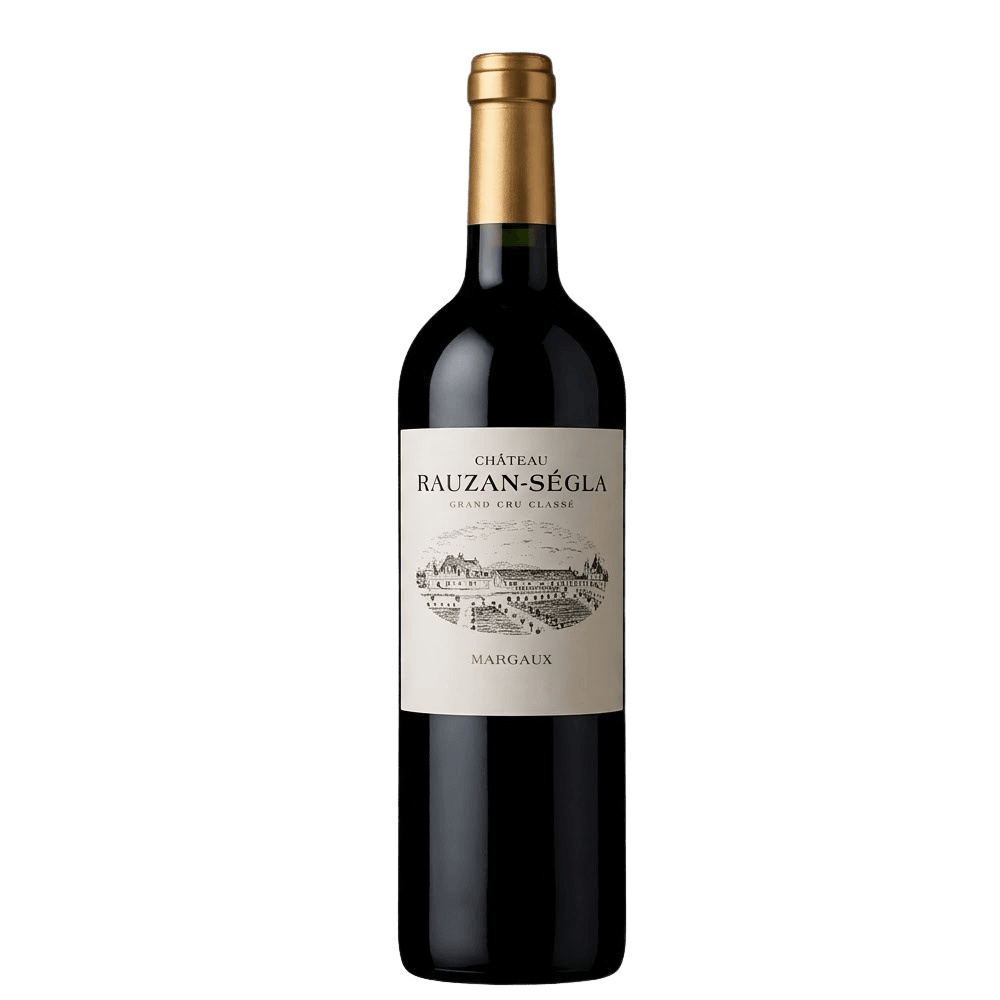
Château Rauzan-Segla
Château Rauzan-Ségla
2013
Château Rauzan-Ségla is a Second Growth estate in Margaux, classified in 1855. Its Cabernet Sauvignon-led Bordeaux blends draw on a mosaic of gravel and clay-rich soils, combining aromatic precision, refined tannins and the structure associated with the historic vineyards of the Médoc.
Country
France
Region
Bordeaux - Margaux
More information
Producer
Château Rauzan-Ségla – A Historic Second Growth of Margaux
Château Rauzan-Ségla is one of the historic classified wine estates of Margaux, situated on the Left Bank of Bordeaux in the Médoc. Its origins date to the seventeenth century, and its position among the Deuxièmes Crus in the Bordeaux Classification of 1855 reflects the property's longstanding significance within the region.
The estate occupies approximately 70 hectares of vineyards near the village of Margaux, where successive geological formations have created a complex mosaic of gravel, clay and limestone-influenced soils.
These varied growing conditions are central to the identity of Rauzan-Ségla. Rather than treating its vineyards as a uniform property, the estate approaches individual parcels and smaller vineyard zones according to their particular characteristics.
Since its acquisition by Chanel in 1994, Château Rauzan-Ségla has pursued an increasingly detailed understanding of its terroirs, combining traditional Bordeaux winemaking with precise vineyard observation and parcel-specific vinification.
The estate produces two principal wines: Château Rauzan-Ségla, its classified Grand Vin, and Ségla, its separately identified second wine.
Both reflect the distinctive character of Margaux, although their vineyard selection, blending and intended styles differ.
Producer at a Glance
- Producer: Château Rauzan-Ségla
- Location: Margaux, Médoc, Bordeaux, France
- Historical Origins: Seventeenth century
- Classification: Deuxième Grand Cru Classé, 1855
- Ownership: Chanel, since 1994
- Managing Director: Nicolas Audebert
- Vineyard Area: Approximately 70 hectares
- Principal Grape Varieties: Cabernet Sauvignon and Merlot
- Additional Varieties: Petit Verdot and Cabernet Franc
- Terroir: Deep gravel, fine gravel and limestone-clay soils
- Viticulture: Detailed parcel and intra-parcel management
- Harvesting: Manual
- Vinification: Separate fermentation of selected vineyard components
- Maturation: French oak barrels, with details varying by wine and vintage
- Organic Certification: From the 2024 vintage
- Grand Vin: Château Rauzan-Ségla
- Second Wine: Ségla
A History Rooted in Seventeenth-Century Bordeaux
The history of Château Rauzan-Ségla is closely connected with the development of the great vineyards of the Médoc.
Its origins can be traced to the seventeenth century and the activities of Pierre de Rauzan, an influential figure in the early development of several historic Bordeaux wine properties.
During this period, the Médoc was undergoing significant changes as vineyard ownership, land management and wine production became increasingly organised.
The Rauzan name became associated with vineyard holdings in Margaux that would eventually develop into separate estates.
Over time, the property acquired its distinct identity as Rauzan-Ségla.
The estate's history reflects the wider evolution of Bordeaux, where vineyards established over successive generations became recognised for their individual reputations and commercial standing.
The Classification of 1855
A defining moment came in 1855.
For the Paris Universal Exhibition, Bordeaux wine merchants prepared a classification of leading wines, primarily from the Médoc, based on their established market standing.
Château Rauzan-Ségla was classified as a Deuxième Grand Cru Classé.
This placed the estate within the second tier of the five-level classification.
The designation remains an important historical distinction and forms part of the property's identity today.
It is essential, however, to distinguish the classification of the estate from the characteristics of individual vintages.
The 1855 ranking identifies the historical status of the property; it does not establish a fixed quality score for every wine produced.
The Chanel Era – A New Chapter Beginning in 1994
Château Rauzan-Ségla has been owned by Chanel since 1994.
The acquisition marked the beginning of a significant period of investment and technical development.
Particular attention has been directed towards understanding the estate's vineyard soils, improving the precision of vineyard management and adapting winemaking practices to individual parcels.
The objective has been to develop a more detailed interpretation of the property's diverse terroirs.
Under this approach, vineyard decisions are informed by differences in soil structure, vine behaviour, grape maturity and the characteristics of each growing season.
The estate has also invested in its winemaking facilities and the organisation of separate fermentation batches.
These developments have allowed the winemaking team to work with increasingly precise vineyard selections.
Nicolas Audebert serves as Managing Director of Château Rauzan-Ségla.
The estate's modern philosophy combines its historical identity with an approach based on observation, experimentation and the gradual refinement of vineyard and cellar practices.
The Margaux Appellation – Elegance on the Left Bank
Château Rauzan-Ségla is located in Margaux, one of the principal communal appellations of the Médoc.
Situated on the Left Bank of the Gironde estuary, Margaux is particularly associated with Cabernet Sauvignon-based red wines.
The region's growing conditions are influenced by its proximity to the Atlantic Ocean and the Gironde estuary.
The maritime climate moderates temperature extremes, although rainfall, heat and seasonal weather patterns can vary considerably between vintages.
The landscape is characterised by gently undulating terraces containing different proportions of gravel, sand, clay and limestone-influenced material.
These geological variations contribute to differences between individual vineyards.
Margaux wines are often associated with aromatic finesse, floral complexity and refined tannin structure.
However, the appellation contains considerable diversity.
Each estate's vineyard composition, soil characteristics and winemaking decisions influence the style of its wines.
At Rauzan-Ségla, the interaction between different soil environments is particularly important.
The Terroir of Château Rauzan-Ségla
The vineyards of Château Rauzan-Ségla occupy approximately 70 hectares across a complex mosaic of soils.
The estate identifies three principal geological environments.
Each contributes different growing conditions and characteristics to the grapes.
Deep Gravel – The Historic Heart of the Vineyard
The deep gravel soils form an important part of Rauzan-Ségla's historic vineyard landscape.
These soils are associated with the ancient terraces of the Médoc.
The estate identifies its Terrace 4 gravel formations as particularly significant.
Alternating layers of gravel and clay influence drainage and the availability of water to the vines.
These conditions are especially relevant to Cabernet Sauvignon, which benefits from suitable drainage and a sufficiently long ripening period.
The estate associates these deep gravel soils with wines displaying structure, complexity and depth.
Fine Gravel – Fruit and Versatility
Other parcels contain finer gravel formations.
These soils differ from the deeper gravel terraces in their composition and water-holding characteristics.
The estate describes these vineyard areas as contributing fruit expression and versatility.
Their characteristics can provide useful complementary components during blending.
The precise contribution depends on grape variety, vineyard management and growing-season conditions.
Limestone-Clay – A Different Expression of Margaux
A third important soil environment consists of clay-rich soils over limestone bedrock.
These parcels offer growing conditions distinct from those of the gravel terraces.
Their cooler, clay-influenced characteristics can affect vine development and grape ripening.
The estate associates these soils with wines displaying concentration, volume and structural presence.
The Importance of the Vineyard Mosaic
The diversity of these soils is one of the defining characteristics of Château Rauzan-Ségla.
Differences in drainage, soil depth and water availability influence how vines respond to weather conditions.
The resulting grapes may differ in ripeness, aromatic expression and tannin structure.
By working with these vineyard components separately, the estate can preserve their individual characteristics before blending.
This approach is fundamental to Rauzan-Ségla's winemaking philosophy.
The Four Grape Varieties of Rauzan-Ségla
The vineyards are planted with four traditional Bordeaux red grape varieties.
Cabernet Sauvignon and Merlot are the principal components, supported by smaller plantings of Petit Verdot and Cabernet Franc.
Their respective roles reflect both the characteristics of the grape varieties and the estate's diverse soils.
Cabernet Sauvignon
Cabernet Sauvignon is central to the identity of Château Rauzan-Ségla.
The estate particularly associates the variety with its gravel soils.
As a relatively late-ripening grape, Cabernet Sauvignon requires careful vineyard management and suitable growing conditions.
It contributes characteristics commonly associated with:
- Blackcurrant and dark berries.
- Structural depth.
- Firm but potentially refined tannins.
- Freshness and acidity.
- Cedar and other savoury notes.
- Long-term ageing potential.
The estate's vineyard management increasingly focuses on understanding how Cabernet Sauvignon behaves in different soil environments.
Merlot
Merlot provides an important complement to Cabernet Sauvignon.
The estate grows the variety across suitable gravel and clay-influenced soils.
Merlot can contribute:
- Plum and red-fruit characteristics.
- A rounded palate.
- Supple tannins.
- Texture and volume.
- Aromatic softness.
Its role in the final blend varies according to the characteristics of each vintage.
Petit Verdot
Petit Verdot occupies a smaller proportion of the vineyard.
Depending on the growing season and ripeness, it may contribute colour, structure and additional aromatic complexity.
Spicy and floral characteristics are among the elements associated with the variety.
Its inclusion in individual wines is determined through blending.
Cabernet Franc
Cabernet Franc is also present in smaller quantities.
The estate associates it with fruit and floral characteristics, including raspberry and other red-fruit notes.
Its contribution varies according to the vineyard selection and vintage.
Blending Rather Than Fixed Proportions
The estate does not use a permanent grape formula for every vintage.
The final proportions depend on the quality and characteristics of the individual vineyard components.
This flexibility allows the producer to respond to each harvest while maintaining the identity of its wines.
Vineyard Management – Understanding Every Parcel
A defining element of Rauzan-Ségla's modern approach is its detailed study of the vineyard.
The estate recognises that significant differences can occur not only between individual parcels but also within the same plot.
Soil depth, drainage, vine development and grape maturity can vary over relatively short distances.
The vineyard team therefore identifies smaller zones with distinct characteristics.
Key Vineyard Practices
- Detailed observation of soil composition and structure.
- Monitoring of vine growth and behaviour.
- Identification of different ripening zones.
- Parcel-specific cultivation decisions.
- Assessment of grape maturity before harvest.
- Manual harvesting and careful selection.
- Separate handling of vineyard components where appropriate.
The purpose is to respond to the conditions of each vineyard area rather than applying identical practices across the entire estate.
This detailed approach continues through harvest and vinification.
Organic Viticulture and Environmental Management
Château Rauzan-Ségla has progressively developed its approach to vineyard management and environmental responsibility.
The property is certified in organic viticulture from the 2024 vintage.
This is an important distinction for understanding the estate's production history.
The certification should not be applied retrospectively to earlier vintages.
Organic viticulture involves restrictions on the use of certain synthetic agricultural inputs and requires compliance with the relevant certification framework.
However, organic certification does not mean that vineyard management is entirely free from treatments or interventions.
At Rauzan-Ségla, organic practices form part of the broader effort to manage the vineyard according to its natural conditions.
The estate's approach remains focused on observation, soil understanding and the relationship between vine health and grape quality.
Harvesting – Precision from Vineyard to Winery
Harvesting at Château Rauzan-Ségla is carried out manually.
Because the estate contains different grape varieties and vineyard environments, the grapes do not necessarily reach optimal maturity at the same time.
Harvest dates are therefore determined according to the characteristics of individual parcels and smaller vineyard zones.
The estate's technical documentation describes harvesting by parcel and intra-parcel selection.
Grapes are transported in small crates and undergo sorting before vinification.
Harvesting Principles
- Manual grape collection.
- Selection according to vineyard origin.
- Monitoring of ripeness and grape condition.
- Careful transport to the winery.
- Sorting before fermentation.
- Separate handling of selected vineyard components.
This process allows the winemaking team to preserve the identity of different vineyard selections.
The precise harvest period varies from year to year.
Winemaking – Precision Through Separate Vinification
The winemaking philosophy of Château Rauzan-Ségla is based on understanding the individual characteristics of its vineyard components.
Rather than fermenting all grapes together, the estate uses separate vinification for selected parcels and smaller vineyard zones.
Temperature-controlled stainless steel vats allow the winemaking team to manage fermentation according to the characteristics of each batch.
The estate's technical documentation also describes the use of gravity during vat filling.
Individual Fermentation Batches
Different vineyard components may require different approaches.
Decisions can include:
- Fermentation temperature.
- Duration of skin contact.
- Extraction methods.
- Management of tannin development.
- Separation or combination of individual batches.
These decisions are adapted to the harvest.
The objective is to preserve the characteristics of the fruit while developing the structure required for the intended wine.
The Role of Tasting
Tasting is central to the process.
Individual components are evaluated throughout vinification and maturation.
The team considers their aromatic characteristics, texture, tannins and balance.
These assessments inform decisions about the final blends.
Blending – The Defining Art of Bordeaux
Blending is one of the most important stages in the production of Château Rauzan-Ségla's wines.
The estate's different soils and grape varieties produce components with distinct characteristics.
Cabernet Sauvignon may contribute structure and depth.
Merlot can provide texture and fruit expression.
Petit Verdot and Cabernet Franc may introduce additional complexity.
The winemaking team evaluates these components individually and in combination.
The objective is to create a balanced expression of the vintage and the estate's identity.
This requires decisions about which components are most suitable for the Grand Vin and which are better suited to Ségla.
The process is repeated every year.
Consequently, neither the precise grape blend nor the characteristics of the finished wines should be treated as identical between vintages.
Maturation – French Oak and the Development of Structure
The wines of Château Rauzan-Ségla undergo maturation in French oak barrels.
The Grand Vin is generally matured for approximately 18 months, although the precise details depend on the vintage.
The proportion of new barrels also varies.
Oak maturation contributes to the gradual development and integration of the wine's components.
Controlled oxygen exchange can influence tannin evolution and texture.
New oak may introduce aromas associated with cedar, toast and spice.
Previously used barrels generally contribute less direct wood-derived flavour.
The estate seeks to balance these influences with the fruit and structure of the wine.
The Grand Vin and Ségla can receive different proportions of new oak according to their intended styles and the characteristics of the vintage.
The Wines of Château Rauzan-Ségla
The estate produces two principal red wines.
Although they share a producer and the wider Margaux terroir, they have distinct identities.
Château Rauzan-Ségla – The Grand Vin
Château Rauzan-Ségla is the estate's classified Grand Vin.
It carries the historical Deuxième Grand Cru Classé designation associated with the property.
The wine is selected to express the character of the estate's principal vineyard terroirs.
Its style is associated with:
- Aromatic finesse.
- Floral and dark-fruit complexity.
- Refined but substantial tannins.
- Structural depth.
- Balance between freshness and concentration.
- Potential for extended bottle ageing.
The exact blend, maturation and tasting profile vary by vintage.
Ségla – The Second Wine
Ségla is the estate's separately identified second wine.
It is produced from selected vineyard components and has its own blending and maturation decisions.
The estate associates Ségla with fruit expression, suppleness and refined tannins.
Its vineyard sourcing includes areas beyond the historic core of the property, where varied gravel, sand and clay formations contribute different characteristics.
Although Ségla shares the estate's winemaking philosophy, it is not the same product as Château Rauzan-Ségla.
The two wines must therefore be identified separately.
The Character of Château Rauzan-Ségla
The estate's wines are associated with the balance between finesse and structural depth that has become closely linked with Margaux.
The Grand Vin is generally described through its combination of aromatic precision, refined tannins and ageing potential.
Depending on the vintage, its aromatic profile may include blackcurrant, red berries, floral notes, cedar and spice.
The palate can combine concentrated fruit with freshness and a fine tannin structure.
Ségla offers a separate interpretation of the estate's vineyards, generally emphasising fruit expression and a supple texture.
These descriptions represent the producer's broader stylistic identity.
They should not replace the tasting notes or technical information for individual vintages.
Château Rauzan-Ségla Within the Bordeaux Classification
Château Rauzan-Ségla is one of the classified Second Growth estates of the Médoc.
Its inclusion in the 1855 classification connects the property with the historical development of Bordeaux's wine trade.
The classification remains relevant when identifying the estate and understanding its position within the region.
However, the classification applies to the historic property rather than serving as a numerical assessment of individual bottles.
Vintage quality, market prices and wine characteristics must be evaluated separately.
This distinction is particularly important when comparing different harvests.
Discover Château Rauzan-Ségla on Sipfind
Explore Château Rauzan-Ségla, a historic classified wine estate in the Margaux appellation of Bordeaux.
Learn about its seventeenth-century origins, diverse gravel and clay-limestone terroirs, Cabernet Sauvignon-led blends and detailed approach to vineyard management.
Discover the estate's Grand Vin and second wine, Ségla, and explore available vintages.
Sipfind provides independent wine price comparisons from European retailers, helping visitors identify offers for the same wine, vintage and bottle format.
Country
Region
Bordeaux - Margaux
Margaux is one of the most respected wine appellations in Bordeaux and represents the pinnacle of Left Bank elegance. Located in the Haut-Médoc, the appellation combines centuries of winemaking heritage with exceptional terroir, producing refined red wines that are widely recognised for their perfume, finesse and remarkable ageing potential. Margaux has long been synonymous with graceful, sophisticated Bordeaux that balances structure with silky texture.
The appellation benefits from distinctive gravel soils with varying proportions of sand and clay, creating ideal drainage and warmth retention for Cabernet Sauvignon, Merlot, Cabernet Franc and Petit Verdot. These deep gravel beds, combined with the moderating influence of the Gironde estuary, produce wines of exceptional aromatic complexity, with characteristic notes of violets, black fruit, cedar and spice. The terroir allows for elegant tannins and refined structure that distinguishes Margaux from neighbouring appellations.
Margaux is home to twenty-one classified estates from the 1855 Classification, including the renowned First Growth Château Margaux, along with distinguished properties such as Château Palmer, Château Rauzan-Ségla, Château Brane-Cantenac and Château Giscours. These estates represent benchmark expressions of the appellation's signature style: wines of exceptional balance, aromatic intensity and graceful power that reward careful cellaring.
Discover Margaux wines, compare prices from trusted merchants across Europe and find the best offers with Sipfind.
Grapes
Cabernet Sauvignon is one of the world’s most important and widely planted red wine grapes, renowned for its powerful structure, concentrated fruit and exceptional ageing potential. Originating in Bordeaux, France, the variety has become a defining grape of fine wine regions around the world, particularly Napa Valley, Tuscany, Chile, Australia and South Africa.
Classic Cabernet Sauvignon combines flavours and aromas of blackcurrant, cassis, blackberry and dark cherry with characteristic notes of cedar, graphite, tobacco and herbs. Naturally high tannins and fresh acidity provide structure and longevity, while maturation in oak can add layers of spice, vanilla and toast. Its character varies significantly with climate, soil and winemaking, ranging from elegant and savoury to rich, powerful and intensely concentrated.
In Bordeaux, Cabernet Sauvignon is particularly associated with the Left Bank, where it forms the foundation of many prestigious blends alongside Merlot, Cabernet Franc and other permitted varieties. In Napa Valley, it has become the region’s signature red grape, producing some of the world’s most sought-after Cabernet Sauvignon wines.
Cabernet Sauvignon’s ability to express terroir while retaining its distinctive structure and character has made it a global benchmark for premium red wine. Whether produced as the dominant variety in a blend or as a varietal wine, the finest examples combine concentration, complexity and the capacity to develop gracefully over decades
Merlot is one of the world’s most important red wine grapes, celebrated for its generous fruit, supple texture and ability to produce wines ranging from approachable and elegant to exceptionally complex and long-lived. Originating in Bordeaux, France, Merlot is particularly associated with the Right Bank, where it forms the foundation of many of the prestigious wines of Pomerol and Saint-Émilion.
Merlot typically expresses flavours and aromas of plum, black cherry, blackberry and red fruits, often developing notes of chocolate, tobacco, cedar, herbs and earthy complexity with maturation. Its naturally rounded texture and generally softer tannin profile distinguish it from Cabernet Sauvignon, although the finest examples can possess considerable structure, freshness and ageing potential.
In Pomerol, Merlot reaches some of its most celebrated expressions, particularly on the appellation’s clay-rich soils, producing wines of remarkable concentration, texture and complexity. In Saint-Émilion, it is commonly blended with Cabernet Franc and, to a lesser extent, Cabernet Sauvignon, creating wines that combine ripe fruit with structure, aromatic complexity and longevity.
Beyond Bordeaux, Merlot is widely cultivated in Italy, California, Washington State, Chile and other major wine regions. It can be produced as a varietal wine or used as a central component of blends, where its fruit and texture complement more structured grape varieties.
From the great Merlot-based wines of Bordeaux’s Right Bank to leading expressions around the world, Merlot’s combination of rich fruit, refined texture and capacity to express terroir has established it as one of the defining varieties of fine red wine.
History and Style
Château Rauzan-Ségla – The Elegance and Depth of Margaux
Château Rauzan-Ségla is a historic Bordeaux wine estate situated in the Margaux appellation on the Left Bank of the Gironde estuary. Classified as a Deuxième Grand Cru Classé in 1855, the château is recognised for red wines that combine Cabernet Sauvignon-led structure with the aromatic finesse traditionally associated with Margaux.
The estate's vineyards occupy approximately 70 hectares across a complex mosaic of gravel, clay and limestone-influenced soils. These different growing environments contribute complementary characteristics to the final blend.
Owned by Chanel since 1994, Château Rauzan-Ségla has developed a detailed approach to vineyard management, parcel selection and vinification. The objective is to preserve the individual characteristics of its terroirs before bringing them together through blending.
The resulting wine is associated with floral aromas, red and dark fruit, refined tannins and considerable ageing potential. Its precise character varies with each harvest, reflecting the growing season, grape selection and decisions made in the vineyard and cellar.
Quick Wine Facts
- Producer: Château Rauzan-Ségla
- Wine: Château Rauzan-Ségla Grand Vin
- Country: France
- Region: Bordeaux
- Subregion: Médoc
- Appellation: Margaux AOC
- Classification: Deuxième Grand Cru Classé, 1855
- Wine Style: Dry Red Bordeaux
- Principal Grape Varieties: Cabernet Sauvignon and Merlot
- Additional Varieties: Petit Verdot and Cabernet Franc
- Vineyard Area: Approximately 70 hectares
- Soil: Gravel, clay and limestone-clay formations
- Harvest: Manual, with parcel-specific selection
- Vinification: Temperature-controlled fermentation, adapted to individual vineyard parcels
- Maturation: French oak barrels, generally around 18 months
- Ageing Potential: Long-term, depending on vintage and storage
- Bottle Size: 750 ml
A Historic Second Growth of Margaux
Château Rauzan-Ségla belongs to the group of Bordeaux estates classified as Second Growths in 1855.
The classification was established for the Paris Universal Exhibition and organised selected Médoc estates into five levels according to their historical commercial standing.
Rauzan-Ségla was included among the Deuxièmes Crus, the second-highest category.
This classification remains an important part of the estate's identity.
Margaux itself is one of the most recognised appellations of the Médoc, situated on the Left Bank of Bordeaux.
The appellation is particularly associated with Cabernet Sauvignon-based red wines, although Merlot and other permitted Bordeaux varieties contribute to the blends.
Within this tradition, Rauzan-Ségla is known for combining aromatic finesse with structure and depth.
Its reputation is closely connected to the character of its vineyards and the careful selection of individual components before blending.
The Estate and Its Modern Development
Château Rauzan-Ségla has belonged to Chanel since 1994.
The change in ownership marked an important period in the estate's modern development.
Investment in vineyard management, technical knowledge and winemaking facilities has supported a more detailed understanding of the property's different soils and vineyard parcels.
Rather than treating the estate as a uniform vineyard, the team studies variations within individual plots.
These differences influence decisions about cultivation, harvest timing and vinification.
The estate's approach places particular emphasis on precision and the relationship between each parcel's growing conditions and the characteristics of its grapes.
This work is especially important for Cabernet Sauvignon, which plays a central role in the identity of the Grand Vin.
The estate's long-term development has also included changes in vineyard planting and grape-variety selection to better reflect the characteristics of its terroirs.
The Terroir of Margaux – A Mosaic of Gravel and Clay
The vineyards of Château Rauzan-Ségla occupy part of the historic gravel terraces of the Médoc.
These terraces were formed through geological processes associated with the development of the Gironde estuary and its surrounding landscape.
The estate identifies three principal soil environments.
Deep Gravel Soils
Deep gravel is an important component of the historic vineyard.
These soils are associated with the Médoc's ancient terraces.
Their structure influences drainage and the availability of water to the vines.
Gravel also contributes to the thermal behaviour of the soil, an important consideration in the ripening of Cabernet Sauvignon.
Fine Gravel Soils
Other vineyard parcels contain finer gravel formations.
These soils differ in their texture, depth and relationship with underlying clay.
They contribute additional growing environments within the estate.
Limestone-Clay Soils
Some parcels contain clay-rich soils over limestone.
These soils provide a different balance of water availability and growing conditions.
The estate associates these areas with wines displaying concentration and a distinctive structural character.
The Importance of Soil Diversity
The combination of these soil types creates a range of vineyard expressions.
Rather than relying on a single uniform terroir, Rauzan-Ségla draws on the complementary characteristics of different parcels.
This diversity is fundamental to the final blend.
Cabernet Sauvignon – The Structural Foundation
Cabernet Sauvignon is the principal grape variety associated with Château Rauzan-Ségla.
Its importance has increased as the estate has refined its understanding of the relationship between grape varieties and individual vineyard sites.
Cabernet Sauvignon is particularly suited to well-drained gravel soils, where suitable growing conditions allow the variety to develop its characteristic structure.
It contributes:
- Blackcurrant and dark-fruit characteristics.
- Tannin structure.
- Freshness and acidity.
- Aromatic complexity.
- Potential for extended bottle ageing.
The proportion of Cabernet Sauvignon varies between vintages.
For example, the 2022 Grand Vin contained 72% Cabernet Sauvignon, while the 2023 blend contained 85%.
These differences demonstrate why grape percentages must be recorded individually for each vintage.
Merlot – Texture and Balance
Merlot is the second principal grape variety at Château Rauzan-Ségla.
It contributes complementary characteristics to the Cabernet Sauvignon-led blend.
Merlot is often associated with:
- Plum and dark cherry aromas.
- A rounded palate.
- Supple tannins.
- Fruit concentration.
- Additional texture.
The balance between Cabernet Sauvignon and Merlot depends on the conditions of the growing season.
The estate selects the proportions according to the characteristics of the individual wines produced from each parcel.
Merlot can therefore play a larger or smaller role depending on the vintage.
Petit Verdot and Cabernet Franc
Petit Verdot and Cabernet Franc form smaller parts of the estate's vineyard plantings.
Their inclusion in the Grand Vin varies between vintages.
Petit Verdot
Petit Verdot can contribute colour, tannin and aromatic complexity.
Depending on ripeness and growing conditions, it may also introduce floral and spicy characteristics.
Cabernet Franc
Cabernet Franc can contribute freshness, aromatic detail and additional complexity.
However, the presence of Cabernet Franc in the vineyard does not mean that it appears in every vintage of the Grand Vin.
The final composition is determined through selection and blending.
Vineyard Management – Precision Within Individual Parcels
Château Rauzan-Ségla employs a detailed approach to vineyard management.
The estate studies differences in soil composition, vine behaviour and grape development.
These differences can occur not only between vineyard parcels but also within individual plots.
The team therefore identifies smaller vineyard zones with distinct characteristics.
Key Vineyard Practices
- Detailed mapping of vineyard soils.
- Monitoring of vine growth and ripening.
- Parcel-specific vineyard management.
- Selection of harvest dates according to grape maturity.
- Manual harvesting.
- Separate handling of selected vineyard components.
This approach allows the winemaking team to preserve the characteristics of individual parcels before blending.
The estate's vineyard practices have also developed towards organic viticulture.
Château Rauzan-Ségla is certified in organic viticulture from the 2024 vintage.
This distinction is important because earlier vintages should not automatically be described as organically certified.
Harvesting – Selection at the Right Moment
Harvest timing is particularly important at Château Rauzan-Ségla.
The estate's different vineyard parcels do not necessarily reach maturity at the same time.
Variations in soil, exposure and grape variety influence the development of the fruit.
The team therefore monitors individual vineyard zones and determines harvest timing according to their characteristics.
Harvesting is carried out manually.
Grapes are selected and handled carefully before entering the winery.
This process supports the estate's approach to separate vinification and blending.
The precise harvest dates differ considerably between vintages.
Vinification – Respecting Individual Terroirs
Vinification at Château Rauzan-Ségla is organised around the characteristics of individual vineyard parcels.
The estate uses temperature-controlled fermentation vats and adapts winemaking decisions to the properties of each batch.
This allows the team to manage extraction and fermentation according to grape ripeness, tannin structure and aromatic characteristics.
Vinification Process
1. Parcel Selection
Grapes are identified according to their vineyard origin and maturity.
2. Harvest and Sorting
The harvested fruit undergoes selection before vinification.
3. Separate Fermentation
Individual vineyard components are fermented separately where appropriate.
4. Temperature Management
Fermentation temperatures are adjusted according to the characteristics of the grapes.
5. Extraction
Extraction decisions are adapted to the vintage and the structure of the fermenting wine.
6. Evaluation and Blending
The individual wines are assessed before the final blend is assembled.
This process is designed to preserve the identity of the vineyard components while allowing the estate to create a balanced Grand Vin.
The Art of Blending
Blending is one of the defining elements of Château Rauzan-Ségla.
The estate's vineyards contain different grape varieties and soil environments.
Each component can contribute different characteristics.
Cabernet Sauvignon provides much of the wine's structure.
Merlot contributes texture and fruit expression.
Petit Verdot and Cabernet Franc may introduce additional aromatic or structural elements.
The final blend is determined through tasting and evaluation.
The objective is not to maintain fixed grape percentages from year to year.
Instead, the estate seeks to express the characteristics of each vintage while preserving the identity of Rauzan-Ségla.
This approach explains why the composition of the wine can change substantially between successive harvests.
Oak Maturation – Developing Structure and Integration
Following vinification and blending, Château Rauzan-Ségla undergoes maturation in French oak barrels.
The estate generally employs an ageing period of approximately 18 months.
The proportion of new oak varies according to the vintage.
For example:
- 2022: 18 months, with 50% new oak.
- 2023: 18 months, with 55% new oak.
Oak maturation influences the development of the wine's tannins, texture and aromatic characteristics.
New barrels may contribute notes associated with cedar, toast and spice.
Previously used barrels generally have a less pronounced direct aromatic influence.
The objective is to integrate these characteristics with the wine's fruit and structure without obscuring the expression of the vineyard.
Style and Tasting Profile
Château Rauzan-Ségla is associated with a combination of aromatic finesse, structural depth and refined tannins.
The precise sensory characteristics depend on the vintage and the maturity of the bottle.
Appearance
- Deep ruby-red colour in younger vintages.
- Colour intensity varies according to the harvest.
- Mature bottles may develop garnet tones.
Aromas
Depending on the vintage, the wine may display:
- Blackcurrant.
- Red cherry and dark berries.
- Violet and rose.
- Cedar.
- Subtle spice.
- Savoury and earthy characteristics with bottle age.
The estate's descriptions of the 2022 and 2023 vintages emphasise the relationship between fruit, floral aromas and structural refinement.
Palate
The wine is generally associated with:
- Fine but substantial tannins.
- Fresh acidity.
- Concentrated fruit.
- A supple texture.
- Balanced structure.
- A persistent finish.
The combination of finesse and depth is an important characteristic of the Rauzan-Ségla style.
However, the precise balance between these elements varies between vintages.
Ageing Potential – The Development of a Classified Growth
Château Rauzan-Ségla is produced with the structure required for extended bottle ageing.
Its ageing potential is influenced by Cabernet Sauvignon, tannin development, acidity and fruit concentration.
However, there is no universal drinking window that applies to every vintage.
Factors Influencing Ageing
- Growing-season conditions.
- Cabernet Sauvignon and Merlot proportions.
- Tannin structure.
- Acidity and concentration.
- Oak maturation.
- Bottle storage conditions.
- Individual preferences.
With maturity, Bordeaux wines can develop aromas associated with cedar, tobacco, leather, dried flowers and forest floor.
The rate and character of development depend on the individual wine.
For Sipfind, vintage-specific drinking windows should be presented separately where supported by reliable documentation.
Serving and Food Pairing
Château Rauzan-Ségla can accompany a range of savoury dishes.
Its structure and aromatic characteristics make it particularly suitable for preparations that complement Cabernet Sauvignon-based Bordeaux.
Recommended Food Pairings
Roasted Beef
The wine's tannins and structure can complement roasted or grilled beef.
Lamb
Roasted lamb, particularly with herbs, is a traditional pairing for structured Bordeaux.
Game
Selected game dishes can complement the wine's savoury characteristics.
Mushrooms
Mushroom-based preparations can work particularly well with mature bottles.
Hard Cheeses
Selected mature cheeses can provide a suitable pairing depending on their intensity.
Serving
- Serving temperature: Approximately 16–18°C.
- Glassware: A large Bordeaux-style wine glass.
- Decanting: Consider according to vintage and bottle maturity.
- Cellaring: Vintage-dependent.
Older bottles should be handled carefully because sediment and bottle condition may influence serving decisions.
Château Rauzan-Ségla and Ségla – Two Distinct Wines
Château Rauzan-Ségla produces two separately identified red wines.
Château Rauzan-Ségla
The estate's Grand Vin.
It carries the historic Deuxième Grand Cru Classé classification associated with the property.
The wine is selected to express the characteristics of the estate's principal vineyard terroirs.
Ségla
The estate's second wine.
It is produced from separately selected vineyard components and has its own blending and maturation decisions.
Although both wines originate from the same producer, they are not interchangeable.
Their grape proportions, production characteristics and prices can differ significantly.
For this reason, Sipfind treats Château Rauzan-Ségla and Ségla as separate products.
Understanding Vintage Variation
Château Rauzan-Ségla is produced from a single harvest each year.
The composition and characteristics of the wine vary according to the growing season.
The estate adjusts vineyard management, harvesting, vinification and blending decisions to the conditions of each vintage.
The contrast between 2022 and 2023 illustrates this approach.
The 2022 blend contained 72% Cabernet Sauvignon and 26% Merlot.
In 2023, Cabernet Sauvignon accounted for 85%, while Merlot represented 13.5%.
These differences reflect the estate's selection of the most suitable components for each harvest.
For this reason, the permanent product page should focus on the estate, classification, terroir and established winemaking philosophy.
Precise blend percentages, alcohol levels, maturation details and tasting notes belong to the individual vintage pages.
Discover Château Rauzan-Ségla on Sipfind
Explore Château Rauzan-Ségla, a historic Second Growth wine from the Margaux appellation of Bordeaux.
Discover the estate's gravel and clay-rich terroirs, Cabernet Sauvignon-led blends and the characteristics of individual vintages.
Compare available offers from European wine retailers on Sipfind, with producer, vintage and bottle format clearly identified.