
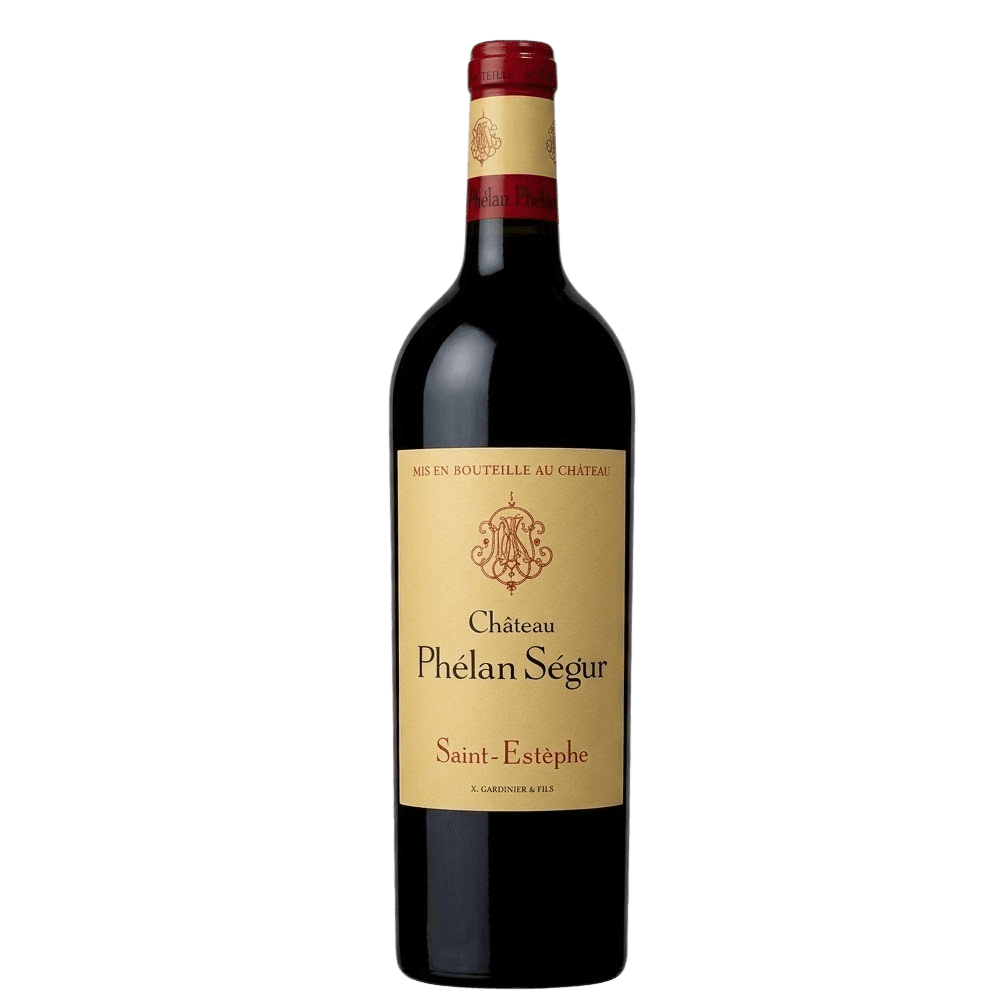
Château Phélan Ségur
Château Phélan Ségur
2006
An elegant Saint-Estèphe Grand Vin shaped by Cabernet Sauvignon, clay-gravel soils, refined tannins and a natural capacity for long ageing.
Country
France
Region
Bordeaux - Saint-Estephe
More information
Producer
Château Phélan Ségur is a historic wine estate in Saint-Estèphe, overlooking the Gironde estuary in Bordeaux’s northern Médoc. Founded by an Irish wine merchant more than two centuries ago, the estate combines a distinctive cultural heritage with some of the appellation’s characteristic clay-gravel terroirs.
Its wines are shaped by Cabernet Sauvignon and Merlot, meticulous parcel selection and a restrained approach to extraction and maturation. The resulting style balances the power and longevity of Saint-Estèphe with pure fruit, natural freshness and refined tannins.
Quick Facts
- Producer: Château Phélan Ségur
- Location: Saint-Estèphe, Bordeaux, France
- Appellation: Saint-Estèphe AOC
- Founded: Early nineteenth century
- Founder: Bernard O’Phelan
- Owner: Philippe Van de Vyvere
- Vineyard area: Approximately 70 hectares
- Principal varieties: Cabernet Sauvignon and Merlot
- Additional varieties: Cabernet Franc and Petit Verdot
- Flagship wine: Château Phélan Ségur
- Second wine: Frank Phélan
Irish Origins in Saint-Estèphe
The history of Château Phélan Ségur began with Bernard O’Phelan, an Irish wine merchant from Tipperary who settled in Bordeaux at the end of the eighteenth century. Through his marriage into the Guestier merchant family, he developed the commercial knowledge and connections required to establish his own wine estate.
Bernard acquired Clos de Garramey in Saint-Estèphe in 1805, followed by the Ségur de Cabanac estate in 1810. These acquisitions formed the foundations of the modern property.
After Bernard’s death in 1841, the estate passed to his son Frank Phélan. Frank continued to develop the reputation and quality of the wines while serving as mayor of Saint-Estèphe for thirty years. Originally known as Château Ségur de Garramey, the property adopted the name Château Phélan Ségur at the beginning of the twentieth century.
Today, the estate is owned by Philippe Van de Vyvere, who has continued its development while preserving the identity, architecture and viticultural heritage of the property.
The Estate and Vineyards
The vineyards of Château Phélan Ségur cover approximately 70 hectares divided into four principal sections across the hillocks and plateaux of Saint-Estèphe. Several parcels adjoin vineyards belonging to Château Montrose and Château Calon Ségur.
The estate’s terroir is dominated by gravel deposited by the river, combined with clay and sand in varying proportions. These clay-gravel soils provide drainage while retaining sufficient moisture to support the vines during dry periods.
The proximity of the Gironde estuary also plays an important role. Its maritime influence helps moderate winter cold and reduce the impact of extreme summer temperatures.
The vineyard is planted with approximately 58% Cabernet Sauvignon, 39% Merlot, 1.5% Cabernet Franc and 1.5% Petit Verdot. These figures describe the estate’s vineyard plantings; the blend of each wine changes according to the vintage and the selection made by the winemaking team.
Responsible Viticulture
Château Phélan Ségur follows a plot-specific and environmentally conscious approach to vineyard management. The team studies the individual soils and subsoils before adapting grape varieties, rootstocks, cultivation methods and canopy management to each parcel.
Vineyard soils may be ploughed or grassed according to their conditions. Herbicide use has been largely eliminated, fertilisation is generally organic and biodiversity is actively protected. The estate also uses preventative vineyard practices and monitoring technology to reduce treatments and other inputs.
The grapes are harvested by hand, with individual parcels picked according to their maturity.
Precision in the Cellar
Harvested grapes are transported in small crates before passing through manual and vibrating sorting tables. A final optical selection, introduced in 2011, helps remove fruit that does not meet the required standard.
The estate’s numerous fermentation vessels allow individual parcels and smaller intra-parcel selections to be vinified separately. Fermentation generally lasts around ten days, followed by approximately twenty days of maceration. Extraction is adapted to each lot through pumping over, rack and return, or cap punching.
Following pressing, the free-run and press wines are separated. Malolactic fermentation takes place in barrel before the individual lots are assessed for blending. This selection determines which wines become part of Château Phélan Ségur, Frank Phélan or La Croix Bonis.
Style and Identity
The defining character of Château Phélan Ségur is the balance between Saint-Estèphe’s natural power and a more refined expression of structure and texture. Cabernet Sauvignon provides depth, freshness and longevity, while Merlot contributes roundness and suppleness.
Across the portfolio, the estate seeks purity of fruit, precise structure and controlled extraction. The Grand Vin is designed for extended development, while Frank Phélan and La Croix Bonis offer more approachable interpretations of the estate and its terroir.
The Wines of Château Phélan Ségur
Château Phélan Ségur is the estate’s Grand Vin. It represents the most rigorous selection of vineyard parcels and individual cellar lots. The wine combines structured dark fruit, freshness and ageing capacity with silky tannins and restrained oak.
Frank Phélan is the second wine of the estate. Created in 1986 and named after the founder’s son, it is sourced from designated old-vine parcels together with selected younger vines. Its fruit, rounded texture and supple tannins generally make it accessible earlier than the Grand Vin.
La Croix Bonis comes from selected estate parcels and is predominantly based on Merlot. It offers a fleshy, fruit-driven and supple expression of Saint-Estèphe with softer tannins and earlier drinking appeal.
Country
Region
Bordeaux - Saint-Estephe
Saint-Estèphe is one of the most respected appellations in Bordeaux and occupies the northernmost position among the great Left Bank communes of the Médoc. Recognised as an AOC since 1936, the appellation has earned an international reputation for producing structured, age-worthy wines that combine power with finesse. While perhaps less celebrated than neighbouring Pauillac, Saint-Estèphe offers exceptional depth, consistent quality and wines that reward long-term cellaring.
The appellation covers approximately 1,200 hectares of vineyards situated on well-drained gravel and clay-limestone soils along the Gironde estuary. This terroir is particularly suited to Cabernet Sauvignon, which typically dominates blends alongside Merlot, Cabernet Franc and Petit Verdot. The cool maritime influence moderates temperatures, extending the growing season and contributing to the firm tannins and pronounced minerality that define the appellation's character. These conditions produce wines with darker fruit profiles, structured acidity and exceptional ageing potential.
Saint-Estèphe is home to five classified growth estates from the historic 1855 Classification, including Château Cos d'Estournel and Château Montrose, both Second Growths renowned for their precision and longevity. Other distinguished producers such as Château Calon-Ségur, Château Phélan Ségur and Château de Pez further demonstrate the appellation's benchmark quality and consistent refinement across vintages.
Discover Saint-Estèphe wines, compare prices from trusted merchants across Europe and find the best offers with Sipfind.
Grapes
Cabernet Sauvignon is one of the world’s most important and widely planted red wine grapes, renowned for its powerful structure, concentrated fruit and exceptional ageing potential. Originating in Bordeaux, France, the variety has become a defining grape of fine wine regions around the world, particularly Napa Valley, Tuscany, Chile, Australia and South Africa.
Classic Cabernet Sauvignon combines flavours and aromas of blackcurrant, cassis, blackberry and dark cherry with characteristic notes of cedar, graphite, tobacco and herbs. Naturally high tannins and fresh acidity provide structure and longevity, while maturation in oak can add layers of spice, vanilla and toast. Its character varies significantly with climate, soil and winemaking, ranging from elegant and savoury to rich, powerful and intensely concentrated.
In Bordeaux, Cabernet Sauvignon is particularly associated with the Left Bank, where it forms the foundation of many prestigious blends alongside Merlot, Cabernet Franc and other permitted varieties. In Napa Valley, it has become the region’s signature red grape, producing some of the world’s most sought-after Cabernet Sauvignon wines.
Cabernet Sauvignon’s ability to express terroir while retaining its distinctive structure and character has made it a global benchmark for premium red wine. Whether produced as the dominant variety in a blend or as a varietal wine, the finest examples combine concentration, complexity and the capacity to develop gracefully over decades
Merlot is one of the world’s most important red wine grapes, celebrated for its generous fruit, supple texture and ability to produce wines ranging from approachable and elegant to exceptionally complex and long-lived. Originating in Bordeaux, France, Merlot is particularly associated with the Right Bank, where it forms the foundation of many of the prestigious wines of Pomerol and Saint-Émilion.
Merlot typically expresses flavours and aromas of plum, black cherry, blackberry and red fruits, often developing notes of chocolate, tobacco, cedar, herbs and earthy complexity with maturation. Its naturally rounded texture and generally softer tannin profile distinguish it from Cabernet Sauvignon, although the finest examples can possess considerable structure, freshness and ageing potential.
In Pomerol, Merlot reaches some of its most celebrated expressions, particularly on the appellation’s clay-rich soils, producing wines of remarkable concentration, texture and complexity. In Saint-Émilion, it is commonly blended with Cabernet Franc and, to a lesser extent, Cabernet Sauvignon, creating wines that combine ripe fruit with structure, aromatic complexity and longevity.
Beyond Bordeaux, Merlot is widely cultivated in Italy, California, Washington State, Chile and other major wine regions. It can be produced as a varietal wine or used as a central component of blends, where its fruit and texture complement more structured grape varieties.
From the great Merlot-based wines of Bordeaux’s Right Bank to leading expressions around the world, Merlot’s combination of rich fruit, refined texture and capacity to express terroir has established it as one of the defining varieties of fine red wine.
Cabernet Franc is one of France’s most historic red wine grapes, valued for its aromatic intensity, vibrant acidity and ability to express both climate and soil with remarkable clarity. It produces elegant single-varietal wines and plays an essential role in some of Bordeaux’s most distinguished blends. Earlier ripening than Cabernet Sauvignon allows Cabernet Franc to perform particularly well in cooler wine regions.
In the Loire Valley, Cabernet Franc reaches its clearest expression as a varietal wine. Typical aromas include redcurrant, raspberry, red cherry and violet, often accompanied by graphite, dried herbs, tobacco and subtle peppery notes. Naturally fresh acidity and finely structured tannins can produce approachable, fruit-driven wines as well as complex examples capable of developing for many years.
The variety is especially important in Chinon, Bourgueil and Saumur-Champigny. Chinon can range from fragrant and supple to deeply structured and age-worthy, depending on vineyard site and soil. Bourgueil often combines dark red fruit with firm structure, while Saumur-Champigny is renowned for freshness, aromatic purity and refined texture. Limestone-rich tuffeau, gravel, sand and clay all contribute to the diversity of Cabernet Franc across these Loire appellations.
In Bordeaux, Cabernet Franc is principally associated with the Right Bank, particularly Saint-Émilion and Pomerol. Usually blended with Merlot and sometimes Cabernet Sauvignon, it contributes perfume, freshness, savoury complexity and structural precision. On suitable limestone and clay terroirs, Cabernet Franc can become a dominant component of exceptionally refined and long-lived wines.
Beyond France, Cabernet Franc is cultivated in regions including Tuscany, Bolgheri, Napa Valley, Washington State, Canada, Argentina and Chile, producing styles shaped by local climate and terroir. Traditionally known as Breton in the Loire and Bouchet in parts of Bordeaux, Cabernet Franc’s combination of aromatic elegance, freshness and ageing potential establishes it as one of the world’s great red wine varieties.
Petit Verdot is a powerful red wine grape from south-west France, best known as a small but distinctive component of the classic red blends of Bordeaux. Its deeply coloured wines, firm tannins and concentrated aromatics allow even modest proportions to add structure, freshness and intensity alongside Cabernet Sauvignon, Merlot and Cabernet Franc.
On Bordeaux’s Left Bank, Petit Verdot is particularly associated with the gravel soils of the Médoc, including appellations such as Margaux, Saint-Julien, Pauillac and Saint-Estèphe. The variety buds relatively early but ripens late, making complete maturation challenging in cooler vintages. When fully ripe, it can retain vibrant acidity while developing considerable colour, tannin and aromatic complexity.
Typical expressions show blackberry, black cherry, blueberry and plum, accompanied by violet, liquorice, pepper, cocoa and other dark spices. In Bordeaux blends, Petit Verdot is generally used in limited quantities to reinforce colour, tannic structure and aromatic depth. Its combination of acidity and tannin can also contribute significantly to a wine’s ageing potential.
Beyond Bordeaux, warmer and more reliable growing conditions have allowed Petit Verdot to achieve greater ripeness and a more prominent role. Producers in California, Australia, Spain and South America increasingly use the variety in both Bordeaux-style blends and varietal wines. These expressions are often full-bodied and deeply coloured, with ripe dark fruit, floral character, spice and powerful tannins.
From its historic role in the Médoc to its expanding presence as a varietal wine, Petit Verdot is defined by colour, structure, freshness and aromatic intensity. Once regarded primarily as a supporting grape, it is increasingly recognised as a distinctive variety capable of producing serious, age-worthy wines in its own right.
History and Style
Château Phélan Ségur is a historic Saint-Estèphe estate overlooking the Gironde estuary in Bordeaux’s northern Médoc. Its Grand Vin combines the structure and depth associated with the appellation with an identity built around elegance, precision, silky tannins and freshness.
Quick Facts
- Producer: Château Phélan Ségur
- Wine: Château Phélan Ségur
- Category: Red Wine
- Estate wine: Grand Vin
- Appellation: Saint-Estèphe
- Region: Bordeaux
- Country: France
- Principal varieties: Cabernet Sauvignon and Merlot
- Additional varieties: Cabernet Franc and Petit Verdot
- Second wine: Frank Phélan
History and Identity
The history of Château Phélan Ségur began with Bernard O’Phelan, an Irish wine merchant who settled in Bordeaux at the end of the eighteenth century. He acquired Clos de Garramey in 1805 and the Ségur de Cabanac estate in 1810, establishing the foundations of the present property.
Following Bernard’s death in 1841, the combined estate passed to his son Frank Phélan, who further developed its vineyards and reputation while serving as mayor of Saint-Estèphe for thirty years. Originally known as Château Ségur de Garramey, the estate adopted the name Château Phélan Ségur at the beginning of the twentieth century.
The château itself was designed around wine production rather than as a residence separated from the working estate. Its vat room and cellars were incorporated into the main Palladian-style building, making it an early example of the integrated architectural model that became associated with the Médoc.
Vineyards and Terroir
The Château Phélan Ségur vineyard covers approximately 70 hectares divided into four principal sections. Its parcels occupy hillocks and plateaux in Saint-Estèphe and adjoin vineyards belonging to Château Montrose and Château Calon Ségur.
The soils consist principally of gravel deposited by the river and mixed with varying proportions of clay and sand. These clay-gravel soils provide drainage while retaining sufficient moisture to support the vines through dry periods. The estate’s proximity to the Gironde estuary helps moderate both winter cold and summer heat.
The vineyard is planted predominantly with Cabernet Sauvignon and Merlot, complemented by smaller proportions of Cabernet Franc and Petit Verdot. Cabernet Sauvignon provides the structural foundation of the Grand Vin, while Merlot contributes roundness and suppleness. Cabernet Franc brings finesse and floral character, with Petit Verdot adding spice and further complexity.
Vineyard Management and Winemaking
The vineyards are cultivated using a responsible, plot-specific approach. Soils may be ploughed or grassed according to individual conditions, fertilisation is generally organic and vineyard inputs are carefully controlled. The grapes are harvested by hand and transported in small crates.
At the winery, the fruit passes through manual and vibrating sorting tables before a final optical selection. Individual lots are vinified separately across a range of tanks, allowing the winemaking team to interpret the character of each vineyard parcel with precision.
Fermentation generally lasts around ten days, followed by approximately twenty days of maceration. Extraction is adapted to each lot through techniques including pumping over, rack and return, and cap punching. The wines then undergo malolactic fermentation in barrel before the individual lots are evaluated for the final blend.
Maturation and the proportion of new oak vary according to the vintage. The estate’s general technical presentation specifies approximately 18 months in barrel, with around 50% new oak, but the exact figures should always be recorded separately for each vintage.
Style and Ageing
Château Phélan Ségur expresses the power of Saint-Estèphe through a controlled and refined style. Cabernet Sauvignon provides structure, dark-fruit character and longevity, while Merlot softens the composition and contributes texture.
The Grand Vin is associated with pure fruit, precise structure, silky tannins and natural freshness rather than excessive extraction or overt oak. With bottle age, its youthful fruit and structure can develop towards more complex notes of spice, ripe fruit, leather and integrated cedar.
The balance between strength and finesse gives Château Phélan Ségur the capacity to develop over several decades in suitable vintages. The optimum drinking window nevertheless depends on the year, bottle condition, provenance and storage history.