
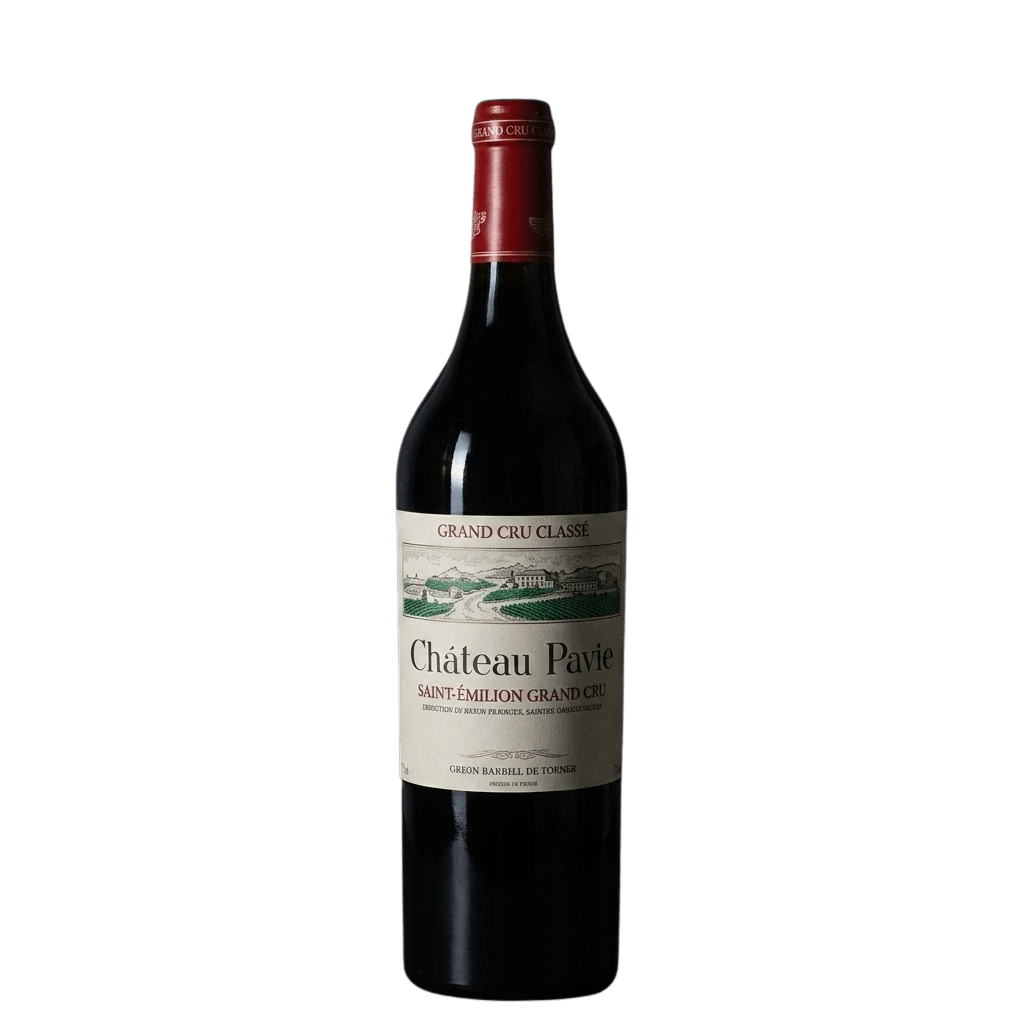
Château Pavie
Château Pavie
2016
From 446 EUR from 1 retailers
Château Pavie represents the pinnacle of Saint-Émilion winemaking, a Premier Grand Cru Classé A estate producing powerful, concentrated Merlot-dominant wines of exceptional ageing potential and international acclaim.
Country
France
Region
Bordeaux - Saint-Emilion
Number of retailers: 1
bordeauxwines.se
Sweden
Château Pavie
2016
Standard delivery 1-3 business days
More information
Producer
Château Pavie is one of only four estates classified as Premier Grand Cru Classé (A) in Saint-Émilion, the appellation's highest designation achieved in 2012. Owned by Gérard Perse since 1998, the estate combines a privileged position on the limestone plateau and côte with a modern, quality-focused approach that has transformed Pavie into one of Bordeaux's most powerful and collectible Right Bank wines.
*** HERO CONTENT DESCRIPTION (paste into 'Hero Description' rich-text field) ***
------------------------------------------------------------
Formatting instructions in admin:
1. Paste all text below
2. Bullet list (lines starting with *): convert to BULLETED LIST
3. Lines starting with '## ': convert to HEADING 2 (remove '## ' prefix)
------------------------------------------------------------
Château Pavie is one of only four estates classified as Premier Grand Cru Classé (A) in Saint-Émilion, the appellation's highest designation achieved in 2012. Situated on the southern slopes overlooking the medieval town, the property has been owned by Gérard Perse since 1998 and is now recognised for producing Merlot-based wines of remarkable concentration, ripeness and ageing potential. The estate's Grand Vin combines the depth and structure of Saint-Émilion's greatest terroirs with a bold, modern expression that polarises and captivates in equal measure.
Quick Facts
- Location: Saint-Émilion, Bordeaux, France
- Classification: Premier Grand Cru Classé (A) since 2012
- Ownership: Gérard Perse, since 1998
- Estate size: Approximately 37 hectares under vine
- Vineyard position: South-facing slopes combining plateau, côte and pied de côte
- Soils: Limestone plateau, clay-limestone côte and sandy clay at lower elevations
- Principal grapes: Merlot, Cabernet Franc, Cabernet Sauvignon
- Grand Vin: Château Pavie
- Second wine: Arômes de Pavie
- Style: Opulent, concentrated and structured with exceptional cellaring potential
- Ageing: New French oak barrels, typically 70-100% depending on vintage
- Viticulture: Integrated sustainable practices with meticulous canopy and yield management
A Transformation at the Summit of Saint-Émilion
The name Pavie derives from the peach vines that once grew on these slopes. The estate's modern identity, however, was shaped decisively after 1998, when Gérard Perse acquired the property and embarked on a comprehensive transformation of both vineyard and cellar.
Perse introduced rigorous selection, lower yields, extended hang time and a winemaking philosophy focused on extracting maximum ripeness and concentration. The changes attracted both admiration and controversy, yet the estate's elevation to Premier Grand Cru Classé (A) in the 2012 classification confirmed Pavie's position among Saint-Émilion's elite.
The Amphitheatre of Pavie
Château Pavie occupies an exceptional natural amphitheatre on the southern edge of the Saint-Émilion plateau. The vineyard stretches across three distinct geological zones: the limestone plateau at the summit, the steep clay-limestone côte and the sandy clay soils of the pied de côte at lower elevations.
This varied topography creates remarkable complexity within a single estate. The plateau provides structure and minerality, the côte offers power and concentration, and the lower slopes contribute flesh and aromatic generosity. Together, they form a terroir mosaic capable of producing wines with both immediate impact and long-term development.
The vineyard's south-facing exposure ensures excellent sunlight interception and heat accumulation, encouraging full phenolic ripeness even in cooler vintages. Natural drainage through the limestone bedrock further contributes to vine balance and fruit quality.
Merlot-Led Intensity
Merlot dominates the blend at Pavie, typically representing between 60 and 70 percent of the Grand Vin, supported by Cabernet Franc and Cabernet Sauvignon. The estate's approach emphasises physiological ripeness, with harvest often occurring later than neighbouring properties to achieve Perse's signature richness and density.
The resulting wine is characterised by deep colour, ripe dark fruit, chocolate and spice notes, generous texture and substantial yet polished tannins. Extended maturation in predominantly new French oak adds further layers of vanilla, toast and structural integration.
Château Pavie is built for the long term. While approachable in youth due to its opulent fruit, the Grand Vin typically requires a decade or more to reveal its full complexity and can age gracefully for 30 to 40 years or beyond in strong vintages. The estate's modern style has redefined expectations for Saint-Émilion's ageing potential and collectibility.
Country
Region
Bordeaux - Saint-Emilion
Saint-Émilion is one of the most respected wine appellations in Bordeaux and has long been recognised for producing refined, age-worthy wines of exceptional quality. Located on the Right Bank of the Dordogne River, this historic appellation combines centuries of winemaking tradition with distinctive terroir, creating elegant Merlot-dominant wines that are celebrated by collectors and enthusiasts worldwide. Established as an AOC in 1936, Saint-Émilion represents the finest expression of Right Bank winemaking.
The appellation benefits from diverse soils that define its wines. The plateau and côtes feature limestone and clay-limestone terroirs that produce structured, mineral-driven wines with remarkable ageing potential, while the lower slopes contain sandy and gravelly soils that yield softer, more approachable expressions. Merlot dominates the blend, typically complemented by Cabernet Franc and occasionally Cabernet Sauvignon, creating wines of elegance, depth and finesse.
Saint-Émilion is home to its own classification system, revised approximately every decade, which recognises Premiers Grands Crus Classés A estates such as Château Ausone and Château Cheval Blanc, alongside distinguished Premiers Grands Crus Classés B and Grands Crus Classés properties. Notable producers including Château Pavie, Château Figeac and Château Canon demonstrate the appellation's benchmark for quality and terroir expression.
Whether exploring classified estates, exceptional vintages or the appellation's rich medieval heritage, Saint-Émilion offers a distinguished introduction to Right Bank Bordeaux. Discover Saint-Émilion wines, compare prices from trusted merchants across Europe and find the best offers with Sipfind.
Grapes
Merlot is one of the world’s most important red wine grapes, celebrated for its generous fruit, supple texture and ability to produce wines ranging from approachable and elegant to exceptionally complex and long-lived. Originating in Bordeaux, France, Merlot is particularly associated with the Right Bank, where it forms the foundation of many of the prestigious wines of Pomerol and Saint-Émilion.
Merlot typically expresses flavours and aromas of plum, black cherry, blackberry and red fruits, often developing notes of chocolate, tobacco, cedar, herbs and earthy complexity with maturation. Its naturally rounded texture and generally softer tannin profile distinguish it from Cabernet Sauvignon, although the finest examples can possess considerable structure, freshness and ageing potential.
In Pomerol, Merlot reaches some of its most celebrated expressions, particularly on the appellation’s clay-rich soils, producing wines of remarkable concentration, texture and complexity. In Saint-Émilion, it is commonly blended with Cabernet Franc and, to a lesser extent, Cabernet Sauvignon, creating wines that combine ripe fruit with structure, aromatic complexity and longevity.
Beyond Bordeaux, Merlot is widely cultivated in Italy, California, Washington State, Chile and other major wine regions. It can be produced as a varietal wine or used as a central component of blends, where its fruit and texture complement more structured grape varieties.
From the great Merlot-based wines of Bordeaux’s Right Bank to leading expressions around the world, Merlot’s combination of rich fruit, refined texture and capacity to express terroir has established it as one of the defining varieties of fine red wine.
Cabernet Franc is one of France’s most historic red wine grapes, valued for its aromatic intensity, vibrant acidity and ability to express both climate and soil with remarkable clarity. It produces elegant single-varietal wines and plays an essential role in some of Bordeaux’s most distinguished blends. Earlier ripening than Cabernet Sauvignon allows Cabernet Franc to perform particularly well in cooler wine regions.
In the Loire Valley, Cabernet Franc reaches its clearest expression as a varietal wine. Typical aromas include redcurrant, raspberry, red cherry and violet, often accompanied by graphite, dried herbs, tobacco and subtle peppery notes. Naturally fresh acidity and finely structured tannins can produce approachable, fruit-driven wines as well as complex examples capable of developing for many years.
The variety is especially important in Chinon, Bourgueil and Saumur-Champigny. Chinon can range from fragrant and supple to deeply structured and age-worthy, depending on vineyard site and soil. Bourgueil often combines dark red fruit with firm structure, while Saumur-Champigny is renowned for freshness, aromatic purity and refined texture. Limestone-rich tuffeau, gravel, sand and clay all contribute to the diversity of Cabernet Franc across these Loire appellations.
In Bordeaux, Cabernet Franc is principally associated with the Right Bank, particularly Saint-Émilion and Pomerol. Usually blended with Merlot and sometimes Cabernet Sauvignon, it contributes perfume, freshness, savoury complexity and structural precision. On suitable limestone and clay terroirs, Cabernet Franc can become a dominant component of exceptionally refined and long-lived wines.
Beyond France, Cabernet Franc is cultivated in regions including Tuscany, Bolgheri, Napa Valley, Washington State, Canada, Argentina and Chile, producing styles shaped by local climate and terroir. Traditionally known as Breton in the Loire and Bouchet in parts of Bordeaux, Cabernet Franc’s combination of aromatic elegance, freshness and ageing potential establishes it as one of the world’s great red wine varieties.
Cabernet Sauvignon is one of the world’s most important and widely planted red wine grapes, renowned for its powerful structure, concentrated fruit and exceptional ageing potential. Originating in Bordeaux, France, the variety has become a defining grape of fine wine regions around the world, particularly Napa Valley, Tuscany, Chile, Australia and South Africa.
Classic Cabernet Sauvignon combines flavours and aromas of blackcurrant, cassis, blackberry and dark cherry with characteristic notes of cedar, graphite, tobacco and herbs. Naturally high tannins and fresh acidity provide structure and longevity, while maturation in oak can add layers of spice, vanilla and toast. Its character varies significantly with climate, soil and winemaking, ranging from elegant and savoury to rich, powerful and intensely concentrated.
In Bordeaux, Cabernet Sauvignon is particularly associated with the Left Bank, where it forms the foundation of many prestigious blends alongside Merlot, Cabernet Franc and other permitted varieties. In Napa Valley, it has become the region’s signature red grape, producing some of the world’s most sought-after Cabernet Sauvignon wines.
Cabernet Sauvignon’s ability to express terroir while retaining its distinctive structure and character has made it a global benchmark for premium red wine. Whether produced as the dominant variety in a blend or as a varietal wine, the finest examples combine concentration, complexity and the capacity to develop gracefully over decades
History and Style
Château Pavie is the flagship Grand Vin of one of Saint-Émilion's most distinguished estates, elevated to Premier Grand Cru Classé A status—the appellation's highest classification. This Right Bank Bordeaux icon combines terroir excellence with uncompromising winemaking to produce wines of remarkable power, concentration and longevity.
Quick Facts
- Producer: Château Pavie
- Classification: Premier Grand Cru Classé A
- Region: Bordeaux
- Appellation: Saint-Émilion
- Country: France
- Style: Full-bodied Right Bank Bordeaux
- Grape Composition: Merlot-dominant blend with Cabernet Franc and Cabernet Sauvignon (proportions vary by vintage)
- Ageing Potential: 20-40+ years from vintage
- Alcohol (ABV): 13.5-14.5%
- Tasting Profile: Blackberry, plum, graphite, dark chocolate, spice, cedar
- Food Pairing: Beef, lamb, game, duck, aged hard cheeses
- Serving Temperature: 16-18°C
- Bottle Status: Flagship
- Vintage: Varies by bottle
Vineyard, Terroir and Style
The estate's exceptional vineyard sits on the prestigious Saint-Émilion limestone plateau and slopes, where Merlot thrives alongside Cabernet Franc and Cabernet Sauvignon. This unique terroir, combined with meticulous viticulture and extended ageing in new French oak, creates wines of intense character while maintaining the elegance and balance that define great Bordeaux. Under modern ownership, Château Pavie has achieved international recognition for its bold, contemporary style.
History and Reputation
In the glass, Château Pavie reveals dense fruit concentration with layers of blackberry, plum, graphite and spice. The wine's powerful structure and velvety tannins support decades of evolution, developing complexity with bottle age. Each vintage expresses both the estate's distinctive terroir and the character of the year, making Château Pavie a benchmark for collectors and connoisseurs of Right Bank Bordeaux.
Explore Château Pavie across vintages and compare prices from trusted merchants on Sipfind to discover this iconic Saint-Émilion Grand Vin.