
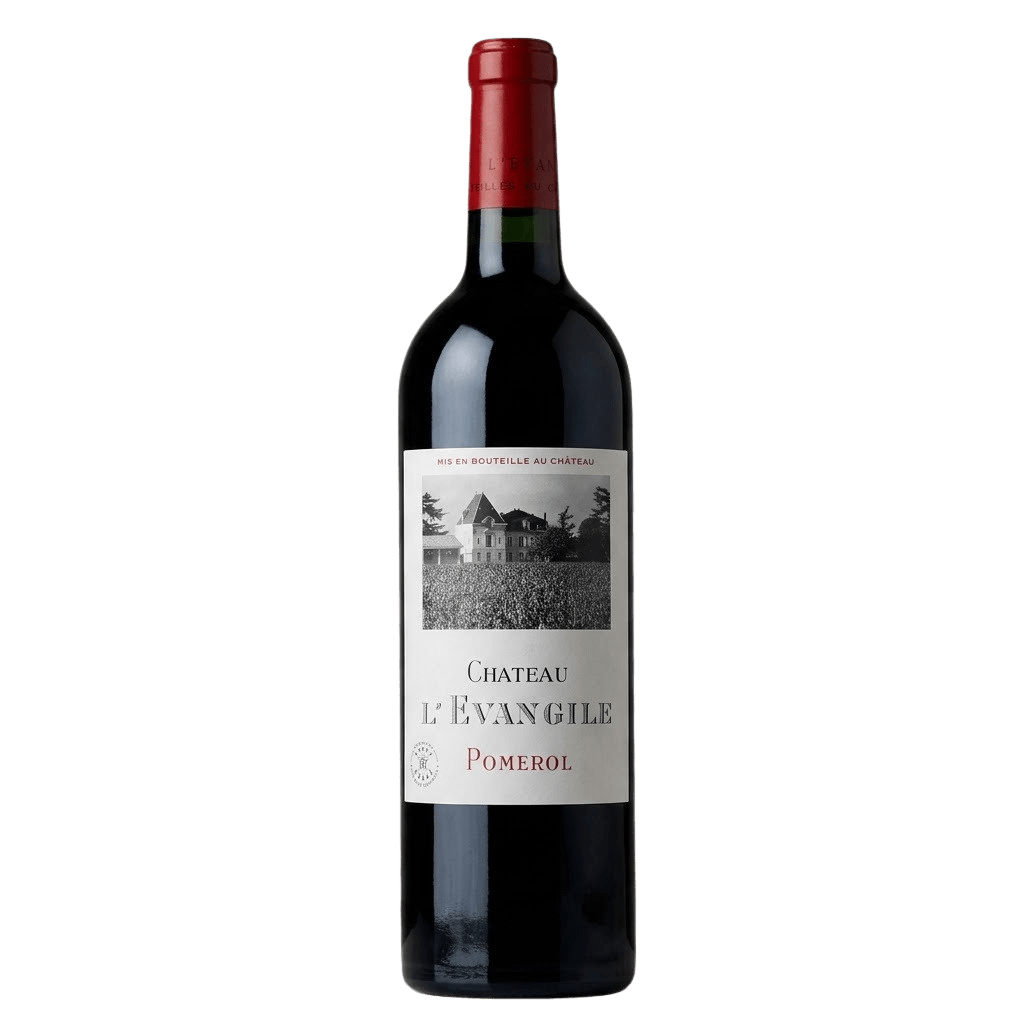
Château L’Evangile
Château L’Evangile
2002
From 245 EUR from 1 retailers
Château L'Evangile is one of Pomerol's most revered estates, crafting Merlot-dominant wines of remarkable elegance, depth and longevity from its privileged Right Bank terroir adjacent to Château Pétrus.
Country
France
Region
Bordeaux - Pomerol
Number of retailers: 1
Chateaunet
France
Château L’Evangile
2002
Standard delivery 1-3 business days
More information
Producer
Château L'Evangile is one of Pomerol's most distinguished estates, with origins in the 18th century and a position on the appellation's celebrated plateau adjacent to Château Pétrus. Since 1990, the property has been owned by Domaines Barons de Rothschild (Lafite), whose stewardship has reinforced the estate's commitment to meticulous viticulture and traditional winemaking. The Grand Vin is renowned for its aromatic richness, silky tannins and capacity to evolve gracefully over two to three decades.
Quick Facts
* Location: Pomerol, Bordeaux, France
* Founded: 18th century
* Appellation: Pomerol AOC
* Ownership: Domaines Barons de Rothschild (Lafite), since 1990
* Principal grapes: Merlot, Cabernet Franc
* Estate size: Approximately 22 hectares
* Soils: Clay and gravel
* Position: Pomerol plateau, adjacent to Château Pétrus
* Grand Vin: Château L'Evangile
* Second wine: Blason de L'Evangile
* Style: Concentrated, refined and structured with exceptional ageing potential
* Viticulture: Parcel-based management with meticulous site selection
## A Pomerol Heritage Rooted in the 18th Century
The estate traces its history to the 1700s, when it was established on some of Pomerol's finest soils. By the mid-19th century, Château L'Evangile had already earned recognition for the quality and consistency of its wines, securing a reputation that would endure across successive generations.
The arrival of Domaines Barons de Rothschild (Lafite) in 1990 marked a new chapter. Investment in vineyard management, cellar infrastructure and viticultural precision has allowed the estate to refine its expression while preserving the character and heritage that define L'Evangile.
## The Pomerol Plateau and Clay-Gravel Soils
Château L'Evangile's approximately 22 hectares occupy a privileged position on the Pomerol plateau, immediately adjacent to Château Pétrus. This geological high point is distinguished by a complex mix of clay and gravel soils deposited over successive geological periods.
The clay fraction provides depth, structure and water retention, while the gravel layers encourage drainage and early ripening. This combination creates ideal conditions for Merlot, which typically represents the dominant proportion of the estate's plantings, supported by Cabernet Franc to add aromatic complexity and structural support.
The plateau's gentle elevation and favourable microclimate contribute to even ripening and allow the estate to achieve full phenolic maturity while maintaining freshness and balance.
## Merlot-Led Elegance and Structure
The Grand Vin of Château L'Evangile is shaped by the interplay between Merlot's richness and the site's natural structure. Careful parcel selection, low yields and traditional winemaking techniques allow the estate to craft wines that combine concentration with finesse.
Aromatic complexity, silky yet firm tannins and a layered texture define the house style. The wines are built for extended ageing, developing secondary notes of truffle, leather and dried fruit while retaining the elegance and mineral freshness that distinguish Pomerol's finest expressions.
Blason de L'Evangile offers an approachable expression of the estate's terroir and philosophy, made with the same attention to detail and designed for earlier enjoyment. Together, these wines reflect L'Evangile's standing as one of Pomerol's benchmark producers and a reference point for collectors of Right Bank Bordeaux.
Country
Region
Bordeaux - Pomerol
Pomerol is one of the most respected wine appellations in Bordeaux and has earned international recognition for producing exceptional Merlot-based wines of extraordinary elegance and depth. Located on the Right Bank near Saint-Émilion, this small appellation combines centuries of winemaking tradition with some of the most distinctive terroir in France. Despite having no formal classification system, Pomerol commands some of the highest prices in the fine wine market and remains highly sought-after by collectors worldwide.
The appellation covers approximately 800 hectares characterised by gravel, clay and iron-rich soils known locally as crasse de fer. This unique terroir provides ideal conditions for Merlot, which typically comprises 70-90% of plantings, with Cabernet Franc playing a supporting role. The iron-oxide content in the soil contributes to the wines' distinctive mineral character, concentration and remarkable structure. Cool clay subsoils retain moisture during dry summers, allowing grapes to ripen slowly and develop exceptional complexity.
Pomerol is home to some of Bordeaux's most distinguished estates, including Pétrus, widely regarded as one of the greatest wines in the world, alongside Le Pin, Vieux Château Certan, Lafleur, Trotanoy and L'Évangile. These wines are celebrated for their velvety texture, intense dark fruit, refined tannins and outstanding ageing potential. The absence of a formal classification has allowed quality and reputation to speak for themselves, creating a distinctive culture of excellence.
Discover Pomerol wines, compare prices from trusted merchants across Europe and find the best offers with Sipfind.
Grapes
Merlot is one of the world’s most important red wine grapes, celebrated for its generous fruit, supple texture and ability to produce wines ranging from approachable and elegant to exceptionally complex and long-lived. Originating in Bordeaux, France, Merlot is particularly associated with the Right Bank, where it forms the foundation of many of the prestigious wines of Pomerol and Saint-Émilion.
Merlot typically expresses flavours and aromas of plum, black cherry, blackberry and red fruits, often developing notes of chocolate, tobacco, cedar, herbs and earthy complexity with maturation. Its naturally rounded texture and generally softer tannin profile distinguish it from Cabernet Sauvignon, although the finest examples can possess considerable structure, freshness and ageing potential.
In Pomerol, Merlot reaches some of its most celebrated expressions, particularly on the appellation’s clay-rich soils, producing wines of remarkable concentration, texture and complexity. In Saint-Émilion, it is commonly blended with Cabernet Franc and, to a lesser extent, Cabernet Sauvignon, creating wines that combine ripe fruit with structure, aromatic complexity and longevity.
Beyond Bordeaux, Merlot is widely cultivated in Italy, California, Washington State, Chile and other major wine regions. It can be produced as a varietal wine or used as a central component of blends, where its fruit and texture complement more structured grape varieties.
From the great Merlot-based wines of Bordeaux’s Right Bank to leading expressions around the world, Merlot’s combination of rich fruit, refined texture and capacity to express terroir has established it as one of the defining varieties of fine red wine.
Cabernet Franc is one of France’s most historic red wine grapes, valued for its aromatic intensity, vibrant acidity and ability to express both climate and soil with remarkable clarity. It produces elegant single-varietal wines and plays an essential role in some of Bordeaux’s most distinguished blends. Earlier ripening than Cabernet Sauvignon allows Cabernet Franc to perform particularly well in cooler wine regions.
In the Loire Valley, Cabernet Franc reaches its clearest expression as a varietal wine. Typical aromas include redcurrant, raspberry, red cherry and violet, often accompanied by graphite, dried herbs, tobacco and subtle peppery notes. Naturally fresh acidity and finely structured tannins can produce approachable, fruit-driven wines as well as complex examples capable of developing for many years.
The variety is especially important in Chinon, Bourgueil and Saumur-Champigny. Chinon can range from fragrant and supple to deeply structured and age-worthy, depending on vineyard site and soil. Bourgueil often combines dark red fruit with firm structure, while Saumur-Champigny is renowned for freshness, aromatic purity and refined texture. Limestone-rich tuffeau, gravel, sand and clay all contribute to the diversity of Cabernet Franc across these Loire appellations.
In Bordeaux, Cabernet Franc is principally associated with the Right Bank, particularly Saint-Émilion and Pomerol. Usually blended with Merlot and sometimes Cabernet Sauvignon, it contributes perfume, freshness, savoury complexity and structural precision. On suitable limestone and clay terroirs, Cabernet Franc can become a dominant component of exceptionally refined and long-lived wines.
Beyond France, Cabernet Franc is cultivated in regions including Tuscany, Bolgheri, Napa Valley, Washington State, Canada, Argentina and Chile, producing styles shaped by local climate and terroir. Traditionally known as Breton in the Loire and Bouchet in parts of Bordeaux, Cabernet Franc’s combination of aromatic elegance, freshness and ageing potential establishes it as one of the world’s great red wine varieties.
History and Style
Château L'Evangile represents the pinnacle of Pomerol winemaking, a flagship Grand Vin from one of Bordeaux's most celebrated Right Bank estates. Situated on the historic Pomerol plateau with vineyards neighboring the legendary Château Pétrus, L'Evangile has built its reputation on wines that combine power with finesse, structure with silky elegance.
Quick Facts
- Producer: Château L'Evangile
- Classification: Pomerol estate (unclassified appellation)
- Region: Bordeaux
- Appellation: Pomerol
- Country: France
- Style: Full-bodied Right Bank Bordeaux
- Grape Composition: Merlot-dominant blend (typically 80-90%) with Cabernet Franc
- Ageing Potential: 15-30+ years from vintage
- Alcohol (ABV): 13-14%
- Tasting Profile: Dark fruits, violets, truffles, spice, velvety tannins, tertiary notes of leather and tobacco with age
- Food Pairing: Beef, lamb, duck, game, mushroom dishes, aged cheese
- Serving Temperature: 16-18°C
- Bottle Status: Flagship
- Vintage: Varies by vintage (multi-vintage product)
Vineyard, Terroir and Style
The estate's 22-hectare vineyard benefits from exceptional terroir—a complex mosaic of clay, gravel and sand soils that are ideally suited to Merlot, which typically comprises 80-90% of the blend, complemented by Cabernet Franc. This composition reflects the Right Bank philosophy of emphasizing Merlot's capacity for opulence and aromatic complexity. Under the stewardship of Domaines Barons de Rothschild (Lafite) since 1990, L'Evangile has achieved new heights of precision and consistency while respecting its historic character.
History and Reputation
The wine displays classic Pomerol characteristics: velvety tannins, remarkable depth and a signature aromatic profile of dark fruits, violets, truffles and spice. While approachable in youth, Château L'Evangile reveals its full complexity with extended cellaring, developing tertiary notes of leather, tobacco and forest floor. Each vintage expresses both the estate's distinctive terroir and the particular character of the growing season.
Whether you're a seasoned collector or discovering Pomerol's treasures, use Sipfind to compare prices and find the best offers on Château L'Evangile from trusted merchants worldwide.