
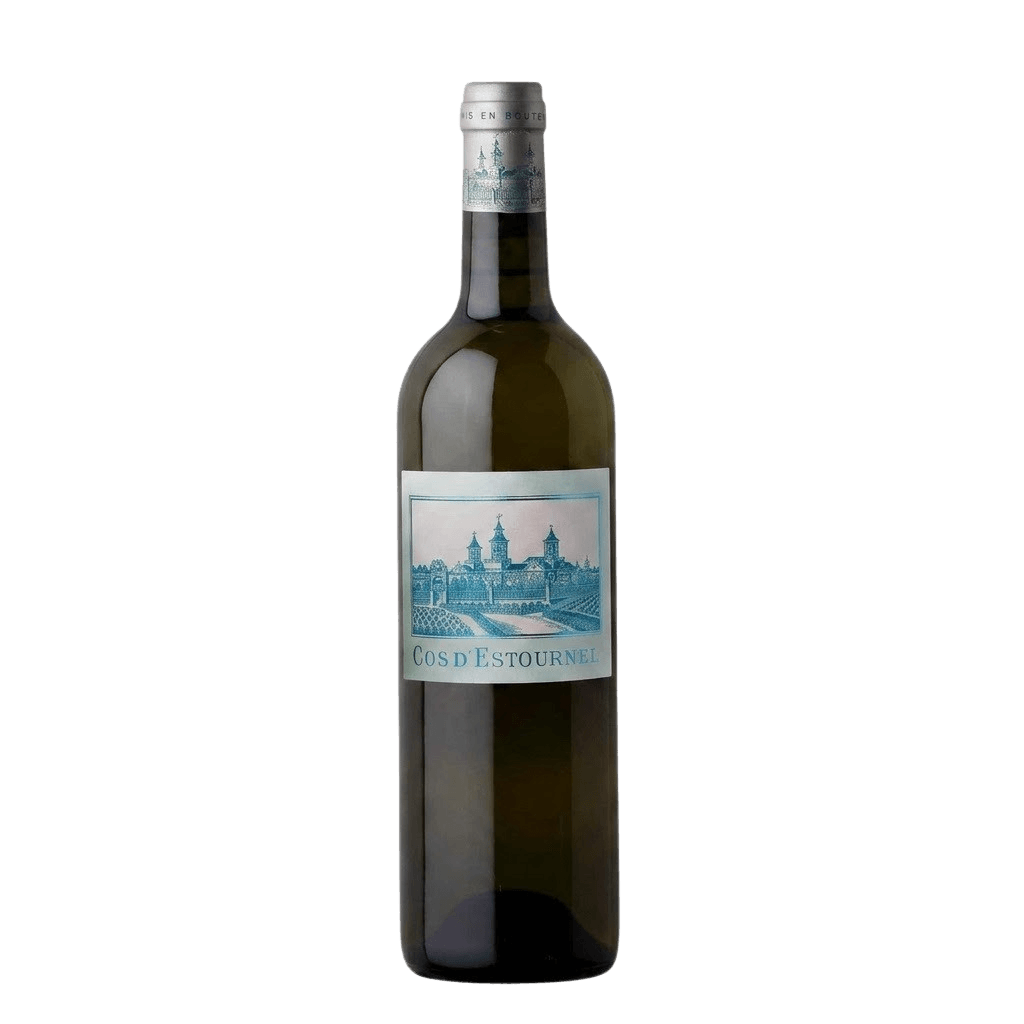
Château Cos d’Estournel
Chateau Cos d'Estournel Blanc
2019
From 144 EUR from 2 retailers
Château Cos d'Estournel Blanc is the rare and exceptional white flagship from the prestigious Saint-Estèphe Second Growth, representing an elegant expression of white Bordeaux from one of the Left Bank's most celebrated estates.
Country
France
Region
Bordeaux - Saint-Estephe
Number of retailers: 2
Chateaunet
France
Chateau Cos d'Estournel Blanc
2019
Standard delivery 1-3 business days
You save up to 28 EUR, where 28 EUR is the difference between the highest price and the lowest price
bordeauxwines.se
Sweden
Chateau Cos d'Estournel Blanc
2019
Standard delivery 1-3 business days
More information
Producer
Château Cos d'Estournel is a Second Growth of the 1855 Classification and the most celebrated wine estate in Saint-Estèphe. Situated on a commanding gravel ridge immediately north of Pauillac, the property has been owned by Michel Reybier since 2000 and remains dedicated to the production of powerful, precise and exceptionally long-lived Cabernet-based wines. Its distinctive oriental-inspired architecture and elevated terroir combine to create one of the Médoc's most recognisable and respected addresses.
Quick Facts
- Location: Saint-Estèphe, Bordeaux, France
- Founded: Early 19th century
- Classification: Deuxième Cru Classé – Second Growth, 1855
- Ownership: Michel Reybier, since 2000
- Estate size: Approximately 91 hectares of vineyards
- Principal grapes: Cabernet Sauvignon, Merlot, Cabernet Franc, Petit Verdot
- Soils: Deep gravel over clay and limestone subsoils
- Grand Vin: Château Cos d'Estournel
- Second wine: Les Pagodes de Cos
- Style: Concentrated, structured and built for decades of evolution
- Ageing: Predominantly new French oak barrels
A Distinctive Estate Above the Estuary
The estate takes its name from its founder, Louis Gaspard d'Estournel, who assembled the property in the early 19th century and commissioned its striking château. The building's pagoda-topped design and carved wooden doors from Zanzibar reflect d'Estournel's engagement with international trade, particularly with India and the Far East, where his wines gained early renown.
The property's classification as a Second Growth in 1855 acknowledged the exceptional quality of its terroir. Positioned on one of the highest points in Saint-Estèphe, the vineyards enjoy natural drainage and sun exposure that favour the ripening of Cabernet Sauvignon, contributing to wines of unusual concentration and structure for the appellation.
The Ridge of Gravel and Clay
Cos d'Estournel's vineyards occupy a remarkable geological site. The estate sits atop a deep gravel ridge deposited during the Quaternary period, with well-drained gravelly slopes overlying clay and limestone. This combination provides both excellent drainage and sufficient water retention to sustain the vines through dry summer months.
The proximity to the Gironde estuary moderates temperatures, extending the growing season and encouraging gradual, even ripening. These conditions particularly suit Cabernet Sauvignon, which typically represents around 60 to 65 per cent of the Grand Vin and defines its structure, aromatic intensity and capacity to age.
Merlot, Cabernet Franc and small quantities of Petit Verdot complete the blend, adding roundness, aromatic complexity and spice. Each parcel is vinified separately, allowing the winemaking team to capture the subtle variations across the estate's mosaic of soils.
Wines Built for Time
The Grand Vin of Château Cos d'Estournel is recognised for its density, complexity and formidable tannin structure in youth. Extended maceration, precise extraction and maturation in a high proportion of new French oak contribute to wines that require patience but reward it with extraordinary depth and longevity.
Across recent decades, the estate has refined its approach to parcel selection, cellar technology and oak management, balancing power with finesse. The result is a wine that expresses the concentration and grip expected of Saint-Estèphe while maintaining freshness, aromatic clarity and a polished, almost sensual texture.
Les Pagodes de Cos, introduced in 1994, offers earlier accessibility while preserving the estate's signature style. Drawn from younger vines and parcels that do not meet the exacting standards of the Grand Vin, it provides an approachable introduction to the character of Cos d'Estournel.
Country
Region
Bordeaux - Saint-Estephe
Saint-Estèphe is one of the most respected appellations in Bordeaux and occupies the northernmost position among the great Left Bank communes of the Médoc. Recognised as an AOC since 1936, the appellation has earned an international reputation for producing structured, age-worthy wines that combine power with finesse. While perhaps less celebrated than neighbouring Pauillac, Saint-Estèphe offers exceptional depth, consistent quality and wines that reward long-term cellaring.
The appellation covers approximately 1,200 hectares of vineyards situated on well-drained gravel and clay-limestone soils along the Gironde estuary. This terroir is particularly suited to Cabernet Sauvignon, which typically dominates blends alongside Merlot, Cabernet Franc and Petit Verdot. The cool maritime influence moderates temperatures, extending the growing season and contributing to the firm tannins and pronounced minerality that define the appellation's character. These conditions produce wines with darker fruit profiles, structured acidity and exceptional ageing potential.
Saint-Estèphe is home to five classified growth estates from the historic 1855 Classification, including Château Cos d'Estournel and Château Montrose, both Second Growths renowned for their precision and longevity. Other distinguished producers such as Château Calon-Ségur, Château Phélan Ségur and Château de Pez further demonstrate the appellation's benchmark quality and consistent refinement across vintages.
Discover Saint-Estèphe wines, compare prices from trusted merchants across Europe and find the best offers with Sipfind.
Grapes
Sauvignon Blanc is one of the world’s most widely recognised white wine grapes, celebrated for its vibrant acidity, expressive aromatics and remarkable ability to reflect climate and terroir. Originating in France, the variety is historically associated with the Loire Valley and Bordeaux, while today it produces distinctive wines across many of the world’s leading wine regions.
In the Loire Valley, Sauvignon Blanc reaches some of its most celebrated expressions in Sancerre and Pouilly-Fumé. These wines are typically dry, precise and refreshing, showing flavours and aromas of citrus, green apple, gooseberry and white flowers, often accompanied by herbal and mineral notes. Differences in soil, vineyard location and winemaking can produce styles ranging from delicate and elegant to concentrated and age-worthy.
In Bordeaux, Sauvignon Blanc traditionally plays a different role. It is frequently blended with Sémillon, and sometimes Muscadelle, to produce both dry white Bordeaux and the renowned sweet wines of Sauternes and Barsac. Sauvignon Blanc contributes acidity, freshness and aromatic lift, complementing the richness and texture of Sémillon.
Beyond France, Sauvignon Blanc has become particularly important in New Zealand, where Marlborough established an internationally recognised style characterised by intense citrus, passion fruit, gooseberry and herbaceous aromas. Important expressions are also produced in California, Chile, South Africa, Australia and Italy, demonstrating the variety’s ability to develop distinctive personalities across different climates and soils.
Whether expressed as a mineral-driven Loire wine, a structured Bordeaux blend or an intensely aromatic New World Sauvignon Blanc, the grape’s combination of freshness, aromatic clarity and terroir expression has established it as one of the defining varieties of modern white wine.
Sémillon is a white wine grape originating in Bordeaux, where it is central to both dry white blends and botrytised sweet wines. Its generous texture, affinity with noble rot and ability to develop considerable complexity through bottle ageing have established Sémillon as one of the most versatile white varieties in fine wine, with benchmark expressions found in Bordeaux and Australia’s Hunter Valley.
Quick Grape Facts
- Grape Type: White wine grape
- Origin: Bordeaux, France
- Key Regions: Sauternes, Barsac, Graves, Pessac-Léognan and Hunter Valley
- Primary Styles: Dry white wines, botrytised sweet wines and white blends
- Common Blending Partners: Sauvignon Blanc and Muscadelle
- Typical Aromas: Lemon, green apple, pear, beeswax, honey, apricot, toast and nuts
- Structure: Generally medium to full-bodied, with acidity and concentration varying according to climate, harvest timing and wine style
- Botrytis Susceptibility: High, supported by the grape’s relatively thin skins
- Ageing Potential: High in leading Sauternes, Barsac and Hunter Valley expressions
- Canonical Name: Sémillon
- Alias: Semillon
- Historical Labels: Hunter River Riesling, Shepherd’s Riesling, Hock, White Burgundy and Chablis
Regional Expressions and Wine Styles
In Sauternes and Barsac, Sémillon’s thin skins make it particularly receptive to Botrytis cinerea, or noble rot. Botrytis concentrates the grapes’ sugars, acidity and flavours, producing richly textured sweet wines with notes of honey, beeswax, apricot, candied citrus and saffron. Sauvignon Blanc commonly contributes freshness and aromatic lift, while Muscadelle may add floral complexity. In the dry white wines of Graves and Pessac-Léognan, Sémillon brings body, depth and ageing potential to blends with Sauvignon Blanc, developing waxy, toasted and nutty complexity as the wines mature.
In Australia’s Hunter Valley, Sémillon is typically harvested early at relatively low sugar levels and fermented in stainless steel with little or no oak influence. Young wines can appear light-bodied, restrained and citrus-driven, yet the finest examples evolve over decades to show lemon curd, toast, lanolin, honey and nuts. Sémillon is also produced as a varietal wine in the Barossa Valley and blended with Sauvignon Blanc in Margaret River. Historical Australian labels such as Hunter River Riesling do not indicate a relationship with Riesling and should be treated as former naming conventions rather than separate grapes or modern synonyms.
Explore Sémillon Wines on Sipfind
Explore Sémillon wines, regions and current offers from selected wine retailers on Sipfind.
History and Style
Château Cos d'Estournel Blanc is the white flagship wine of Château Cos d'Estournel, a Second Growth estate in Bordeaux's Saint-Estèphe appellation. While Saint-Estèphe is celebrated for powerful red wines, this rare white offering demonstrates the estate's commitment to exceptional winemaking across styles. Produced in limited quantities from carefully selected parcels, it has quickly established itself as one of the region's most distinctive white wines since its introduction.
Quick Facts
- Producer: Château Cos d'Estournel
- Classification: Second Growth estate (red wines - 1855 Classification)
- Region: Bordeaux
- Appellation: Bordeaux AOC (white wine appellation)
- Country: France
- Style: Full-bodied white Bordeaux
- Grape Composition: Sauvignon Blanc and Sémillon blend, exact proportions vary by vintage
- Ageing Potential: 5-10 years from vintage
- Alcohol (ABV): 13-14%
- Tasting Profile: Citrus, white flowers, stone fruit, minerality, subtle oak, fresh acidity
- Food Pairing: Seafood, white fish, poultry, creamy cheeses, Asian cuisine
- Serving Temperature: 10-12°C
- Bottle Status: Flagship
- Consumer Profile: Fine wine collectors, white Bordeaux enthusiasts, luxury dining establishments
Vineyard, Terroir and Style
Château Cos d'Estournel's reputation as a Left Bank icon dates back centuries, with the estate's distinctive pagoda-style architecture symbolizing its global vision and pioneering spirit. The terroir of Saint-Estèphe, characterized by gravelly soils with clay and limestone subsoils, provides excellent drainage and mineral complexity. While the estate is renowned for structured, age-worthy red wines, the white wine programme reflects a modern interpretation of the property's potential, drawing on the Médoc's historic tradition of white wine production that predates the region's red wine fame.
History and Reputation
The wine is typically crafted from Sauvignon Blanc and Sémillon, expressing vibrant citrus notes, white flowers, and stone fruit aromatics alongside subtle minerality and oak influence from barrel fermentation and ageing. The style balances freshness with textural complexity, offering both immediate appeal and medium-term ageing potential. On the palate, it displays precision and elegance with a refined mineral backbone characteristic of quality white Bordeaux.
For collectors and enthusiasts seeking exceptional white wines from prestigious Bordeaux estates, Château Cos d'Estournel Blanc represents a rare opportunity to experience the diversity of one of the Left Bank's finest producers. Compare prices across premium retailers on Sipfind.