
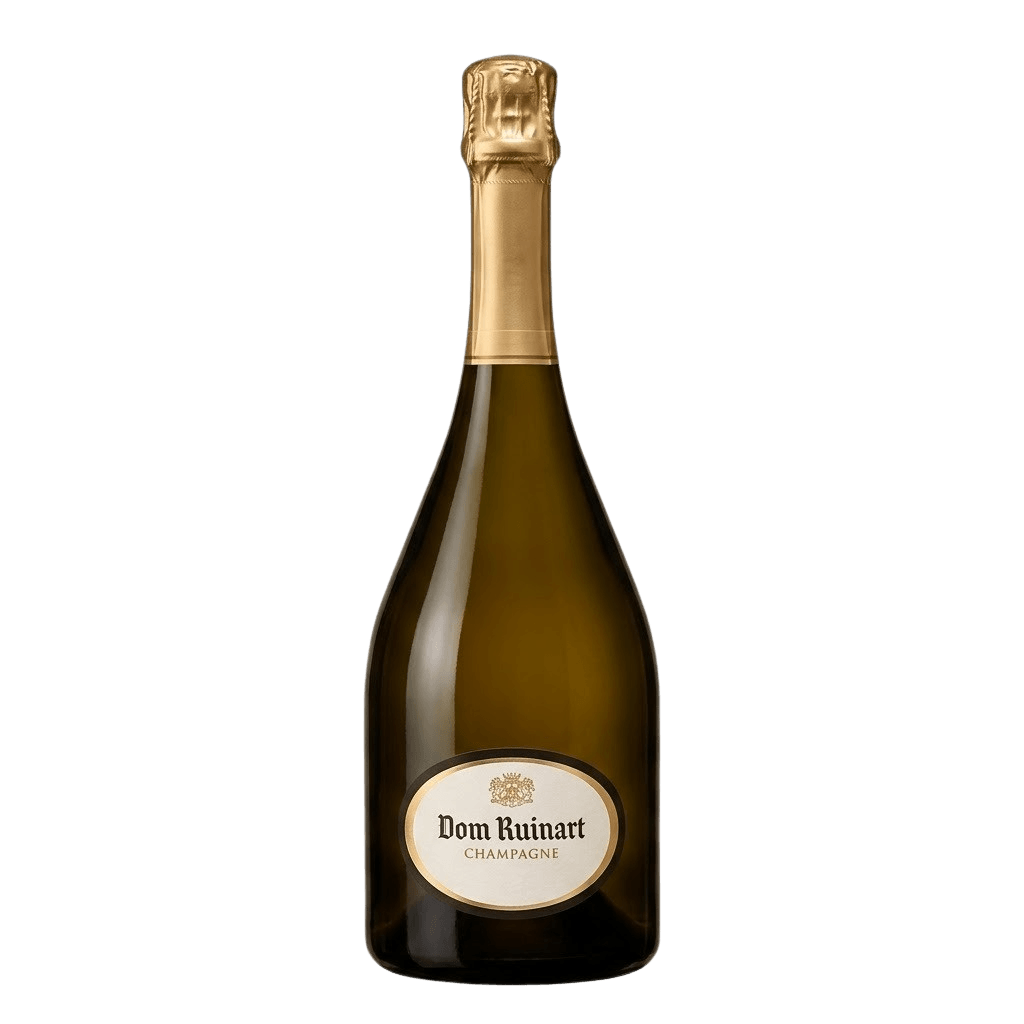
Champagne Ruinart
Ruinart Dom Ruinart Blanc de Blancs
2025
Dom Ruinart Blanc de Blancs represents Champagne Ruinart's ultimate expression of Chardonnay elegance, a prestige cuvée crafted exclusively from grand cru vineyards that exemplifies the house's 300-year mastery of blanc de blancs champagne.
Country
France
Region
Champagne
More information
Producer
Founded in Reims in 1729 by Nicolas Ruinart, Maison Ruinart is recognised as the world's first established Champagne house. Nearly three centuries later, it remains defined by a refined, Chardonnay-led style that balances freshness, elegance and aromatic purity. The house draws its fruit from Premier Cru and Grand Cru vineyards across the Côte des Blancs, Montagne de Reims and Vallée de la Marne, ageing every cuvée in exceptional Gallo-Roman chalk cellars beneath the city.
Quick Facts
- Location: Reims, Champagne, France
- Founded: 1729
- Founder: Nicolas Ruinart
- House identity: Chardonnay-led Champagne
- Signature cuvée: Ruinart Blanc de Blancs
- Prestige cuvée: Dom Ruinart Blanc de Blancs
- Historic cellars: Ancient Gallo-Roman chalk quarries known as crayères
- Cellar network: Approximately eight kilometres of galleries
- Maximum depth: Around 38 metres below ground
- Recognition: Part of the UNESCO World Heritage-listed Champagne landscape
- Key styles: Brut, Blanc de Blancs, Rosé and vintage Champagne
- Ownership: LVMH
The First Champagne House
Maison Ruinart began on 1 September 1729, when Nicolas Ruinart drafted the founding charter for the first company devoted exclusively to producing Champagne. The house grew from the vision of his uncle, Dom Thierry Ruinart, a Benedictine monk who had observed the rising appetite for sparkling wine among French aristocracy and European courts during his travels through the early 18th century.
Dom Thierry never lived to see the house established, but his nephew acted on the conviction that Champagne represented both a cultural shift and a commercial opportunity. The royal authorisation to transport wine in bottles rather than barrels, granted in 1728, made the venture possible. By founding the house in Reims—at the heart of Champagne's chalky heartland—Nicolas Ruinart positioned the family enterprise to become synonymous with quality, heritage and the art of blending.
The Chardonnay Signature
Chardonnay lies at the heart of Ruinart's identity, bringing luminosity, precision and delicate aromatic expression to every cuvée. The house sources much of its Chardonnay from the Côte des Blancs and the Montagne de Reims, privileging villages known for producing fruit of exceptional finesse and ageing potential.
Ruinart Blanc de Blancs, produced entirely from Chardonnay, is the purest expression of this philosophy. Its profile is built around white flowers, citrus peel and chalky minerality, with extended lees contact adding texture and complexity without compromising freshness. At the summit of the range stands Dom Ruinart Blanc de Blancs, the house's prestige cuvée, created from outstanding vintages and given further time to develop depth, balance and refined structure in the cellars.
Ruinart Rosé introduces Pinot Noir through the addition of red wine, typically accounting for around 15 to 20 per cent of the blend. The result combines Ruinart's characteristic elegance with greater body and notes of red berries, while maintaining the freshness and tension that define the house style.
The Crayères of Reims
Beneath the Maison lies an extraordinary network of ancient chalk quarries, excavated during the Gallo-Roman period and transformed into cellars in the 18th century. Extending for approximately eight kilometres and descending as far as 38 metres, these cathedral-like crayères provide darkness, stable year-round temperatures of around 11°C and natural humidity ideal for the slow maturation of Champagne.
The cellars form part of the Champagne Hillsides, Houses and Cellars recognised as a UNESCO World Heritage Site in 2015. Their chalk walls absorb vibrations and contribute to the stillness that allows wine to age undisturbed. Walking through the crayères connects visitors directly to the geology, history and continuity that have shaped Champagne production for centuries.
Elegance Shaped by Time
Ruinart's winemaking is built around clarity rather than power. Extended lees ageing, typically lasting three years for non-vintage cuvées and considerably longer for prestige bottlings, contributes to complexity and a fine, persistent mousse. Minimal dosage allows the purity of Chardonnay and the character of each blend to express itself with precision.
The result is a collection of Champagnes distinguished by aromatic finesse, balanced texture and a graceful interplay between freshness and roundness. Nearly three centuries after its founding, Ruinart continues to refine a vision rooted in the potential of Chardonnay, the legacy of its chalk cellars and the patient craft of blending.
Country
Region
Champagne
Champagne is widely regarded as the world's most prestigious sparkling wine region and has become synonymous with celebration, luxury and uncompromising quality. Located in northeastern France, approximately 150 kilometres east of Paris, the region combines centuries of winemaking tradition with exceptional terroir to produce sparkling wines of remarkable elegance and complexity. From legendary maisons to small grower-producers, Champagne represents the benchmark against which all other sparkling wines are measured, and its influence on global wine culture remains unrivalled.
The region's vineyards stretch across five principal districts: Montagne de Reims, Vallée de la Marne, Côte des Blancs, Côte de Sézanne and Côte des Bar. The defining characteristic of Champagne terroir is its chalk-limestone subsoil, which provides excellent drainage, mineral richness and steady water supply essential for producing grapes of exceptional quality. The cool continental climate, moderated by maritime influences, ensures slow ripening and high natural acidity, while the principal grape varieties—Chardonnay, Pinot Noir and Pinot Meunier—each contribute distinct character to the final blend. The region's 17 grand cru villages and 42 premier cru villages represent the finest expression of Champagne terroir, producing grapes of outstanding concentration and finesse.
Champagne is governed by strict AOC regulations established in 1927, which define geographical boundaries, permitted grape varieties, yields and production methods. The region is home to some of the world's most celebrated houses, including Krug, Louis Roederer, Bollinger, Dom Pérignon, Veuve Clicquot, Pol Roger, Salon, Taittinger and Moët & Chandon. These maisons have upheld the art of blending and cellar ageing for generations, producing prestige cuvées and vintage expressions that rank among the most collectible wines in the world. Alongside these historic houses, a growing number of grower-producers cultivate and vinify their own grapes, offering terroir-focused expressions that reveal the diversity and depth of Champagne's varied terroirs.
Whether exploring grand cru villages, prestige cuvées or historic maisons, Champagne offers an unparalleled journey through the birthplace of the world's finest sparkling wines. Discover Champagne Champagnes, compare prices from trusted merchants across Europe and find the best offers with Sipfind.
Grapes
Chardonnay is one of the world’s most important and prestigious white wine grapes, renowned for its remarkable versatility and ability to reflect both terroir and winemaking style. Most famously associated with Burgundy and Champagne in France, Chardonnay is cultivated across virtually every major wine-producing country and can produce everything from precise, mineral-driven whites to rich, complex wines with exceptional ageing potential.
In Burgundy, Chardonnay reaches some of its most celebrated expressions. The limestone-rich vineyards of Chablis are known for wines combining vibrant acidity, citrus character and mineral precision, while the Côte de Beaune, particularly appellations such as Meursault, Puligny-Montrachet and Chassagne-Montrachet, produces some of the world’s most sought-after and age-worthy white wines.
Chardonnay also plays a fundamental role in Champagne, where it contributes freshness, finesse and acidity to blends alongside Pinot Noir and Meunier. When produced exclusively from Chardonnay, the resulting Champagne is known as Blanc de Blancs, a style prized for its elegance, precision and capacity to develop considerable complexity with extended ageing.
The grape’s character varies significantly according to climate, terroir and winemaking. Cooler regions can produce wines showing citrus, green apple, white flowers and mineral notes, while warmer conditions can bring peach, melon and tropical-fruit character. Oak fermentation, barrel ageing and malolactic fermentation can introduce additional layers of toast, vanilla, butter and hazelnut, demonstrating Chardonnay’s exceptional stylistic range.
Beyond France, Chardonnay has established important expressions in California, Australia, New Zealand, South Africa and numerous other wine regions. From the mineral whites of Chablis and the great vineyards of Burgundy to Blanc de Blancs Champagne and modern New World interpretations, Chardonnay’s combination of versatility, complexity and terroir expression has established it as one of the defining grape varieties of fine wine.
History and Style
Dom Ruinart Blanc de Blancs is the prestige cuvée of Champagne Ruinart, the oldest established Champagne house, founded in 1729 in Reims. This non-vintage champagne represents the pinnacle of the house's blanc de blancs philosophy, crafted exclusively from 100% Chardonnay sourced from premier grand cru sites in the Côte des Blancs, including Chouilly, Mesnil-sur-Oger, and Avize. Released as a core range prestige bottling, Dom Ruinart embodies three centuries of Chardonnay expertise.
Quick Facts
- Producer: Champagne Ruinart
- Classification: Prestige Cuvée
- Region: Champagne
- Appellation: Champagne AOC
- Country: France
- Style: Blanc de Blancs Champagne, prestige cuvée
- Grape Composition: 100% Chardonnay from grand cru vineyards
- Ageing Potential: 10-15 years from purchase
- Alcohol (ABV): 12-12.5%
- Tasting Profile: White flowers, citrus, white peach, brioche, chalky minerality, fine mousse
- Food Pairing: Oysters, scallops, lobster, white fish, caviar, creamy cheeses
- Serving Temperature: 8-10°C
- Bottle Status: Iconic Cuvée
- Vintage: Non-Vintage
House Style and Blending Philosophy
Ruinart's historic dedication to Chardonnay distinguishes it among the great Champagne houses, and Dom Ruinart showcases the grape's finest expressions from chalk-rich terroirs. The Côte des Blancs' limestone subsoils impart remarkable minerality and freshness, while extended ageing on lees develops complexity and depth. The house's signature round bottles, inspired by 18th-century designs, reflect its heritage and protect the wine during maturation.
Character and Ageing
Dom Ruinart Blanc de Blancs reveals a luminous golden colour with persistent fine mousse. The palate exhibits exceptional purity with flavours of white flowers, citrus fruits, white peach, and brioche, underpinned by distinctive chalky minerality. Its elegant structure and creamy texture demonstrate extended cellar ageing, while the finish shows remarkable length and precision.
This prestige cuvée appeals to champagne connoisseurs and collectors seeking refined expressions of Chardonnay. Compare prices across premium merchants on Sipfind to secure this benchmark blanc de blancs champagne.