
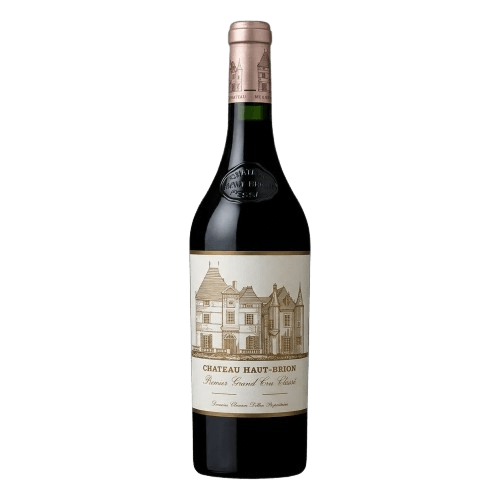
Château Haut-Brion
Château Haut-Brion
2008
From 511 EUR from 2 retailers
Château Haut-Brion represents the pinnacle of Pessac-Léognan winemaking, a Premier Grand Cru Classé estate producing elegant, complex Bordeaux blends with remarkable minerality and extraordinary ageing potential.
Country
France
Region
Bordeaux - Pessac-Leognan
Number of retailers: 2
Bottle Hero
European Union
Château Haut-Brion
2008
You save up to 271 EUR, where 271 EUR is the difference between the highest price and the lowest price
bordeauxwines.se
Sweden
Château Haut-Brion
2008
Standard delivery 1-3 business days
More information
Producer
Château Haut-Brion is one of only five estates classified as Premier Grand Cru Classé in the 1855 Classification and the sole First Growth located outside the Médoc. Situated in Pessac-Léognan on the southwestern edge of Bordeaux, it has been owned by the Dillon family since 1935 through their holding company, Domaine Clarence Dillon. The estate's Grand Vin is renowned for refined tannins, layered aromatic complexity and an exceptional ageing trajectory that can extend beyond half a century.
Quick Facts
- Location: Pessac, Pessac-Léognan, Bordeaux, France
- Founded: Estate origins trace to the 16th century
- Classification: Premier Grand Cru Classé – First Growth, 1855
- Ownership: Domaine Clarence Dillon (family ownership since 1935)
- Leadership: Prince Robert of Luxembourg, Chairman
- Principal grapes: Cabernet Sauvignon, Merlot, Cabernet Franc
- White grapes: Sémillon and Sauvignon Blanc
- Estate size: Approximately 51 hectares under vine
- Soils: Deep gravel beds over clay and sandy clay
- Grand Vin: Château Haut-Brion
- Second wine: Le Clarence de Haut-Brion
- White wine: Château Haut-Brion Blanc
- Style: Elegant, aromatic and structured with remarkable longevity
- Viticulture: Sustainable practices with meticulous parcel management
The First Growth of Graves
Château Haut-Brion's reputation was secured long before the 1855 Classification. Records from the 17th century document the estate's wines being served at the English court and mentioned in the diaries of Samuel Pepys, who noted a tasting in 1663. When Napoleon III commissioned the official classification of Bordeaux wines for the 1855 Exposition Universelle, Haut-Brion's exceptional standing ensured its place among the four Médoc estates awarded First Growth status.
The estate remained in French hands for centuries before being acquired in 1935 by American financier Clarence Dillon, whose family continues to oversee both Haut-Brion and its neighbouring property, Château La Mission Haut-Brion.
A Distinctive Terroir Within Bordeaux
The vineyards of Château Haut-Brion occupy a slight elevation in the suburb of Pessac, surrounded by urban development yet benefiting from a unique microclimate and soil structure. The estate's soils are composed of deep Günzian gravel from the Quaternary period, interspersed with clay and sandy clay subsoils that provide both excellent drainage and water retention during dry periods.
This warm, well-drained terroir allows Haut-Brion to achieve consistent ripeness earlier than estates further north in the Médoc, contributing to the wine's characteristic suppleness and aromatic generosity. Cabernet Sauvignon typically dominates the blend, supported by Merlot and Cabernet Franc in proportions that shift according to vintage conditions.
The estate's white wine production, though limited to around 2.7 hectares, produces Château Haut-Brion Blanc from Sémillon and Sauvignon Blanc. This rare wine ranks among the most sought-after dry whites in Bordeaux.
Aromatic Complexity and Elegant Structure
The Grand Vin of Château Haut-Brion is distinguished by a refined aromatic profile that balances dark fruit, tobacco, earthy minerality and subtle floral notes. Unlike the more muscular expressions typical of Pauillac or Saint-Estèphe, Haut-Brion's style emphasises elegance, silky tannins and a seamless integration of structure and fruit.
Vinification takes place in temperature-controlled stainless steel vats, with precise parcel selection allowing the estate to tailor fermentation and maceration to each block. Maturation occurs in French oak barrels, of which approximately 70% are renewed each vintage, contributing texture and complexity without overwhelming the wine's inherent finesse.
The result is a wine built for extended cellaring. Young vintages can present firm structure and restrained aromatics, but with two or three decades of bottle age, Haut-Brion develops extraordinary depth, tertiary complexity and a haunting aromatic persistence that few wines can match.
Country
Region
Bordeaux - Pessac-Leognan
Pessac-Léognan is an AOC/AOP wine appellation in northern Graves, immediately south and south-west of the city of Bordeaux, France. Recognised as a separate appellation in 1987, it produces both red and dry white wines across ten communes. Its gravel-dominated terroir is home to all 14 estates in the current Graves Great Growth classification, including Château Haut-Brion, which also appears in the 1855 Bordeaux Classification.
Pessac-Léognan occupies the northern part of the Graves wine area. Its vineyards extend across Cadaujac, Canéjan, Gradignan, Léognan, Martillac, Mérignac, Pessac, Saint-Médard-d’Eyrans, Talence and Villenave-d’Ornon.
The appellation’s soils combine river pebbles, fine gravel, flint, sand and limestone-rich clay. Ancient gravel deposits form gently undulating outcrops with effective natural drainage. The nearby Garonne, the city of Bordeaux and the Landes Forest also influence local growing conditions.
Red Pessac-Léognan is principally associated with Cabernet Sauvignon and Merlot. Cabernet Franc, Malbec and Petit Verdot may also contribute to the blend.
The appellation’s red wines are generally structured and complex, combining ripe fruit with firm but polished tannins. Their balance, concentration and capacity for bottle ageing vary by estate, vineyard site and vintage.
Pessac-Léognan also produces dry white Bordeaux from Sauvignon Blanc, Sauvignon Gris, Sémillon and Muscadelle. These wines can combine citrus and white-fruit character with freshness, texture and mineral or gently toasted notes.
The exact blend and ageing approach differ between producers. Sauvignon commonly contributes freshness and aromatic definition, while Sémillon can add breadth and texture.
All 14 estates in the current Graves Great Growth classification are situated within Pessac-Léognan. Estates may be classified for their red wine, their dry white wine or both.
Château Haut-Brion has a unique position: it belongs to the Graves classification and is also a Premier Grand Cru Classé in the 1855 Bordeaux Classification. Other recognised estates in the appellation include Château La Mission Haut-Brion, Domaine de Chevalier, Château Haut-Bailly, Château Pape Clément and Château Smith Haut Lafitte.
Compare prices for Pessac-Léognan wines across retailers on Sipfind. Explore red and dry white wines by estate, vintage, bottle size and available offer.
Grapes
Merlot is one of the world’s most important red wine grapes, celebrated for its generous fruit, supple texture and ability to produce wines ranging from approachable and elegant to exceptionally complex and long-lived. Originating in Bordeaux, France, Merlot is particularly associated with the Right Bank, where it forms the foundation of many of the prestigious wines of Pomerol and Saint-Émilion.
Merlot typically expresses flavours and aromas of plum, black cherry, blackberry and red fruits, often developing notes of chocolate, tobacco, cedar, herbs and earthy complexity with maturation. Its naturally rounded texture and generally softer tannin profile distinguish it from Cabernet Sauvignon, although the finest examples can possess considerable structure, freshness and ageing potential.
In Pomerol, Merlot reaches some of its most celebrated expressions, particularly on the appellation’s clay-rich soils, producing wines of remarkable concentration, texture and complexity. In Saint-Émilion, it is commonly blended with Cabernet Franc and, to a lesser extent, Cabernet Sauvignon, creating wines that combine ripe fruit with structure, aromatic complexity and longevity.
Beyond Bordeaux, Merlot is widely cultivated in Italy, California, Washington State, Chile and other major wine regions. It can be produced as a varietal wine or used as a central component of blends, where its fruit and texture complement more structured grape varieties.
From the great Merlot-based wines of Bordeaux’s Right Bank to leading expressions around the world, Merlot’s combination of rich fruit, refined texture and capacity to express terroir has established it as one of the defining varieties of fine red wine.
Cabernet Sauvignon is one of the world’s most important and widely planted red wine grapes, renowned for its powerful structure, concentrated fruit and exceptional ageing potential. Originating in Bordeaux, France, the variety has become a defining grape of fine wine regions around the world, particularly Napa Valley, Tuscany, Chile, Australia and South Africa.
Classic Cabernet Sauvignon combines flavours and aromas of blackcurrant, cassis, blackberry and dark cherry with characteristic notes of cedar, graphite, tobacco and herbs. Naturally high tannins and fresh acidity provide structure and longevity, while maturation in oak can add layers of spice, vanilla and toast. Its character varies significantly with climate, soil and winemaking, ranging from elegant and savoury to rich, powerful and intensely concentrated.
In Bordeaux, Cabernet Sauvignon is particularly associated with the Left Bank, where it forms the foundation of many prestigious blends alongside Merlot, Cabernet Franc and other permitted varieties. In Napa Valley, it has become the region’s signature red grape, producing some of the world’s most sought-after Cabernet Sauvignon wines.
Cabernet Sauvignon’s ability to express terroir while retaining its distinctive structure and character has made it a global benchmark for premium red wine. Whether produced as the dominant variety in a blend or as a varietal wine, the finest examples combine concentration, complexity and the capacity to develop gracefully over decades
Cabernet Franc is one of France’s most historic red wine grapes, valued for its aromatic intensity, vibrant acidity and ability to express both climate and soil with remarkable clarity. It produces elegant single-varietal wines and plays an essential role in some of Bordeaux’s most distinguished blends. Earlier ripening than Cabernet Sauvignon allows Cabernet Franc to perform particularly well in cooler wine regions.
In the Loire Valley, Cabernet Franc reaches its clearest expression as a varietal wine. Typical aromas include redcurrant, raspberry, red cherry and violet, often accompanied by graphite, dried herbs, tobacco and subtle peppery notes. Naturally fresh acidity and finely structured tannins can produce approachable, fruit-driven wines as well as complex examples capable of developing for many years.
The variety is especially important in Chinon, Bourgueil and Saumur-Champigny. Chinon can range from fragrant and supple to deeply structured and age-worthy, depending on vineyard site and soil. Bourgueil often combines dark red fruit with firm structure, while Saumur-Champigny is renowned for freshness, aromatic purity and refined texture. Limestone-rich tuffeau, gravel, sand and clay all contribute to the diversity of Cabernet Franc across these Loire appellations.
In Bordeaux, Cabernet Franc is principally associated with the Right Bank, particularly Saint-Émilion and Pomerol. Usually blended with Merlot and sometimes Cabernet Sauvignon, it contributes perfume, freshness, savoury complexity and structural precision. On suitable limestone and clay terroirs, Cabernet Franc can become a dominant component of exceptionally refined and long-lived wines.
Beyond France, Cabernet Franc is cultivated in regions including Tuscany, Bolgheri, Napa Valley, Washington State, Canada, Argentina and Chile, producing styles shaped by local climate and terroir. Traditionally known as Breton in the Loire and Bouchet in parts of Bordeaux, Cabernet Franc’s combination of aromatic elegance, freshness and ageing potential establishes it as one of the world’s great red wine varieties.
History and Style
Château Haut-Brion stands as the flagship Grand Vin of one of Bordeaux's most storied estates, a Premier Grand Cru Classé property in the Pessac-Léognan appellation. Unlike its Médoc counterparts among the 1855 First Growths, Haut-Brion hails from the Graves region, bringing a distinctive character shaped by its unique gravelly terroir and urban Bordeaux location.
Quick Facts
- Producer: Château Haut-Brion
- Classification: Premier Grand Cru Classé (1855)
- Region: Bordeaux
- Appellation: Pessac-Léognan
- Country: France
- Style: Full-bodied Left Bank Bordeaux with Graves minerality
- Grape Composition: Merlot and Cabernet Sauvignon blend with Cabernet Franc, proportions vary by vintage
- Ageing Potential: 20-40+ years from vintage
- Alcohol (ABV): 13-14.5%
- Tasting Profile: Blackcurrant, tobacco, cedar, graphite, earthy minerality, dark berries, subtle oak
- Food Pairing: Roasted lamb, beef Wellington, game birds, aged Comté, truffle dishes
- Serving Temperature: 16-18°C
- Bottle Status: Flagship
- Vintage: Varies by bottling
Vineyard, Terroir and Style
The estate's winemaking heritage dates to the 16th century, making it one of the oldest fine wine producers in Bordeaux. The château's exceptional terroir features deep gravel beds over clay and limestone subsoils, imparting remarkable drainage and heat retention that allows for optimal grape ripening. This geological foundation, combined with meticulous vineyard management and selective harvesting, enables the production of fruit with extraordinary concentration and complexity.
History and Reputation
The flagship wine typically blends Merlot and Cabernet Sauvignon with smaller proportions of Cabernet Franc, though exact compositions vary by vintage to reflect each year's unique conditions. The wine exhibits a distinctive Graves character—elegant yet powerful, with pronounced minerality alongside classic Bordeaux notes of blackcurrant, tobacco, cedar and graphite. Extended barrel maturation in French oak adds layers of complexity while preserving the wine's inherent finesse and terroir expression.
Collectors and connoisseurs prize Château Haut-Brion for its exceptional ageing potential and consistent quality across vintages. The wine's balance of structure, concentration and elegance makes it a benchmark Left Bank Bordeaux, equally suited to extended cellaring or pairing with refined cuisine.