
Bruno Giacosa
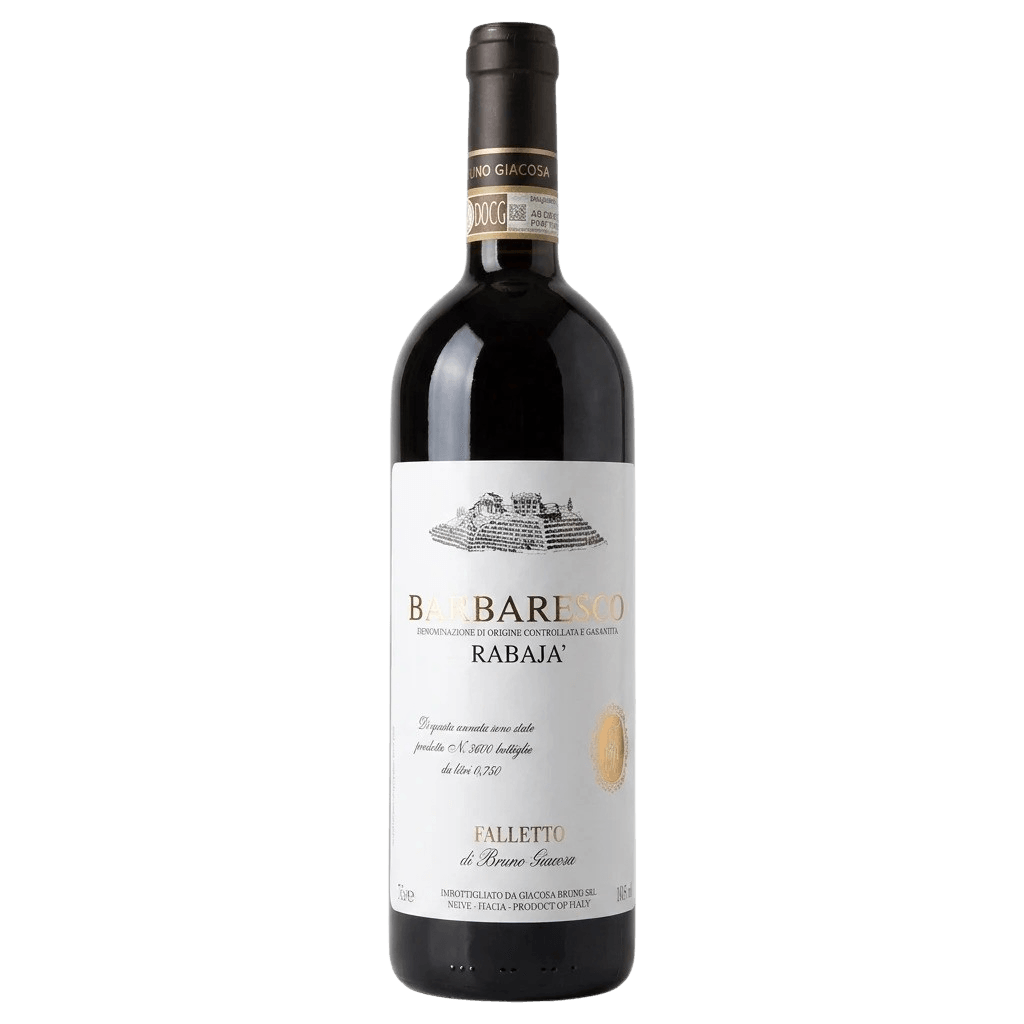
Bruno Giacosa Barbaresco Rabaja
2025
Bruno Giacosa Barbaresco Rabajà is a distinguished Nebbiolo from one of Barbaresco's most celebrated vineyard sites. Combining floral complexity, red-fruit purity, refined structure and vibrant acidity, it reflects the traditional elegance and ageing potential associated with Bruno Giacosa's wines. A compelling expression of Rabajà's distinctive terroir in the heart of Piemonte.
Country
Italy
Region
Barolo/Barbaresco - Barolo/Barbaresco
Scoring
No ratings are available for this vintage
More information
Producer
Bruno Giacosa is one of Piedmont's most venerated estates, producing benchmark expressions of Nebbiolo from the finest vineyards of Barbaresco and Barolo. Founded in 1900 and shaped by the vision of the late Bruno Giacosa until his death in 2018, the estate remains family-owned and continues the philosophy established across more than a century. Its wines are distinguished by meticulous site selection, traditional vinification and an iconic red label reserved exclusively for Riserva bottlings in outstanding vintages.
Quick Facts
- Location: Neive, Langhe, Piedmont, Italy
- Founded: 1900
- Leadership: Family-owned, continuing the legacy of Bruno Giacosa (1929–2018)
- Appellations: Barbaresco DOCG and Barolo DOCG
- Principal grape: Nebbiolo
- Key Barbaresco vineyards: Asili and Rabajà
- Key Barolo vineyards: Falletto and Le Rocche del Falletto
- Soils: Calcareous marl with varying exposures and microclimates
- Signature wine: Barbaresco Asili Riserva (Red Label)
- Label system: White label for standard releases, red label for Riserva wines from exceptional vintages
- Style: Traditional, refined and structured with remarkable aromatic complexity
- Ageing potential: 20–30 years for standard releases, 30–50+ years for Riserva bottlings
A Century of Traditional Nebbiolo
Bruno Giacosa began producing wine in 1900, initially sourcing fruit from growers across Langhe's most distinguished sites. Bruno Giacosa himself, born in 1929, took over the family business in the post-war period and transformed it into a reference point for classical Nebbiolo winemaking. His approach combined intimate knowledge of individual vineyards with an unwavering commitment to expressing terroir through minimal intervention and patient cellar work.
The estate acquired ownership of key parcels over time, including portions of the Falletto vineyard in Barolo, allowing greater control over viticulture and harvest decisions. Despite these acquisitions, Bruno Giacosa continued to work closely with trusted growers, maintaining long-term relationships that ensured access to fruit from exceptional sites such as Asili and Rabajà in Barbaresco.
The Vineyards of Asili and Rabajà
Barbaresco Asili represents the estate's most iconic wine. The Asili vineyard, located in the commune of Barbaresco, is planted on south-facing slopes with calcareous marl soils that encourage both aromatic finesse and structural depth. Bruno Giacosa's Asili Riserva, released only in outstanding vintages and marked by the estate's red label, is celebrated for its perfume, elegance and capacity to evolve gracefully over decades.
Rabajà, situated in the commune of Barbaresco near Neive, offers a contrasting expression. Its southeast exposure and compact marl soils produce wines of greater power and concentration, with darker fruit tones and a more muscular tannic structure. Both vineyards showcase the remarkable diversity within Barbaresco's relatively compact appellation.
Falletto and the Heart of Barolo
In Barolo, the estate's focus centres on the Falletto vineyard in Serralunga d'Alba. This site, characterised by steep slopes and iron-rich marl soils, yields Nebbiolo of exceptional concentration and longevity. Barolo Falletto is recognised for its firm structure, savoury complexity and slow evolution in bottle.
Le Rocche del Falletto, a distinct parcel within the broader Falletto cru, produces the estate's most structured and age-worthy Barolo. Its rocky, well-drained soils and optimal southern exposure create conditions for Nebbiolo of intense aromatic depth and remarkable tannic precision. Like Asili Riserva, Le Rocche del Falletto Riserva is released only in exceptional vintages, identified by the red label that signals the estate's highest quality tier.
Traditional Winemaking and the Red Label
Bruno Giacosa's winemaking philosophy emphasised extended maceration in traditional large Slavonian oak botti and minimal cellar intervention. Fermentation times varied according to vintage conditions, but the objective remained consistent: to extract colour, structure and aromatic complexity while preserving the elegance and transparency that define great Nebbiolo.
The estate's red label system, introduced to distinguish Riserva wines from exceptional vintages, has become one of the most recognisable markers of quality in Italian wine. These bottlings represent not simply extended ageing, but a selection of the finest fruit from the best years, vinified with particular care and released only when Bruno Giacosa believed they had reached an appropriate level of development. The result is a portfolio of wines that balance power with refinement, immediate aromatic appeal with the structural foundation for decades of evolution.
Country
Region
Barolo/Barbaresco - Barolo/Barbaresco
Barolo and Barbaresco are widely regarded as Italy's most prestigious wine regions and represent the benchmark for Nebbiolo worldwide. Located in the Langhe hills of Piedmont in northwestern Italy, these neighbouring DOCG appellations combine centuries of winemaking tradition with exceptional terroir, producing some of the most sought-after and age-worthy wines in the world. Often described as the 'King and Queen of Italian wine', Barolo and Barbaresco have established Piedmont as one of the greatest fine wine regions alongside Bordeaux and Burgundy.
The regions benefit from a continental climate moderated by Alpine influences, with calcareous marl and sandstone soils that create ideal conditions for Nebbiolo. Barolo covers eleven communes including the renowned crus of Cannubi, Brunate and Bussia, producing powerful, structured wines that require extended ageing. Barbaresco, located northeast of Barolo, encompasses four communes and produces wines that are typically more approachable in their youth while retaining remarkable elegance and complexity. Both regions demonstrate extraordinary site-specific expression, with individual vineyards—known as Menzioni Geografiche Aggiuntive (MGAs)—producing distinct interpretations of Nebbiolo's signature aromas of rose, tar, cherry and truffle.
The regions are home to legendary producers including Giacomo Conterno, Bruno Giacosa, Bartolo Mascarello, Giuseppe Rinaldi, Gaja, Produttori del Barbaresco and Roagna. Together these estates represent a culture of meticulous vineyard management, respect for tradition and uncompromising quality that has made Barolo and Barbaresco among the world's most collectible wines.
Whether exploring historic vintages, renowned crus or iconic producers, Barolo and Barbaresco offer an unrivalled journey through Italy's finest wine heritage. Discover Barolo/Barbaresco wines, compare prices from trusted merchants across Europe and find the best offers with Sipfind.
Grapes
Nebbiolo is the noble red grape of Piedmont in northwestern Italy, best known as the variety behind the celebrated wines of Barolo and Barbaresco. Despite its relatively pale colour, Nebbiolo produces wines of remarkable structure, complexity and longevity, combining naturally high acidity with powerful tannins.
Classic Nebbiolo is distinguished by an expressive aromatic profile of red cherry, rose, violet and dried flowers, often developing notes of spice, herbs, leather, tobacco and truffle with age. The grape is particularly sensitive to its growing site, allowing differences in soil, altitude and exposure to create highly distinctive expressions.
Nebbiolo reaches its greatest fame in the Langhe hills, where Barolo and Barbaresco demonstrate the grape’s exceptional capacity for ageing and reflecting terroir. Beyond these renowned appellations, Nebbiolo is also cultivated across northern Piedmont and parts of Lombardy, producing styles ranging from elegant and aromatic to intensely structured.
Its combination of perfume, acidity, tannin and longevity has established Nebbiolo as one of Italy’s most important and distinctive red grape varieties.
History and Style
Bruno Giacosa Barbaresco Rabajà – A Historic Expression of Nebbiolo
Bruno Giacosa Barbaresco Rabajà is a distinguished red wine from the Rabajà vineyard area in Barbaresco, one of the most celebrated communes of Piemonte's Langhe region.
Produced from Nebbiolo, the wine represents an important part of the history of Bruno Giacosa, a producer whose reputation was built on exceptional vineyard selection, traditional winemaking and a remarkable understanding of the relationship between Nebbiolo and its origins.
Rabajà is among Barbaresco's most recognised vineyard sites. Its reputation is associated with wines of aromatic complexity, firm but refined tannins, freshness and considerable ageing potential.
In the hands of Bruno Giacosa, these characteristics have historically been expressed through an approach that places particular emphasis on balance, precision and the preservation of vineyard identity.
The wine combines the distinctive structure of Nebbiolo with the elegance for which Barbaresco is renowned.
Its identity is closely connected with the history of the producer, the characteristics of the Rabajà vineyard and the individual conditions of each vintage.
Wine at a Glance
- Wine: Bruno Giacosa Barbaresco Rabajà
- Producer: Casa Vinicola Bruno Giacosa
- Country: Italy
- Region: Piemonte
- Wine Region: Langhe
- Appellation: Barbaresco DOCG
- Vineyard: Rabajà
- Municipality: Barbaresco
- Grape Variety: Nebbiolo
- Wine Type: Dry Red Wine
- Production Style: Traditional Barbaresco
- Typical Aromas: Red cherry, rose, violet, dried herbs and subtle spice
- Structure: Firm tannins, pronounced acidity and a persistent finish
- Ageing Potential: Significant in suitable vintages
- Bottle Format: 750 ml
- Vintage: Identified by individual harvest year
Bruno Giacosa – A Defining Name in Piemonte
Bruno Giacosa occupies an exceptional position in the history of Barbaresco and Barolo.
Born in 1929, Giacosa grew up in a family involved in wine production in the Langhe.
His career developed through an intimate understanding of the region's vineyards, growers and individual parcels.
Rather than relying exclusively on vineyards owned by the family, he built much of his early reputation through the careful selection of grapes from growers with whom he maintained longstanding relationships.
This approach allowed him to identify vineyard sites capable of producing wines of exceptional character.
A Reputation Built on Vineyard Selection
For Bruno Giacosa, the origin of the grapes was fundamental.
The quality of a vineyard, the age and condition of its vines, the characteristics of the growing season and the timing of harvest all influenced the potential of the finished wine.
His approach reflected the belief that great Nebbiolo begins in the vineyard.
Winemaking should preserve and reveal those characteristics rather than obscure them.
This philosophy contributed to the producer's reputation for wines combining aromatic purity, structure and longevity.
Barbaresco and Barolo
Bruno Giacosa became particularly associated with the production of both Barbaresco and Barolo.
Although both appellations are based on Nebbiolo, their vineyard environments and resulting wine styles can differ.
Giacosa's wines demonstrated the importance of understanding individual sites rather than treating either appellation as a single uniform style.
Rabajà became one of the important vineyard names associated with his Barbaresco production.
The Legacy of Bruno Giacosa
Bruno Giacosa died in 2018.
His legacy continues through the winery, which remains associated with the production of traditional Nebbiolo wines.
The historical importance of his work lies not only in individual celebrated vintages but also in his contribution to the recognition of Piemonte's finest vineyard sites.
Rabajà – One of Barbaresco's Great Vineyards
Rabajà is situated within the municipality of Barbaresco.
It is recognised as one of the appellation's most important vineyard areas.
The site occupies slopes within the Langhe hills, where altitude, exposure and soil composition influence the development of Nebbiolo.
The Geography of Rabajà
Rabajà lies within the historic vineyard landscape surrounding the village of Barbaresco.
Its position provides varying exposures and growing conditions across the vineyard area.
These differences influence sunlight, temperature and grape maturity.
Nebbiolo is particularly sensitive to its growing environment.
Changes in exposure, soil and altitude can affect the wine's aromatic character, tannic structure and acidity.
Vineyard Exposure
Sunlight exposure plays an important role in the ripening of Nebbiolo.
The variety requires a relatively long growing season.
Suitable exposures can support the development of phenolic maturity while preserving the acidity essential to the wine's structure.
The conditions of Rabajà contribute to the vineyard's reputation for producing wines of depth and refinement.
Soils and Geological Origins
The soils of Barbaresco originate largely from ancient marine sedimentary formations.
Within Rabajà, calcareous marl and related sedimentary materials contribute to the vineyard's growing environment.
These soils influence drainage, water availability and root development.
The precise composition varies within the vineyard.
Their interaction with exposure and climate helps shape the character of the grapes.
The Character of Rabajà
Rabajà is frequently associated with Barbaresco wines displaying both power and elegance.
Its wines can combine concentrated red fruit, floral aromas, firm tannins and a long finish.
With bottle age, they may develop greater aromatic complexity.
These characteristics are not identical in every vintage.
They reflect the interaction between the vineyard and the conditions of each growing season.
Nebbiolo – The Grape Behind Barbaresco Rabajà
Nebbiolo is the sole permitted grape variety for Barbaresco DOCG.
It is among Italy's most distinctive red wine grapes.
The variety is known for its relatively pale colour, pronounced tannins, high acidity and remarkable aromatic complexity.
A Late-Ripening Variety
Nebbiolo typically requires a long growing season.
Its development depends on sufficient warmth, suitable vineyard exposure and favourable conditions during the autumn.
The timing of harvest is particularly important.
The grapes must achieve suitable ripeness while retaining the freshness that contributes to the wine's balance.
Aromatic Characteristics
Nebbiolo is associated with a wide range of aromas.
Depending on the vineyard, vintage and bottle age, these may include:
- Red cherry.
- Raspberry.
- Wild strawberry.
- Rose petals.
- Violet.
- Dried herbs.
- Orange peel.
- Liquorice.
- Subtle spice.
- Tobacco.
- Forest floor.
- Truffle.
These characteristics evolve as the wine matures.
Tannins and Acidity
Nebbiolo's structure is one of its defining qualities.
Even wines with relatively light colour can possess substantial tannins.
The combination of tannins and acidity contributes to their capacity for extended ageing.
The balance between these elements is particularly important in a wine such as Barbaresco Rabajà.
Traditional Winemaking at Bruno Giacosa
Bruno Giacosa became internationally recognised for an approach to winemaking that emphasised the preservation of Nebbiolo's natural character.
The producer's philosophy has historically involved careful fermentation management and maturation in large wooden casks.
Fermentation
Following harvest, Nebbiolo grapes are fermented to produce a dry red wine.
During fermentation, contact between the juice and grape skins extracts colour, tannins and aromatic compounds.
The duration and management of maceration influence the resulting structure.
Traditional approaches to Nebbiolo production can involve relatively extended skin contact.
However, precise fermentation practices must be considered according to the vintage.
Preserving Vineyard Identity
The objective is to allow the wine to express the characteristics of its vineyard.
Excessive manipulation or strongly aromatic oak can obscure these qualities.
Bruno Giacosa's historical style is associated with restraint and an emphasis on the natural balance of the grapes.
Maturation in Large Oak Casks
Large wooden casks have long played an important role in traditional Piemonte winemaking.
They allow wines to mature without necessarily introducing the pronounced vanilla or toasted aromas associated with some smaller new oak barrels.
The use of large casks can support the gradual integration of tannins and other structural components.
The precise maturation period varies according to the wine and vintage.
The Importance of Time
Nebbiolo often requires time to develop harmony.
Its tannins and acidity can be particularly prominent in youth.
Maturation in wood and subsequent bottle ageing allow the wine's components to evolve.
This process contributes to the complexity associated with mature Barbaresco.
The Style of Bruno Giacosa Barbaresco Rabajà
Bruno Giacosa Barbaresco Rabajà is associated with the combination of aromatic finesse and structural depth that characterises the finest expressions of Nebbiolo.
The wine's precise character varies by vintage.
Appearance
Young Nebbiolo often displays a translucent ruby colour.
Garnet reflections may be visible even relatively early in the wine's development.
With age, the colour can evolve towards brick-red and orange tones.
Aromatic Profile
The wine may display aromas of:
- Red cherry.
- Raspberry.
- Rose.
- Violet.
- Dried flowers.
- Sweet spice.
- Liquorice.
- Tobacco.
- Earth.
- Truffle.
The balance between primary fruit and developed aromas depends on bottle age.
Palate
The palate is generally characterised by freshness, pronounced tannins and persistent flavour.
Red-fruit characteristics may be accompanied by floral, herbal and savoury notes.
The tannic structure contributes to the wine's definition.
Finish
The finish may be long and complex, with lingering red fruit, spice and savoury characteristics.
The wine's acidity provides freshness and contributes to its ageing potential.
Ageing Potential – The Importance of Patience
Bruno Giacosa Barbaresco Rabajà is associated with significant ageing potential.
Nebbiolo's tannins and acidity can support gradual development over many years.
However, the precise ageing potential depends on the vintage and the condition of the bottle.
Development in Youth
Young bottles may display vibrant red fruit, floral aromas and prominent tannins.
The structure can appear relatively firm.
Aeration may help reveal additional aromatic complexity.
Development with Age
With suitable bottle ageing, the wine may develop:
- Dried rose petals.
- Tobacco.
- Leather.
- Forest floor.
- Truffle.
- Dried cherry.
- Subtle balsamic notes.
These characteristics develop differently according to vintage and storage conditions.
Vintage-Specific Drinking Windows
No universal drinking window should be applied to every vintage of Bruno Giacosa Barbaresco Rabajà.
Some vintages may be approachable earlier.
Others may require extended cellaring.
The wine should be evaluated individually.
Serving Bruno Giacosa Barbaresco Rabajà
Serving conditions can influence the perception of Nebbiolo's aromas and tannins.
Serving Temperature
A temperature of approximately 16–18°C provides a useful starting point.
Excessive warmth can emphasise alcohol.
Serving the wine too cold may make its tannins appear more pronounced.
Glassware
A large Burgundy-style glass can be particularly suitable for mature Nebbiolo.
Its bowl provides space for the development of floral and complex tertiary aromas.
Decanting
Young vintages may benefit from aeration.
However, decanting should be considered according to the wine's age and condition.
Older bottles may contain sediment and should be handled carefully.
Storage
For long-term ageing, bottles should be stored in a cool, dark environment with stable temperature and suitable humidity.
Avoid excessive heat and rapid temperature fluctuations.
Food Pairing – The Cuisine of Piemonte
Barbaresco Rabajà is particularly well suited to dishes that complement Nebbiolo's acidity and tannic structure.
Traditional Piemonte Cuisine
Braised beef, particularly preparations inspired by brasato al Barolo, can provide an excellent pairing.
The wine's acidity helps balance rich meat dishes.
Game
Venison, pheasant and other game dishes can complement the wine's savoury complexity.
Mushrooms and Truffles
Porcini mushrooms and white truffles are particularly associated with the cuisine of the Langhe.
Their earthy aromas can complement mature Nebbiolo.
Pasta
Tajarin with butter, sage or mushrooms can provide a suitable pairing.
Cheese
Aged cheeses such as Castelmagno and Parmigiano Reggiano can work well with the wine's structure.
The ideal pairing depends on the vintage and the preparation of the dish.
Rabajà and Other Bruno Giacosa Wines
Bruno Giacosa has produced several distinguished Barbaresco and Barolo wines.
Each reflects different vineyard origins and production histories.
Rabajà and Asili
Asili is another celebrated Barbaresco vineyard associated with Bruno Giacosa.
The two sites are geographically close but possess different vineyard characteristics.
Asili is often associated with elegance and aromatic finesse.
Rabajà is frequently described as combining elegance with additional structural depth.
These are broad stylistic distinctions rather than fixed rules.
Rabajà and Santo Stefano
Santo Stefano is another historic vineyard name associated with Bruno Giacosa.
Its wines have contributed significantly to the producer's reputation.
Rabajà and Santo Stefano should be treated as separate vineyard identities.
Rabajà and Barolo
Bruno Giacosa's Barolo wines originate from different appellations and vineyard environments.
Although they share Nebbiolo as their grape variety, their terroirs and wine identities differ.
The wines should not be grouped under a generic Bruno Giacosa Nebbiolo product.
Understanding Historical Vintages and Labels
The history of Bruno Giacosa's vineyard wines requires particular attention when identifying individual bottles.
The producer has used different vineyard names and designations over time.
The Importance of the Label
Historical bottles may carry information that differs from modern labels.
This can include vineyard names, producer designations and Riserva classifications.
Each bottle should be identified according to its actual label and vintage.
Rabajà and Riserva
A standard Barbaresco Rabajà and a Barbaresco Rabajà Riserva are not automatically the same wine.
Riserva wines are subject to additional ageing requirements.
The designation must therefore be preserved when matching products.
Vintage Variation
The following information should be stored separately for each vintage:
- Exact wine name.
- Vineyard designation.
- Riserva status.
- Producer designation.
- Harvest year.
- Alcohol content.
- Maturation.
- Production volume.
- Drinking window.
- Tasting notes.
Historical vintages should not automatically inherit modern technical specifications.
Discover Bruno Giacosa Barbaresco Rabajà on Sipfind
Bruno Giacosa Barbaresco Rabajà represents an important expression of Nebbiolo from one of Piemonte's most celebrated vineyard areas.
Its identity combines the history of a distinguished producer with the distinctive characteristics of Rabajà.
The wine offers an opportunity to explore the relationship between traditional winemaking, vineyard origin and the ageing potential of Nebbiolo.
Discover individual vintages of Bruno Giacosa Barbaresco Rabajà on Sipfind.
Explore their characteristics and compare available offers from European wine retailers for the same wine, vintage and bottle format.