
Château d’Yquem
2023
378EUR
incl. VAT
97/100
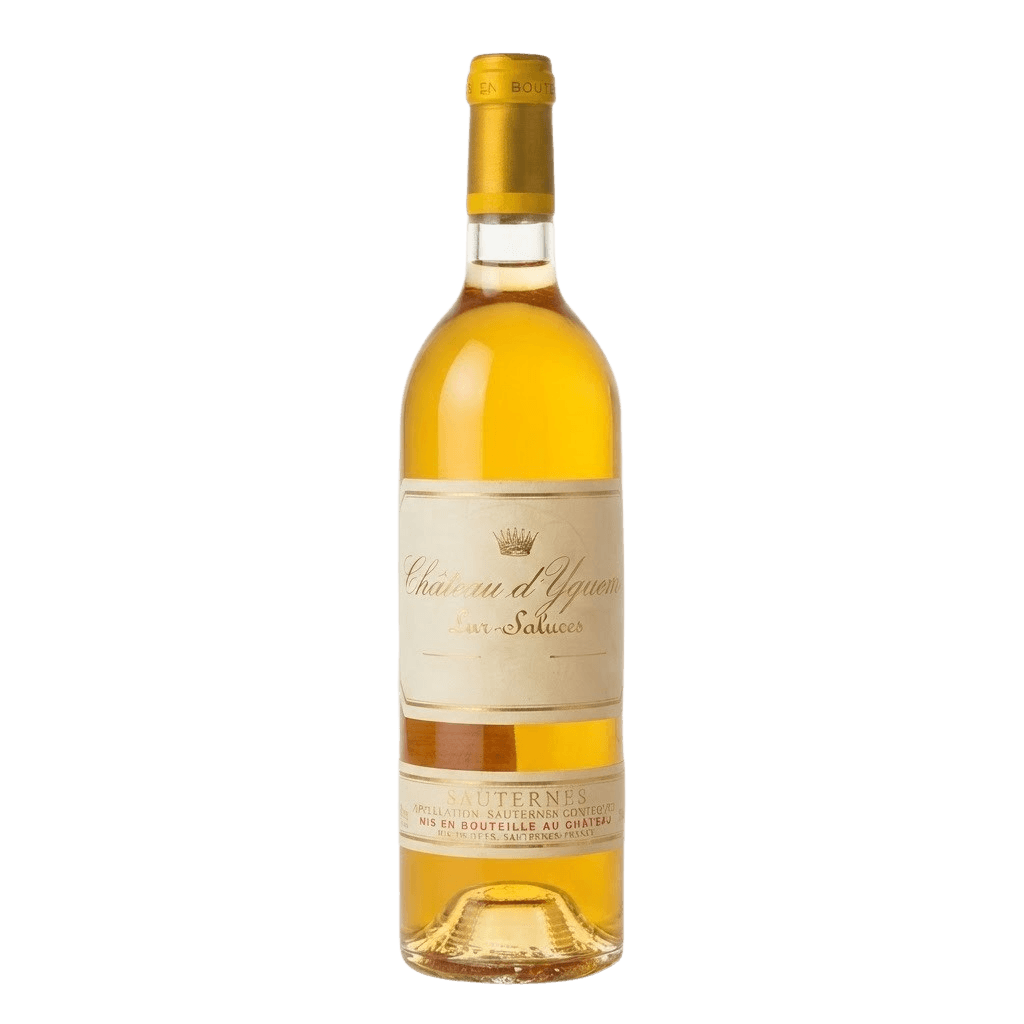
Bordeaux’s celebrated sweet-wine region, where autumn mists, noble rot and painstaking selective harvests transform Sémillon-led wines into remarkably complex and age-worthy expressions.
South of the city of Bordeaux lies one of the world's historic centres of sweet wine. Sauternes is defined by an unusual interaction between landscape, water and autumn weather that creates favourable conditions for Botrytis cinerea – the fungus responsible for noble rot.
The appellation extends across Sauternes, Barsac, Bommes, Fargues and Preignac, approximately 40 kilometres south-east of Bordeaux. The Ciron flows through the area before meeting the nearby Garonne, helping generate humid conditions that alternate with fine autumn days. This climatic rhythm is fundamental to the development of botrytised grapes.
The current INAO specification defines Sauternes as a still white wine appellation and requires harvesting within the delimited geographical area.
Sauternes belongs to the southern part of the Bordeaux wine region and sits close to the Garonne and its smaller tributary, the Ciron.
Water is one of the keys to understanding the region. During autumn, moisture associated particularly with the Ciron contributes to humid nights and mornings. When these conditions alternate with favourable warmer and drier periods, they create an environment in which Botrytis cinerea can develop as noble rot rather than destructive grey rot.
The appellation is not geologically uniform. Gravel, sand, clay and limestone occur in different combinations across the landscape, influencing drainage, water retention and the behaviour of individual vineyard sites.
Barsac is especially distinctive. INAO describes Haut-Barsac as a limestone plateau, while the eastern part of the commune contains warmer, free-draining gravel soils. Barsac lies within the geographical area of Sauternes but also possesses its own Barsac AOP.
The defining natural phenomenon of Sauternes is noble rot.
Botrytis cinerea attacks the grape skins under suitable conditions, allowing water to evaporate from the berries and progressively concentrating sugars, acidity and flavour compounds. The berries shrivel and become intensely concentrated rather than simply becoming conventionally ripe.
This process does not occur uniformly. One berry may be ready while another on the same bunch remains insufficiently affected.
Consequently, Sauternes cannot normally be harvested in a single pass. Pickers return repeatedly through the vineyards in a series of selective harvests known as tries successives, choosing suitably concentrated grapes by hand. INAO specifically requires manual harvesting and careful selection.
This combination of climatic risk, low yields and labour-intensive selection is fundamental to both the character and economics of Sauternes.
Sémillon is the defining grape of Sauternes. Its susceptibility to noble rot and capacity to retain richness while developing complex aromas make it particularly well suited to botrytised sweet wine.
Bordeaux's official regional body describes Sémillon as the area's principal variety, contributing delicacy, balance and complexity.
Sauvignon contributes aromatic intensity, freshness and acidity, helping balance the concentration and sweetness produced through botrytis.
Both Sauvignon Blanc and Sauvignon Gris are permitted within the appellation.
Muscadelle plays a much smaller role but can contribute floral and fruity aromatic nuances.
The precise proportions of these varieties differ between estates and wines and should therefore never be treated as a universal Sauternes blend.
Few major wine styles depend as heavily on individual grape selection as Sauternes.
Harvest teams make successive passes through the vineyards, selecting grapes according to their degree of ripeness and botrytis concentration. INAO's current rules specify manually harvested, overripe grapes selected through successive passes.
The resulting fruit contains highly concentrated juice, meaning yields are naturally limited.
After pressing, fermentation converts only part of the available grape sugars into alcohol. Residual sugar remains in the finished wine, producing Sauternes' characteristic sweetness.
Winemaking techniques and maturation vary between producers. Some estates make extensive use of barrel fermentation and maturation, while others employ different combinations of vessels and oak regimes. These details belong to the individual producer, wine and vintage entities, rather than being presented as universal regional rules.
Sauternes is sweet, but the finest examples are defined by considerably more than sweetness.
Young wines commonly combine citrus, flowers, stone fruit and exotic fruit, developing greater complexity as they mature. INAO identifies floral and fruit aromas in younger Sauternes, with candied fruit, citrus and honey becoming prominent with age.
Botrytis can add further dimensions of spice, saffron, honeyed richness and dried or candied fruit, while acidity provides the freshness required to balance high levels of concentration and residual sugar.
Texture can range from silky and refined to exceptionally rich and viscous, depending on terroir, vintage, producer and degree of botrytis.
The most structured examples can develop for decades, evolving from primary fruit towards increasingly complex combinations of dried fruit, citrus preserve, honey, spice and tertiary aromas.
The relationship between Sauternes and Barsac is unusual and important.
Sauternes AOP's geographical area comprises five communes, including Barsac. However, wines produced within Barsac may also qualify for the separate Barsac AOP when they meet its requirements. INAO confirms that Barsac is simultaneously one of the five communes within Sauternes' geographical area and an appellation in its own right.
For Sipfind's entity architecture, I would therefore keep:
Bordeaux → Sauternes → Producers
and
Bordeaux → Barsac → Producers
as distinct searchable regional/appellation entities, while linking them semantically because of their geographical and regulatory relationship.
Sauternes also occupies an important position in Bordeaux's historic 1855 Classification.
Unlike the Médoc classification, which principally concerns red wine, the Sauternes and Barsac classification covers the great sweet-wine estates of the region.
Its hierarchy consists of Premiers Crus and Deuxièmes Crus, with Château d’Yquem occupying the unique position of Premier Cru Supérieur.
This historical classification remains an important part of Sauternes' identity, but it should be kept separate from the modern AOP regulations: classification and appellation are not the same thing.
Discover Sauternes producers and wines. Compare vintages, critic scores, availability and current prices from trusted wine merchants.
