
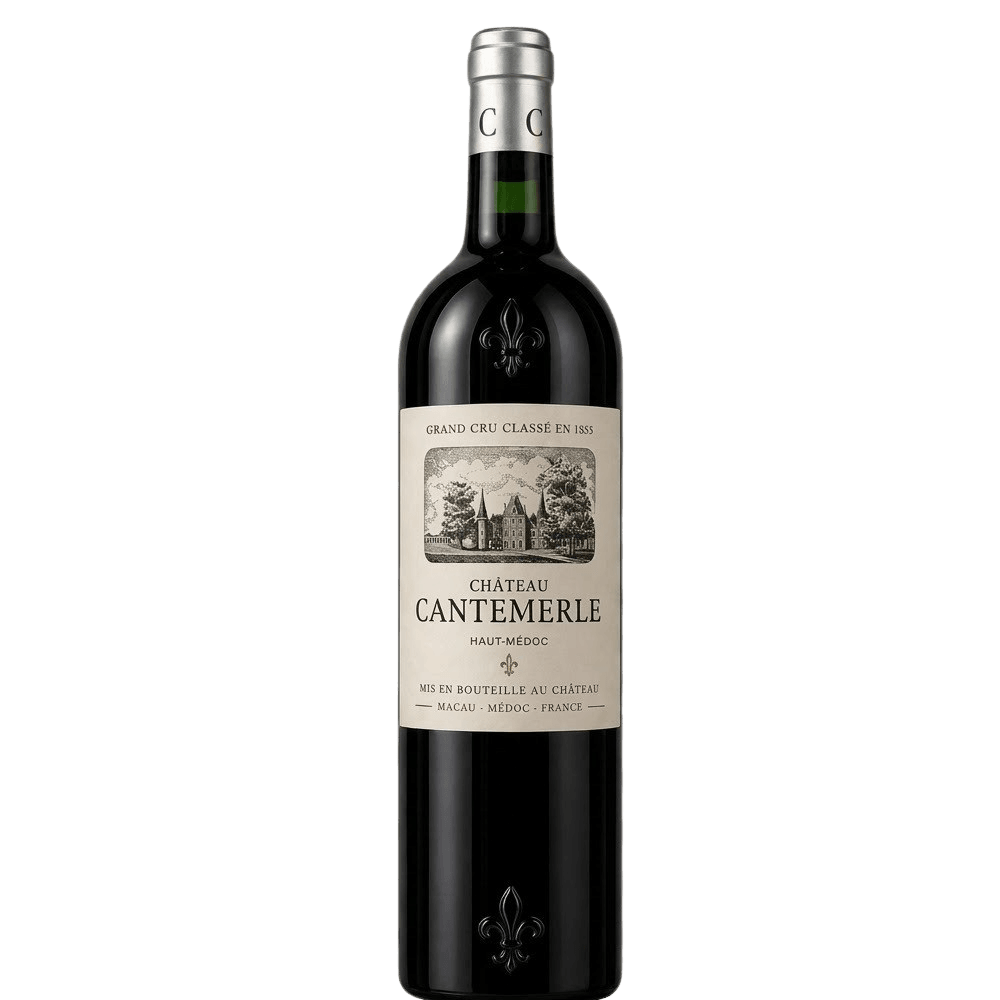
Château Cantemerle
2023
France
Bordeaux - Haut-Médoc
26EUR
incl. VAT
92/100
Standard delivery 1-3 business days
Haut-Médoc is one of Bordeaux's historic Left Bank appellations, renowned for Cabernet Sauvignon-led red wines, gravel-rich vineyards and distinguished classified growths. Stretching across the southern Médoc, it combines the structure and ageing potential of traditional Bordeaux with a remarkable diversity of terroirs and producers.
Haut-Médoc is one of the most important wine appellations on Bordeaux's Left Bank, occupying the southern section of the Médoc peninsula between the Atlantic Ocean and the Gironde estuary.
Renowned for its gravel-rich vineyards and Cabernet Sauvignon-led red wines, the appellation combines centuries of winemaking history with a remarkable diversity of estates and terroirs.
Haut-Médoc is particularly associated with structured Bordeaux blends that balance dark-fruit concentration, freshness and tannic definition.
The region includes several estates classified in the historic Bordeaux Classification of 1855, alongside numerous independent producers whose reputations have developed outside that ranking.
Although Haut-Médoc is frequently discussed as part of the wider Médoc wine region, the Haut-Médoc AOC is a distinct appellation.
Its boundaries should not be confused with the separate communal appellations of Margaux, Saint-Julien, Pauillac, Saint-Estèphe, Moulis-en-Médoc and Listrac-Médoc.
Understanding this distinction is essential to appreciating the geographical and stylistic diversity of Bordeaux's Left Bank.
The Médoc's transformation into one of the world's most celebrated wine regions accelerated during the 17th and 18th centuries.
Dutch engineers contributed to the drainage of marshland, helping make additional areas suitable for agriculture and viticulture.
Over time, vineyard estates developed on the gravel terraces of the peninsula.
These soils proved particularly suitable for Cabernet Sauvignon, which gradually became one of the defining grape varieties of the region.
By the 19th century, the Médoc had established an international reputation for wines capable of developing considerable complexity through bottle ageing.
The Bordeaux Classification of 1855 formalised the commercial standing of many of its leading estates.
Five classified growths are situated within the present-day Haut-Médoc appellation: Château La Lagune, Château La Tour Carnet, Château Belgrave, Château Camensac and Château Cantemerle.
Their presence reflects the historical importance of the appellation, although the quality and identity of Haut-Médoc extend well beyond its classified properties.
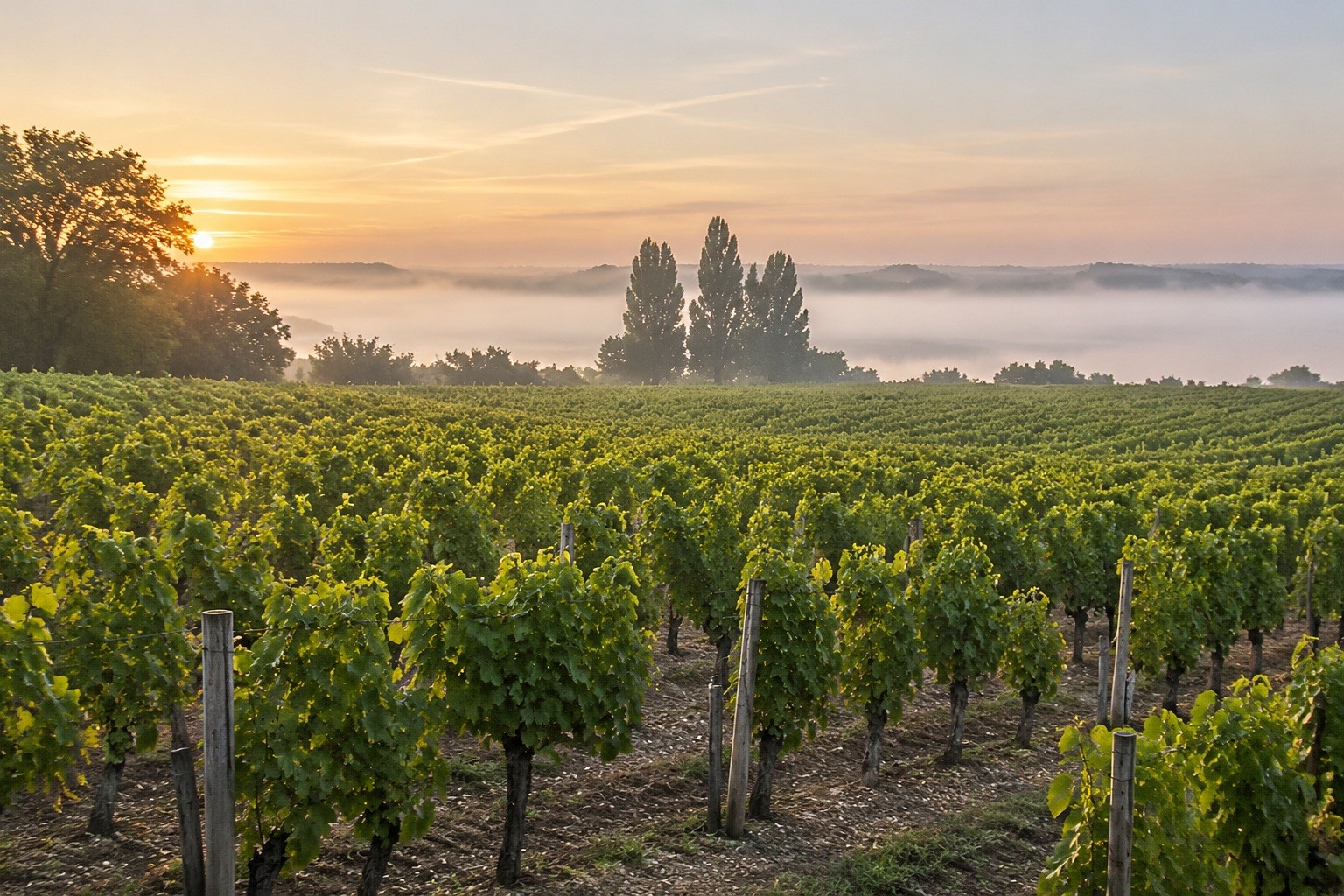
Haut-Médoc occupies a broad landscape of gravel terraces, gentle slopes and varied underlying soils.
The region's geology reflects successive periods of sediment deposition associated with the Garonne and Gironde river systems.
Gravel is particularly important because of its drainage characteristics and ability to absorb warmth.
These conditions can support the ripening of Cabernet Sauvignon, a relatively late-ripening grape variety.
However, Haut-Médoc is not geologically uniform.
Clay, limestone and sandy soils also occur throughout the appellation.
Their distribution influences vineyard water availability, grape development and the balance between the varieties used in the final wines.
The maritime climate moderates seasonal temperature extremes, while rainfall patterns and autumn conditions can significantly influence the character of individual vintages.
Cabernet Sauvignon is central to the identity of Haut-Médoc.
It contributes dark-fruit aromas, tannic structure, freshness and the capacity for bottle ageing.
Merlot provides complementary fruit and texture, often contributing a rounder mid-palate.
Cabernet Franc, Petit Verdot, Malbec and Carménère may also form part of the traditional Bordeaux blend.
The precise proportions vary between producers and vintages.
This flexibility allows estates to adapt their wines to the characteristics of individual vineyard parcels and growing seasons.
Haut-Médoc wines are generally associated with blackcurrant, blackberry, dark cherry, cedar and subtle herbal or savoury characteristics.
Cabernet Sauvignon contributes structure, while Merlot can provide additional suppleness.
The finest examples balance fruit concentration with freshness and well-defined tannins.
With suitable bottle ageing, wines may develop aromas of tobacco, leather, forest floor and dried fruit.
However, Haut-Médoc encompasses a broad range of styles.
Some wines are intended for relatively early enjoyment, while more structured examples can develop over many years.
The ageing potential depends on the producer, vintage, vineyard conditions and winemaking.
The historic classified growths form an important part of Haut-Médoc's identity.
Château La Lagune, Château La Tour Carnet, Château Belgrave, Château Camensac and Château Cantemerle are all included in the 1855 Classification.
However, the appellation also contains highly regarded estates outside that ranking.
Château Sociando-Mallet is a notable example, recognised for structured, Cabernet Sauvignon-led wines with significant ageing potential.
Other producers contribute to the diversity of the appellation through different vineyard holdings, blending decisions and winemaking philosophies.
The distinction between classified and unclassified estates should not be interpreted as a simple measure of contemporary wine quality.
The 1855 Classification reflects historical commercial standing rather than an annual assessment.
The geographical Haut-Médoc contains several of Bordeaux's most celebrated communal appellations.
Margaux, Saint-Julien, Pauillac, Saint-Estèphe, Moulis-en-Médoc and Listrac-Médoc each possess their own appellation identity.
Their wines may share the broader geological and climatic characteristics of the Médoc, but they are marketed under separate appellations.
Haut-Médoc AOC therefore represents a distinct category rather than a collective label for all wines produced in the southern Médoc.
This distinction is particularly important when comparing wines, producers and vintages.
Haut-Médoc offers an extensive range of Cabernet Sauvignon-led Bordeaux wines, from historic classified growths to distinguished independent estates.
Its diversity of terroirs and producers provides opportunities to explore different interpretations of the traditional Left Bank blend.
Discover Haut-Médoc producers, individual wines and vintages on Sipfind.
Compare available offers from European wine retailers for the same wine, vintage and bottle format.
Number of haut-médoc: 1 pcs.
Château Cantemerle
2023
France
Bordeaux - Haut-Médoc
incl. VAT
Standard delivery 1-3 business days