
Château Quintus
2021
82EUR
incl. VAT
A Domaine Clarence Dillon estate in Saint-Émilion, uniting historic limestone vineyards to produce refined, terroir-driven Bordeaux wines centred on Merlot and Cabernet Franc.
Château Quintus is a Saint-Émilion wine estate belonging to Domaine Clarence Dillon, the family-owned group responsible for Château Haut-Brion and Château La Mission Haut-Brion. Established under its present identity in 2011, Quintus brings together historic vineyards with contrasting exposures and soils to create wines that reflect the diversity of Bordeaux's Right Bank.
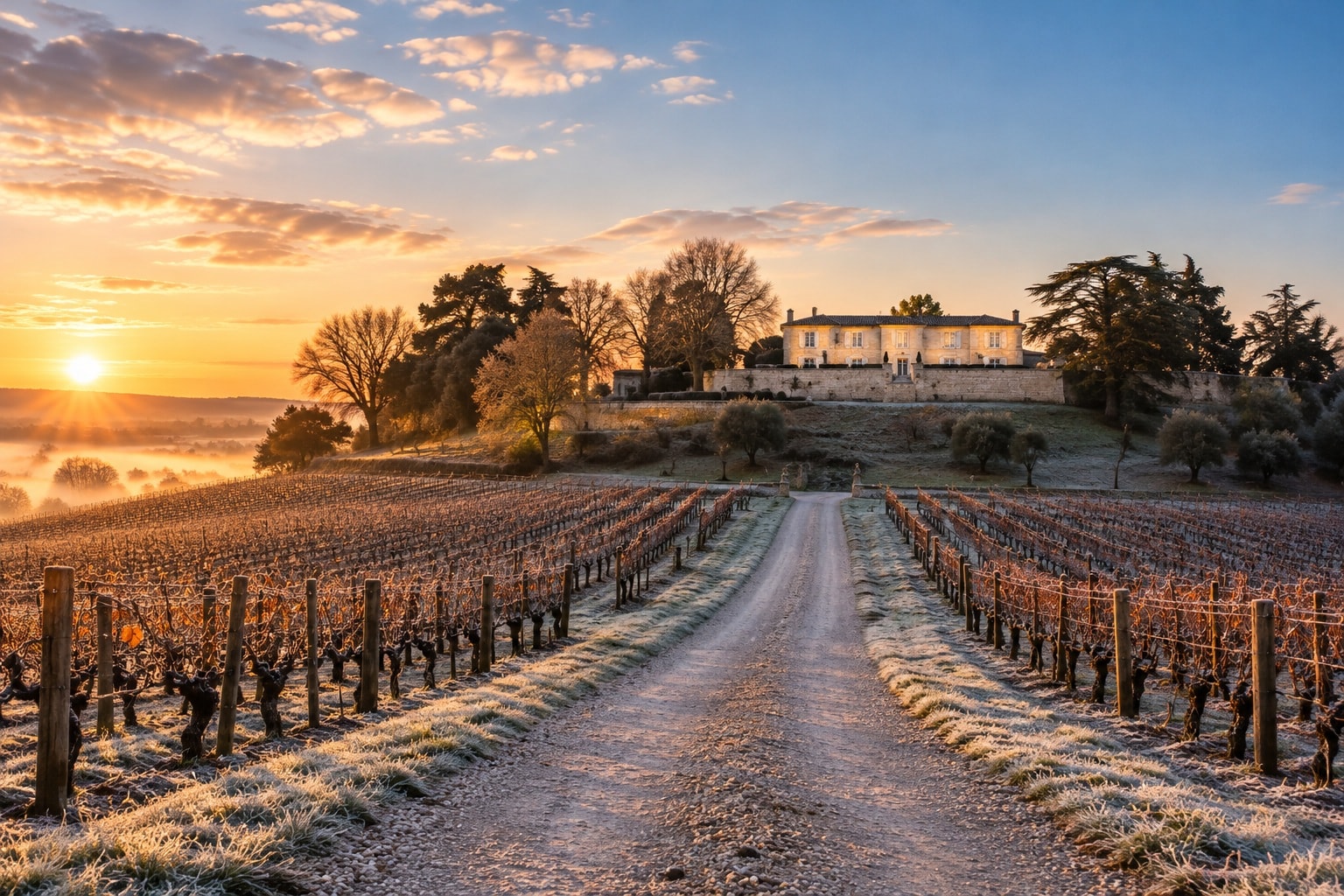
Situated on a limestone promontory overlooking the Dordogne valley, the estate combines Merlot and Cabernet Franc with a philosophy centred on vineyard selection, precise blending and respect for terroir. Its wines emphasise purity of fruit, freshness, textural refinement and balance, while retaining the structure required for bottle ageing.
AttributeDetails
Producer
Château Quintus
Location
Saint-Émilion, Bordeaux, France
Appellation
Saint-Émilion Grand Cru
Established
2011, under its present identity
Owner
Domaine Clarence Dillon
Principal Grape Varieties
Merlot and Cabernet Franc
The modern history of Château Quintus began in 2011, when Domaine Clarence Dillon acquired Château Tertre Daugay, a historic Saint-Émilion property.
Under the direction of Prince Robert of Luxembourg, the estate was renamed Château Quintus and developed around the ambition of bringing together complementary vineyard terroirs under a single identity.
The name Quintus derives from the Latin word for fifth, reflecting both the property's place within the Dillon family's wine heritage and the symbolism of a fifth element representing the essence of a whole.
The estate expanded significantly in 2013 through the acquisition of neighbouring Château L'Arrosée, whose vineyards were incorporated into Quintus.
A further milestone followed in 2021 with the acquisition of Château Grand-Pontet, adding another important collection of Saint-Émilion vineyard parcels.
These acquisitions transformed Quintus into an estate combining three historic properties, each contributing its own soils, exposures and vineyard characteristics.
The result is a contemporary Bordeaux estate built upon centuries of Saint-Émilion viticultural history.
Château Quintus occupies approximately 45 hectares, including around 42 hectares of vineyards, following its expansion in 2021.
The estate's most distinctive geographical feature is its position on a limestone promontory rising approximately 62 metres above the surrounding landscape.
From this elevated position, the property overlooks the Dordogne valley and benefits from a variety of vineyard exposures.
Its principal soil types include limestone, clay and clay-limestone, with variations in depth, drainage and orientation creating different growing conditions across the estate.
Merlot and Cabernet Franc are the principal grape varieties.
Merlot contributes fruit concentration, suppleness and texture, while Cabernet Franc provides aromatic definition, freshness and structural precision.
The combination of different vineyard parcels allows the estate to select and assemble wines according to the characteristics of each growing season.
Rather than relying on one uniform vineyard profile, Quintus draws its identity from the interaction of multiple terroirs.
Château Quintus places considerable emphasis on biodiversity and environmental management.
The estate's landscape includes vineyards, wooded areas, hedgerows, terraces and a distinctive Mediterranean green belt.
Approximately two hectares of gardens and terraces provide habitats for insects, birds and other wildlife that contribute to the vineyard ecosystem.
The estate has introduced measures including the planting of native hedgerows, wildflower areas, nesting boxes and insect shelters.
Mechanical soil disturbance and mowing are limited where appropriate to encourage ecological diversity.
Its environmental management has been recognised through High Environmental Value certification since 2018 and ISO 14001 certification since 2019, within the collective environmental management framework for Bordeaux wine producers.
These measures form part of the estate's broader objective of maintaining healthy soils and preserving the individual character of its vineyard parcels.
Winemaking at Château Quintus is guided by the characteristics of each harvest and the diversity of its vineyard parcels.
Grapes are selected according to ripeness, quality and their suitability for the estate's different wines.
Parcel selection allows the winemaking team to evaluate individual components before determining the final assemblages.
The relationship between Merlot and Cabernet Franc is central to this process, with the proportions adjusted according to vintage conditions.
Fermentation and extraction are managed to preserve fruit expression while developing balanced tannins and structure.
Maturation in oak contributes to the integration and development of the wines, although the proportion of new barrels and the precise ageing regime vary between vintages.
The estate's approach prioritises harmony between fruit, structure, freshness and the mineral character associated with its limestone-influenced terroirs.
Exact grape blends, alcohol levels, harvest dates and oak maturation details belong to individual vintage pages rather than the producer's permanent profile.
The wines of Château Quintus express a style centred on balance rather than concentration alone.
Merlot contributes generous fruit and a supple texture, while Cabernet Franc introduces freshness, aromatic lift and structural definition.
The estate's limestone and clay-limestone soils contribute to wines that combine depth with tension and precision.
Across the portfolio, the stylistic emphasis is on pure fruit, fine tannins, integrated structure and a persistent finish.
The flagship Château Quintus is designed for greater depth and ageing potential, while the estate's other wines offer different expressions of the same vineyard origins.
The resulting identity can be summarised as:
Historic Saint-Émilion terroirs → Merlot and Cabernet Franc → precise selection → harmonious blending → refined tannins → freshness → ageing potential.
The estate's Grand Vin
Château Quintus is the flagship wine of the property.
Produced from selected vineyard parcels, it combines Merlot and Cabernet Franc in proportions determined by each vintage.
Its identity centres on fruit purity, aromatic complexity, refined tannins and the capacity to develop with bottle ageing.
The estate's second wine
Le Dragon de Quintus takes its name from the bronze dragon sculpture overlooking the estate.
Produced from the same broader collection of vineyard terroirs, it offers a more immediately approachable expression of the Quintus style.
Fresh fruit, supple texture and balanced structure are central to its identity.
An accessible expression of the estate
Saint-Émilion de Quintus completes the producer's current portfolio.
Made with the same attention to vineyard selection and winemaking, it emphasises freshness, generosity and approachability.
The wine provides an introduction to the character of Quintus and the wider Saint-Émilion appellation.
The producer confirms these three distinct wines in its current portfolio.
Discover Château Quintus, Le Dragon de Quintus and Saint-Émilion de Quintus. Compare vintages, critic scores, availability and current prices from trusted wine merchants.
Products from Château Quintus: 2 pcs.
Bottle Hero
Chateaunet
Philipson Wine ApS
bordeauxwines.se