
Château LasCombes
2017
92EUR
incl. VAT
A historic Second Growth in Margaux, Château Lascombes combines diverse gravel and clay terroirs with precise viticulture to produce structured, refined and expressive Bordeaux.
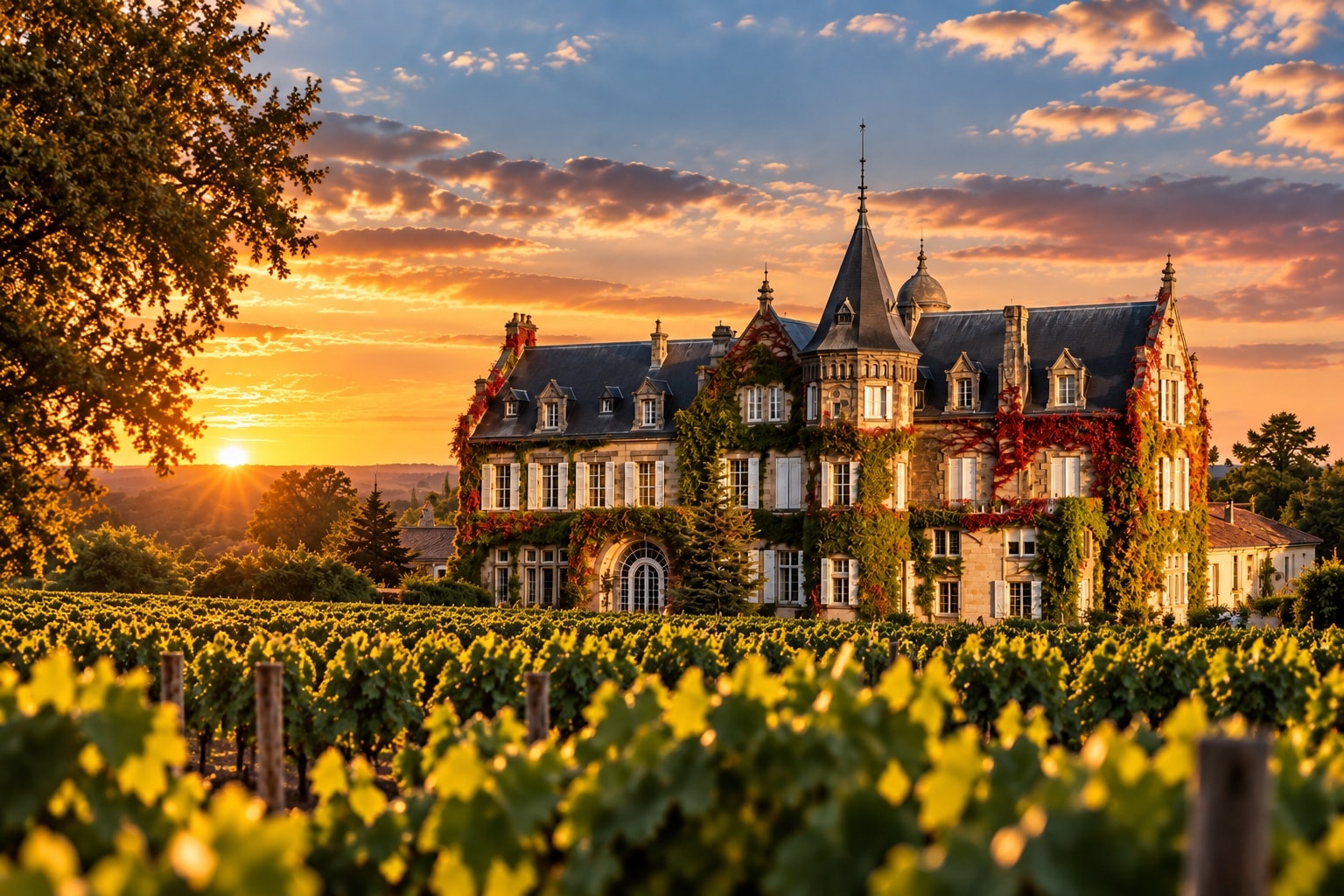
Château Lascombes is a Second Growth estate in Margaux, on Bordeaux's Left Bank. Classified as a Deuxième Grand Cru Classé in 1855, the property possesses one of the largest vineyard holdings within the Margaux appellation and an unusually broad range of soil types.
The estate's identity is shaped by this diversity. Gravelly rises, clay-rich parcels and clay-limestone soils provide contrasting conditions for Cabernet Sauvignon, Merlot and Petit Verdot, allowing Château Lascombes to combine the structure and depth of the Médoc with the aromatic refinement traditionally associated with Margaux.
The history of Château Lascombes is closely connected with the development of Margaux as one of the Médoc's leading wine-producing communes.
The estate takes its name from Antoine de Lascombes, who owned the property during the 17th century. Over subsequent generations, the vineyard expanded and established a reputation that ultimately led to Château Lascombes being ranked as a Second Growth in the 1855 Classification.
The property changed ownership several times during the following century. One of its most important modern periods began in 1952, when French wine writer and businessman Alexis Lichine acquired the estate. Lichine reorganised the vineyards and invested substantially in Château Lascombes, helping restore its international profile.
Further investment followed under later owners, particularly from the beginning of the 21st century, with extensive work in both vineyard and cellar.
Since 2022, Château Lascombes has entered another phase of its development under new ownership, accompanied by renewed work on vineyard precision, terroir understanding and the stylistic direction of the Grand Vin.
Château Lascombes possesses extensive holdings distributed throughout the Margaux appellation, giving the estate considerable geological diversity.
Rather than being centred on one homogeneous block, the vineyards encompass several distinct soil environments. Gravelly parcels favour Cabernet Sauvignon by providing drainage and encouraging deep rooting, while clay and clay-limestone sectors provide conditions particularly suited to Merlot.
This diversity is one of the defining characteristics of Château Lascombes.
The estate can therefore draw upon parcels differing in soil depth, water retention, exposure and grape variety when constructing the Grand Vin.
For SCI, the important semantic distinction is:
Margaux appellation → multiple terroir families → individual parcels → grape varieties → vintage blend
The percentages planted to each grape variety describe the estate vineyard, not the composition of every Château Lascombes vintage. The actual Grand Vin blend must therefore always remain vintage-specific.
Modern viticulture at Château Lascombes increasingly focuses on understanding and managing individual parcels according to their particular soils, vines and growing conditions.
Vineyard work is adapted to differences in water availability, soil structure, vine age and grape variety rather than applying a uniform programme across the estate.
The objective is to achieve balanced ripeness while preserving freshness and allowing the contrasting terroirs of Margaux to remain identifiable.
Harvest decisions are consequently made according to the maturity of individual parcels. Fruit intended for the Grand Vin undergoes rigorous selection, with the final composition determined by the quality and character of each vintage.
This parcel-driven approach is central to the estate's continuing evolution.
Château Lascombes vinifies its vineyard parcels separately, allowing the character and quality of individual terroirs to be assessed before blending.
The cellar combines precise temperature control and careful extraction with an increasingly restrained approach designed to preserve fruit, freshness and texture.
Cabernet Sauvignon provides much of the structural framework of the Grand Vin, while Merlot contributes volume and texture. Petit Verdot may provide additional aromatic and structural complexity depending on the vintage.
Maturation takes place in French oak barrels, with the proportion of new oak and the precise duration of élevage determined according to the requirements of each vintage and individual lots.
For Sipfind, exact values for:
blend · alcohol · harvest dates · new oak percentage · maturation period · production
should therefore be stored at vintage level, rather than being hard-coded into the producer master.
Château Lascombes combines the depth and structure of a Médoc classified growth with the aromatic character and textural refinement associated with Margaux.
Historically, the estate has often produced a relatively powerful and concentrated interpretation of the appellation. More recent work in the vineyard and cellar has placed increasing emphasis on precision, freshness and the expression of individual terroirs.
Cabernet Sauvignon brings structure, length and dark-fruited character, while Merlot can provide breadth and supple texture. The contribution of Petit Verdot varies according to the growing season and final blend.
For SCI, the producer's stylistic DNA should be:
Margaux fragrance → depth → structure → texture → freshness → refinement → length.
Specific fruit, floral, spice and oak descriptors should remain attached to individual vintages rather than becoming permanent characteristics of the producer entity.
The estate's principal wine is:
Château Lascombes — Margaux Deuxième Grand Cru Classé
The estate also produces a second wine, allowing stricter selection for the Grand Vin and providing another expression of the property's vineyards.
For Sipfind, the hierarchy should therefore be constructed around:
Château Lascombes → Grand Vin → Vintage
with separate product entities for additional wines in the portfolio.
Each Château Lascombes vintage should then contain its own verified:
Blend → Alcohol → Harvest → Vinification → Maturation → Production → Tasting Profile → Critic Scores → Merchant Offers
This keeps the producer entity historically and stylistically stable while allowing SCI to handle changing vintage data correctly.
Discover Château Lascombes and compare vintages, critic scores, availability and current prices from trusted wine merchants.
Products from Chateau LasCombes: 1 pcs.
Bottle Hero
Chateaunet
bordeauxwines.se