
Château L’Église-Clinet
2020
61EUR
incl. VAT
Discover Château L’Église-Clinet, one of Pomerol's most distinguished estates, renowned for its exceptional Merlot-led wines, meticulous vineyard management and remarkable ageing potential. Shaped by the vision of Denis Durantou and continued by his family, the château represents the elegance, depth and individuality of Bordeaux's Right Bank.
Château L’Église-Clinet stands among the most admired wine estates in Pomerol, one of Bordeaux's smallest and most prestigious appellations.
Located on the Right Bank near Libourne, the estate has established an international reputation for producing wines that combine remarkable concentration with aromatic precision, freshness and longevity.
Unlike the classified growths of the Médoc or Saint-Émilion, Pomerol has no official château classification. Its leading estates have instead earned their reputations through the quality, consistency and individuality of their wines.
Château L’Église-Clinet is firmly established within this distinguished group.
The estate's modern identity is inseparable from Denis Durantou, whose dedication to vineyard management, careful selection and precise winemaking helped transform Château L’Église-Clinet into one of Pomerol's most sought-after names.
Today, the Durantou family continues this legacy, preserving the estate's distinctive character while maintaining its commitment to quality.
The history of Château L’Église-Clinet is closely connected to the development of Pomerol as one of Bordeaux's most celebrated wine regions.
The property emerged through the combination of vineyard holdings associated with Clos L’Église and Château Clinet, two established names in the appellation.
This union created the foundation for the estate known today as Château L’Église-Clinet.
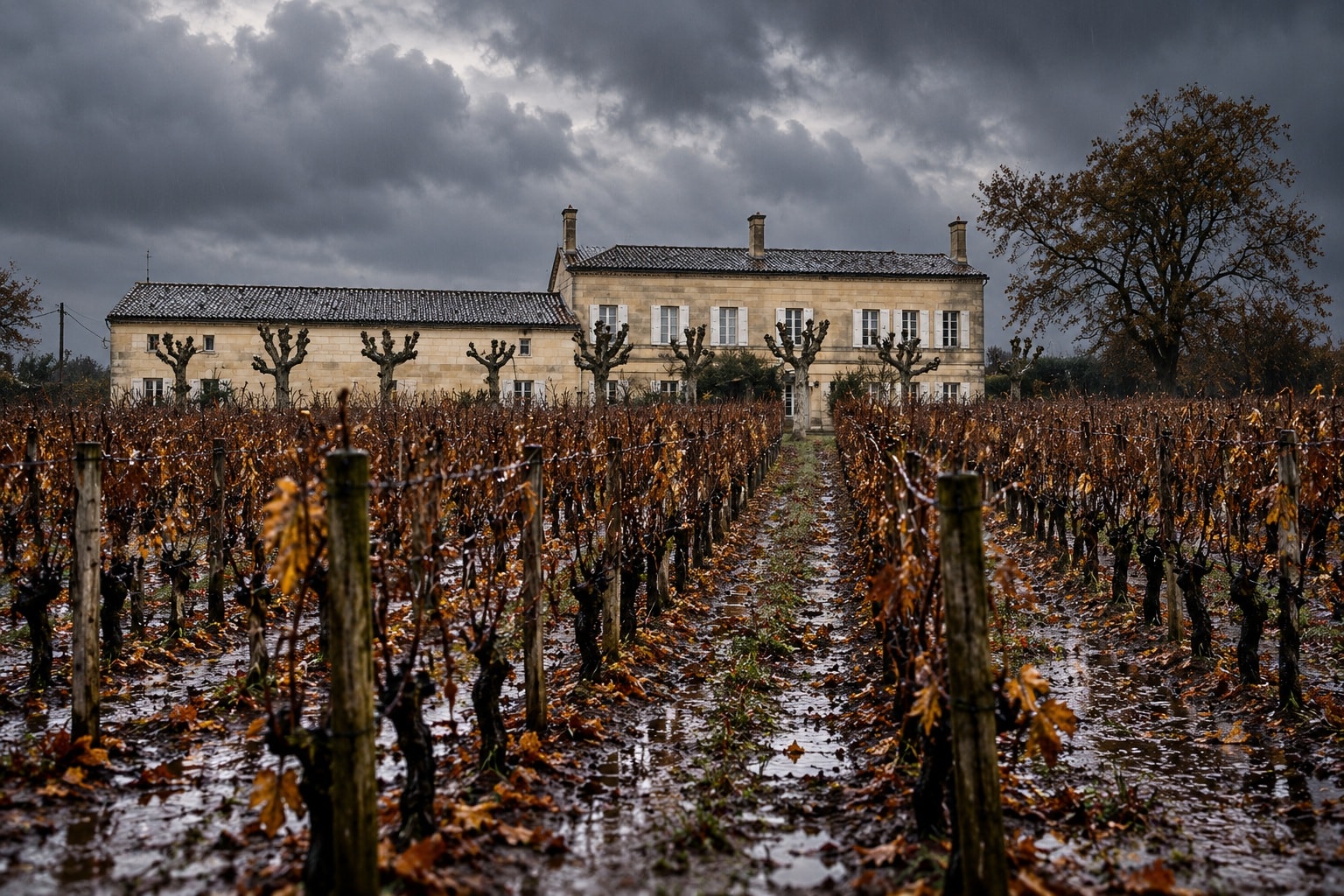
Its vineyards occupy a privileged position within Pomerol, where the relationship between soil, grape variety and meticulous cultivation plays a decisive role in wine quality.
Over time, the estate developed its own identity, distinct from the neighbouring properties from which its historic name originated.
The château's international reputation, however, was established largely through the dedication and expertise of Denis Durantou.
Denis Durantou was one of the most influential figures in the modern history of Pomerol.
Taking responsibility for Château L’Église-Clinet in the 1980s, he pursued an uncompromising approach to quality at a time when the estate was not yet regarded among the appellation's leading names.
His philosophy placed exceptional importance on the vineyard.
Careful observation of growing conditions, precise vineyard work and rigorous fruit selection became central to the estate's development.
Durantou was particularly respected for his ability to produce wines that combined depth and power with freshness, balance and aromatic definition.
Rather than pursuing concentration alone, his approach sought to express the individuality of each growing season while preserving the character of Pomerol's terroir.
Under his leadership, Château L’Église-Clinet gained widespread critical recognition and became one of the most highly regarded producers on Bordeaux's Right Bank.
Following his death in 2020, the estate remained in the hands of his family, ensuring continuity with the principles that established its reputation.
Pomerol occupies a relatively compact area on Bordeaux's Right Bank, yet it is home to some of the world's most celebrated red wines.
The appellation is particularly associated with Merlot, a grape variety capable of producing remarkable concentration, texture and complexity when grown under favourable conditions.
Unlike the Left Bank's gravel-dominated Cabernet Sauvignon vineyards, Pomerol features a varied geological landscape incorporating clay, gravel and sandy soils.
These differences create distinctive growing conditions across the appellation.
The most celebrated wines often combine the richness associated with Merlot with structural precision, freshness and the ability to evolve over decades.
Château L’Église-Clinet represents one of the appellation's most distinctive expressions of this balance.
Its wines demonstrate how concentration and elegance can coexist when vineyard conditions and winemaking decisions are carefully aligned.
The estate's vineyards are situated within Pomerol's complex geological landscape.
Clay and gravel play important roles in the character of the region's finest wines.
Clay-rich soils provide valuable moisture retention and can support Merlot during periods of limited rainfall.
Gravel contributes drainage and influences the temperature and water conditions experienced by the vines.
The interaction between these soil types, vineyard exposure and the local climate helps shape the balance between fruit concentration, tannin development and acidity.
For Château L’Église-Clinet, the quality of the vineyard sites provides the foundation for wines recognised for their depth, aromatic complexity and ageing potential.
The estate's reputation reflects the importance of understanding and managing these conditions with precision.
Château L’Église-Clinet is associated with the classic grape varieties of Pomerol, particularly Merlot and Cabernet Franc.
Merlot forms the foundation of the estate's wines.
It contributes richness, dark fruit character and a distinctive textural depth, while the vineyard's terroir and growing conditions influence the balance between concentration and freshness.
Cabernet Franc plays a complementary role.
It can contribute floral aromatics, spice, structural definition and additional complexity.
The interaction between these varieties is central to the character of many leading Pomerol wines.
At Château L’Église-Clinet, the precise proportions vary according to vineyard conditions, selection and the requirements of each vintage.
This flexibility allows the estate to preserve its identity while responding to the individuality of the growing season.
The winemaking philosophy associated with Château L’Église-Clinet reflects the principles established during Denis Durantou's stewardship.
Quality begins in the vineyard, where careful cultivation and selection determine the potential of the harvested fruit.
The estate's wines are known for combining concentration with definition rather than relying on power alone.
Fermentation, extraction and maturation must therefore support the expression of the grapes without overwhelming their natural character.
Oak maturation contributes to the development of structure and complexity, although its influence is intended to remain integrated within the finished wine.
The result is a style recognised for its intensity, balance and capacity for long-term development.
This emphasis on precision remains fundamental to the estate's reputation.
The estate's flagship wine is Château L’Église-Clinet, a Pomerol red renowned for its concentration, aromatic complexity and exceptional ageing potential.
Predominantly based on Merlot, with Cabernet Franc contributing additional character, the wine is celebrated for its ability to combine richness with freshness and structural precision.
Depending on the vintage, its aromatic profile may include black cherry, plum, blackberry, violets, spice and subtle earthy notes.
With bottle maturation, the wine can develop additional complexity through tobacco, truffle, cedar and other tertiary characteristics.
The finest vintages are capable of evolving over several decades under appropriate storage conditions.
La Petite Église is the estate's second wine.
It provides another expression of Château L’Église-Clinet's vineyard and winemaking philosophy, while maintaining its own identity.
Produced through the estate's selection process, La Petite Église is generally intended to offer a more approachable interpretation of the producer's Pomerol style.
It shares the regional foundations of Merlot-led fruit, structure and balance associated with the grand vin.
For enthusiasts interested in discovering the character of Château L’Église-Clinet, La Petite Église offers an additional perspective on the estate.
The death of Denis Durantou in 2020 marked an important moment in the history of Château L’Église-Clinet.
His contribution to the estate extended far beyond individual vintages.
He established a philosophy centred on vineyard quality, careful selection and the pursuit of balance.
Today, the Durantou family continues to manage the estate, preserving its heritage while guiding its development.
The château remains an important reference point for enthusiasts seeking wines that express the depth and refinement of Pomerol.
Its continued reputation reflects both the quality of its vineyards and the enduring influence of the principles established during Durantou's leadership.
Explore Château L’Église-Clinet and its celebrated Pomerol wines.
Discover the estate's grand vin and La Petite Église, compare available vintages and explore offers from independent European wine retailers.
Sipfind helps you identify the exact wine and vintage you are looking for, bringing together retailer information in one place.
Products from Château L’Église-Clinet: 1 pcs.
Bottle Hero
Chateaunet
Philipson Wine ApS
bordeauxwines.se