
Vietti Roero Arneis
2025
Italy
Barolo/Barbaresco - Barolo/Barbaresco
20EUR
incl. VAT
90/100
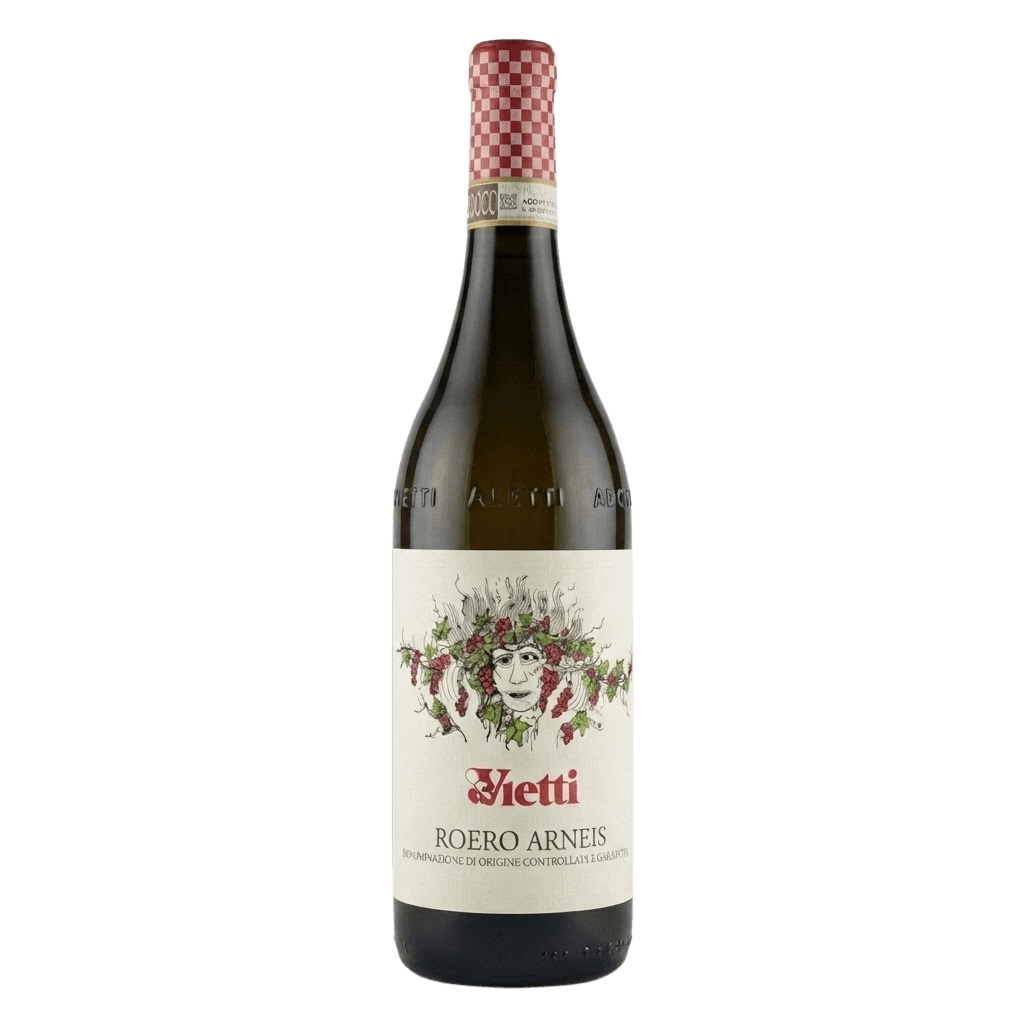
Arneis is a distinctive indigenous white grape from Piedmont, celebrated for its orchard-fruit character, delicate floral aromas and rounded texture. Historically rooted in the Roero hills, the variety survived a dramatic decline before becoming one of northern Italy's recognised white-wine specialities.
Arneis is an indigenous white grape variety from Piedmont in north-western Italy, with its strongest historical and geographical association in the Roero hills.
Although Piedmont is internationally celebrated for red wines made from Nebbiolo and Barbera, Arneis represents an equally distinctive part of the region's viticultural heritage.
Today, the grape is best known for producing dry white wines under the Roero Arneis DOCG appellation.
Its modern identity is closely associated with expressive fruit, delicate floral character and a rounded palate.
Yet the history of Arneis is considerably older than its present-day reputation suggests.
Written references associated with the grape date back to the late fifteenth and early sixteenth centuries.
During the eighteenth century, Arneis was considered a high-quality local variety, although its grapes were frequently used to produce sweet wines or vermouth rather than the dry white wines for which it is now recognised.
The variety subsequently experienced a significant decline.
By the twentieth century, Arneis had become increasingly uncommon, and its future as a commercially important wine grape was uncertain.
A revival began during the 1960s and 1970s, when producers recognised its potential for dry white-wine production.
Vietti was among the pioneers of this movement, recording its first varietal Arneis bottling in 1967.
Today, Arneis has regained a recognised position in Piedmont, particularly in the Roero appellation, where it has become one of the region's defining grape varieties.
Its story combines centuries of regional tradition with one of Italian wine's notable twentieth-century revivals.
AttributeDetails
Grape
Arneis
Grape Type
White
Species
Vitis vinifera
Origin
Piedmont, Italy
Principal Region
Roero
Other Growing Area
Langhe
Historical References
Late 15th–early 16th century
Modern Revival
1960s–1970s
Principal Wine Style
Dry White
Additional Style
Sparkling White
Main Appellation
Roero Arneis DOCG
Typical Fruit Profile
Pear, Apple, Stone Fruit
Common Floral Character
Delicate White Flowers
Acidity
Generally Moderate
Body
Light to Medium, sometimes fuller
Texture
Often Rounded
Budbreak
Medium-Early
Ripening
September
Vine Vigour
High
Historical Producer
Vietti
Notable Historical Year
1967
Smak- och strukturuppgifterna beskriver typiska stilar, inte egenskaper som måste förekomma i varje Arneis-vin.
The history of Arneis stretches back several centuries.
According to the Roero Producers' Consortium, historical references associated with the variety appear between the late fifteenth and early sixteenth centuries.
Early names included forms such as Reneysium and Ornesium.
The modern name Arneis became established during the early nineteenth century.
In earlier centuries, the grape occupied a different position in Piedmontese wine production.
During the eighteenth century, it was regarded as a quality variety and was frequently associated with sweet wines and vermouth.
However, the arrival of phylloxera and wider changes in vineyard cultivation contributed to its decline.
During the twentieth century, Arneis became increasingly rare.
The grape's relatively early ripening and sweet berries also meant that it was sometimes cultivated for table grapes rather than exclusively for wine.
The revival began when producers started reconsidering its potential for dry white wines.
By the 1970s, vineyards dedicated specifically to Arneis were being re-established.
This period marked the beginning of the grape's modern commercial development.
The renewed interest eventually helped establish Arneis as one of Piedmont's recognised indigenous white varieties.
Roero is the region most closely associated with Arneis.
Situated north of the Tanaro River in Piedmont, the area forms a distinctive winegrowing landscape opposite the Langhe hills.
The region's geology includes substantial sandy and sedimentary formations, which distinguish parts of Roero from the predominantly marl-based landscapes associated with many famous Langhe vineyards.
These geological differences contribute to the diversity of vineyard conditions within Piedmont.
Arneis has a long history in Roero and remains one of its principal grape varieties.
The region's modern wine identity is built around two indigenous grapes: Arneis for white wines and Nebbiolo for red wines.
The Roero DOCG appellation protects wines produced under specific geographical and production requirements.
For white wines labelled Roero Arneis DOCG, the regulations require a minimum of 95% Arneis.
The appellation also permits sparkling wines made from Arneis.
This makes Roero the principal reference point for understanding the grape's modern identity.
Although Arneis is also cultivated elsewhere, its historical significance and contemporary reputation remain closely connected to these Piedmontese hills.
Arneis is generally associated with an expressive but relatively delicate aromatic profile.
Typical descriptions include orchard fruits such as pear and apple, alongside stone-fruit characteristics that may suggest peach or apricot.
Floral notes can contribute additional aromatic complexity.
Some wines also display herbal, citrus or almond-like nuances, depending on their origin, maturity and production method.
One of the grape's distinctive stylistic characteristics is its texture.
Arneis wines often combine fruit expression with a rounded mouthfeel rather than the particularly sharp acidity associated with some other white varieties.
This does not mean that Arneis lacks freshness.
Instead, its balance is frequently shaped by the relationship between fruit concentration, acidity and texture.
The grape's expression varies considerably according to vineyard conditions, harvest timing and winemaking.
Cooler growing conditions may help preserve freshness, while warmer seasons can produce riper fruit profiles and greater weight.
Some producers favour a youthful, fruit-focused style, while others use extended lees contact or alternative maturation methods to develop additional complexity.
For Sipfind, individual wine descriptions should always distinguish these general varietal characteristics from the verified tasting profile of a particular producer's wine.
Arneis is a vigorous grape variety with a relatively early start to its growing season.
The variety typically begins budding around the middle of April, although timing depends on local weather conditions.
Flowering generally takes place during the first part of June.
The grapes develop through the summer, with ripening usually occurring during September.
This relatively early growing cycle makes vineyard selection important.
Because the vine begins developing comparatively early, spring frost can present a risk in susceptible locations.
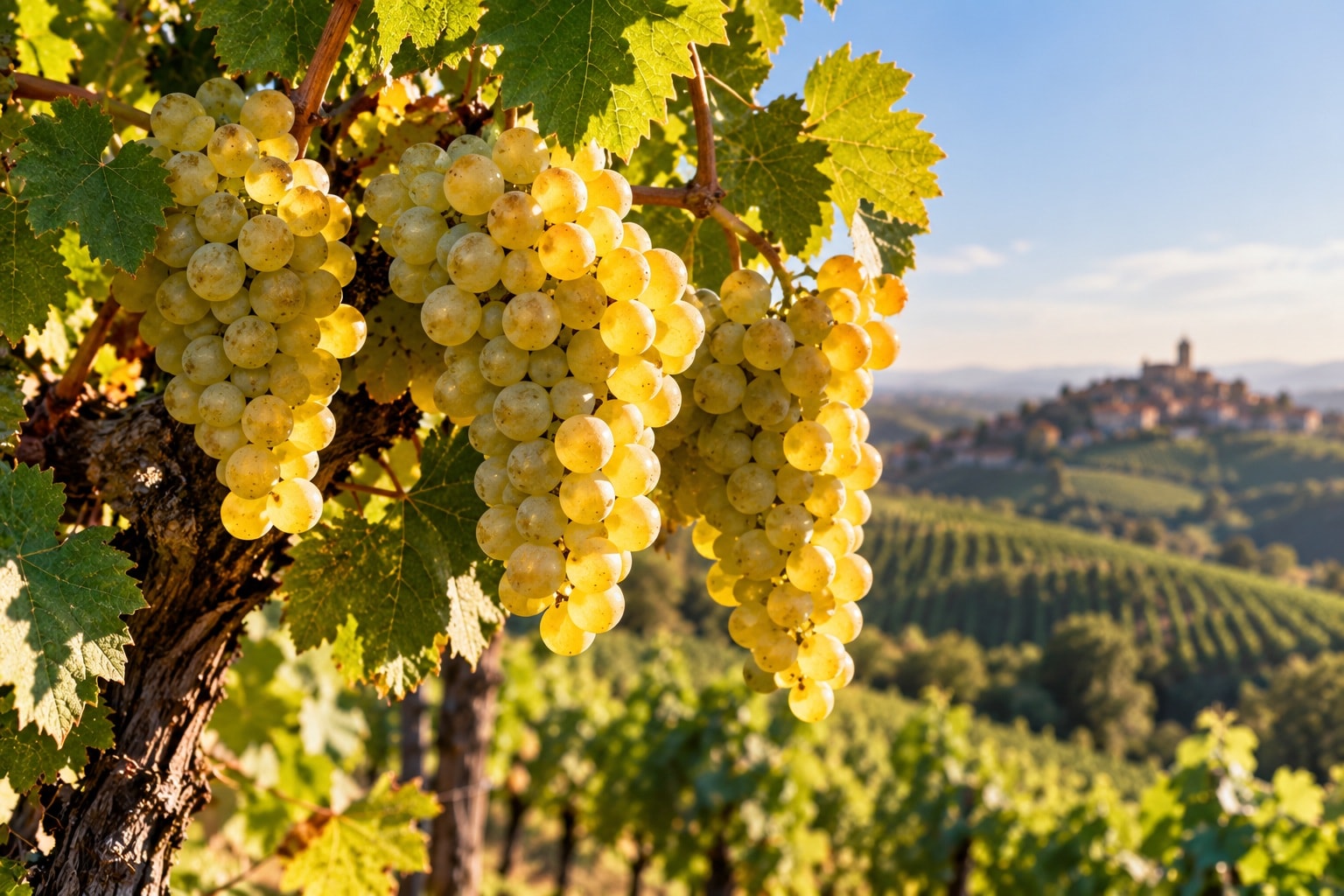
The grape produces medium-small berries with greenish-yellow skins.
Its bunches are generally medium to small and can be compact.
Arneis is also known for its vigorous vegetative growth, making canopy management and pruning important considerations.
The Consorzio Barbera d'Asti identifies susceptibility to powdery mildew as one of the variety's cultivation challenges.
These characteristics help explain why successful Arneis production requires careful vineyard management rather than simply allowing the vine's natural vigour to determine the crop.
The grape's combination of early development, vigorous growth and distinctive fruit characteristics contributes to its identity within Piedmontese viticulture.
Arneis has undergone a significant stylistic transformation over its history.
Historical accounts indicate that the grape was once frequently used for sweet wines and vermouth.
Its modern reputation, however, is primarily associated with dry white wines.
The revival of Arneis during the twentieth century coincided with renewed interest in producing wines that expressed the grape's own aromatic and structural characteristics.
Today, producers employ different approaches depending on the style they wish to achieve.
Temperature-controlled fermentation in stainless steel is one approach used to preserve fruit and floral expression.
Other producers may incorporate lees contact or alternative maturation vessels to develop texture and complexity.
These techniques should not be interpreted as universal requirements for Arneis.
The grape itself does not prescribe a single fermentation or maturation method.
The Roero DOCG appellation also recognises sparkling expressions of Arneis, demonstrating that the variety is not restricted to still white wines.
For wine enthusiasts, this stylistic diversity provides an opportunity to explore how vineyard origin and winemaking influence the expression of the same indigenous grape.
Vietti occupies an important position in the modern history of Arneis.
The estate, based in Castiglione Falletto in the Langhe, is internationally recognised for its Barolo wines.
However, its contribution to Piedmontese winemaking extends beyond Nebbiolo.
In 1967, Vietti produced its first pure Arneis bottling.
This was an important development at a time when the grape had become increasingly uncommon.
The producer's decision to work with Arneis helped demonstrate its potential as a varietal white wine.
Vietti's involvement formed part of the wider revival that eventually returned Arneis to commercial prominence.
Today, the producer continues to be associated with the grape through its Roero Arneis wine.
This historical connection is particularly significant because it links a modern wine category with the efforts of producers who helped preserve and re-establish a traditional regional variety.
For visitors exploring Arneis on Sipfind, Vietti provides an important historical reference point.
The producer's 1967 milestone is documented in its official company history.
Although Arneis is strongly associated with Piedmont, the grape is not cultivated exclusively in Italy.
Its distinctive characteristics have attracted interest from winegrowers in other countries.
However, Piedmont remains its historical centre and the principal reference point for understanding the variety.
The grape's international identity is still closely connected to Roero and the modern development of dry Arneis wines.
For this reason, comparisons between Arneis wines from different regions should take account of climate, vineyard conditions and production methods.
A wine produced outside Piedmont may express the grape differently from a traditional Roero Arneis.
The grape variety remains the same, but the geographical and regulatory identities of the wines differ.
This distinction is important when organising wines by grape, region and appellation.
Arneis can be a versatile white wine at the table.
Its combination of fruit expression, freshness and often rounded texture makes it suitable for a variety of dishes.
Depending on the wine's style, it can complement vegetable-based dishes, seafood, poultry and lighter pasta preparations.
Its association with Piedmont also makes it a natural companion to regional cuisine.
Fresh cheeses, delicate vegetable dishes and lighter preparations can provide useful pairing opportunities.
However, food pairing should reflect the character of the individual wine.
A light, youthful Arneis may suit different dishes from a fuller-bodied example with extended maturation.
For Sipfind, these recommendations should therefore be treated as general guidance rather than fixed rules applying to every bottle.
Arneis is frequently enjoyed while relatively young, when its fruit and floral characteristics are prominent.
However, the variety should not be categorised as incapable of ageing.
The development of an individual wine depends on several factors, including vineyard origin, grape concentration, acidity, production method and storage conditions.
Some producers make Arneis wines intended primarily for early enjoyment.
Others produce more structured expressions that may develop additional complexity with bottle age.
There is therefore no single drinking window that applies to all Arneis wines.
For Sipfind, ageing recommendations should be associated with individual wines and vintages rather than assigned automatically at grape level.
This distinction allows the grape page to remain accurate while bottle-specific pages provide more detailed information about maturity and drinking potential.
Explore Arneis, one of Piedmont's distinctive indigenous white grape varieties.
Discover its history in the Roero hills, learn about its modern revival and explore the different expressions produced by contemporary winemakers.
Browse Arneis wines from established producers, compare available vintages and discover offers from independent European wine retailers.
Sipfind brings together wine information and retailer price comparisons to help you explore Arneis across different producers and regions.
Number of arneis: 1 pcs.
Vietti Roero Arneis
2025
Italy
Barolo/Barbaresco - Barolo/Barbaresco
incl. VAT