
Champagne Nicolas Feuillatte
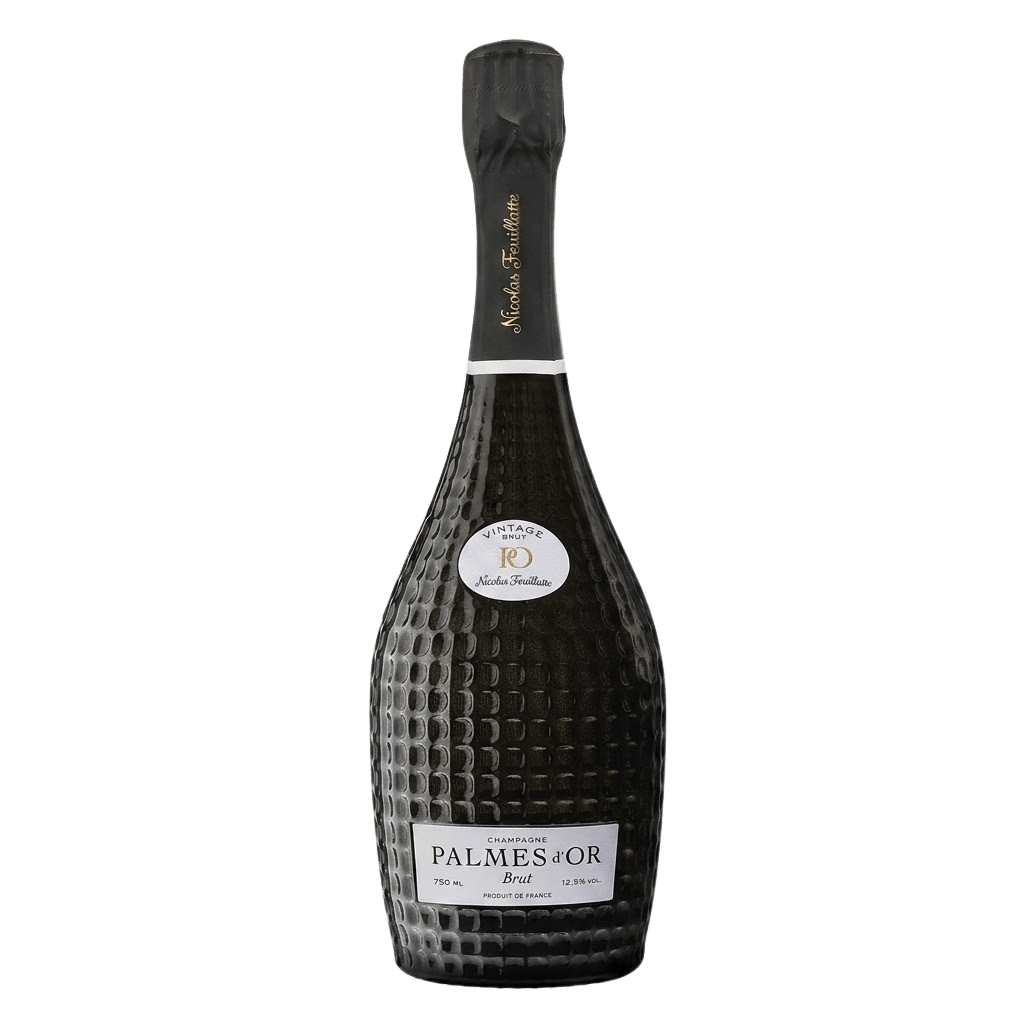
Nicolas Feuillatte Palmes d'Or Brut
2009
From 142 EUR from 1 retailers
Palmes d'Or Brut is the flagship prestige cuvée of Nicolas Feuillatte, produced only in exceptional vintage years from a rigorously selected blend of Chardonnay and Pinot Noir sourced from Grand Cru villages. Extended lees ageing and its distinctive sculpted bottle make it one of the most recognisable prestige Champagnes.
Country
France
Region
Champagne
Number of retailers: 1
XtraWine
European Union
Nicolas Feuillatte Palmes d'Or Brut
2009
Standard delivery 1-3 business days
More information
Producer
Centre Vinicole – Champagne Nicolas Feuillatte is one of Champagne's largest cooperative-based houses and among the region's most commercially significant producers. Established in 1976 in Chouilly on the Côte des Blancs, the house operates through a partnership model that unites cooperative growers with the commercial identity created by négociant Nicolas Feuillatte. Its wines draw on fruit sourced from extensive vineyard holdings spanning Champagne's diverse terroirs, from grand cru sites to premier cru parcels across the Montagne de Reims, Côte des Blancs, Vallée de la Marne and Côte des Bar.
Quick Facts
- Location: Chouilly, Côte des Blancs, Champagne, France
- Founded: 1976
- Founder: Partnership between Nicolas Feuillatte and cooperative growers
- House identity: Cooperative-based Champagne with terroir diversity
- Vineyard access: Over 5,000 hectares through cooperative members
- Terroir range: Montagne de Reims, Côte des Blancs, Vallée de la Marne, Côte des Bar
- Signature cuvée: Brut Réserve
- Prestige cuvée: Palmes d'Or
- Principal grapes: Chardonnay, Pinot Noir, Pinot Meunier
- Key styles: Brut, Blanc de Blancs, Rosé and vintage Champagne
- Production approach: Traditional vinification with extended lees ageing
- Vineyard management: Cooperative model with sustainable practices integration
A Partnership Model Built on Scale
The house emerged from a collaboration between Henri Macquart, president of the cooperative movement in Champagne, and Nicolas Feuillatte, a négociant who understood the commercial potential of a quality-focused cooperative brand. This structure allowed thousands of small growers to pool their production under a unified identity while maintaining control over vineyard management.
Within two decades, the cooperative model had proven both commercially successful and qualitatively viable, establishing Centre Vinicole – Champagne Nicolas Feuillatte as a major force in the region. The house's scale provides blending flexibility unmatched by smaller grower-producers, drawing on fruit from diverse climats and exposures across Champagne's principal growing zones.
Terroir Diversity Through Cooperative Reach
The cooperative's vineyard network extends across more than 5,000 hectares, encompassing parcels in premier cru and grand cru villages as well as carefully selected sites throughout Champagne's secondary zones. This geographical breadth allows the house to blend parcels from the Chardonnay-dominated Côte des Blancs with Pinot Noir from the Montagne de Reims, Meunier from the Vallée de la Marne and fruit from the Côte des Bar's Kimmeridgian soils.
Meticulous viticulture standards are maintained across member vineyards through cooperative oversight. Sustainable practices have been progressively integrated into estate management, reflecting both environmental priorities and a long-term focus on vineyard health and fruit quality.
Palmes d'Or and the House Range
At the summit of the portfolio stands Palmes d'Or, the house's flagship vintage Champagne. Created from exceptional parcels and subject to extended cellar ageing, it represents the cooperative's capacity to identify and isolate superior fruit from its extensive vineyard holdings. The result is a structured, complex Champagne built for medium-term development.
The broader range includes Brut Réserve, the house's signature non-vintage expression, alongside Blanc de Blancs, Rosé and additional vintage cuvées. Each reflects the house's blending philosophy: combining parcels from diverse terroirs to achieve balance, consistency and fruit purity while expressing the characteristic freshness and structure associated with traditional Champagne vinification and patient lees contact.
Country
Region
Champagne
Champagne is widely regarded as the world's most prestigious sparkling wine region and has become synonymous with celebration, luxury and uncompromising quality. Located in northeastern France, approximately 150 kilometres east of Paris, the region combines centuries of winemaking tradition with exceptional terroir to produce sparkling wines of remarkable elegance and complexity. From legendary maisons to small grower-producers, Champagne represents the benchmark against which all other sparkling wines are measured, and its influence on global wine culture remains unrivalled.
The region's vineyards stretch across five principal districts: Montagne de Reims, Vallée de la Marne, Côte des Blancs, Côte de Sézanne and Côte des Bar. The defining characteristic of Champagne terroir is its chalk-limestone subsoil, which provides excellent drainage, mineral richness and steady water supply essential for producing grapes of exceptional quality. The cool continental climate, moderated by maritime influences, ensures slow ripening and high natural acidity, while the principal grape varieties—Chardonnay, Pinot Noir and Pinot Meunier—each contribute distinct character to the final blend. The region's 17 grand cru villages and 42 premier cru villages represent the finest expression of Champagne terroir, producing grapes of outstanding concentration and finesse.
Champagne is governed by strict AOC regulations established in 1927, which define geographical boundaries, permitted grape varieties, yields and production methods. The region is home to some of the world's most celebrated houses, including Krug, Louis Roederer, Bollinger, Dom Pérignon, Veuve Clicquot, Pol Roger, Salon, Taittinger and Moët & Chandon. These maisons have upheld the art of blending and cellar ageing for generations, producing prestige cuvées and vintage expressions that rank among the most collectible wines in the world. Alongside these historic houses, a growing number of grower-producers cultivate and vinify their own grapes, offering terroir-focused expressions that reveal the diversity and depth of Champagne's varied terroirs.
Whether exploring grand cru villages, prestige cuvées or historic maisons, Champagne offers an unparalleled journey through the birthplace of the world's finest sparkling wines. Discover Champagne Champagnes, compare prices from trusted merchants across Europe and find the best offers with Sipfind.
Grapes
Chardonnay is one of the world’s most important and prestigious white wine grapes, renowned for its remarkable versatility and ability to reflect both terroir and winemaking style. Most famously associated with Burgundy and Champagne in France, Chardonnay is cultivated across virtually every major wine-producing country and can produce everything from precise, mineral-driven whites to rich, complex wines with exceptional ageing potential.
In Burgundy, Chardonnay reaches some of its most celebrated expressions. The limestone-rich vineyards of Chablis are known for wines combining vibrant acidity, citrus character and mineral precision, while the Côte de Beaune, particularly appellations such as Meursault, Puligny-Montrachet and Chassagne-Montrachet, produces some of the world’s most sought-after and age-worthy white wines.
Chardonnay also plays a fundamental role in Champagne, where it contributes freshness, finesse and acidity to blends alongside Pinot Noir and Meunier. When produced exclusively from Chardonnay, the resulting Champagne is known as Blanc de Blancs, a style prized for its elegance, precision and capacity to develop considerable complexity with extended ageing.
The grape’s character varies significantly according to climate, terroir and winemaking. Cooler regions can produce wines showing citrus, green apple, white flowers and mineral notes, while warmer conditions can bring peach, melon and tropical-fruit character. Oak fermentation, barrel ageing and malolactic fermentation can introduce additional layers of toast, vanilla, butter and hazelnut, demonstrating Chardonnay’s exceptional stylistic range.
Beyond France, Chardonnay has established important expressions in California, Australia, New Zealand, South Africa and numerous other wine regions. From the mineral whites of Chablis and the great vineyards of Burgundy to Blanc de Blancs Champagne and modern New World interpretations, Chardonnay’s combination of versatility, complexity and terroir expression has established it as one of the defining grape varieties of fine wine.
History and Style
Palmes d'Or Brut is the prestige cuvée of Centre Vinicole Champagne Nicolas Feuillatte, representing the summit of the house's range. Produced only in vintage years of exceptional character and drawn from Grand Cru villages of the Côte des Blancs and Montagne de Reims, the wine combines depth, elegance and extended ageing in an instantly recognisable, contemporary bottle design.
Quick Facts
- Producer: Centre Vinicole Champagne Nicolas Feuillatte
- Region: Champagne, France
- Location: Chouilly, Côte des Blancs
- Type: Vintage Prestige Cuvée Champagne
- Blend: Approximately 50% Chardonnay, 50% Pinot Noir
- Sourcing: Grand Cru villages only (100% échelle des crus)
- Vintage philosophy: Declared only in years of exceptional quality
- Ageing: Minimum 8-10 years on lees before disgorgement
- Dosage: Brut (approximately 8 g/l)
- Signature: Distinctive sculpted "sepal" bottle design
- Style: Refined, complex, long and structured
- Cellaring potential: 10-20 years from vintage date
The House Flagship
Introduced in 1985, Palmes d'Or was created to represent the highest expression of Centre Vinicole Champagne Nicolas Feuillatte. It is drawn exclusively from Grand Cru villages, produced only in years of exceptional harvest quality, and matured for far longer than any other cuvée in the house range.
The wine's iconic sculpted bottle – inspired by the natural form of a champagne sepal – has become a defining visual signature of the cuvée, making Palmes d'Or one of the most recognisable prestige Champagnes on the market.
A Balance of Chardonnay and Pinot Noir
The blend is built on a near-equal balance of Chardonnay and Pinot Noir, both sourced from Grand Cru villages. Chardonnay from the Côte des Blancs contributes freshness, precision and mineral tension. Pinot Noir from the Montagne de Reims adds structure, aromatic depth and vinous power.
The combination produces a Champagne that is both refined and complete – elegant in its aromatics, structured on the palate and long on the finish.
Extended Ageing and Aromatic Complexity
Palmes d'Or matures for a minimum of eight to ten years on lees before disgorgement, developing the pronounced autolytic notes that define the greatest prestige Champagnes. On release, the wine shows a bright golden colour with a fine, persistent mousse.
Aromas of white peach, pear and citrus zest are layered with brioche, toasted almond, honey and delicate patisserie notes. The palate is full and finely textured, with mineral tension and a long, refined finish that reflects both the quality of the sourcing and the discipline of extended ageing.
Serving, Pairing and Cellaring
Palmes d'Or is best served between 10 and 12°C, in a large tulip-shaped glass that allows its aromatic complexity to express itself fully. It reaches its optimal expression when given a few minutes in the glass to open.
At the table it pairs superbly with refined dishes such as lobster and scallops, poultry with truffle, foie gras terrine and mature hard cheeses. The wine's structure and depth allow it to continue evolving for ten to twenty years from its vintage date, developing further complexity as its aromatic profile matures.