
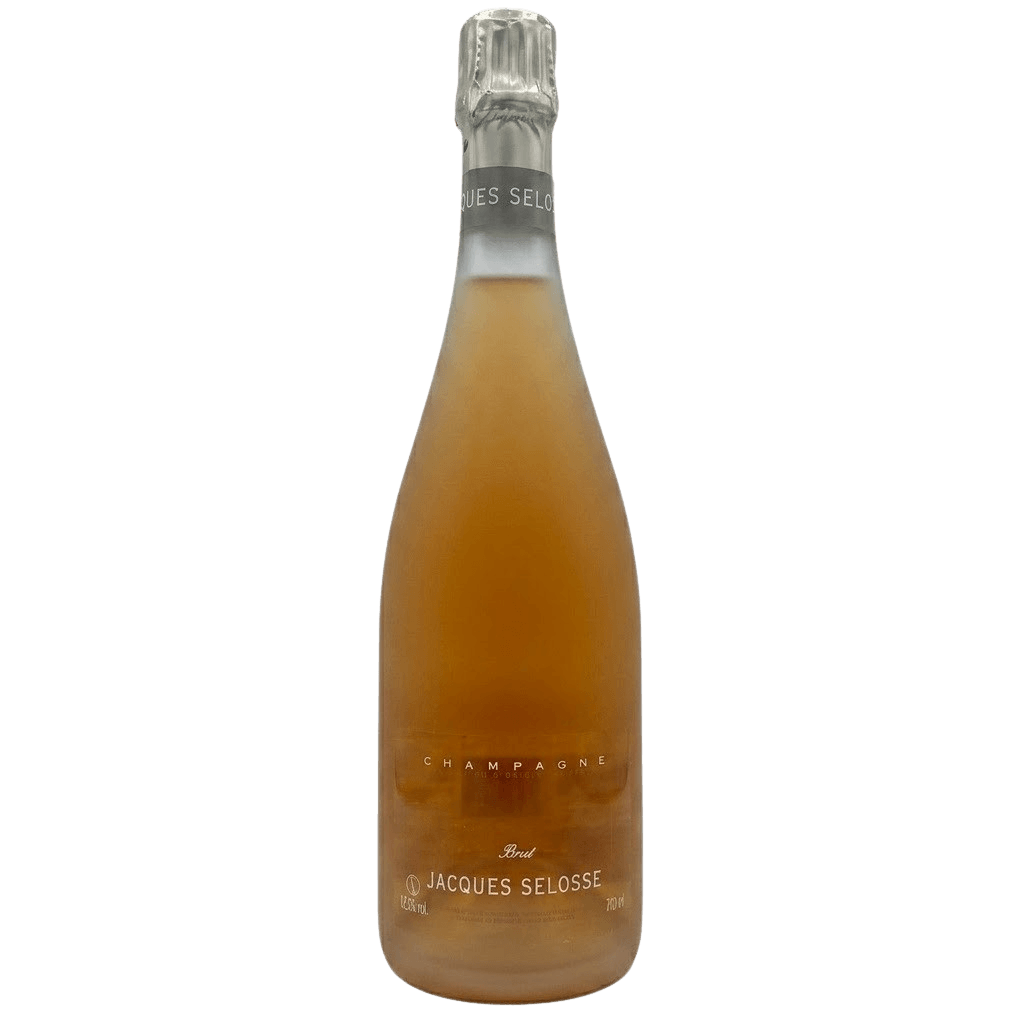
Champagne Jacques Selosse
Jacques Selosse Rosé
From 750 EUR from 2 retailers
Jacques Selosse Rosé is the non-vintage Brut Rosé of Champagne Jacques Selosse in Avize, Côte des Blancs. Built on estate Chardonnay from Avize, Cramant and Oger, it is coloured by still red Pinot Noir wine bought in from Ambonnay. Barrel fermentation and a base blended across harvests contribute to its distinctive balance of vinous weight and freshness.
Country
France
Region
Champagne
Number of retailers: 2
CHAMPAGNEN.SE
Sweden
Jacques Selosse Rosé
Chateaunet
France
Jacques Selosse Rosé
Standard delivery 1-3 business days
You save up to 169 EUR, where 169 EUR is the difference between the highest price and the lowest price
More information
Producer
Champagne Jacques Selosse is a pioneering grower Champagne producer based in Avize, in the heart of the Côte des Blancs. Founded in the 1970s by Jacques Selosse and now led by his son Anselme since 1974, the house has become one of the most influential and sought-after names among terroir-focused Champagne producers. Its wines are distinguished by a Burgundian philosophy of parcel selection, oak fermentation and extended lees contact that privileges depth, texture and site expression over conventional elegance.
Quick Facts
- Location: Avize, Côte des Blancs, Champagne, France
- Founded: 1970s
- Founder: Jacques Selosse
- Current leadership: Anselme Selosse, since 1974
- House identity: Grower Champagne, terroir-driven, single-vineyard expression
- Principal grape: Chardonnay, with Pinot Noir in select cuvées
- Grand Cru holdings: Avize, Cramant, Oger, Le Mesnil-sur-Oger, Aÿ
- Signature cuvée: Substance
- Prestige cuvées: Version Originale, single-vineyard bottlings
- Viticulture: Biodynamic practices, low yields, parcel-specific work
- Vinification: Barrel fermentation in oak, extended lees ageing, solera method for certain cuvées
- Style: Oxidative complexity, pronounced minerality, savoury depth
A Burgundian Vision in Champagne
Anselme Selosse took over the family domaine in 1974 at the age of twenty-five and embarked on a radical departure from the region's prevailing practices. Inspired by the terroir philosophy of Burgundy, he began vinifying each parcel separately in small oak barrels, abandoning stainless steel and rejecting malolactic fermentation in certain cuvées to preserve acidity and tension. He reduced yields dramatically, introduced organic and later biodynamic viticulture, and extended lees contact well beyond the appellation minimum.
This approach was initially met with scepticism in a region built on blending and consistency. Over decades, however, Selosse's Champagnes earned a devoted following among collectors and sommeliers for their pronounced individuality, oxidative complexity and capacity to age.
The Côte des Blancs Grand Cru Mosaic
The house draws its identity from Grand Cru Chardonnay sites across the Côte des Blancs. Avize provides the core, with parcels on the village's chalky mid-slope delivering wines of bright minerality and citrus precision. Cramant contributes rounder, floral expression, while Oger adds weight and body. Le Mesnil-sur-Oger, with its cooler exposure and pure chalk subsoil, introduces razor-sharp acidity and remarkable ageing potential.
Each vineyard is farmed with meticulous attention to soil health and vine balance. Selosse views his role as that of a vigneron first, allowing the chalk terroirs of the Côte des Blancs to express themselves through low intervention and patient maturation. A small holding in Aÿ provides Pinot Noir for rosé and certain blended cuvées, adding structure and red-fruit complexity.
Substance and the Solera Method
At the heart of the portfolio stands Substance, a Blanc de Blancs composed entirely of Grand Cru Chardonnay and produced using a solera system. Unlike traditional vintage or non-vintage blending, the solera reserves a proportion of wine from each harvest, creating a layered, multi-vintage expression that evolves continuously over time. The result is a Champagne of remarkable depth, marked by honeyed texture, oxidative richness and a savoury, almost umami-like finish.
Version Originale, the house's prestige cuvée, is also vinified under solera principles and represents the pinnacle of Selosse's philosophy. Extended barrel ageing and deliberate exposure to oxygen produce a Champagne of profound complexity, capable of ageing for decades. The single-vineyard cuvées—such as those from parcels in Avize, Cramant and Mareuil-sur-Aÿ—offer precise, site-specific expressions of individual terroirs.
Vinification and the Language of Lees
Selosse's winemaking centres on slow fermentation in small oak barrels, many of which are several decades old to avoid excessive wood influence. Wines remain on their lees for extended periods, often years, developing autolytic character, roundness and a distinctive savoury dimension. Disgorgement is performed only when the wine is deemed ready, and dosage is kept minimal to preserve the integrity of the base wine.
The resulting Champagnes challenge conventional expectations. They are textured rather than brisk, contemplative rather than immediately celebratory, and built to reward patience. In an industry often defined by house style and consistency, Jacques Selosse has established a benchmark for individual expression, terroir transparency and the profound ageing potential of Chardonnay from the greatest sites of the Côte des Blancs.
Country
Region
Champagne
Champagne is widely regarded as the world's most prestigious sparkling wine region and has become synonymous with celebration, luxury and uncompromising quality. Located in northeastern France, approximately 150 kilometres east of Paris, the region combines centuries of winemaking tradition with exceptional terroir to produce sparkling wines of remarkable elegance and complexity. From legendary maisons to small grower-producers, Champagne represents the benchmark against which all other sparkling wines are measured, and its influence on global wine culture remains unrivalled.
The region's vineyards stretch across five principal districts: Montagne de Reims, Vallée de la Marne, Côte des Blancs, Côte de Sézanne and Côte des Bar. The defining characteristic of Champagne terroir is its chalk-limestone subsoil, which provides excellent drainage, mineral richness and steady water supply essential for producing grapes of exceptional quality. The cool continental climate, moderated by maritime influences, ensures slow ripening and high natural acidity, while the principal grape varieties—Chardonnay, Pinot Noir and Pinot Meunier—each contribute distinct character to the final blend. The region's 17 grand cru villages and 42 premier cru villages represent the finest expression of Champagne terroir, producing grapes of outstanding concentration and finesse.
Champagne is governed by strict AOC regulations established in 1927, which define geographical boundaries, permitted grape varieties, yields and production methods. The region is home to some of the world's most celebrated houses, including Krug, Louis Roederer, Bollinger, Dom Pérignon, Veuve Clicquot, Pol Roger, Salon, Taittinger and Moët & Chandon. These maisons have upheld the art of blending and cellar ageing for generations, producing prestige cuvées and vintage expressions that rank among the most collectible wines in the world. Alongside these historic houses, a growing number of grower-producers cultivate and vinify their own grapes, offering terroir-focused expressions that reveal the diversity and depth of Champagne's varied terroirs.
Whether exploring grand cru villages, prestige cuvées or historic maisons, Champagne offers an unparalleled journey through the birthplace of the world's finest sparkling wines. Discover Champagne Champagnes, compare prices from trusted merchants across Europe and find the best offers with Sipfind.
Grapes
Chardonnay is one of the world’s most important and prestigious white wine grapes, renowned for its remarkable versatility and ability to reflect both terroir and winemaking style. Most famously associated with Burgundy and Champagne in France, Chardonnay is cultivated across virtually every major wine-producing country and can produce everything from precise, mineral-driven whites to rich, complex wines with exceptional ageing potential.
In Burgundy, Chardonnay reaches some of its most celebrated expressions. The limestone-rich vineyards of Chablis are known for wines combining vibrant acidity, citrus character and mineral precision, while the Côte de Beaune, particularly appellations such as Meursault, Puligny-Montrachet and Chassagne-Montrachet, produces some of the world’s most sought-after and age-worthy white wines.
Chardonnay also plays a fundamental role in Champagne, where it contributes freshness, finesse and acidity to blends alongside Pinot Noir and Meunier. When produced exclusively from Chardonnay, the resulting Champagne is known as Blanc de Blancs, a style prized for its elegance, precision and capacity to develop considerable complexity with extended ageing.
The grape’s character varies significantly according to climate, terroir and winemaking. Cooler regions can produce wines showing citrus, green apple, white flowers and mineral notes, while warmer conditions can bring peach, melon and tropical-fruit character. Oak fermentation, barrel ageing and malolactic fermentation can introduce additional layers of toast, vanilla, butter and hazelnut, demonstrating Chardonnay’s exceptional stylistic range.
Beyond France, Chardonnay has established important expressions in California, Australia, New Zealand, South Africa and numerous other wine regions. From the mineral whites of Chablis and the great vineyards of Burgundy to Blanc de Blancs Champagne and modern New World interpretations, Chardonnay’s combination of versatility, complexity and terroir expression has established it as one of the defining grape varieties of fine wine.
History and Style
Jacques Selosse Rosé is the non-vintage Brut Rosé of Champagne Jacques Selosse in Avize, Côte des Blancs. Built on estate Chardonnay from Avize, Cramant and Oger, it is coloured by still red Pinot Noir wine bought in from Ambonnay. Barrel fermentation and a base blended across harvests contribute to its distinctive balance of vinous weight and freshness.
Wine at a Glance
- Producer: Champagne Jacques Selosse
- Wine: Jacques Selosse Rosé
- Country: France
- Region: Champagne
- Appellation: Champagne AOC
- Wine Type: Brut Rosé Champagne
- Grape Varieties: Chardonnay and Pinot Noir, Chardonnay-led
- Vintage Type: Non-Vintage
- Vineyard Selection: Estate Chardonnay from Avize, Cramant and Oger; still red Pinot Noir wine purchased from Egly-Ouriet in Ambonnay
- Vinification: Fermentation in old oak barrels; base blended across successive harvests; addition of still red wine at assemblage
- Maturation: Extended ageing on the lees in the estate's cellars
- Bottle Format: 750 ml
Jacques Selosse Rosé is a non-vintage Brut Rosé Champagne produced by Champagne Jacques Selosse, a grower estate based in the village of Avize, in the Côte des Blancs sector of the Champagne appellation. It is built on estate Chardonnay, coloured by still red Pinot Noir wine bought in from a grower in Ambonnay, and it is the only cuvée in the range that is not made entirely from the estate's own fruit.
The estate works to a Chardonnay-led house style, and that orientation carries into the rosé. Structure comes from fermentation in old oak barrels and from a base blended across successive harvests rather than drawn from a single year. Guillaume Selosse has run the estate since 2018, following Anselme Selosse; the viticulture is biodynamic and the holdings run to approximately 8 hectares.
What stays constant between releases is the method. What varies is the composition: the proportion of red wine, the vintages drawn on and the dosage all differ between disgorgements, and are documented per release rather than fixed for the cuvée. For a wine with no vintage on the label, the disgorgement date is the more informative identifier.
Vineyards and Terroir
The Chardonnay for this cuvée comes from the estate's parcels in Avize, Cramant and Oger, taken from the mid-slope sections where the chalk lies closest beneath the surface. The estate also holds Chardonnay in Le Mesnil-sur-Oger. All are villages of the Côte des Blancs, an area associated with Chardonnay and with chalk subsoils.
The Pinot Noir in this wine does not come from the estate's own vineyards. Holdings of the variety are small — approximately 1 hectare against approximately 7.3 hectares of Chardonnay, in Aÿ, Mareuil-sur-Aÿ and Ambonnay — and that fruit goes to other wines in the range. For the rosé, the still red wine is purchased from Egly-Ouriet in Ambonnay.
That makes this cuvée an exception within the estate's practice. Every other wine is made entirely from fruit the estate grows itself. Here a bought-in component is used because the house considers the Ambonnay grower's still red wine better suited to the purpose than its own.
The estate farms biodynamically, and that practice governs the whole of its production rather than being applied selectively to particular cuvées.
Vinification and Maturation
The production method is the most distinctive aspect of this wine, and it departs from conventional Champagne practice at three points.
Fermentation in Old Oak
The base wines are fermented in old oak barrels rather than in stainless steel. Older barrels contribute less direct oak character than new ones; the effect here is on texture and on a controlled exchange of oxygen during fermentation and maturation. The resulting style is described as oxidative, meaning the wine shows the effects of that exchange rather than being protected from it. Much of modern Champagne production is organised around limiting oxygen contact in order to preserve primary freshness, so this is a deliberate departure rather than an incidental one.
A Base Blended Across Harvests
The cuvée is not built from a single growing season. Estate Chardonnay from successive harvests is combined, which dilutes the influence of any individual year; sources differ on how many vintages make up the base, and the figure for a release should be taken from the producer's own documentation.
This is worth distinguishing from the solera-style perpetual reserve the estate is often associated with. That continuous system is the method of Substance. The rosé draws on successive vintages held in cask rather than on a reserve carried forward indefinitely.
The practical consequence is that two bottles bearing the same cuvée name are not necessarily the same wine, since the vintages in the base move forward as releases succeed one another. The estate does not present this as vintage variation, and it is not recorded as such.
The Red Wine Component
Colour and red-fruit character come from still red Pinot Noir wine added at assemblage, before the second fermentation. This is one of the two permitted methods for rosé Champagne, the alternative being limited skin contact during production of the base wine.
The wine is bought in barrel from Egly-Ouriet in Ambonnay and matured in the estate's own casks before assembly. The proportion is small and differs between releases, so a figure should not be carried from one disgorgement to the next.
Maturation on the Lees
Following assembly and second fermentation, the wine undergoes extended ageing on the lees in the estate's cellars. Lees contact contributes to texture and to the integration of the wine's components. Extended maturation is characteristic of the estate's approach across its range; the duration applied to any particular release is recorded by the producer.
Style and Tasting Profile
The identity of this cuvée rests on the combination of a Chardonnay base, barrel fermentation and multi-harvest blending.
Its colour derives from the addition of still red wine rather than from skin contact, and its depth depends on the proportion added.
Two characteristics are consistent across releases. The first is a vinous weight on the palate, which follows from barrel fermentation and from the proportion of older material in the base. The second is a fine mousse. The oxidative character described above is part of that structure rather than a fault, and it is what distinguishes the style from Champagnes made under more protective conditions.
Detailed sensory description belongs with the individual disgorgement rather than with the cuvée, and should be identified by disgorgement date where the producer's notes support it.
Ageing and Serving
The estate's method produces wines intended to develop in bottle, and extended lees ageing before release is part of that intention.
No single ageing period applies to every release. A bottle disgorged recently is at a different stage from one disgorged several years earlier, even when the label is identical. Where the disgorgement date is known, it is more informative than the absence of a vintage.
- Serving Temperature: Approximately 10-12°C
- Glassware: A medium-sized white wine glass rather than a flute
- Decanting: Not applicable
- Storage: Cool, dark conditions with a stable temperature
- Drinking Window: Release-dependent
Position within the Range
Champagne Jacques Selosse produces several separately identified cuvées, and Rosé is distinguished from them by method rather than by grape variety alone.
Initial, V.O. and Substance are Blanc de Blancs. Exquise is a sec. Millésime carries a vintage, and from the 2007 base it has been assembled from the estate's parcels of both varieties rather than from Avize Chardonnay alone. The Lieux-Dits are six single-vineyard cuvées: three from Chardonnay parcels and three from Pinot Noir parcels in Aÿ, Mareuil-sur-Aÿ and Ambonnay.
Rosé is therefore not the estate's only wine involving Pinot Noir. Two things set it apart: it is the only one coloured by an addition of still red wine, and the only one drawing on fruit the estate did not grow.
None of these wines inherits technical information from another. Composition, maturation and disgorgement details are recorded per cuvée and per release. The distinction matters in practice because several of them carry the Selosse name with only a short qualifier to separate them, and a retailer listing identified as Selosse alone cannot be matched to this cuvée with confidence.
Explore Jacques Selosse Rosé on Sipfind
Discover available releases of Jacques Selosse Rosé and compare prices from European wine retailers. Explore individual offers, disgorgement details where available, and current bottle availability.