
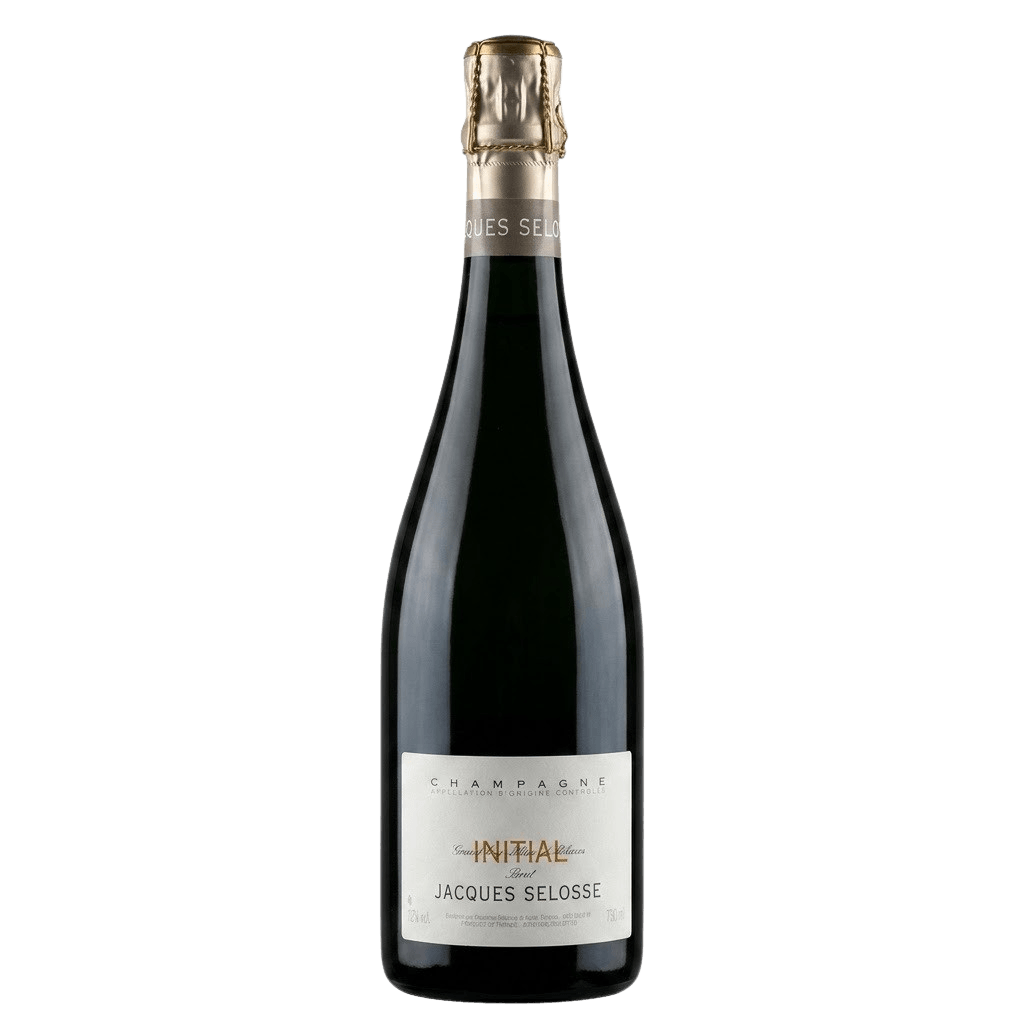
Champagne Jacques Selosse
Jacques Selosse Initial
From 555 EUR from 1 retailers
Jacques Selosse Initial represents the entry point to Anselme Selosse's revolutionary approach to Champagne, combining biodynamic viticulture, barrel fermentation, and extended lees ageing in a Chardonnay-dominant non-vintage cuvée that challenges conventional Champagne expectations.
Country
France
Region
Champagne
Number of retailers: 1
Bottle Hero
Denmark
Jacques Selosse Initial
More information
Producer
Champagne Jacques Selosse is a pioneering grower Champagne producer based in Avize, in the heart of the Côte des Blancs. Founded in the 1970s by Jacques Selosse and now led by his son Anselme since 1974, the house has become one of the most influential and sought-after names among terroir-focused Champagne producers. Its wines are distinguished by a Burgundian philosophy of parcel selection, oak fermentation and extended lees contact that privileges depth, texture and site expression over conventional elegance.
Quick Facts
- Location: Avize, Côte des Blancs, Champagne, France
- Founded: 1970s
- Founder: Jacques Selosse
- Current leadership: Anselme Selosse, since 1974
- House identity: Grower Champagne, terroir-driven, single-vineyard expression
- Principal grape: Chardonnay, with Pinot Noir in select cuvées
- Grand Cru holdings: Avize, Cramant, Oger, Le Mesnil-sur-Oger, Aÿ
- Signature cuvée: Substance
- Prestige cuvées: Version Originale, single-vineyard bottlings
- Viticulture: Biodynamic practices, low yields, parcel-specific work
- Vinification: Barrel fermentation in oak, extended lees ageing, solera method for certain cuvées
- Style: Oxidative complexity, pronounced minerality, savoury depth
A Burgundian Vision in Champagne
Anselme Selosse took over the family domaine in 1974 at the age of twenty-five and embarked on a radical departure from the region's prevailing practices. Inspired by the terroir philosophy of Burgundy, he began vinifying each parcel separately in small oak barrels, abandoning stainless steel and rejecting malolactic fermentation in certain cuvées to preserve acidity and tension. He reduced yields dramatically, introduced organic and later biodynamic viticulture, and extended lees contact well beyond the appellation minimum.
This approach was initially met with scepticism in a region built on blending and consistency. Over decades, however, Selosse's Champagnes earned a devoted following among collectors and sommeliers for their pronounced individuality, oxidative complexity and capacity to age.
The Côte des Blancs Grand Cru Mosaic
The house draws its identity from Grand Cru Chardonnay sites across the Côte des Blancs. Avize provides the core, with parcels on the village's chalky mid-slope delivering wines of bright minerality and citrus precision. Cramant contributes rounder, floral expression, while Oger adds weight and body. Le Mesnil-sur-Oger, with its cooler exposure and pure chalk subsoil, introduces razor-sharp acidity and remarkable ageing potential.
Each vineyard is farmed with meticulous attention to soil health and vine balance. Selosse views his role as that of a vigneron first, allowing the chalk terroirs of the Côte des Blancs to express themselves through low intervention and patient maturation. A small holding in Aÿ provides Pinot Noir for rosé and certain blended cuvées, adding structure and red-fruit complexity.
Substance and the Solera Method
At the heart of the portfolio stands Substance, a Blanc de Blancs composed entirely of Grand Cru Chardonnay and produced using a solera system. Unlike traditional vintage or non-vintage blending, the solera reserves a proportion of wine from each harvest, creating a layered, multi-vintage expression that evolves continuously over time. The result is a Champagne of remarkable depth, marked by honeyed texture, oxidative richness and a savoury, almost umami-like finish.
Version Originale, the house's prestige cuvée, is also vinified under solera principles and represents the pinnacle of Selosse's philosophy. Extended barrel ageing and deliberate exposure to oxygen produce a Champagne of profound complexity, capable of ageing for decades. The single-vineyard cuvées—such as those from parcels in Avize, Cramant and Mareuil-sur-Aÿ—offer precise, site-specific expressions of individual terroirs.
Vinification and the Language of Lees
Selosse's winemaking centres on slow fermentation in small oak barrels, many of which are several decades old to avoid excessive wood influence. Wines remain on their lees for extended periods, often years, developing autolytic character, roundness and a distinctive savoury dimension. Disgorgement is performed only when the wine is deemed ready, and dosage is kept minimal to preserve the integrity of the base wine.
The resulting Champagnes challenge conventional expectations. They are textured rather than brisk, contemplative rather than immediately celebratory, and built to reward patience. In an industry often defined by house style and consistency, Jacques Selosse has established a benchmark for individual expression, terroir transparency and the profound ageing potential of Chardonnay from the greatest sites of the Côte des Blancs.
Country
Region
Champagne
Champagne is widely regarded as the world's most prestigious sparkling wine region and has become synonymous with celebration, luxury and uncompromising quality. Located in northeastern France, approximately 150 kilometres east of Paris, the region combines centuries of winemaking tradition with exceptional terroir to produce sparkling wines of remarkable elegance and complexity. From legendary maisons to small grower-producers, Champagne represents the benchmark against which all other sparkling wines are measured, and its influence on global wine culture remains unrivalled.
The region's vineyards stretch across five principal districts: Montagne de Reims, Vallée de la Marne, Côte des Blancs, Côte de Sézanne and Côte des Bar. The defining characteristic of Champagne terroir is its chalk-limestone subsoil, which provides excellent drainage, mineral richness and steady water supply essential for producing grapes of exceptional quality. The cool continental climate, moderated by maritime influences, ensures slow ripening and high natural acidity, while the principal grape varieties—Chardonnay, Pinot Noir and Pinot Meunier—each contribute distinct character to the final blend. The region's 17 grand cru villages and 42 premier cru villages represent the finest expression of Champagne terroir, producing grapes of outstanding concentration and finesse.
Champagne is governed by strict AOC regulations established in 1927, which define geographical boundaries, permitted grape varieties, yields and production methods. The region is home to some of the world's most celebrated houses, including Krug, Louis Roederer, Bollinger, Dom Pérignon, Veuve Clicquot, Pol Roger, Salon, Taittinger and Moët & Chandon. These maisons have upheld the art of blending and cellar ageing for generations, producing prestige cuvées and vintage expressions that rank among the most collectible wines in the world. Alongside these historic houses, a growing number of grower-producers cultivate and vinify their own grapes, offering terroir-focused expressions that reveal the diversity and depth of Champagne's varied terroirs.
Whether exploring grand cru villages, prestige cuvées or historic maisons, Champagne offers an unparalleled journey through the birthplace of the world's finest sparkling wines. Discover Champagne Champagnes, compare prices from trusted merchants across Europe and find the best offers with Sipfind.
Grapes
Cabernet Franc is one of France’s most historic red wine grapes, valued for its aromatic intensity, vibrant acidity and ability to express both climate and soil with remarkable clarity. It produces elegant single-varietal wines and plays an essential role in some of Bordeaux’s most distinguished blends. Earlier ripening than Cabernet Sauvignon allows Cabernet Franc to perform particularly well in cooler wine regions.
In the Loire Valley, Cabernet Franc reaches its clearest expression as a varietal wine. Typical aromas include redcurrant, raspberry, red cherry and violet, often accompanied by graphite, dried herbs, tobacco and subtle peppery notes. Naturally fresh acidity and finely structured tannins can produce approachable, fruit-driven wines as well as complex examples capable of developing for many years.
The variety is especially important in Chinon, Bourgueil and Saumur-Champigny. Chinon can range from fragrant and supple to deeply structured and age-worthy, depending on vineyard site and soil. Bourgueil often combines dark red fruit with firm structure, while Saumur-Champigny is renowned for freshness, aromatic purity and refined texture. Limestone-rich tuffeau, gravel, sand and clay all contribute to the diversity of Cabernet Franc across these Loire appellations.
In Bordeaux, Cabernet Franc is principally associated with the Right Bank, particularly Saint-Émilion and Pomerol. Usually blended with Merlot and sometimes Cabernet Sauvignon, it contributes perfume, freshness, savoury complexity and structural precision. On suitable limestone and clay terroirs, Cabernet Franc can become a dominant component of exceptionally refined and long-lived wines.
Beyond France, Cabernet Franc is cultivated in regions including Tuscany, Bolgheri, Napa Valley, Washington State, Canada, Argentina and Chile, producing styles shaped by local climate and terroir. Traditionally known as Breton in the Loire and Bouchet in parts of Bordeaux, Cabernet Franc’s combination of aromatic elegance, freshness and ageing potential establishes it as one of the world’s great red wine varieties.
History and Style
Jacques Selosse Initial is the core-range non-vintage cuvée of Champagne Jacques Selosse, one of the most influential grower-Champagne producers in the Côte des Blancs. This wine serves as an introduction to Anselme Selosse's radical winemaking philosophy, which prioritizes terroir expression, oxidative development, and Burgundian techniques over the traditional reductive Champagne method.
Quick Facts
- Producer: Champagne Jacques Selosse
- Classification: Récoltant-Manipulant (Grower-Champagne)
- Region: Champagne
- Appellation: Champagne
- Country: France
- Style: Full-bodied, oxidative-style non-vintage grower Champagne
- Grape Composition: Predominantly Chardonnay with small proportions of Pinot Noir and occasionally Pinot Meunier (exact proportions vary by blend)
- Ageing Potential: 3-5 years from purchase for optimal tertiary development
- Alcohol (ABV): 12-12.5%
- Tasting Profile: Roasted nuts, brioche, honey, baked apple, hazelnut, oxidative notes, mineral undertones
- Food Pairing: Lobster, turbot, roast chicken, aged Comté, foie gras, rich seafood dishes
- Serving Temperature: 10-12°C
- Bottle Status: Estate Wine
- Vintage: Non-Vintage
House Style and Blending Philosophy
Based in Avize, the heart of Grand Cru Chardonnay territory, Jacques Selosse has been farmed biodynamically since the 1990s. Initial draws predominantly from Chardonnay vineyards across multiple villages in the Côte des Blancs, blended with small proportions of Pinot Noir and occasionally Pinot Meunier. The wine is vinified entirely in oak barrels—a departure from stainless steel norms—and undergoes malolactic fermentation and extended lees contact, creating texture and complexity.
Character and Ageing
The style is deliberately richer and more structured than conventional non-vintage Champagne, with pronounced notes of roasted nuts, brioche, honey, baked apple, and oxidative character. Initial typically features lower dosage than industrial Champagne, emphasizing its savory, food-friendly profile. The wine evolves beautifully in bottle, developing deeper tertiary notes over 3-5 years.
This is a wine for those seeking Champagne with depth, personality, and philosophical conviction. Jacques Selosse Initial represents the convergence of biodynamic farming, terroir reverence, and uncompromising winemaking—an essential reference point for modern artisan Champagne. Compare prices across trusted retailers on Sipfind.