
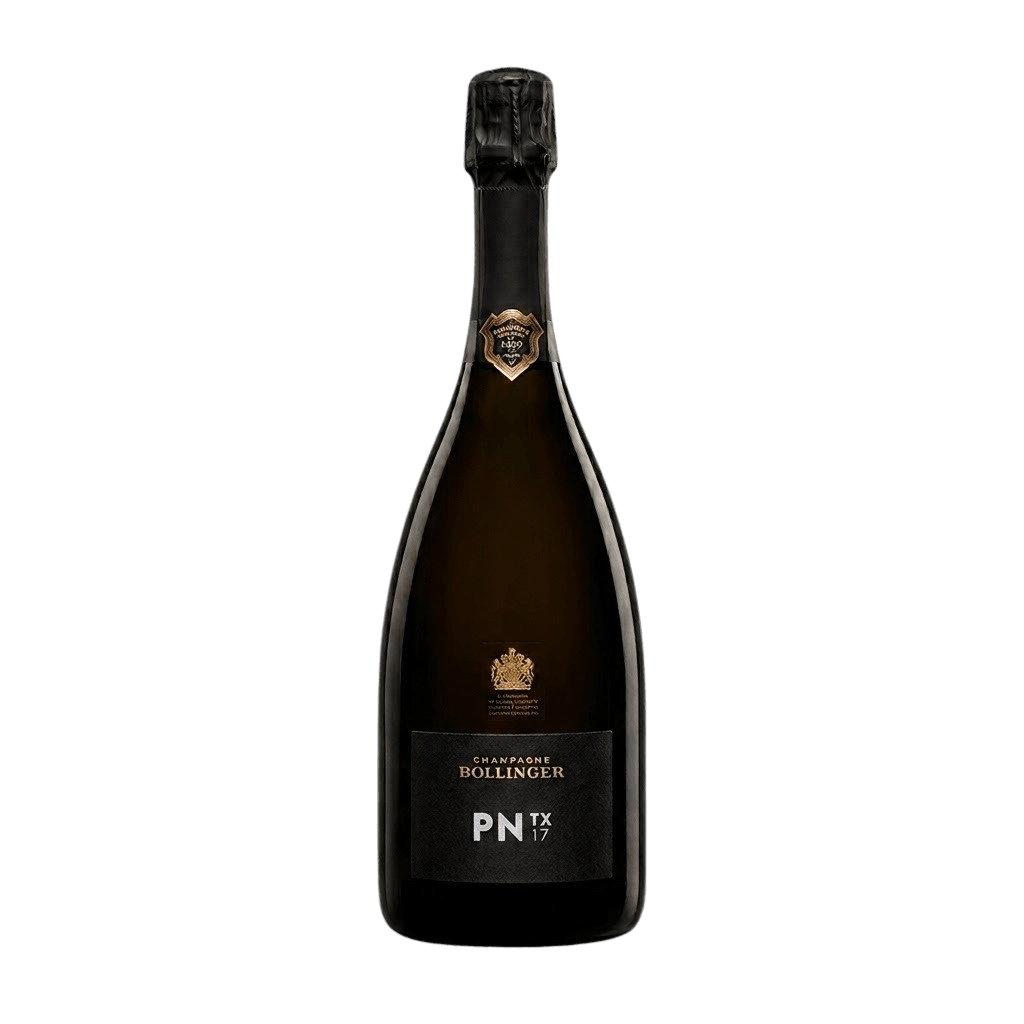
Champagne Bollinger
Bollinger PN TX17
A precise and vinous Blanc de Noirs expressing Tauxières through layered fruit, mineral tension and a notably low dosage.
Country
France
Region
Champagne
More information
Producer
Founded in 1829, Champagne Bollinger is one of the world's most celebrated Grande Marque houses and among the last significant family-owned producers in Champagne. Based in Aÿ in the heart of the Montagne de Reims and still controlled by the family, the house has remained dedicated to traditional methods for nearly two centuries. Its Champagnes are distinguished by structure, concentration and profound aromatic complexity—wines built to age gracefully for decades.
Quick Facts
- Location: Aÿ, Montagne de Reims, Champagne, France
- Founded: 1829
- Founder: Jacques Bollinger
- Ownership: Family-owned since foundation
- House identity: Pinot Noir-led Champagne with barrel fermentation
- Signature cuvée: Special Cuvée
- Prestige cuvées: La Grande Année, R.D. (Récemment Dégorgé), Vieilles Vignes Françaises
- Estate vineyards: Approximately 178 hectares, predominantly Grand Cru and Premier Cru
- Winemaking hallmark: Barrel fermentation in small oak casks
- Key styles: Brut, Vintage, Rosé, Late-release (R.D.), Blanc de Noirs from ungrafted vines
- Dosage approach: Restrained across the range
- Ageing potential: 20 to 30+ years for prestige cuvées
A Family House in Aÿ
Jacques Bollinger, a German-born merchant, and Athanase de Villermont founded the house in 1829 under the name Renaudin-Bollinger & Cie. Within a generation, the Bollinger family assumed full ownership and control of the estate. The house passed through successive family members, including the formidable Madame Élisabeth "Lily" Bollinger, who guided the house through the mid-20th century and became one of Champagne's most influential figures.
Today, the house remains independent and family-controlled, a rare position among Champagne's historic grandes marques. Its headquarters and cellars continue to occupy the original site in Aÿ, a village renowned for its Grand Cru Pinot Noir.
The Pinot Noir Foundation
Pinot Noir forms the structural backbone of every Bollinger cuvée, typically accounting for 60% or more of the blend. The house owns approximately 178 hectares of vineyards, the majority classified as Grand Cru or Premier Cru, concentrated around Aÿ, Bouzy, Verzenay and Louvois—some of Champagne's finest sites for Pinot Noir.
This emphasis on estate fruit and Pinot Noir dominance gives Bollinger its characteristic density, vinous power and ability to develop complexity with extended cellaring. Chardonnay and Pinot Meunier contribute freshness and balance, but it is Pinot Noir that defines the house style.
Barrel Fermentation and Extended Ageing
Bollinger is one of the few Champagne houses to maintain extensive barrel fermentation. A significant portion of the base wines, particularly from the estate's finest parcels, ferments in small oak casks, adding richness, texture and aromatic depth uncommon in modern Champagne production.
Extended lees ageing further distinguishes the house. Special Cuvée, the signature non-vintage cuvée, rests for a minimum of three years on the lees—well beyond the legal requirement. La Grande Année, the vintage prestige cuvée, matures for five to six years before release. R.D., or Récemment Dégorgé, takes this philosophy to its conclusion: fully mature wines disgorged only when deemed ready, often after more than a decade on the lees.
The legendary Vieilles Vignes Françaises comes entirely from ungrafted, pre-phylloxera Pinot Noir vines in the Aÿ lieu-dit of Chaudes Terres and Clos Saint-Jacques. Produced in tiny quantities and released only in exceptional vintages, it represents one of Champagne's rarest and most collectible expressions.
Structured Champagne Built for Time
Across the portfolio, Bollinger Champagnes combine vinous weight with elegance, displaying notes of toasted brioche, hazelnut, stone fruit and spice. The house's restrained dosage approach preserves clarity and allows the structure and complexity developed through barrel fermentation and long ageing to remain at the forefront.
The result is a collection of Champagnes that reward patience. Whether the multi-vintage complexity of Special Cuvée or the profound depth of R.D., Bollinger remains a benchmark for traditional craftsmanship and wines built to evolve over many years.
Country
Region
Champagne
Champagne is widely regarded as the world's most prestigious sparkling wine region and has become synonymous with celebration, luxury and uncompromising quality. Located in northeastern France, approximately 150 kilometres east of Paris, the region combines centuries of winemaking tradition with exceptional terroir to produce sparkling wines of remarkable elegance and complexity. From legendary maisons to small grower-producers, Champagne represents the benchmark against which all other sparkling wines are measured, and its influence on global wine culture remains unrivalled.
The region's vineyards stretch across five principal districts: Montagne de Reims, Vallée de la Marne, Côte des Blancs, Côte de Sézanne and Côte des Bar. The defining characteristic of Champagne terroir is its chalk-limestone subsoil, which provides excellent drainage, mineral richness and steady water supply essential for producing grapes of exceptional quality. The cool continental climate, moderated by maritime influences, ensures slow ripening and high natural acidity, while the principal grape varieties—Chardonnay, Pinot Noir and Pinot Meunier—each contribute distinct character to the final blend. The region's 17 grand cru villages and 42 premier cru villages represent the finest expression of Champagne terroir, producing grapes of outstanding concentration and finesse.
Champagne is governed by strict AOC regulations established in 1927, which define geographical boundaries, permitted grape varieties, yields and production methods. The region is home to some of the world's most celebrated houses, including Krug, Louis Roederer, Bollinger, Dom Pérignon, Veuve Clicquot, Pol Roger, Salon, Taittinger and Moët & Chandon. These maisons have upheld the art of blending and cellar ageing for generations, producing prestige cuvées and vintage expressions that rank among the most collectible wines in the world. Alongside these historic houses, a growing number of grower-producers cultivate and vinify their own grapes, offering terroir-focused expressions that reveal the diversity and depth of Champagne's varied terroirs.
Whether exploring grand cru villages, prestige cuvées or historic maisons, Champagne offers an unparalleled journey through the birthplace of the world's finest sparkling wines. Discover Champagne Champagnes, compare prices from trusted merchants across Europe and find the best offers with Sipfind.
Grapes
History and Style
Bollinger PN TX17 is the third edition in the PN series and the first to place Tauxières at the centre of the blend. Its 2017 base year is supported by older reserve wines, creating a structured and distinctly saline interpretation of Pinot Noir.
Quick Facts
- Producer: Champagne Bollinger
- Cuvée: PN TX17
- Classification: Non-Vintage Champagne
- Base Year: 2017
- Principal Cru: Tauxières
- Other Crus: Avenay and Verzenay
- Region: Champagne, France
- Style: Blanc de Noirs
- Grape Variety: 100% Pinot Noir
- Oldest Reserve Wine: 2006
- Dosage: 4 g/L
- Edition: Third release in the Bollinger PN series
Tauxières Takes the Lead
PN TX17 marks a change from the Verzenay-led first and second releases. The significant contribution from Tauxières brings precision, vivacity and complexity, while Avenay and Verzenay provide additional aromatic depth and structural balance.
The 2017 Base and Reserve Wines
The 2017 base year is blended with older wines, including reserve Pinot Noir matured in magnums and dating back to 2006. These reserve components bring harmony and depth without obscuring the identity of the principal cru.
Low Dosage and Extended Ageing
With a dosage of 4 g/L, PN TX17 is one of the driest expressions in the PN series. Extended cellar ageing builds texture and complexity, while the low dosage allows its acidity, salinity and terroir-led structure to remain clearly defined.
Style and Character
The nose combines dried flowers, tobacco, mocha, liquorice and dried fruit. The palate is livelier, showing apricot, peach, exotic fruit, honey, walnut and spice before finishing with red fruit, blackcurrant, citrus zest and persistent salinity. Champagne Bollinger